More products do not mean better results
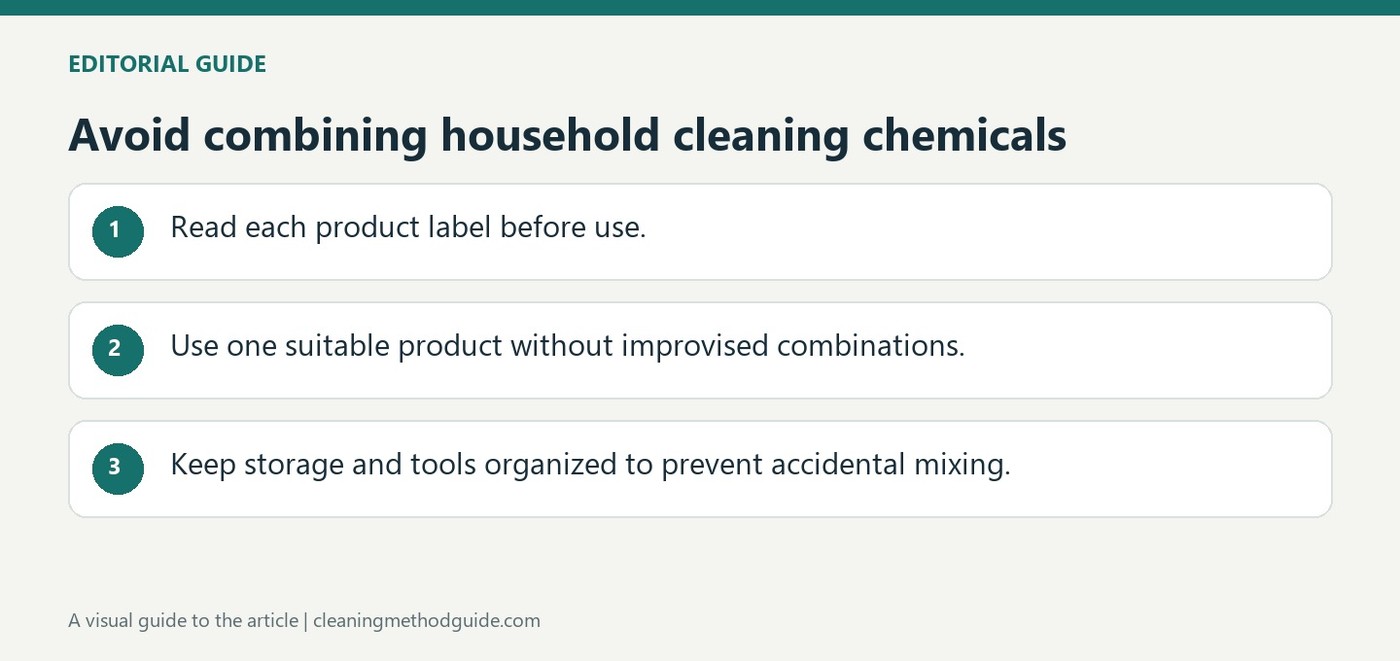
Real Simple warns that mixing cleaning products can create harmful reactions, including dangerous fumes. Its guidance calls out combinations involving bleach, ammonia and acids such as vinegar, and explains that a familiar product can be hazardous when used with another formula.
Read ingredients and directions first
Use the product as labeled and do not experiment with mixtures because a social-media demonstration looks effective. The article also warns against layering different drain cleaners. If one product fails, follow its rinse and handling instructions before changing methods. A stronger smell or larger volume is not evidence of better cleaning, and ventilation does not make an incompatible chemical combination acceptable.
Recognize ingredients hidden inside familiar products
The toxicologist and product specialists consulted by Real Simple discuss commercial formulas as well as plain ingredients. A glass cleaner may contain ammonia, while a toilet or rust product may contain an acid. The front brand name alone therefore cannot establish compatibility with bleach or another cleaner. Keep the original label, read the warnings, and select the appropriate product for the job before starting. The absence of dramatic bubbling does not demonstrate that a mixture is harmless.
Treat a failed attempt as a reason to reassess
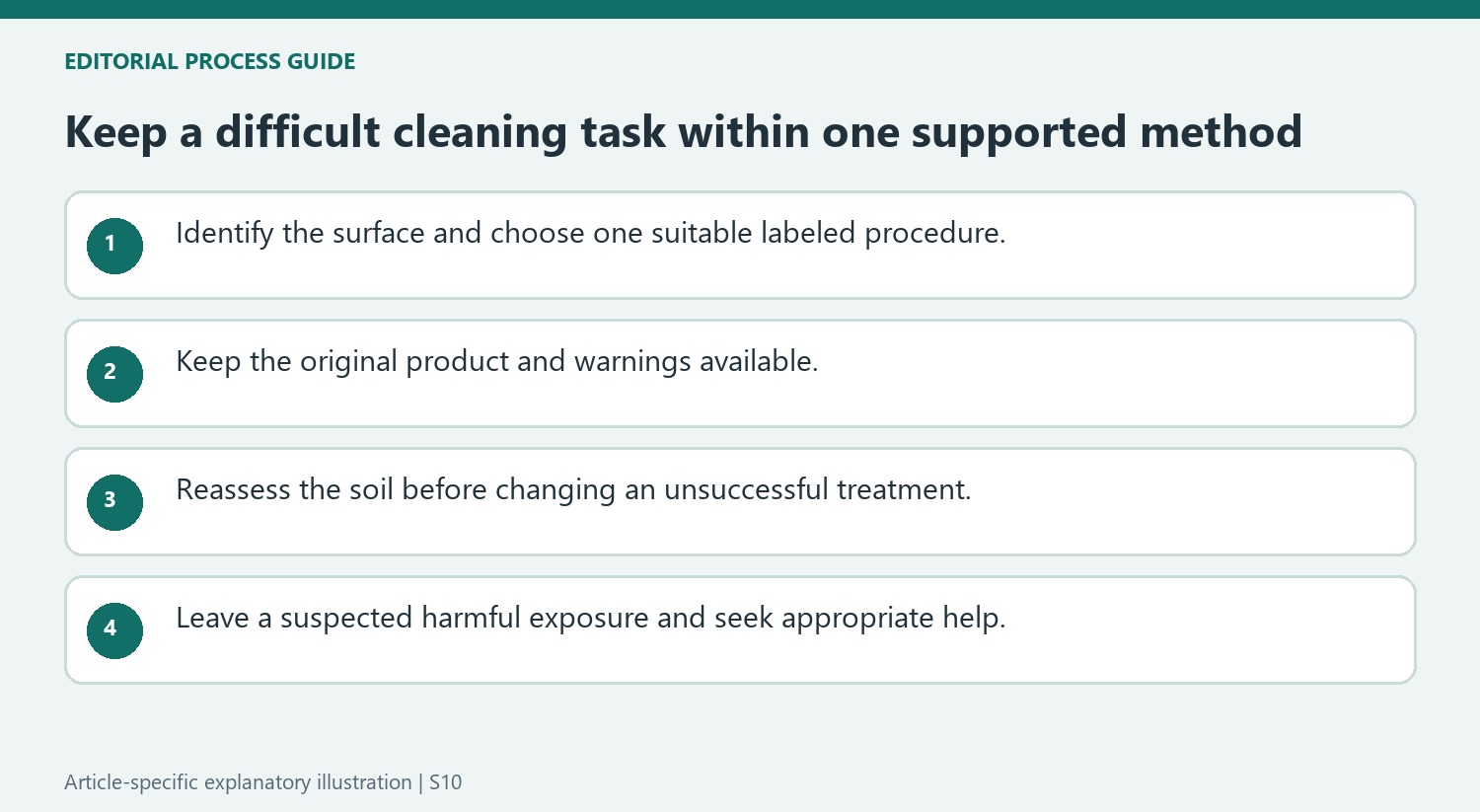
The article specifically warns against following one drain cleaner with another product. An unsuccessful first attempt is not permission to keep pouring different formulas into a confined pipe. Follow the original product's directions and seek suitable professional advice when the problem remains. If a harmful mixture or exposure is suspected, leave the area and obtain emergency or poison-control guidance rather than experimenting with a neutralizer. Do not lean over the container or remain to finish the cleaning. Prevention depends on controlled, separate product use; a large amount of foam, fragrance, or color is not evidence of greater effectiveness.
Read the exact formula rather than relying on the room category
Real Simple's examples cover toilet, glass, drain and surface cleaners because a product's usual location does not establish its chemistry. Two bottles stored in the bathroom can have incompatible ingredients. Begin with the actual task and select one suitable labeled procedure, keeping the original container available throughout the work.
The source also discusses peroxide with vinegar and bleach with alcohol-containing formulas. These warnings reinforce the wider point: a familiar household ingredient is not automatically an acceptable additive. Do not use an online compatibility guess or the absence of an obvious reaction as a substitute for the product's directions and warnings.
Avoid turning a difficult stain into an uncontrolled experiment
When the first attempt does not remove a mark, reassess the surface and the type of soil before changing anything. The article challenges the assumption that a larger quantity or a second formula must provide a better result. Appropriate contact time, the right tool and a method compatible with the fixture matter more than dramatic foam.
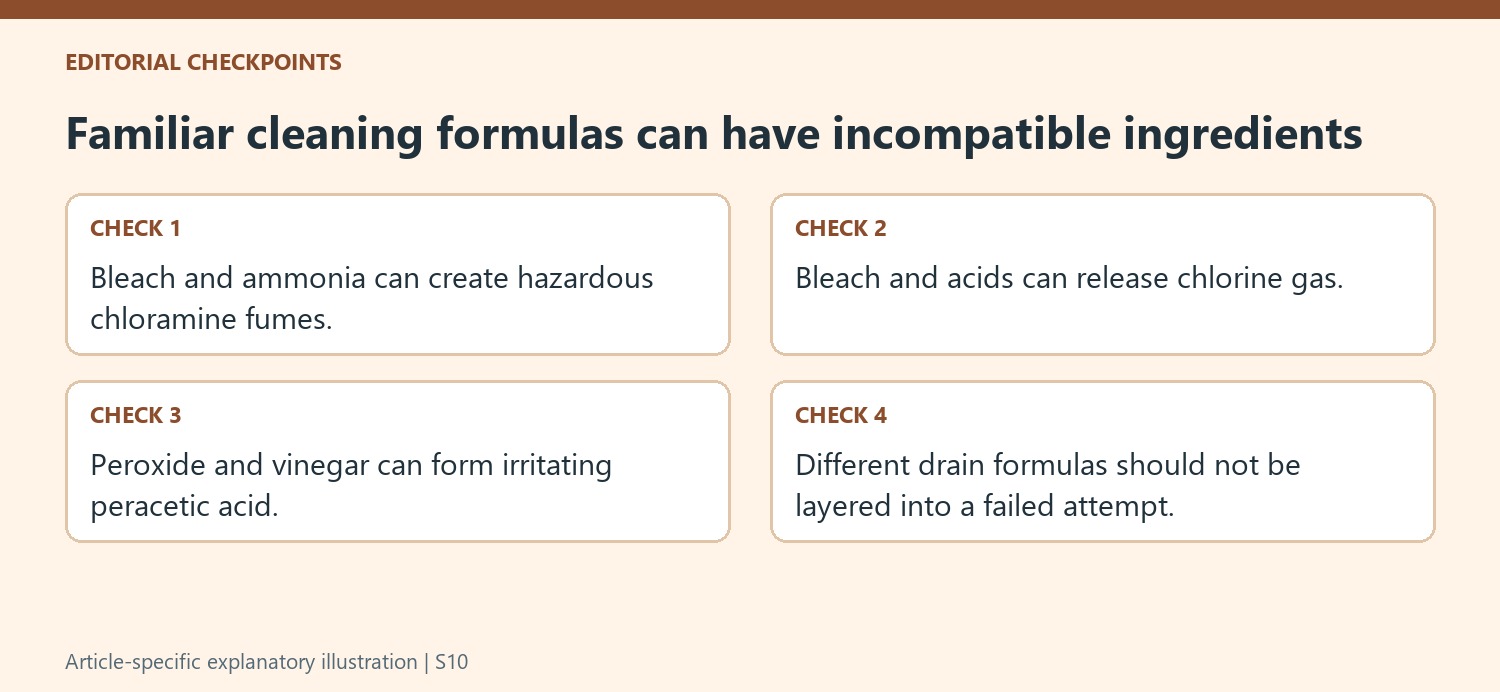
A drain is a particularly poor place to keep adding products because the remaining material is difficult to see or remove. Do not follow one drain formula with another or add bleach to a failed attempt. Follow the original instructions and seek suitable professional help when the blockage remains, telling the professional what has already been used.
Keep prevention and exposure response distinct
Ventilation and protective equipment support correct product use, but they do not make an incompatible combination acceptable. Organize storage to keep products identifiable and reduce the chance of leaks bringing unsuitable formulas together. Other household members should be able to recognize what each container contains.
If a suspected reaction produces fumes or symptoms, move away from the exposure and obtain appropriate emergency or poison-service guidance. Do not stay to sniff the mixture, lean over a drain or add a household neutralizer. The feature's practical message is controlled separate use: choose a supported method before starting and retain enough information to explain the products involved if help is needed. Keeping that procedure simple also makes it easier to communicate to other household members.
References
- 8 Cleaning Products You Should Never Mix. Real Simple; Amanda Lauren.
Real Simple warns that mixing cleaning products can create harmful reactions, including dangerous fumes. Its guidance calls out combinations involving bleach, ammonia and acids such as vinegar, and explains that a familiar product can be hazardous when used with another formula.


Leave a Comment
Comments (0)