Begin with the mildest suitable method
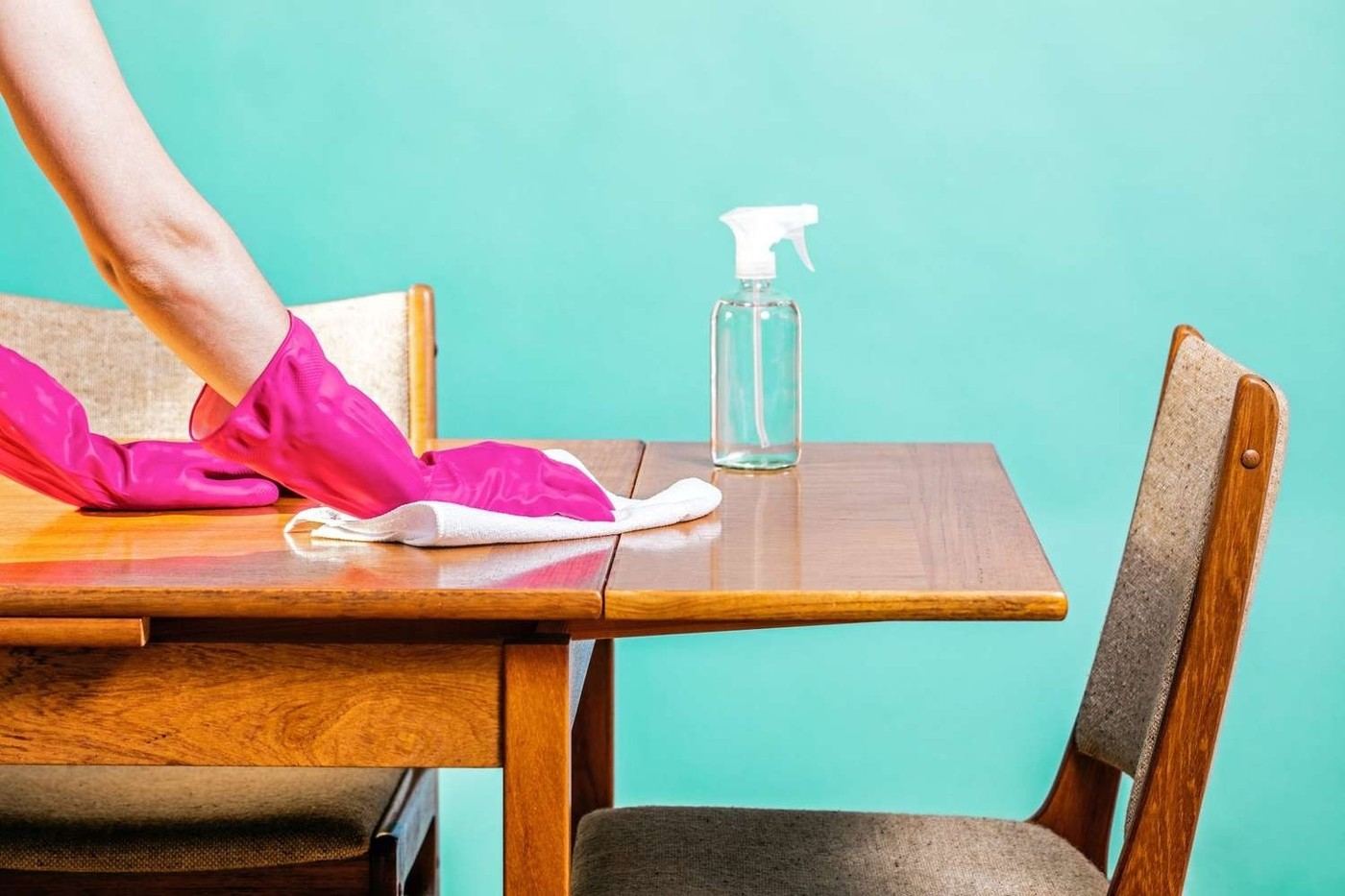
Real Simple explains that wood species, stain and protective finish vary, so a cleaner should first be tried on an inconspicuous area. Its dish-soap example uses a small hidden section to check that the finish is not removed. A successful test on one piece does not establish compatibility with all wooden furniture.
Keep moisture controlled
The guide distinguishes sealed and unfinished wood and warns against saturation. Use only the moisture appropriate to the piece and dry promptly so water does not sit on the surface. If the finish or cleaning method is uncertain, seek the maker's or a furniture professional's advice instead of escalating immediately to a stronger solvent or treating an entire visible tabletop.
Remove the objects before removing the dust
Real Simple advises lifting decorative items rather than wiping around them. That exposes the surface and helps reveal sticky residue or a spill before it becomes a larger problem. Use the furniture maker's preferred dusting method and a clean soft tool, keeping grit from being dragged over the finish. The guide's weekly suggestion is a routine starting point, while frequent use, pets, or fresh spills can call for more immediate attention.
Avoid escalating from a cleaning problem to a finish problem
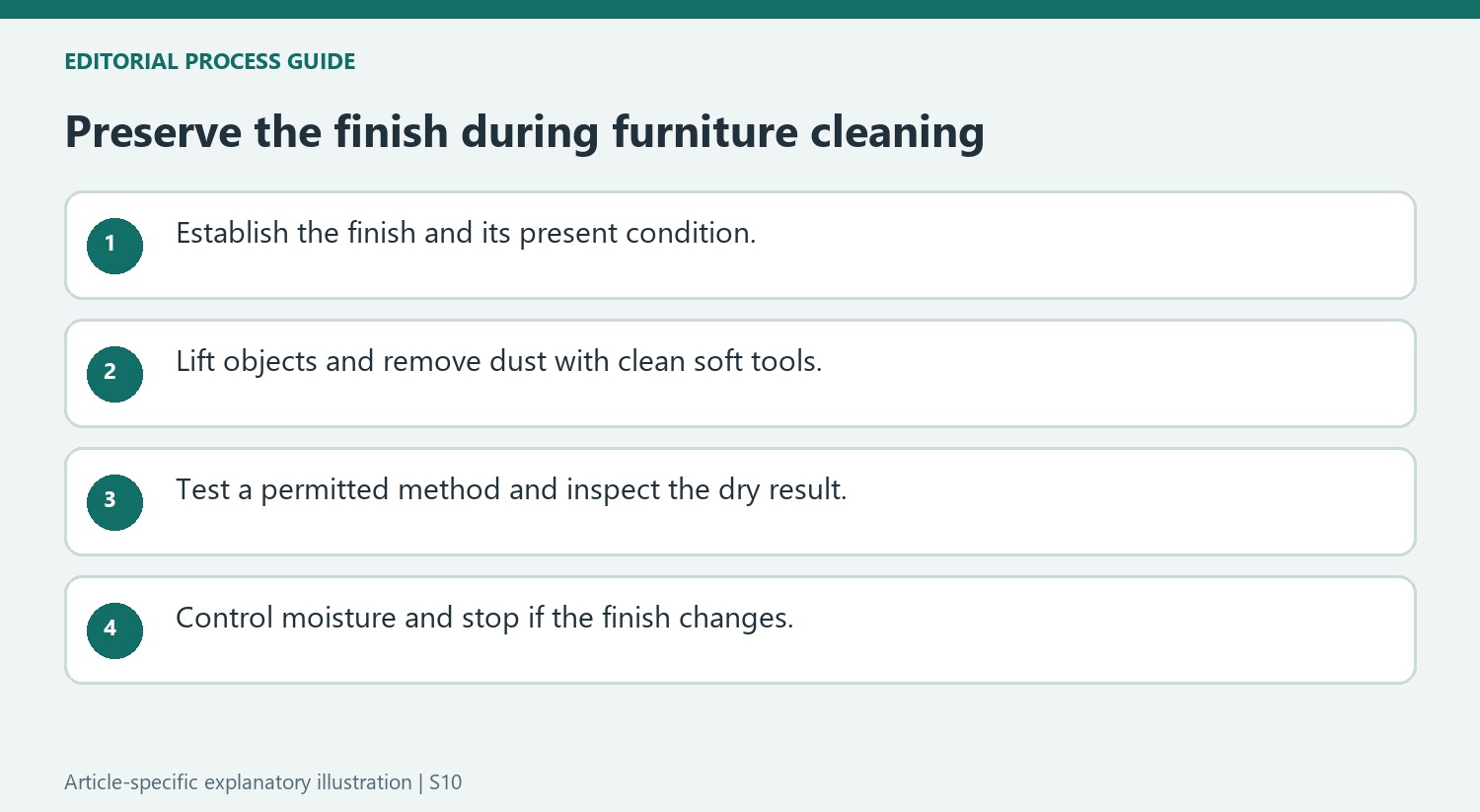
Sealed and unfinished wood react differently to moisture, and the same visible species can carry different stains, varnishes, or older treatments. Begin with a permitted mild method on a hidden area, let it dry, and inspect for changes before treating more. Do not use stronger solvents or abrasive stain recipes simply because a gentle wipe leaves a mark; the discoloration may involve the finish rather than removable dirt. Antique, uncertain, or damaged pieces may need specialist assessment. Preventive measures such as suitable coasters, careful placement, and prompt spill care reduce how often an aggressive restoration question arises.
Identify the finish as well as the wood
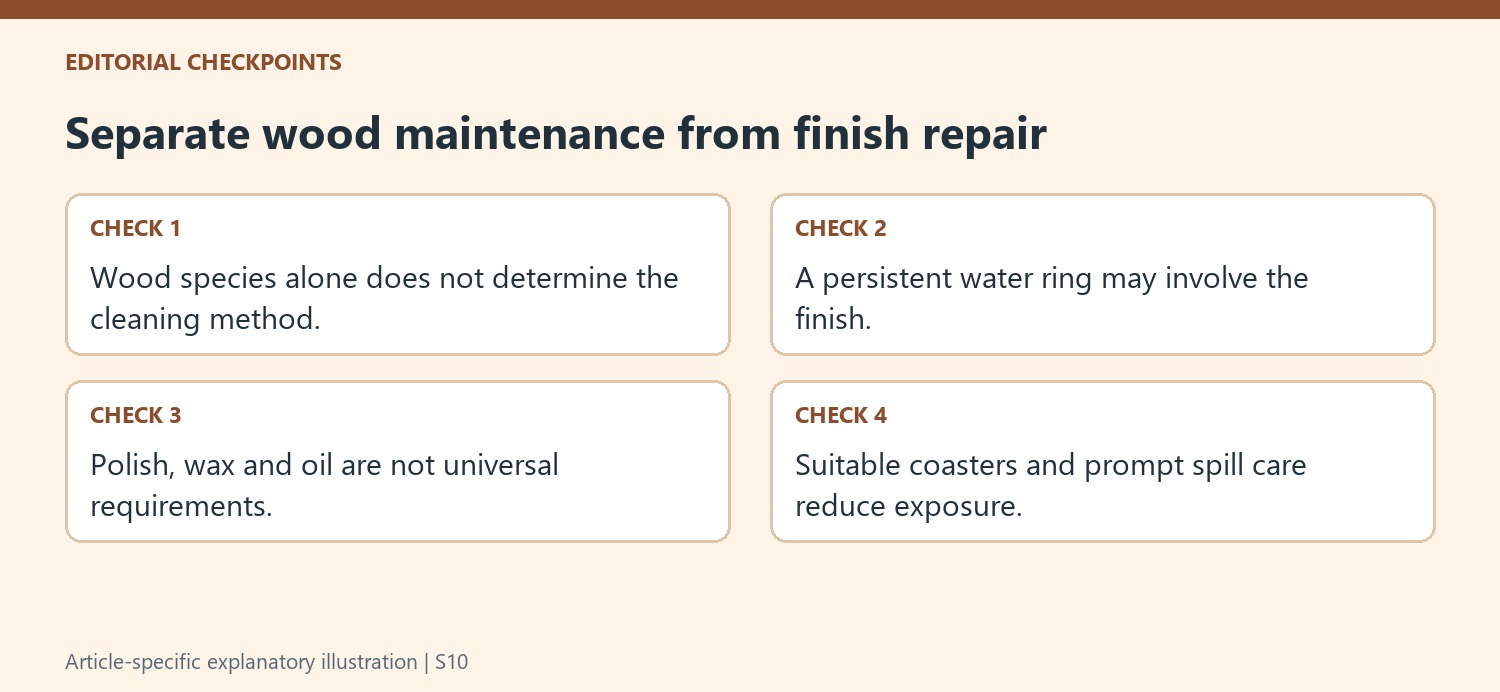
The Real Simple guide emphasizes that care varies with the furniture's surface treatment. Knowing the wood species or stain color alone does not establish whether the piece is sealed, unfinished or coated with a delicate older finish. Ask the manufacturer or seller for care information when possible, particularly before introducing a cleaner the furniture has not previously encountered.
Consider the condition of the finish as well as its original description. A worn edge or damaged patch may respond differently from an intact tabletop. Where the method is permitted, test discreetly and inspect the dry result before extending treatment. Stop if the cloth picks up finish or the area changes in color, sheen or texture.
Remove dust without turning it into an abrasive
Take objects off the surface so the cleaning tool can reach the whole area. Lift decorations and lamps instead of dragging them through dust. Use suitable soft, clean materials, and replace a dirty section of cloth rather than continuing to move collected grit over the finish. These small preparation choices can reduce the need for stronger treatment later.
Control moisture throughout any approved damp-cleaning method. Barely damp material and prompt drying are different from wetting the furniture generously and hoping it will dry afterward. The source distinguishes sealed and unfinished surfaces, so do not carry a soap solution or conditioning product from one piece to another without checking that each permits it.
Treat persistent marks as a reason to reassess
A water ring, sticky patch or change in color may involve more than loose surface dirt. Repeated cleaning with increasing pressure or stronger solvents can move the task from maintenance into damage or finish removal. When the material, finish or cause remains uncertain, appropriate specialist guidance is more useful than a succession of improvised remedies.
Preventive care also belongs in the routine. Suitable coasters and protective placement can reduce direct contact with spills and heat, while prompt attention to fresh liquid limits unnecessary exposure. Keep furniture away from unsuitable environmental conditions identified by its maker. Polishes, waxes and oils are not interchangeable necessities for every wooden item; select them only when appropriate for the actual finish. The aim is to preserve a serviceable surface rather than continually chase a particular shine through additional products.
References
- How to Clean Wood Furniture With Dish Soap to Make It Look Brand New. Real Simple; Caylin Harris.
Real Simple explains that wood species, stain and protective finish vary, so a cleaner should first be tried on an inconspicuous area. Its dish-soap example uses a small hidden section to check that the finish is not removed. A successful test on one piece does not establish compatibility with all wooden furniture.


Leave a Comment
Comments (0)