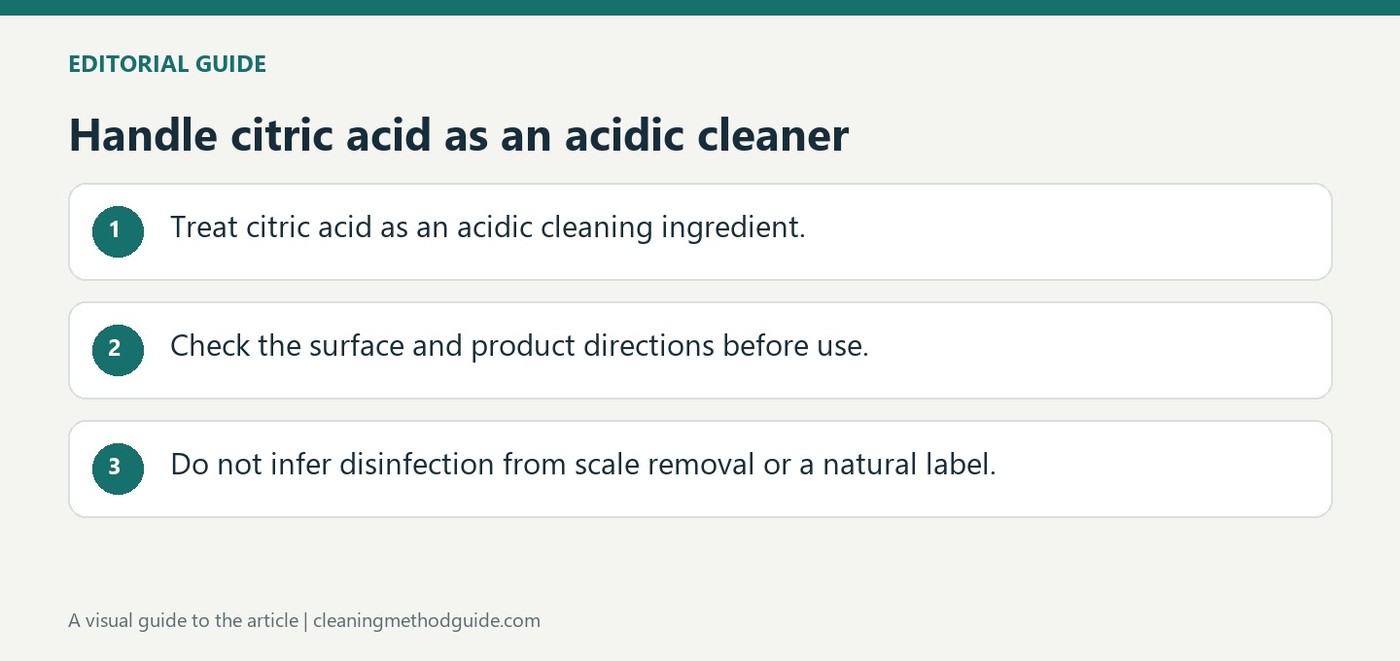
Protect against powder and splashes
The Spruce explains that powdered citric acid can irritate the eyes, skin and airways, despite its familiar occurrence in citrus fruit. Its guide calls for skin and eye protection and appropriate ventilation. Avoid creating airborne powder, and follow the product's instructions rather than assuming a food-related ingredient needs no cleaning precautions.
Check compatibility before expanding the job
The article advises testing a hidden area if surface stability is uncertain. Acidity useful against some deposits can be inappropriate for vulnerable finishes. Use one supported method and do not combine citric acid with incompatible cleaning products. The material, concentration and handling instructions matter more than whether a cleaner is described as natural.
Keep food familiarity separate from powder handling
Citric acid occurs in familiar foods, but a cleaning powder presents a different concentration and exposure route. The guide notes irritation risks from airborne dust and contact with eyes or skin. Measure and handle the labeled product in a way that avoids unnecessary dispersal, provide appropriate ventilation, and use the protection required by its instructions. Identify any prepared cleaning solution clearly and store it away from food and children.
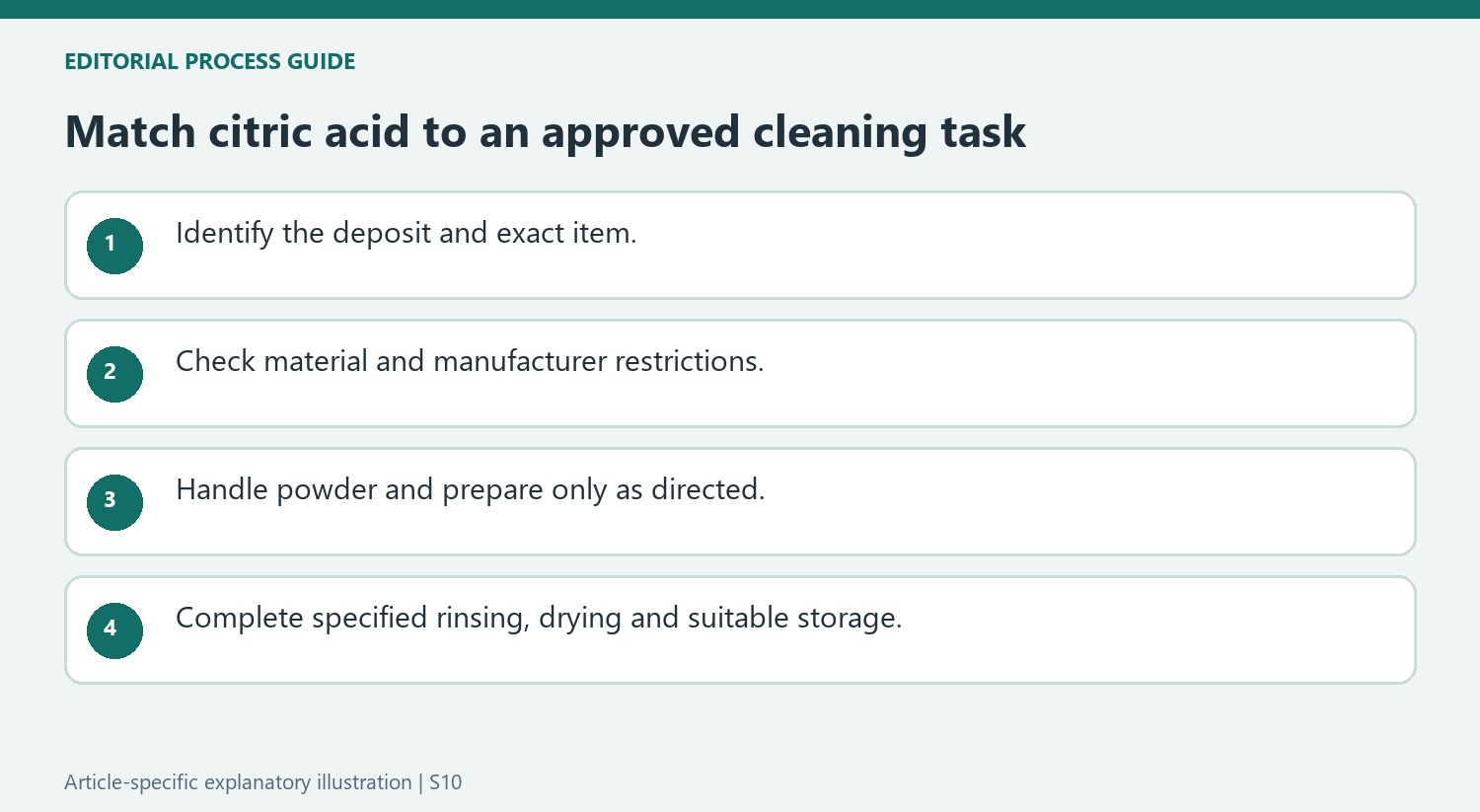
Check the appliance or surface before descaling
The source lists examples from kettle deposits to glass and other household surfaces. Those examples are prompts to check the relevant manufacturer's approved method, not proof that every coffee machine, metal finish, or stone tolerates an acidic treatment. A spot test is useful only after compatibility has been established in principle. Follow any required dilution, rinse, and drying steps and keep the acid separate from incompatible cleaners such as bleach. The cleaning properties described should not be expanded into an unsupported universal sanitizing claim. Use a separately appropriate labeled procedure when the task requires disinfection rather than ordinary deposit removal.
Distinguish mineral deposits from other cleaning goals
The Spruce presents citric acid in a range of household applications, including descaling and removing some mineral-related buildup. Begin by identifying the deposit and the item involved. A cleaner useful for one kind of residue does not automatically address every stain, and removing visible buildup should not be described as proof that a surface has been disinfected.
The examples in a general guide are starting points for checking the actual manufacturer's instructions. A kettle, a coffee machine and a stone counter have different components and care limits. Look for an approved method for the particular item before preparing a solution. An attractive result elsewhere cannot establish that acid is appropriate for an unsealed stone or an unfamiliar finish.
Plan powder handling separately from solution use
Citric acid powder and a prepared cleaning solution present different handling situations. While measuring powder, avoid creating airborne dust and follow the product's requirements for ventilation and personal protection. Familiarity with the ingredient in food does not remove the eye, skin or airway precautions applicable to a concentrated cleaning product.
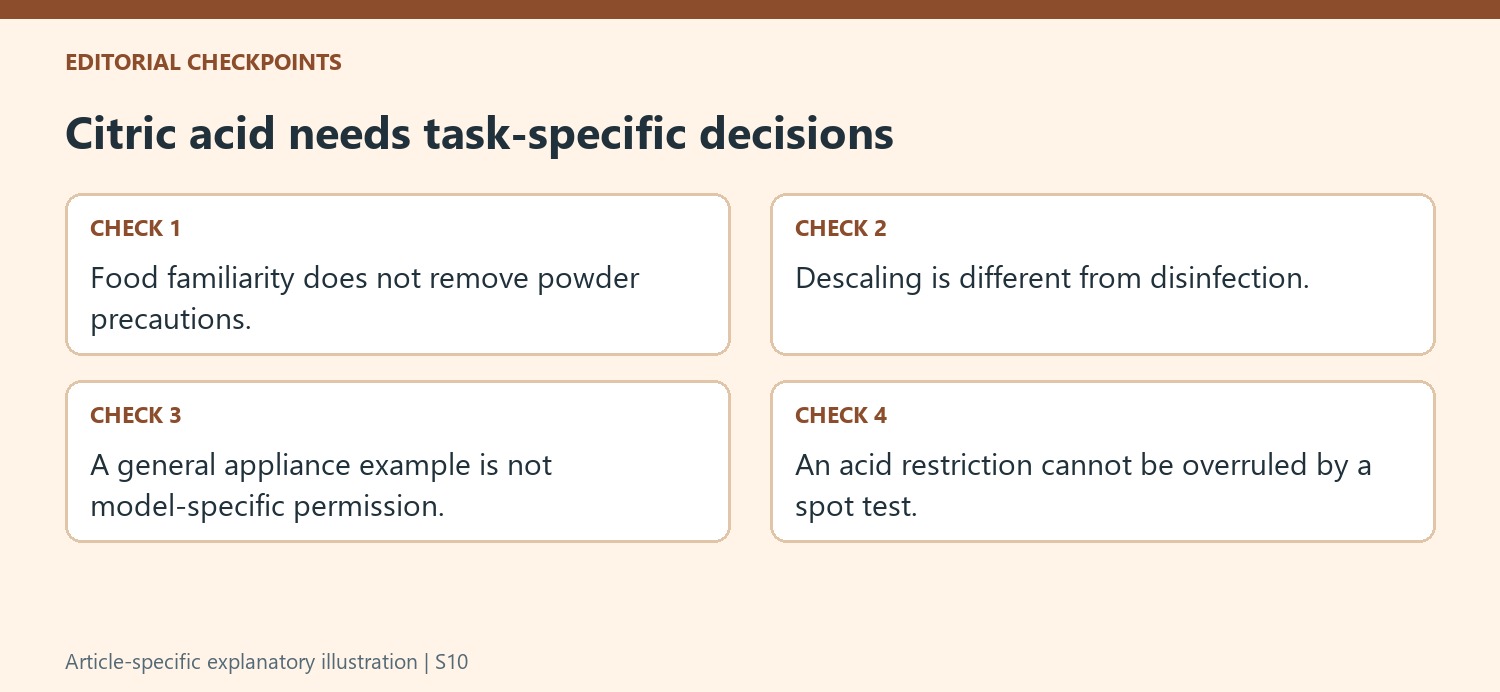
Use identifiable equipment and a suitable labeled container for any preparation allowed by the instructions. Keep cleaning materials separate from food handling, and store the product away from children. Do not assume that every powder sold for cleaning is intended for cooking, or place an unidentified solution where another person could mistake it for a beverage or an ordinary water spray.
Finish according to both the product and the material
Concentration, application time and any required rinsing belong to the supported procedure. Avoid adopting a universal household ratio when the item or product specifies something different. Even a concealed test should follow an initial compatibility check; it cannot overrule a clear instruction excluding acidic cleaners from the surface.
Keep citric acid separate from bleach and other incompatible cleaning treatments, including residues already present in the work area. Complete any specified removal, rinsing and drying before returning the item to normal use. The practical value of the ingredient lies in selecting a suitable task and following a complete method. Its natural occurrence and familiar name should not be turned into claims that every application is harmless or that it replaces a labeled disinfectant when disinfection is actually required.
References
- How to Clean With Citric Acid Safely and Efficiently. The Spruce; Mary Marlowe Leverette.
- When and How to Clean and Disinfect Your Home. Water, Sanitation, and Environmentally Related Hygiene (WASH).
The Spruce explains that powdered citric acid can irritate the eyes, skin and airways, despite its familiar occurrence in citrus fruit. Its guide calls for skin and eye protection and appropriate ventilation. Avoid creating airborne powder, and follow the product's instructions rather than assuming a food-related ingredient needs no cleaning precautions.


Leave a Comment
Comments (0)