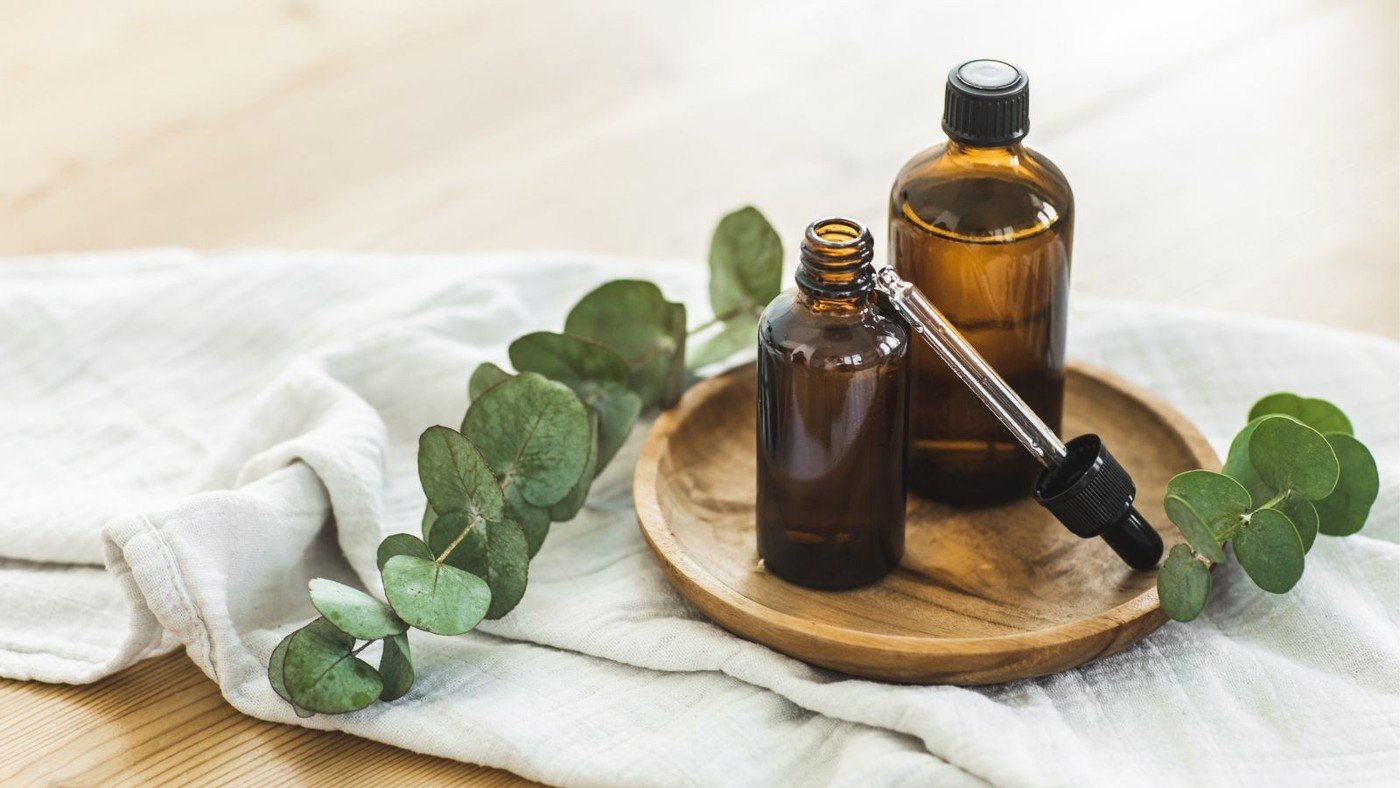
Homes & Gardens' essential-oil feature identifies label reading and dilution as common points of failure. Oils vary in composition, and their presence in a homemade mixture does not automatically improve its cleaning performance or suitability.
Never add oils to bleach or other formulated cleaners, and do not assume an organic label makes them harmless around pets or children. Check surface compatibility and appropriate guidance before any intended use. Keep concentrated products securely stored, avoiding improvised recipes that replace clear cleaning instructions with an appealing scent.
Keep fragrance and cleaning performance as separate decisions
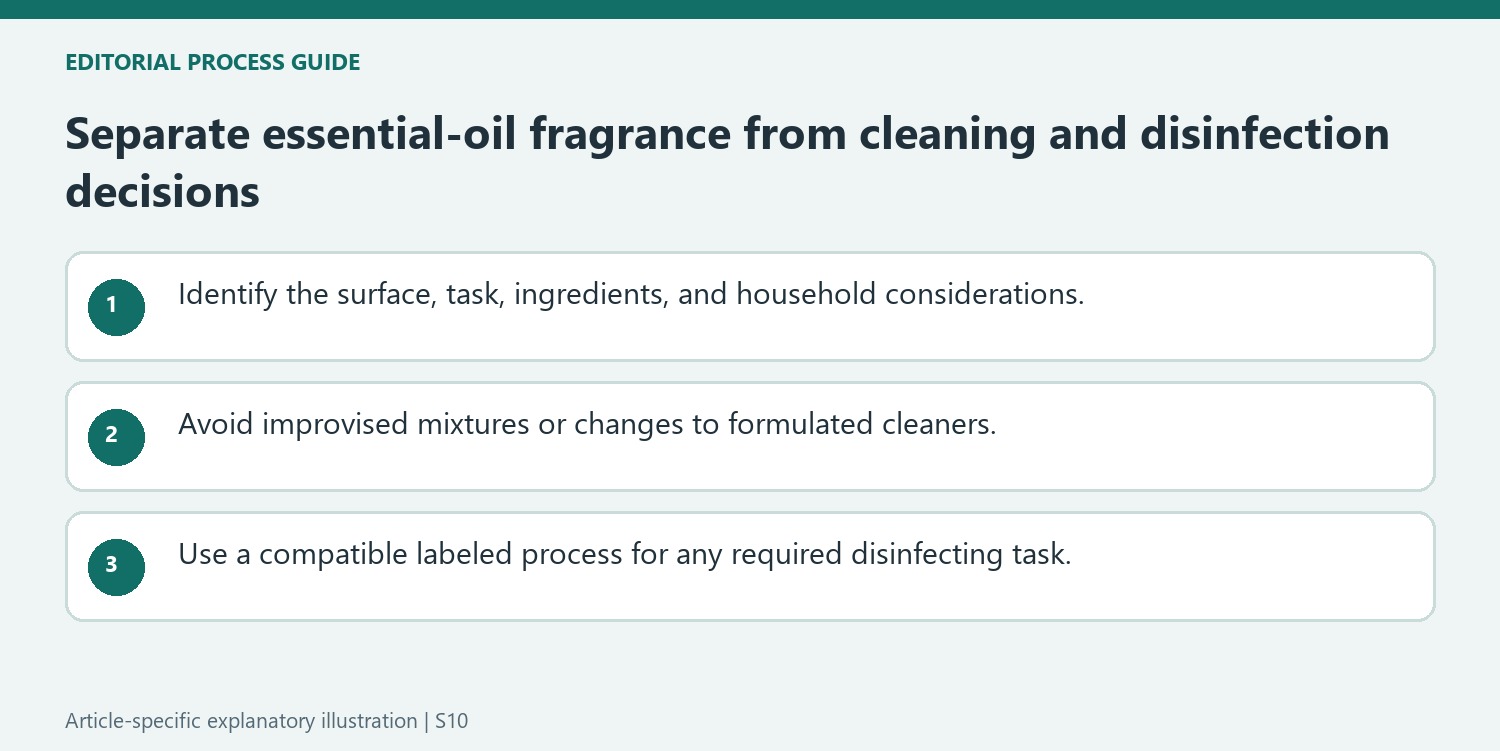
The feature notes that oils vary in strength and purpose and that relying on them alone is a mistake. A pleasant smell does not demonstrate soil removal, compatibility, or a tested disinfecting effect. Read the actual ingredients and intended use, and consider the people and animals in the household. An organic label does not make a concentrated oil suitable for every species, age group, or surface.
Do not use shaking as proof of a reliable formulation
Oil and water do not naturally form a uniform stable mixture, a point the reference discusses. That is a reason to question an improvised spray rather than assume an arbitrary amount becomes a validated cleaner after shaking. Avoid adding oils to bleach or other commercial products and keep concentrated supplies clearly identified and securely stored. For an intended surface-cleaning task, choose a compatible labeled method; for a specific disinfection need, use the appropriate tested product guidance. Check restrictions for coatings, stone, textiles, and equipment rather than selecting by scent. This keeps the article's fragrance suggestions distinct from claims that require stronger evidence and controlled use.
Choose the cleaning purpose before choosing a scent
The source discusses essential oils in cleaning, but fragrance, soil removal, and disinfection are different outcomes. Identify the surface and actual job first, then select a compatible labeled method with the needed purpose. A bottle described as pure or organic does not establish that it is safe for every person, animal, surface, or application. Review the ingredient and intended-use information instead of relying on a natural image or a preferred smell. Concentrated oils require appropriate handling and secure storage. If the intended task is cleaning a counter, the decision should start with that counter's care requirements rather than a desire to use up an oil already in the cupboard.
Do not turn an unstable mixture into a performance claim
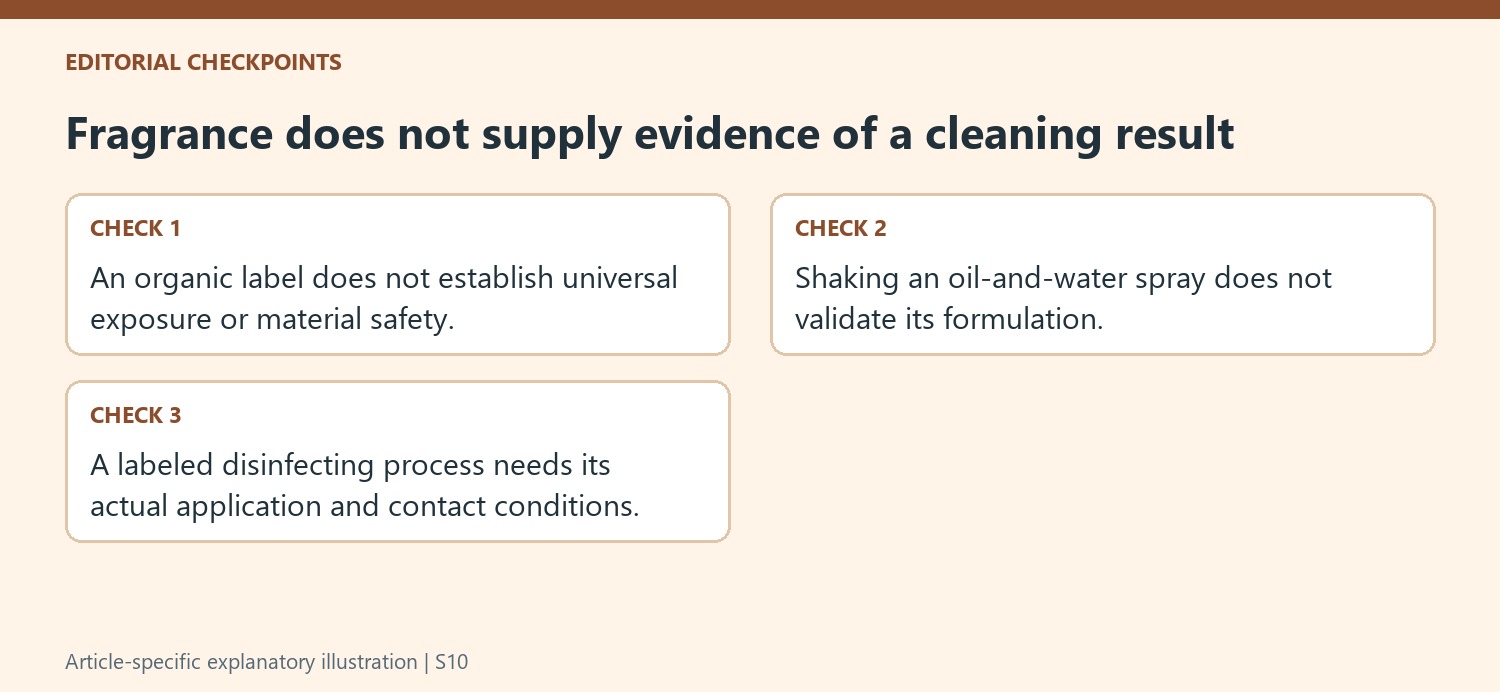
The article notes that oil and water do not naturally form a stable uniform mixture. That observation should prompt caution about arbitrary homemade recipes, not a promise that briefly shaking a spray validates its dose or cleaning action. Adding a few drops of soap also does not provide evidence of a tested disinfectant formulation. Avoid adding oils to bleach, ammonia products, or other commercial cleaners; follow formulated products without changing their ingredients. Surface compatibility includes coatings, textiles, porous materials, and nearby equipment, not only the main area being sprayed. A small hidden trial can reveal an immediate appearance change but cannot establish every longer-term material or exposure outcome.
Use tested disinfection instructions when that is the actual need
The retained public-health reference distinguishes ordinary cleaning from a disinfecting task. Where disinfection is appropriate, choose the relevant labeled product and follow its intended surface, application, contact, and any rinsing requirements. A pleasant aroma or a laboratory description of an ingredient does not prove that a household spray achieves that result. Keep products in identifiable suitable containers and store them according to their own directions, protecting access appropriately. If fragrance is wanted separately, assess that use on its own merits rather than mixing it into a cleaner. The useful routine keeps material care, household exposure, and the evidence for any hygiene claim clear, without presenting an appealing scent as a substitute for an effective approved process. Keep fragrance choices separate from the products used for a required hygiene task, so a later user can still identify the labeled cleaner and its unchanged directions.
References
- Cleaning experts reveal the 8 essential oil cleaning mistakes including never mixing with bleach – and what to do instead. Homes and Gardens; Andy van Terheyden.
- When and How to Clean and Disinfect Your Home. Water, Sanitation, and Environmentally Related Hygiene (WASH).
Homes & Gardens' essential-oil feature identifies label reading and dilution as common points of failure. Oils vary in composition, and their presence in a homemade mixture does not automatically improve its cleaning performance or suitability.


Leave a Comment
Comments (0)