Ideal Home's cleaning-cupboard feature questions the need for several overlapping surface sprays. Reviewing what is already present can reveal duplicates and help prevent buying another bottle before the existing supply is used.
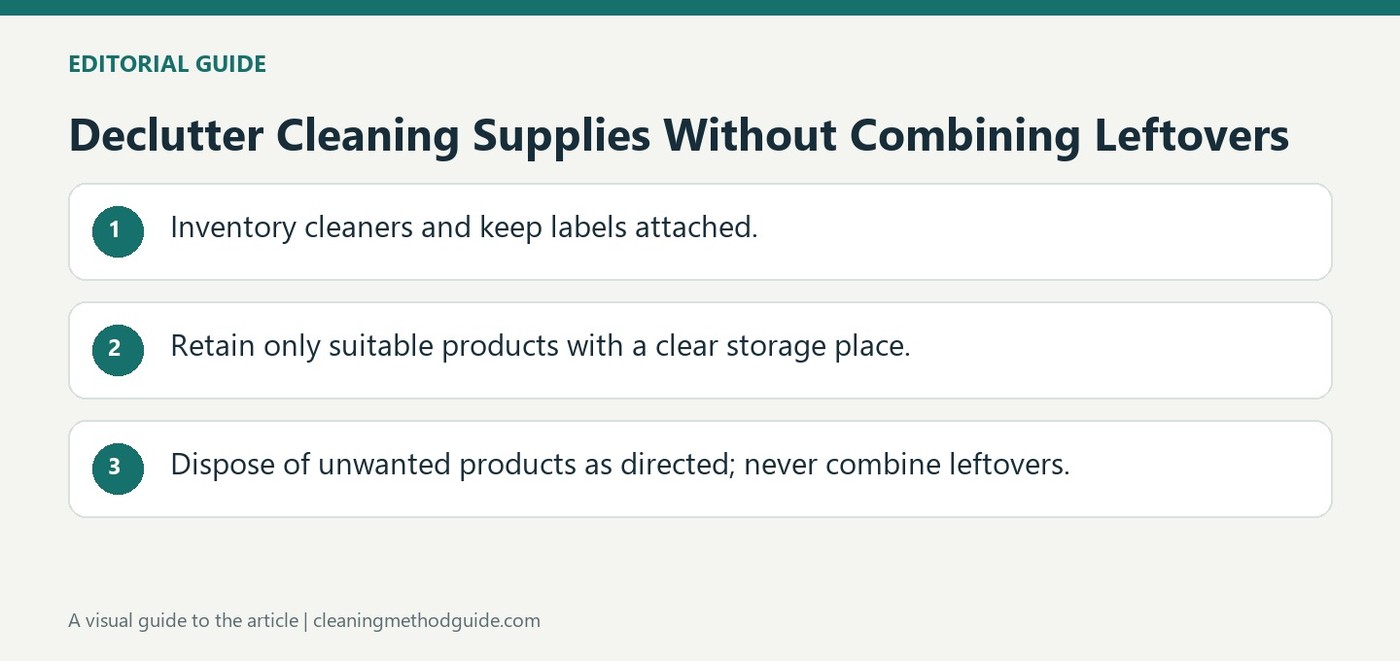
Keep products in their original containers and retain readable directions, rather than consolidating leftovers. Check condition and disposal guidance for anything no longer needed. Select a manageable set that covers the home's actual surfaces, with specialist products only where required, so a tidier cupboard also supports correct use and secure storage.
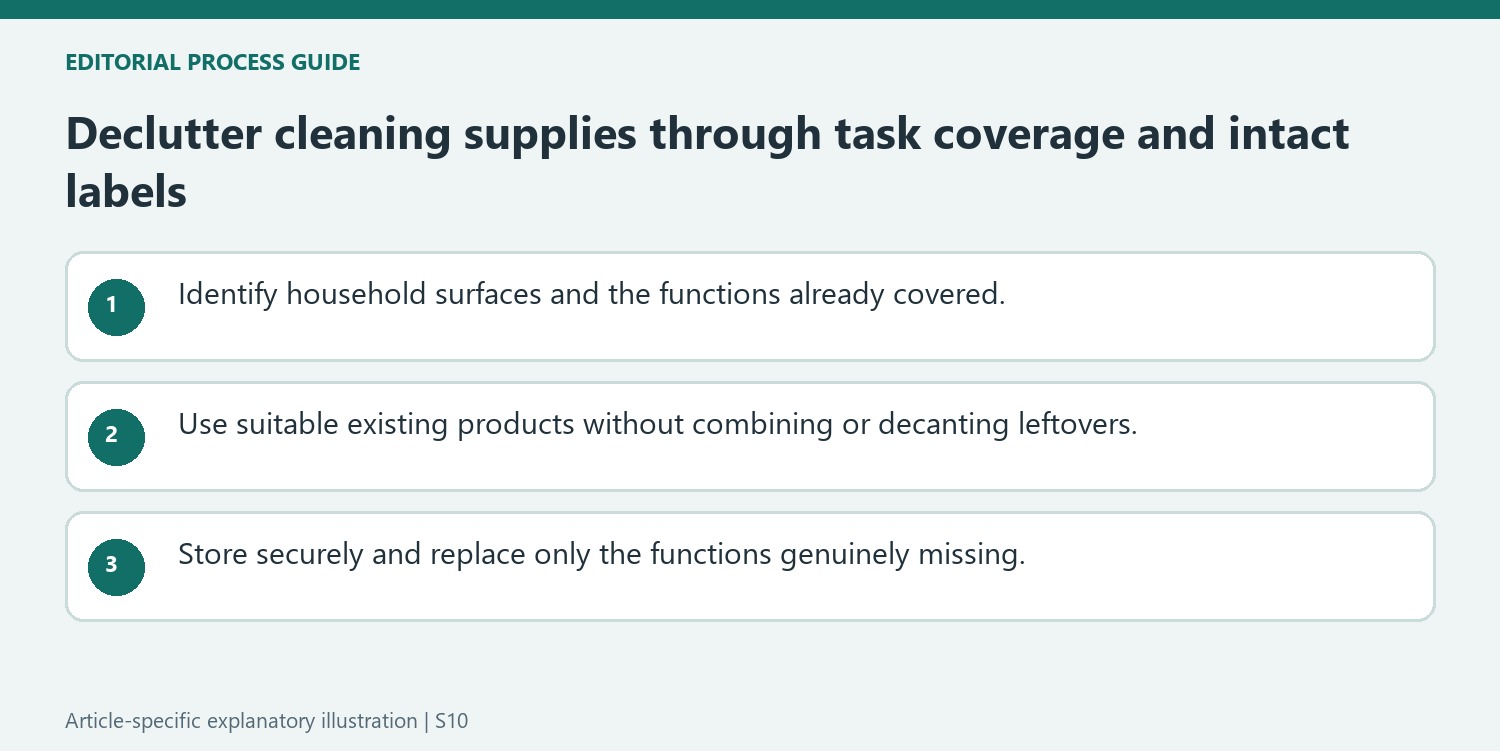
Inventory by the surface and task actually covered
The feature adapts the use-what-you-have idea of Project Pan to the cleaning cupboard. Start by identifying what each product is intended to do and whether it already covers a recurring household job. Several differently fragranced surface sprays may overlap, while a particular finish can still need a specialist product. The purpose is to reduce unnecessary duplication without throwing out a necessary cleaner merely to reach an arbitrary bottle count.
Preserve product identity while reducing the collection
Using up an appropriate cleaner does not mean combining remnants into a single bottle. That loses the label and can create an incompatible mixture. Keep original containers, check the manufacturer's shelf-life and storage guidance, and use the proper disposal route for unwanted or deteriorated supplies. Do not assess effectiveness solely by fragrance or transfer a broad shelf-life estimate to every formulation. Once the collection is manageable, store it securely and note what genuinely needs replacement. A clearer inventory can prevent impulse purchases and make instructions easier to find, which matters more than giving the cupboard an attractive but misleadingly uniform set of unmarked containers.
Map the cupboard to actual household tasks
The source adapts the idea of using products already owned before buying replacements. Start by listing the surfaces and recurring jobs in the home, then read the intended uses on the containers already present. Distinguish overlapping general sprays from genuinely necessary specialist care. A stone worktop or particular appliance may require a different cleaner even when a multipurpose bottle handles many other tasks. Do not discard a necessary product to achieve a decorative bottle count. Equally, a different fragrance or attractive label does not establish a new function. Keep a simple inventory that shows what is available, what it is for, and which item really needs replacement.
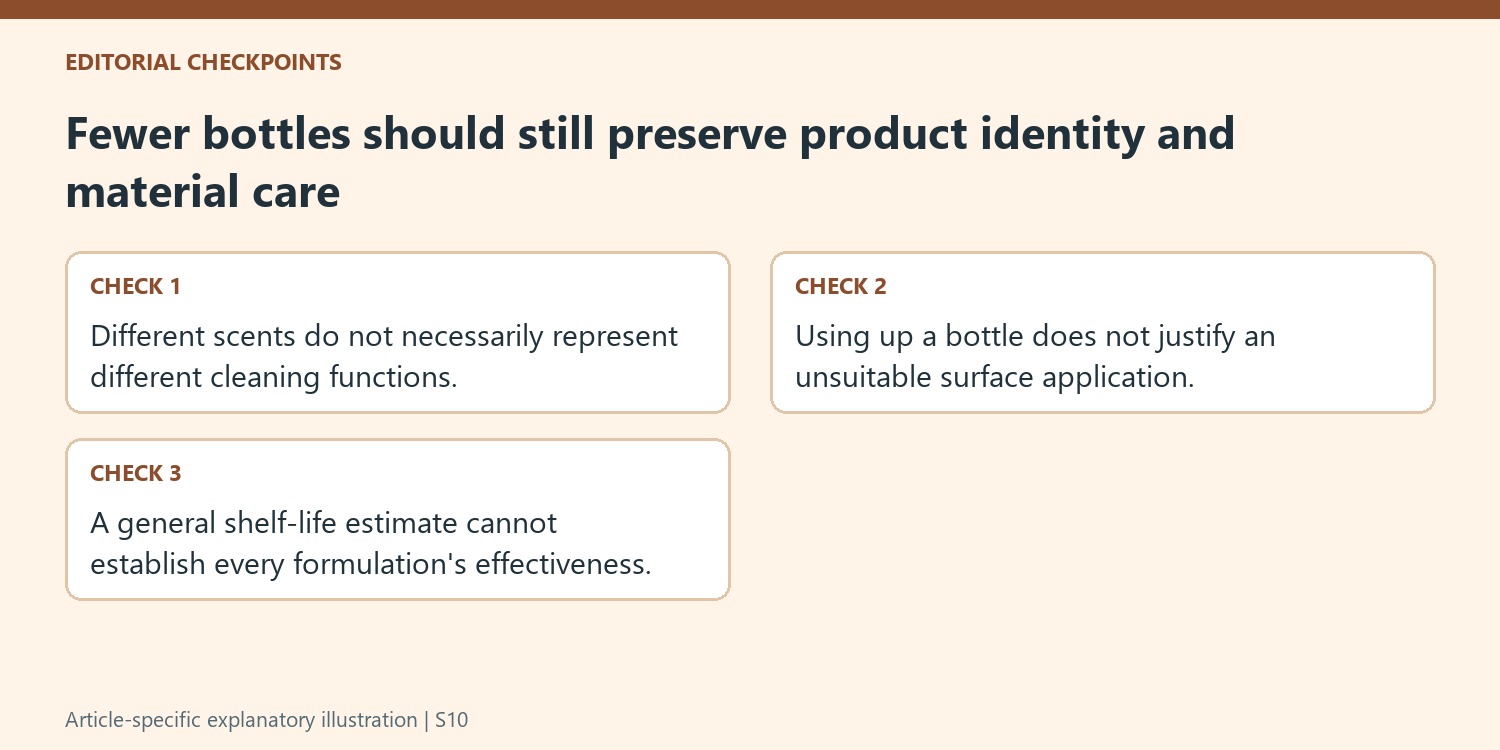
Use an existing product only where it remains suitable
A use-it-up approach should not mean applying an unsuitable cleaner to a surface just to empty the bottle. Confirm the intended application, condition, and manufacturer guidance before the next use. Keep original directions, warnings, and product identity readable. Never pour remnants together to reduce the number of containers, even when their colors or scents seem similar. A combined mixture may be incompatible and no longer has accurate instructions. If a container has deteriorated or its contents are unwanted, follow the relevant disposal route rather than emptying it somewhere convenient. A general shelf-life estimate quoted in the source cannot identify the current effectiveness of every specific formulation.
Reset storage to make the next correct choice easier
Return the manageable collection to an appropriate secure location, separating incompatible products as their labels require. Group by useful task where that helps access, but avoid placing everything in one crowded caddy that hides labels or strains handles. Keep cleaning tools suitable for their own care and distinguish them from chemical containers. Record products that should be used next through permitted tasks and stop purchasing duplicate fragrances while those functions are already covered. Review the inventory periodically and when the home's materials change. The practical benefit is less unnecessary buying and clearer access to correct instructions, not a claim that every home can be cleaned with one bottle or that a uniformly styled cupboard is inherently a safer one. A replacement list can name the surface and task rather than a preferred scent, making the next purchase easier to assess against the supplies that remain.
References
- Do your cleaning products need a declutter? Experts weigh in on what you really need to clean your home. Ideal Home; Kezia Reynolds.
Ideal Home's cleaning-cupboard feature questions the need for several overlapping surface sprays. Reviewing what is already present can reveal duplicates and help prevent buying another bottle before the existing supply is used.


Leave a Comment
Comments (0)