Use the chair's code to restrict the options
The Spruce's chair-cleaning guide separates W, S, W-S and X upholstery codes. Water-based treatment is not suitable for every fabric, and X-code material should not receive an ordinary home cleaning product. Follow the code and product directions before deciding what to test on a concealed area.
Remove loose soil without spreading the stain
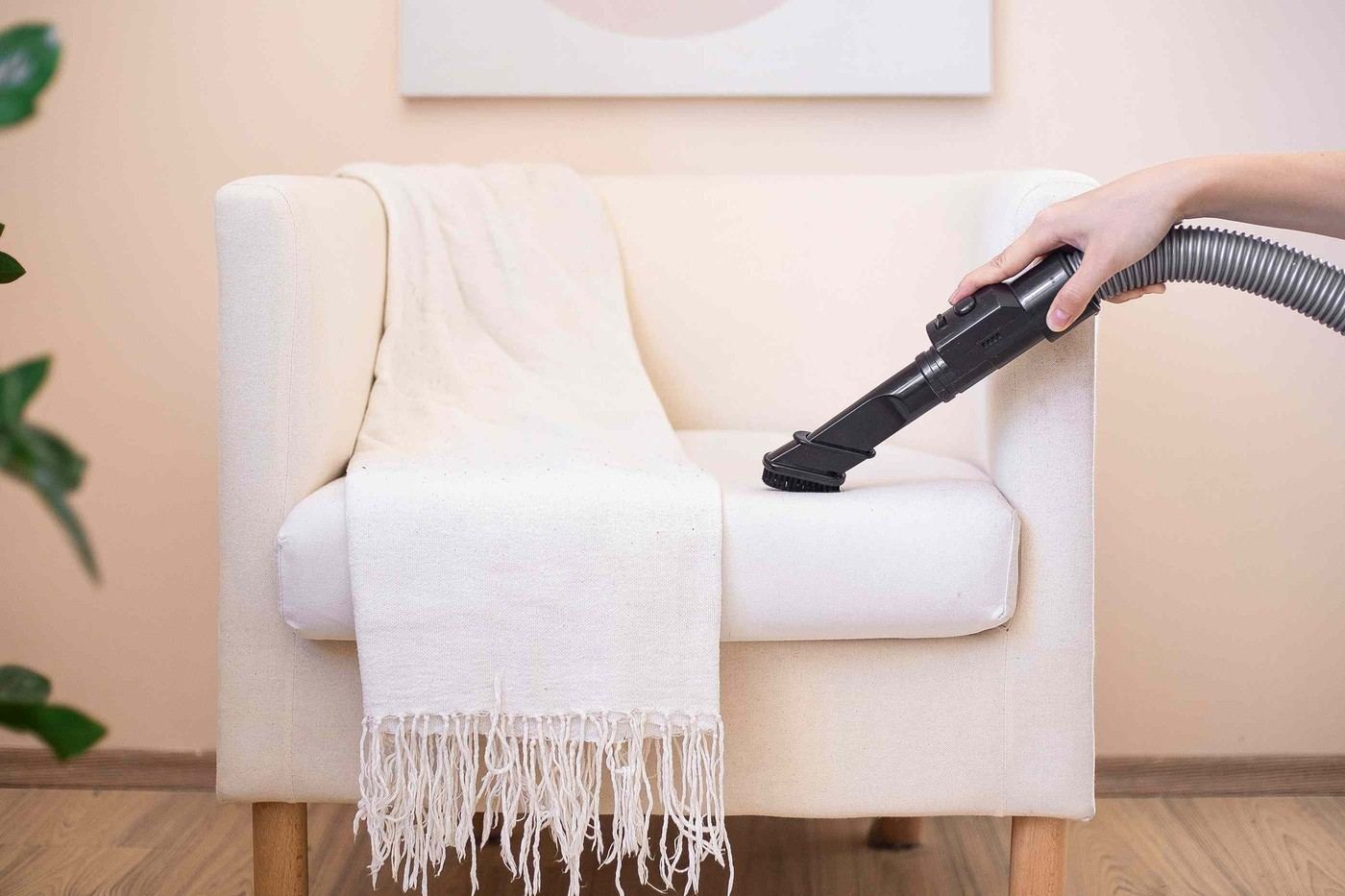
The article recommends vacuuming with appropriate upholstery tools and blotting spills rather than rubbing them deeper into the fabric. A controlled compatibility test helps identify a damaging cleaner before it reaches a large visible section. Solvent methods also require ventilation and no open flames. Avoid soaking the chair, and get professional advice when the material's care requirements cannot be established confidently.
Deal with the spill without rubbing it deeper
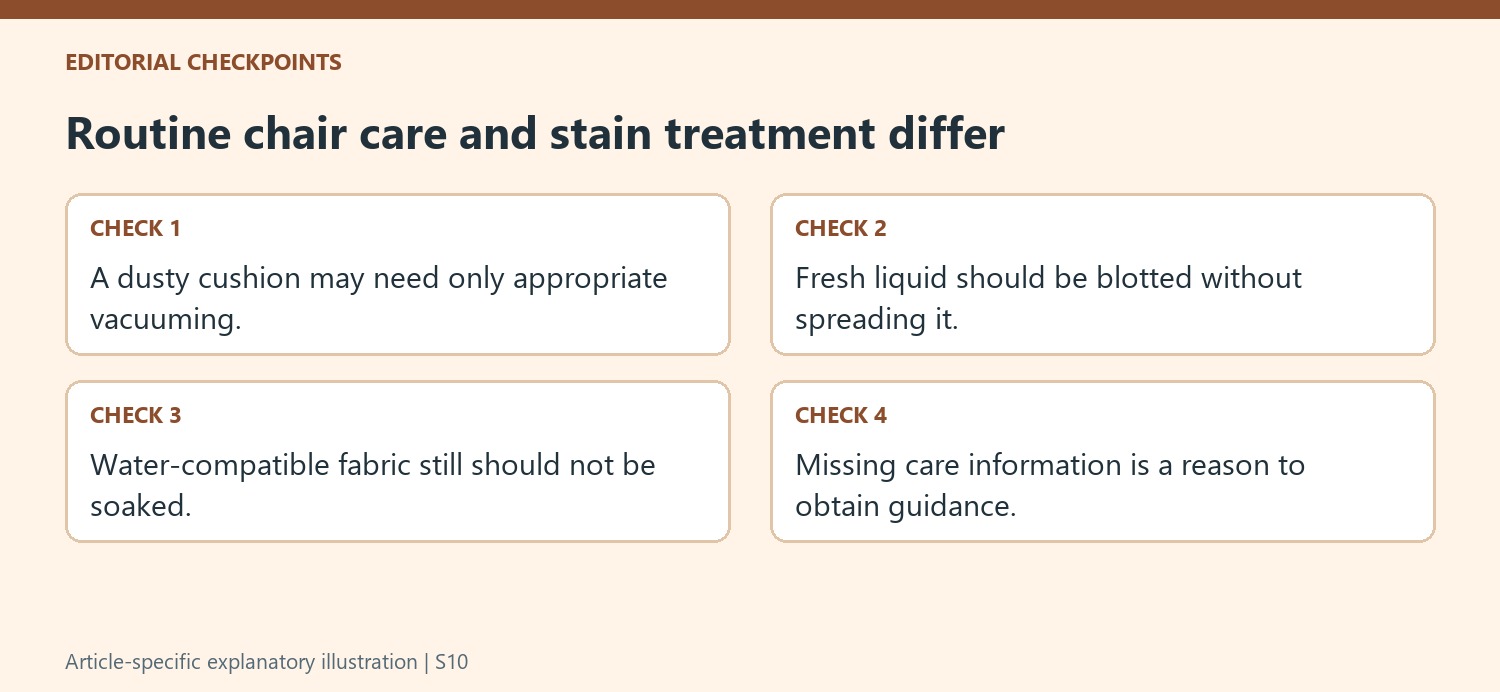
The chair-cleaning guide recommends removing loose solids carefully and blotting liquids so they transfer into a clean absorbent material. Scrubbing a fresh spill can spread it and push it into the upholstery. Once the immediate liquid is lifted, identify the chair's care code and the type of stain before choosing a product. A general cleaner that works on a dining table is not automatically suitable for the fabric beside it.
Include residue removal and complete drying
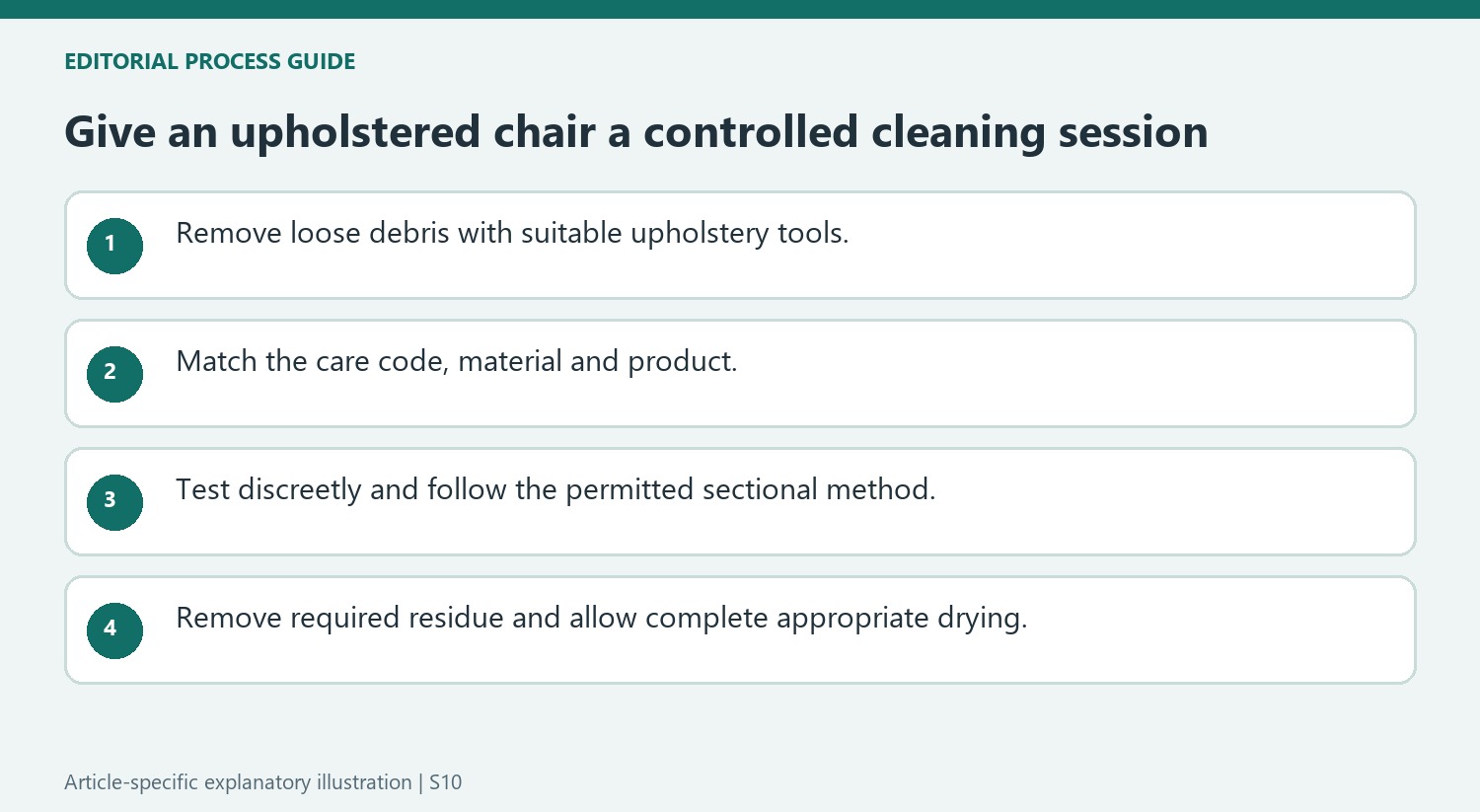
For an approved water-based treatment, the source stresses controlled dampness, working in sections, and removing the cleaning residue because detergent left in fibers can attract more soil. That does not mean saturating the chair or its wood and metal parts. For solvent-only upholstery, use the product instructions or a professional service instead. Allow the permitted hidden test to dry before judging color and texture, then stop if either changes. After any suitable treatment, let the chair dry fully before use without improvised direct heat. Regular vacuuming and suitable washable arm covers can reduce the need for more intensive treatment later.
Use routine vacuuming to define the remaining problem
The Spruce recommends reaching the chair's back, sides and cushion spaces rather than cleaning only the part used for sitting. Where cushions detach, check both sides and the area beneath them. Use tools appropriate to the fabric, and handle the chair safely instead of tipping a heavy or unstable piece merely to follow a general cleaning sequence.
Removing loose debris first reduces the amount that can be pushed around during later treatment. It also helps distinguish surface dust from a localized stain or an area affected by body oils. That distinction matters because a whole-chair cleaning session is not necessarily required every time a small patch looks dull or a few crumbs collect beside the cushion.
Keep the chosen method within the chair's limits
A care code narrows the available methods, but the product still needs to be suitable for the actual material and used according to its own directions. The guide includes separate approaches for water-compatible and solvent-only fabrics. Do not combine them into one universal recipe or treat permission for a water-based product as permission to soak the upholstery.
Apply the same care around components beside the fabric. Wood, metal and decorative trim may have their own restrictions. Work in manageable sections when the supported procedure calls for it, controlling moisture and removing residue as directed. A small hidden test is most useful when it represents the intended product and method and is allowed to dry completely before the result is judged.
Make drying part of the available cleaning time
A chair that feels damp after treatment is not ready for ordinary use merely because the stain is less visible. The source recommends absorbing excess moisture and allowing appropriate air drying while avoiding improvised direct heat. Plan the task so the chair can remain unused for the necessary period, and follow any additional solvent precautions when that method applies.
Preventive measures should also fit the furniture. Suitable washable covers on arms or headrests can make frequently soiled areas easier to maintain, while prompt blotting of spills limits unnecessary spreading. Do not add a fabric treatment automatically just because a general guide mentions one; check the maker's care instructions first. When a tag is missing or a test produces an uncertain result, pause for guidance instead of repeating different formulas across the chair.
References
- Freshen Up Your Upholstered Chairs With a Good Cleaning. The Spruce; Mary Marlowe Leverette.
The Spruce's chair-cleaning guide separates W, S, W-S and X upholstery codes. Water-based treatment is not suitable for every fabric, and X-code material should not receive an ordinary home cleaning product. Follow the code and product directions before deciding what to test on a concealed area.


Leave a Comment
Comments (0)