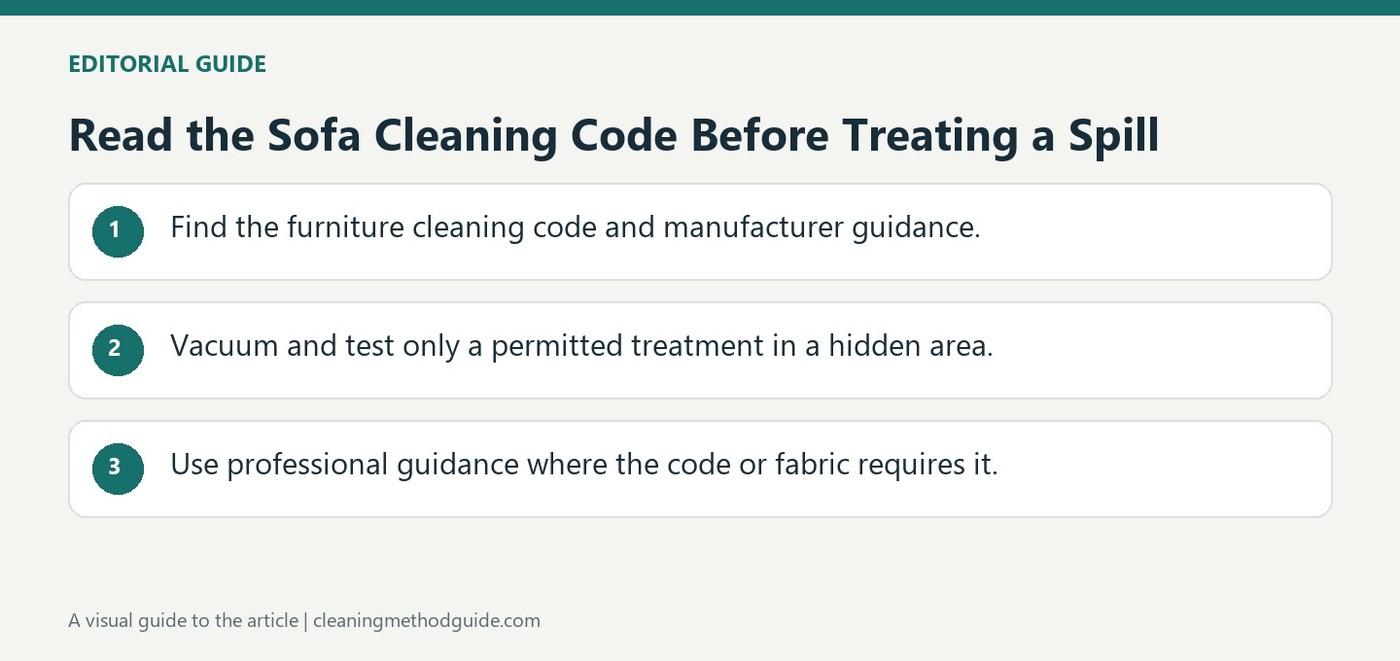
A fabric sofa's care label determines which cleaning approach is suitable. W generally permits water-based products, S calls for an appropriate solvent cleaner, W/S allows either approved type and X indicates vacuuming or brushing only. Consult the maker if the guidance is unclear.
Blot a spill with a clean absorbent cloth instead of rubbing it deeper or damaging the fibers. Use only a compatible treatment, test discreetly and avoid soaking the cushioning. Persistent stains on sensitive upholstery are a reason to seek professional advice.
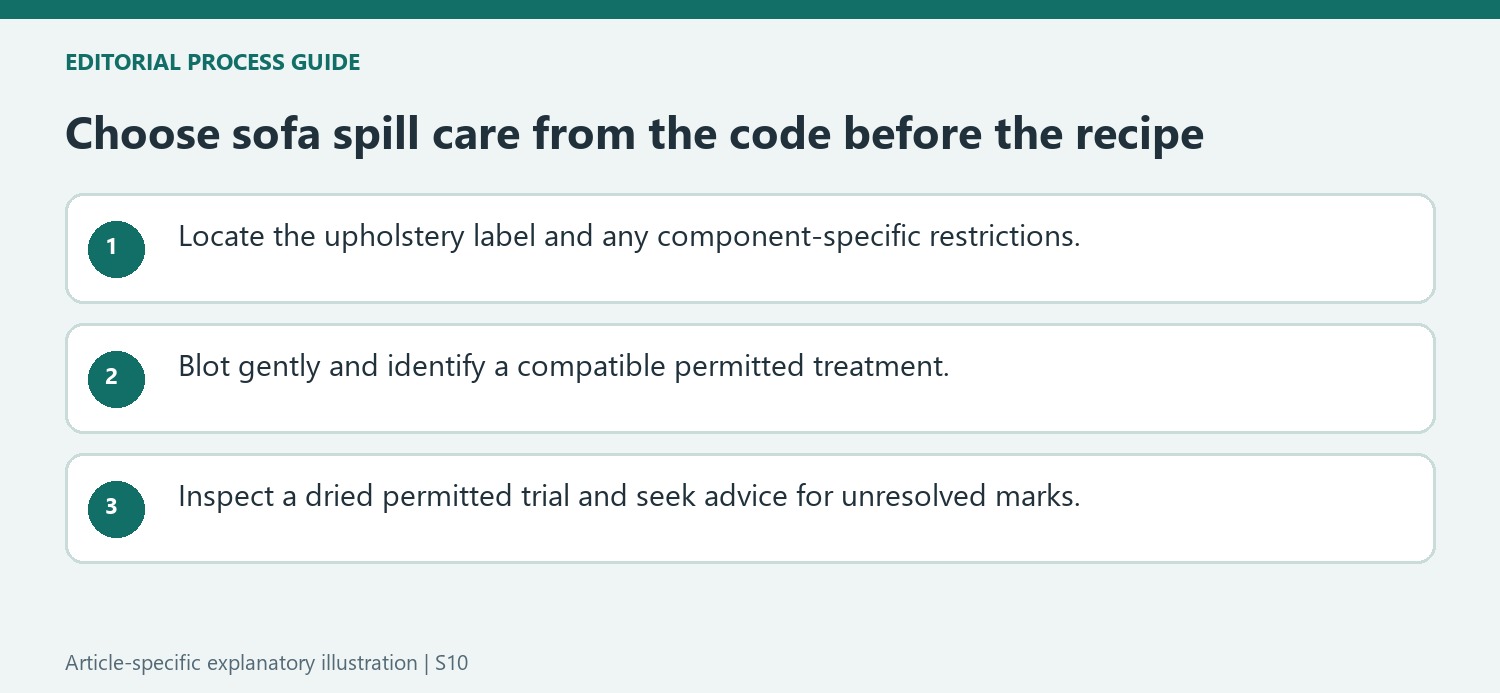
Remove loose soil before considering a stain treatment
The source separates vacuuming crumbs and pet hair from removing a set-in spill. Use the sofa's suitable upholstery attachment and inspect the tag before introducing a liquid or solvent. Blot a fresh spill with a clean absorbent material, moving to a clean area as it takes up moisture. Rubbing can spread the stain or roughen fibers, so increased pressure is not a useful default response to a stubborn mark.
Treat the examples as conditional rather than universal recipes
Sabrina Fierman's advice in the feature discusses why some commonly suggested cleaners leave residue or cause discoloration. Its later stain examples still require the sofa's own material and cleaning-code approval. A product described as effective for wine does not automatically suit an S-code or X-code fabric, and a hidden test cannot override an explicit restriction. Let any permitted test dry and inspect the color and texture before extending treatment. Avoid saturating cushion filling and do not combine products to pursue a faster result. If the care instructions or stain remain uncertain, seek the maker's or an upholstery professional's advice before changing the visible fabric permanently.
Find the instructions for the whole upholstered item
The source begins with the manufacturer's cleaning code, which is more useful than a stain recipe selected only because it worked on another sofa. Locate the label and any additional directions for the particular upholstery, cushion covers, and filling. W, S, W/S, and X identify broad permitted approaches, but the maker may add restrictions or recommend professional treatment. A removable cover is not automatically machine washable. If the code is absent or uncertain, obtain the relevant advice before applying liquid or solvent. Keep the information available for other household members so an urgent spill does not lead to several people applying incompatible products in succession.
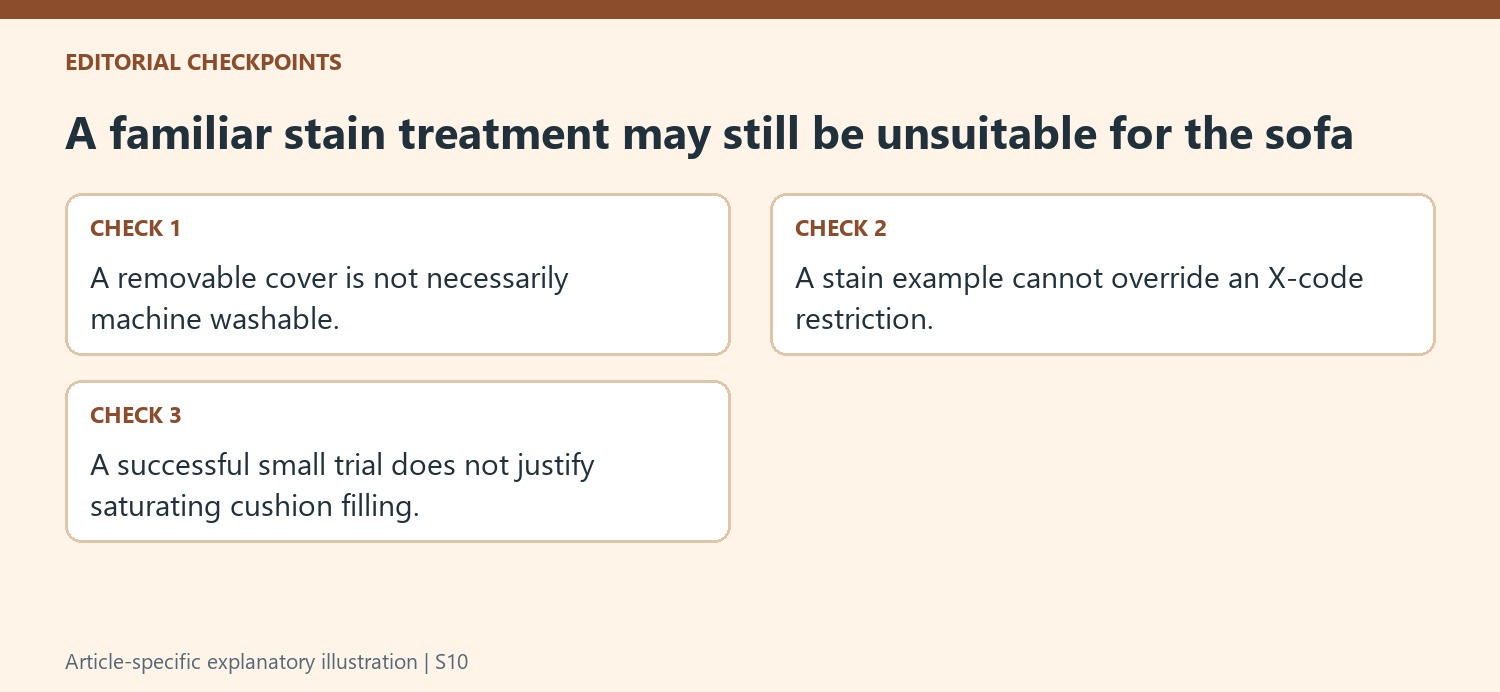
Separate immediate absorption from the later treatment choice
Blot a fresh spill gently with a suitable clean absorbent cloth, moving to a clean area as it takes up liquid. Avoid adding dye from a colored tool or spreading the mark through hard rubbing. Remove loose crumbs and other dry debris through the permitted upholstery attachment rather than working them deeper into a damp patch. Next, identify the stain if possible and check any proposed product against the care instructions. The source's later beverage, chocolate, gum, and blood examples remain conditional; their presence in a feature does not override an X-code restriction or make peroxide suitable for every colored fabric. Do not combine products in pursuit of a faster result.
Judge a permitted trial after it has dried
Where the instructions allow a test, use an inconspicuous appropriate area and inspect the dried color and texture before extending treatment. A wet patch may hide an appearance change, and a successful small trial is not permission to saturate the sofa's filling. Follow the cleaner's removal and drying directions, keeping the area unavailable until ready for normal use. If a mark persists, the fabric changes, or the permissible method is uncertain, consult the maker or an upholstery professional rather than increasing pressure or concentration. Explain the substance and any treatment already used. The practical goal is to address the spill while preserving the actual upholstery, not to guarantee that every household stain can be removed through the same convenient recipe. Keep the care code and product history accessible for follow-up, particularly if an unresolved mark will be assessed professionally.
References
- 6 cleaning methods you should never use on a fabric couch – and 5 simple ones that work. Homes and Gardens; Ruth Doherty.
A fabric sofa's care label determines which cleaning approach is suitable. W generally permits water-based products, S calls for an appropriate solvent cleaner, W/S allows either approved type and X indicates vacuuming or brushing only. Consult the maker if the guidance is unclear.


Leave a Comment
Comments (0)