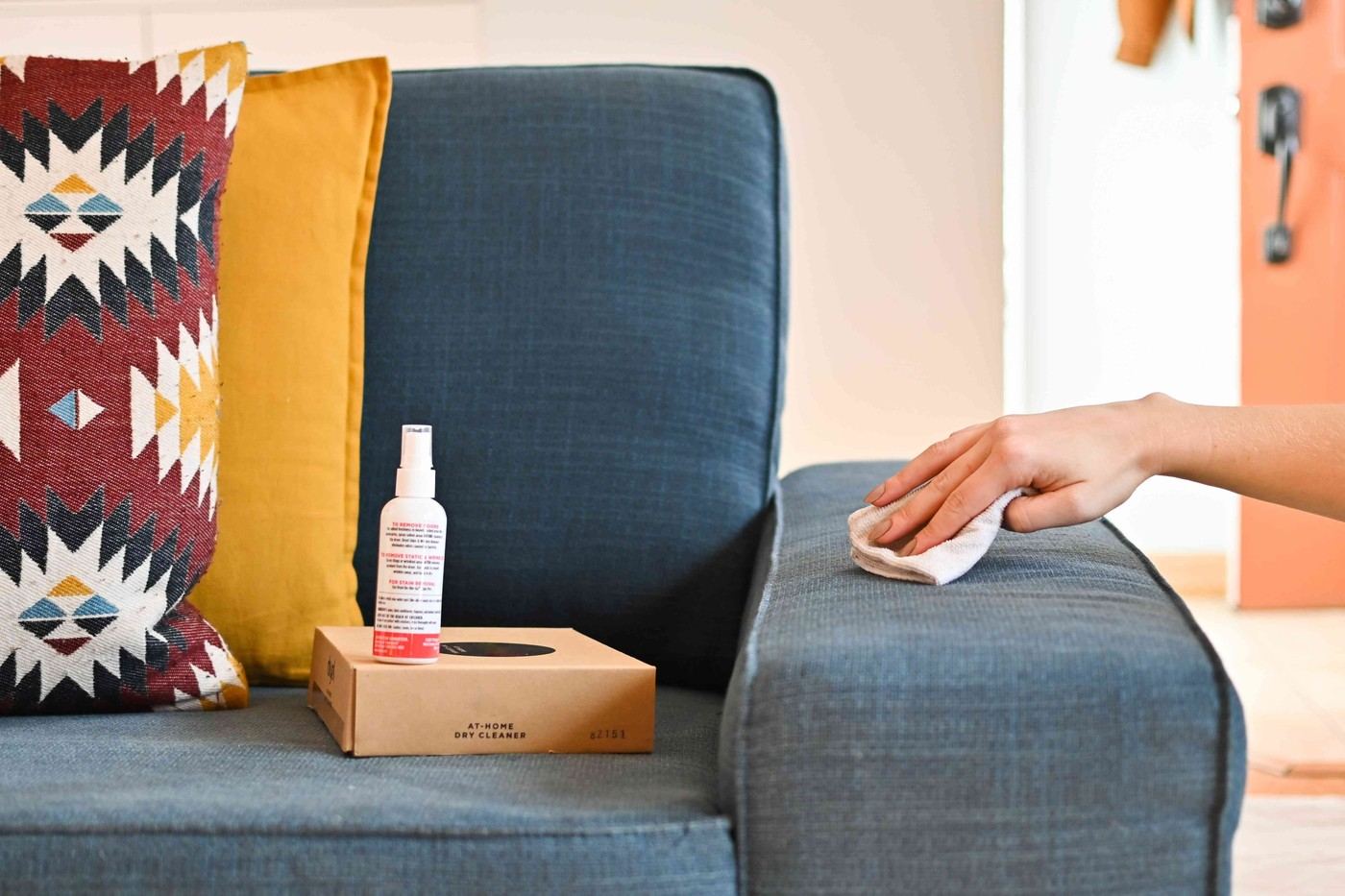
Read the cleaning code before choosing a product
The Spruce explains that upholstery labels distinguish water-compatible fabrics, solvent-only materials, products allowing either method and X-code upholstery requiring vacuuming or professional care. A spot test does not override those limits. Identify the permitted method before bringing a water-based cleaner or solvent to the sofa.
Use a hidden area and observe the response
The guide describes trying an appropriate solvent with a white cloth in an inconspicuous spot before treating visible soil. It also calls for ventilation and removing ignition sources when using solvent. Keep nearby finished surfaces protected. If fabric color or texture changes, do not expand the treatment; uncertainty about the label or reaction is a reason to seek suitable professional guidance.
Use the upholstery code as the first decision
W permits an appropriate water-based method, S identifies a water-free solvent route, and W-S allows suitable products from either group. X restricts ordinary home treatment to vacuuming or professional care. These categories narrow the choice before a hidden test is considered. If the tag is missing, consult the maker or an upholstery professional rather than assuming that an inconspicuous area makes any proposed cleaner acceptable.
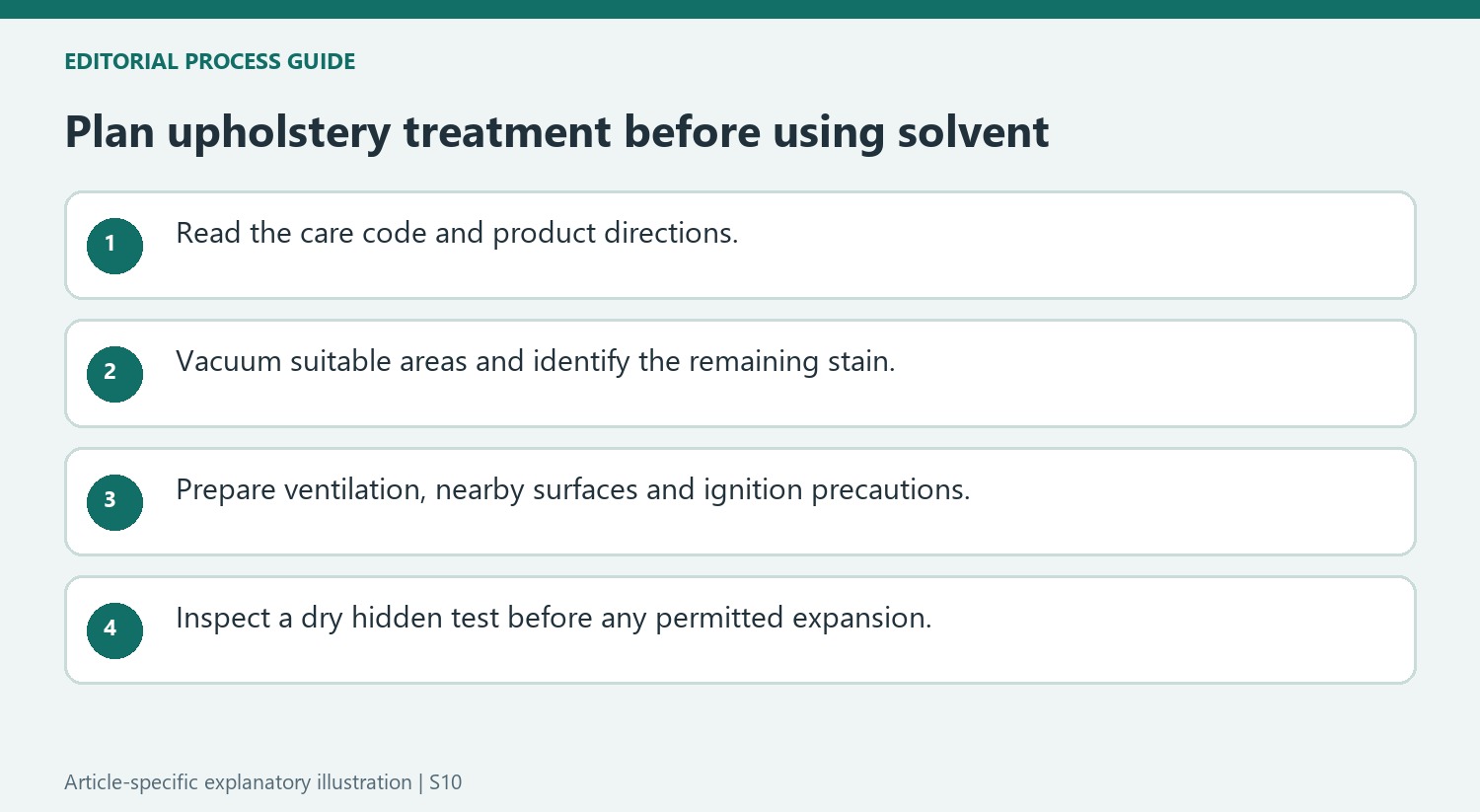
Allow the test to dry and inspect more than the stain
The source's solvent test uses a white cloth on a concealed section and checks for dye transfer or a change in appearance after drying. A damp test patch can conceal a later ring or texture change. Follow the chosen solvent's ventilation, ignition-source, disposal, and nearby-finish precautions; solvent treatment is not merely a dry version of a water wipe. Remove loose soil with suitable upholstery tools first and avoid soaking a cushion. If the fabric responds badly or the stain remains uncertain, stop instead of expanding the treatment. A professional route can be more appropriate than experimenting across a visible seat or arm.
Treat a sofa as several cleaning areas
The Spruce advises vacuuming the back, sides and spaces beneath detachable cushions as well as the visible seating surface. Loose dust and crumbs can remain in those less obvious areas even when the main seat looks presentable. Use suitable upholstery attachments and work methodically so debris is removed rather than shifted onto another part of the sofa.
This preparation also clarifies what remains after loose soil has been lifted. A stained armrest is a different problem from ordinary dust, and an oily mark may respond differently from a drink stain containing dyes. Do not promise that a solvent route will remove every type of discoloration simply because that route is the one the fabric permits.
Prepare the room before opening a solvent product
The source describes dry cleaning solvents as requiring particular caution around fumes and ignition sources. Read the exact product's directions before bringing it to the furniture, including ventilation, protective equipment and disposal requirements. Keep candles, fireplaces, smoking and other prohibited ignition sources out of the process rather than treating them as details to consider after application.
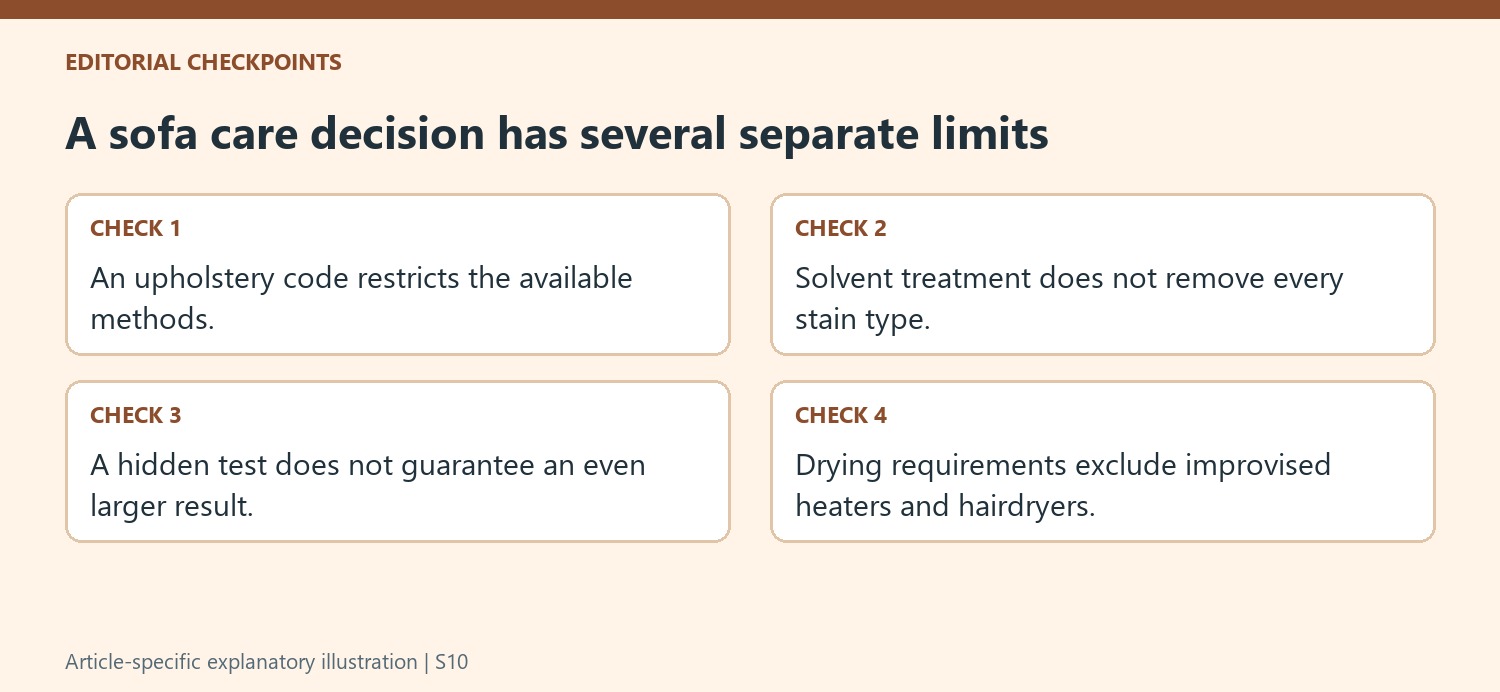
Protect surrounding painted or finished surfaces as directed because a product selected for upholstery can damage nearby materials. Check that there is a suitable place for the sofa to remain while treatment and drying are completed. Opening a window does not remove every restriction, and a familiar household fan or another electrical device should only be used in a manner consistent with the product's safety instructions.
Set expectations before expanding beyond the test
A concealed test helps reveal a bad reaction under the conditions tested; it does not guarantee that every visible area will clean evenly. Existing wear, earlier treatments and the extent of soil can complicate the result. Follow the permitted method and seek a professional assessment when treating a larger section would exceed the household's understanding of the fabric or product.
The guide also warns against using a hairdryer or heater to accelerate solvent-treated upholstery drying. Respect the full drying and ventilation requirements before normal use resumes. Regular appropriate vacuuming and suitable washable arm covers can help reduce future buildup. These measures support the care code without assuming that another cleaner or an additional coating is automatically suitable for the sofa.
References
- How to Clean a Fabric Sofa Without Water. The Spruce; Mary Marlowe Leverette.
The Spruce explains that upholstery labels distinguish water-compatible fabrics, solvent-only materials, products allowing either method and X-code upholstery requiring vacuuming or professional care. A spot test does not override those limits. Identify the permitted method before bringing a water-based cleaner or solvent to the sofa.


Leave a Comment
Comments (0)