
Outdoor furniture can often be refreshed without replacing it, but identify its material before starting. Wood needs a different approach from metal or woven furniture. In particular, a pressure washer can damage wooden surfaces when used as a convenient all-purpose cleaning tool.
Follow the maker's care instructions and begin with a gentle compatible method. Let pieces dry before covering them, and avoid leaving furniture standing on persistently wet ground. Suitable covers and a sheltered storage position reduce the moisture exposure that makes future cleaning harder.
Separate the material groups before choosing a cleaner
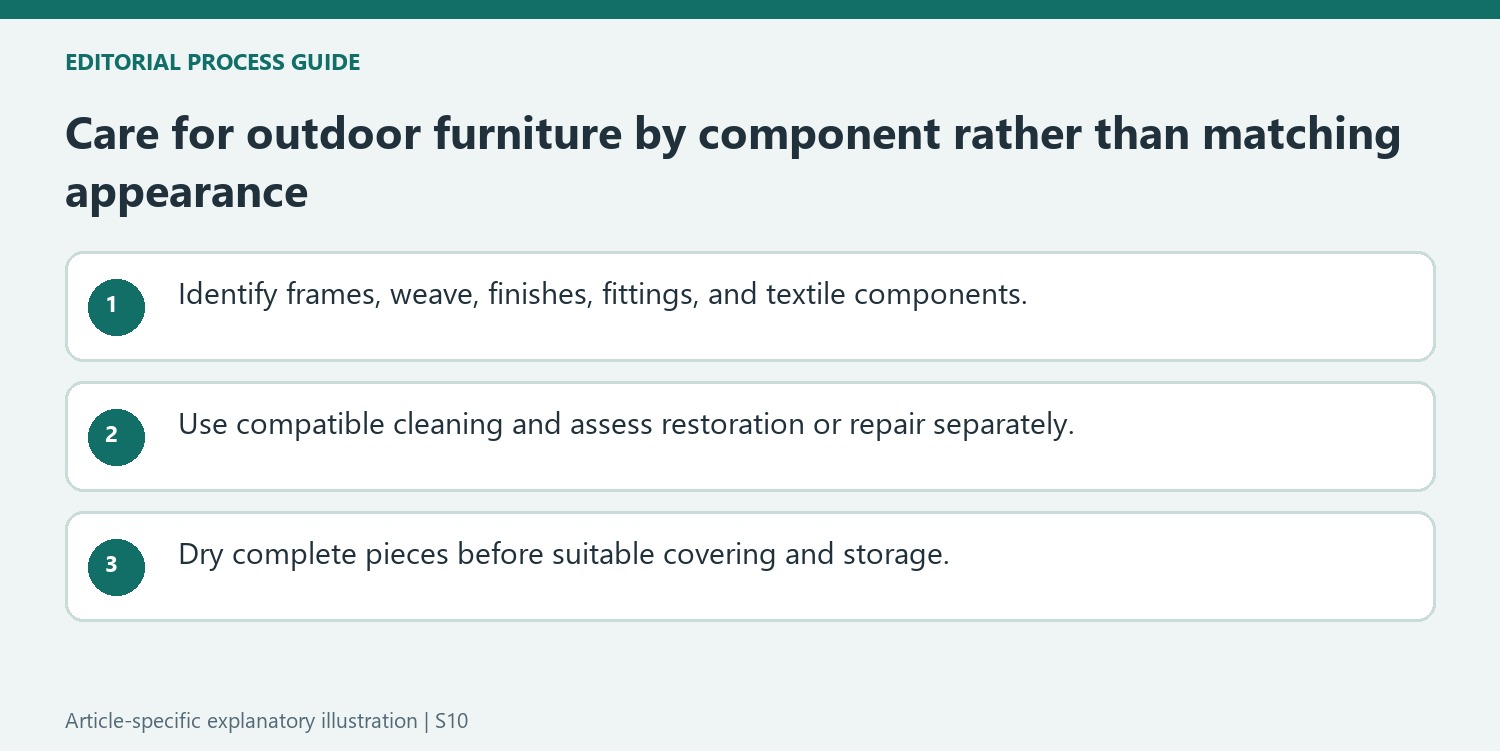
The guide treats wood, metal, synthetic weave, plastic, aluminum, and outdoor textiles as different care problems. A method intended for one should not be transferred to the others because they form a matching furniture set. Remove loose material with suitable gentle tools first and check the current maker's directions for the finish. Natural rattan and synthetic outdoor weave also should not be assumed to tolerate the same moisture exposure.
Include joints, cushions, and storage in the inspection
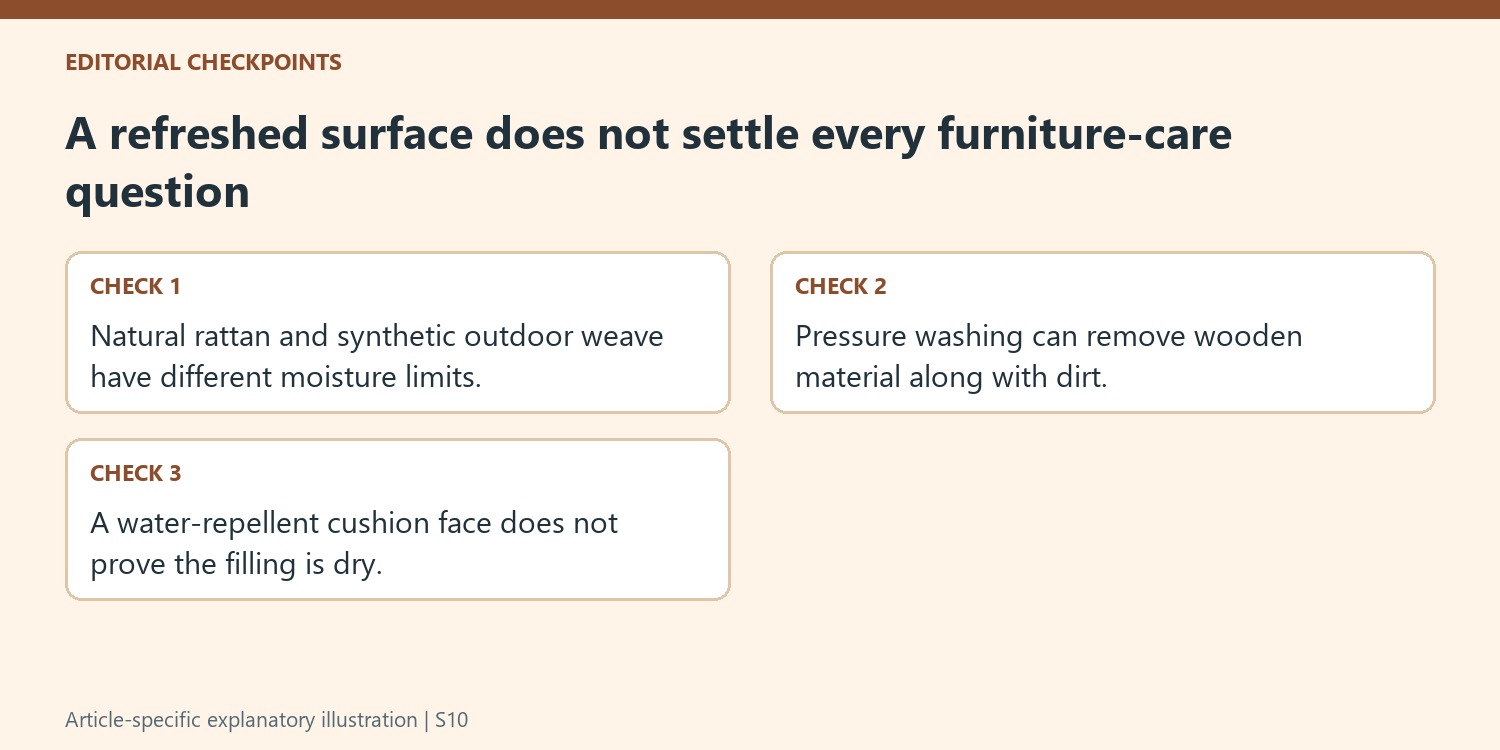
Metal fittings within a woven chair can need attention even when the main surface looks sound. Water-repellent cushion fabric can still have wet filling underneath, so allow the complete component to dry rather than judging only its surface. Check whether covers are actually removable and washable before using a machine cycle. Wood oils, restoration products, abrasive rust treatment, and bleach suggestions all need specific material approval. Once the furniture is clean and dry, use an appropriate protective cover or storage arrangement without trapping persistent moisture. A gentle repeatable routine can preserve useful pieces better than an aggressive seasonal treatment chosen only for its immediate visual effect.
Read a matching outdoor set as several material groups
The source covers wood, metal, synthetic weave, plastic, aluminum, and outdoor textiles. A coordinated appearance does not mean the same product suits every component. Identify frames, finishes, woven panels, fixings, cushions, and protective covers before selecting the process. Distinguish natural rattan from an outdoor synthetic imitation rather than relying on a shop description shortened to rattan. Remove loose debris gently using tools appropriate to the surface, then check the manufacturer's permitted wet-cleaning and product directions. Keep the washing area suitable for runoff and nearby materials. A small initial improvement in color should not be treated as proof that an aggressive method is preserving the furniture.
Separate ordinary cleaning from restoration work
The source warns that a pressure washer can remove wood as well as dirt. Start with the appropriate gentler care method instead of using high pressure across the whole set. Wood oil, sanding, rust treatment, paint touch-up, and coating restoration are separate decisions requiring the actual material and product guidance. Not every wooden piece needs seasonal oil, and not every darkened metal area should be scrubbed with steel wool or acid. Avoid combining the article's alternative recipes into one treatment. If a frame is loose, corroded, or otherwise structurally questionable, cleaning its visible surface does not establish that it is safe to use. Arrange appropriate repair or assessment rather than concealing damage.
Dry complete components before covering or storing them
Water-repellent fabric can still have damp filling, seams, or adjoining frame areas. Check the entire cushion's permitted drying process instead of judging only its outer face. Removable covers are machine washable only when the label allows it. Leave suitable cleaned pieces to dry through the required arrangement before replacing cushions or applying a protective cover. Keep furniture away from persistently wet ground where practical, and choose storage or covers that suit the actual product without trapping ongoing moisture. Review fittings and vulnerable joints as part of the next routine. The aim is to preserve useful furniture through compatible repeatable care, not to guarantee a brand-new appearance or a fixed lifespan after one seasonal cleaning session. Store the relevant care directions with the furniture information so cushions, frames, and covers can be maintained consistently even when different people undertake the work.
References
- How to clean garden furniture to keep your pieces looking brand-spanking new. Ideal Home; Amy Cutmore; Imani Cottrell.
Outdoor furniture can often be refreshed without replacing it, but identify its material before starting. Wood needs a different approach from metal or woven furniture. In particular, a pressure washer can damage wooden surfaces when used as a convenient all-purpose cleaning tool.


Leave a Comment
Comments (0)