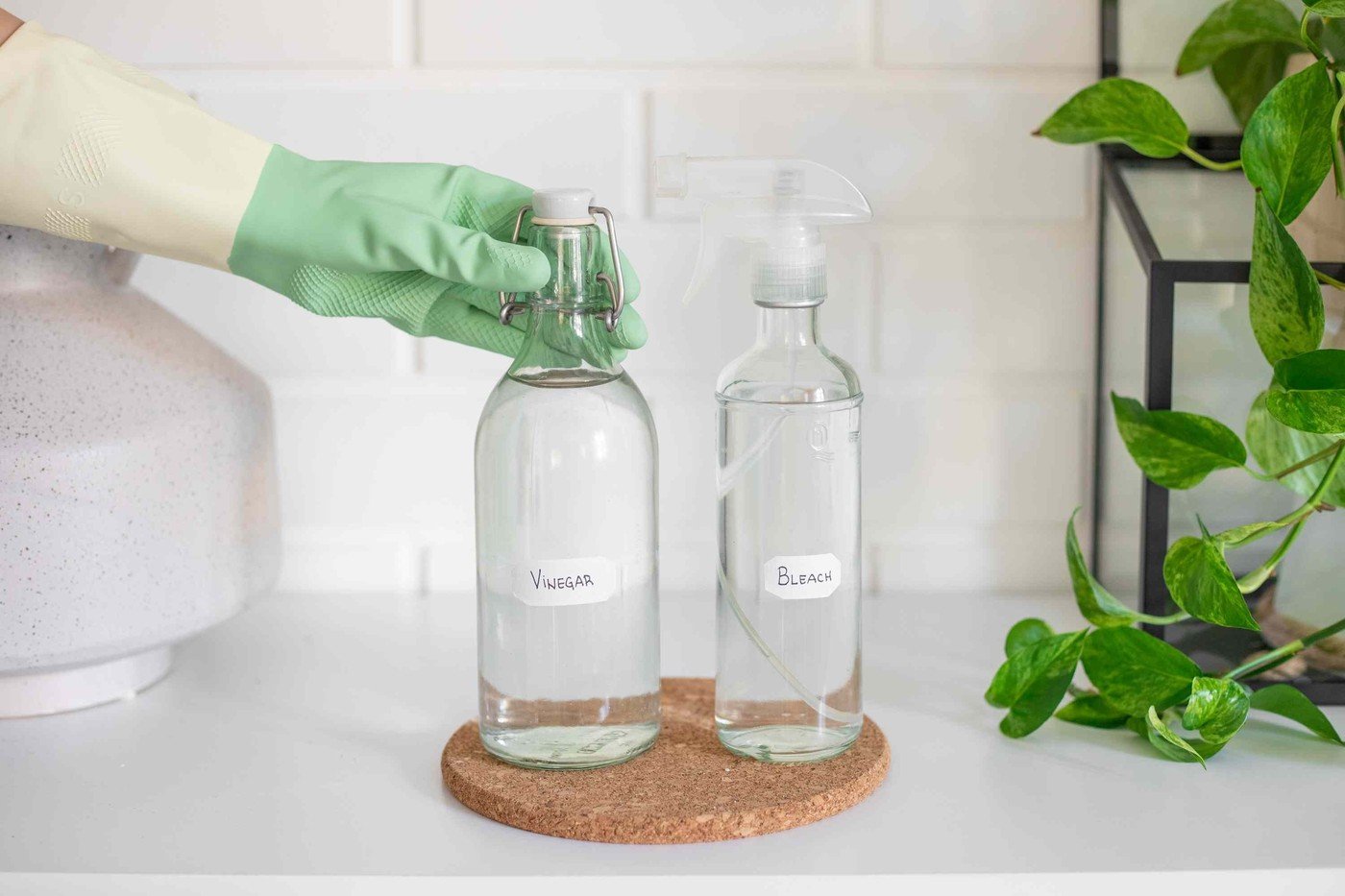
Acid and bleach are an unsafe combination
The Spruce explains that vinegar's acid reacts with chlorine bleach to release chlorine gas. Household dilution does not make this a useful cleaning recipe, and the reaction may not create an obvious visual warning. Never combine the two products or use one as an additive to improve the other.
Respond to exposure by leaving the area
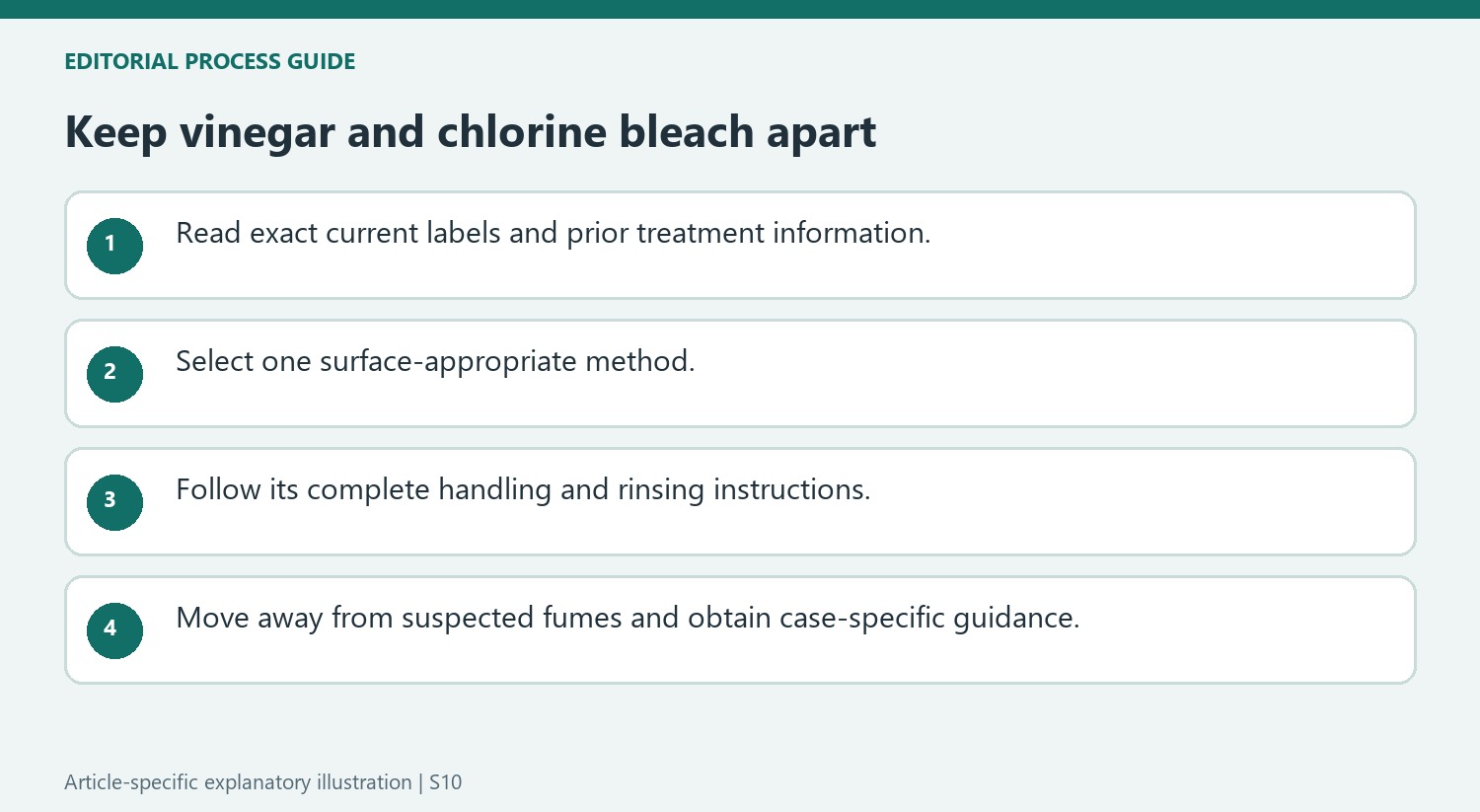
The article advises getting away from the exposure and seeking appropriate medical or poison-control guidance if symptoms occur. Do not stay in a contaminated room trying to finish the job. For routine cleaning, read product warnings before starting, use one suitable method and provide the ventilation required by its instructions. Fresh air is a precaution for correct use, not permission to mix incompatible products.
Do not rely on a visible reaction as a warning
The Spruce explains that diluted household products may release hazardous chlorine gas without the conspicuous color associated with concentrated chlorine. Waiting for a visible change is therefore not a safe compatibility test. The warning applies to acidic products more broadly, not only a bottle of white vinegar. A label identifying bleach in one cleaner should prompt careful reading of the other products in the same area rather than an improvised experiment.
Keep storage and emergency information understandable
Store cleaners in their identified original containers and separate incompatible products where a leak could bring them together. Keep them away from food and inaccessible to children and pets. If a product must be transferred under its instructions, use an appropriate clearly labeled container rather than a beverage bottle. In an exposure incident, move away from the fumes and contact the appropriate local emergency or poison service for advice, particularly if breathing symptoms occur. Do not stay in the contaminated space to add another substance. Routine ventilation supports correct labeled use; it does not make vinegar and chlorine bleach a permissible combination.
Understand why ordinary household dilution does not establish compatibility
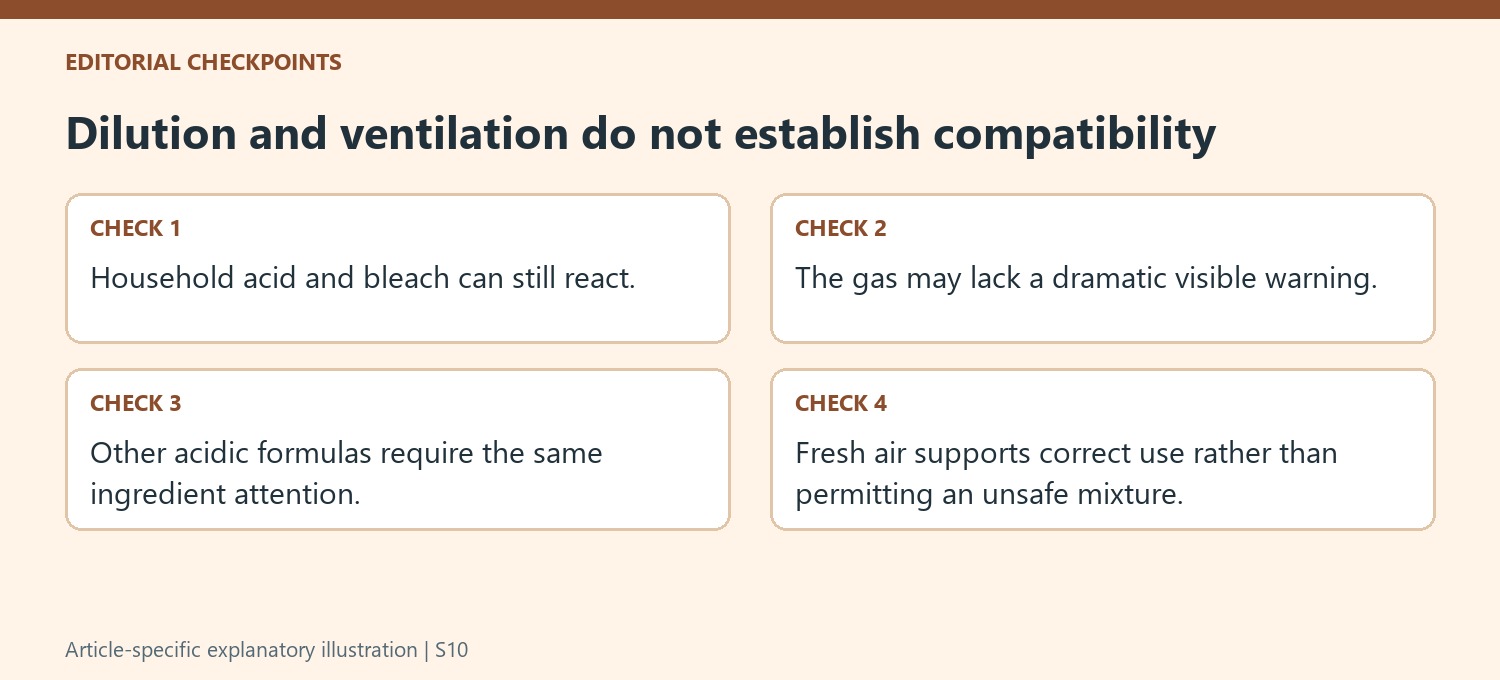
The source identifies the acid in vinegar and the hypochlorite-based bleach as the relevant combination. The everyday concentration of the bottles does not turn them into a supported joint cleaning method. A diluted appearance may make the hazard less visually obvious, so watching the liquid for a dramatic change is not a useful test.
The warning also extends beyond an ingredient bottle labeled vinegar. Some cleaning formulas contain acids for their intended tasks. Read the exact labels before using bleach in an area where another product has been applied. Familiar brand names, scents or a general natural-cleaning description do not identify every ingredient or prove that residues can safely meet.
Plan one method from application through its required finish
Choose a cleaner appropriate to the surface and follow its specified amount, handling and rinsing procedure. Keep that plan clear before starting instead of improvising an additive when a stain persists. The source recommends retaining labels and consulting the maker when the ingredients or intended use are uncertain.
Changing to another treatment requires attention to the earlier product's instructions and any remaining residues. Do not interpret a casual rinse as universal permission to combine methods, particularly in a drain or other place where material may remain out of view. If the next step is unclear, stop the cleaning attempt and obtain appropriate product or professional guidance.
Make information accessible without delaying an exposure response
Product identification is useful for prevention and for explaining an incident to a poison service or emergency professional. Store containers so their labels remain legible, away from food and inaccessible to children or pets. Do not use drink containers that can create another route to accidental exposure.
If fumes or symptoms suggest a harmful mixture, leave the affected area rather than remaining to collect supplies or try a neutralizer. Contact the appropriate local service for case-specific advice. Routine ventilation belongs to correct use; it should never be described as a way to make vinegar and chlorine bleach compatible. The safest ordinary plan is to keep them apart and use only a supported procedure for the actual task.
References
- The Two Ingredients You Should Never Combine for Homemade Cleaning Solutions. The Spruce; Mary Marlowe Leverette.
The Spruce explains that vinegar's acid reacts with chlorine bleach to release chlorine gas. Household dilution does not make this a useful cleaning recipe, and the reaction may not create an obvious visual warning. Never combine the two products or use one as an additive to improve the other.


Leave a Comment
Comments (0)