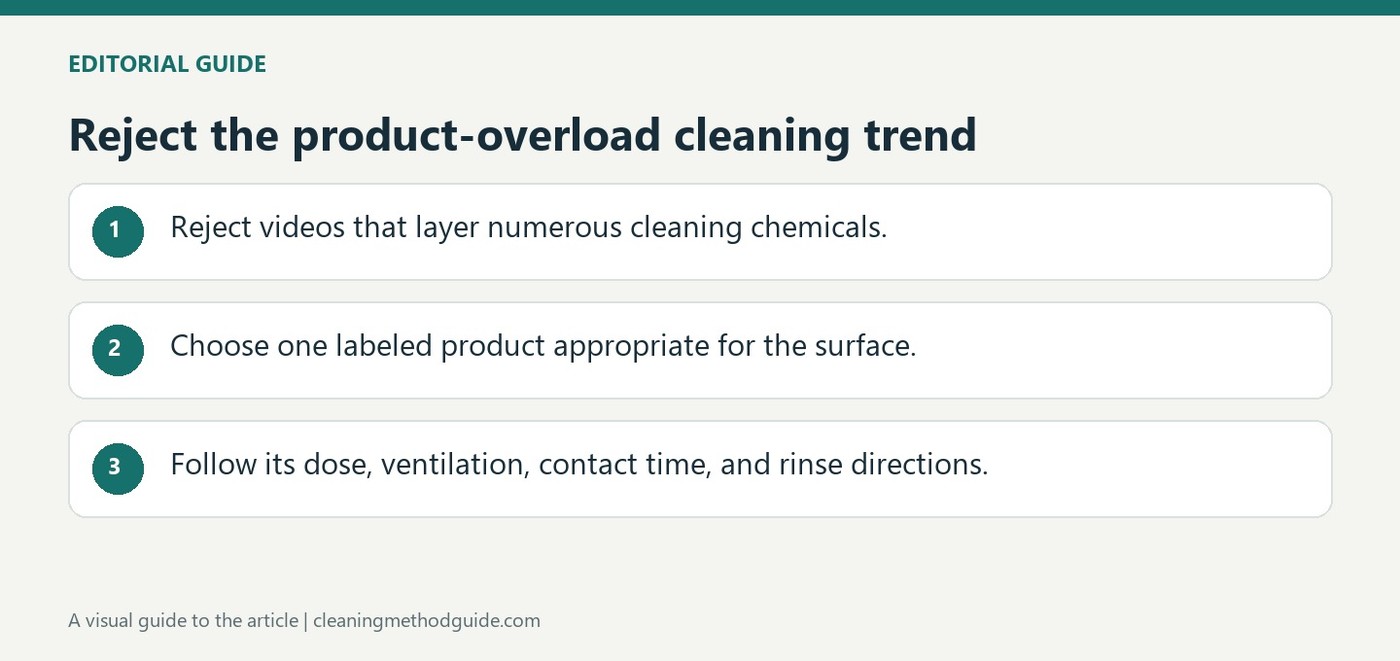
A visual effect is not a cleaning method
Better Homes and Gardens discusses videos that pour multiple cleaning formulas into a sink, toilet or bath. The article consults the American Cleaning Institute and warns that the dramatic quantity and layered appearance do not establish better cleaning. Different ingredients can interact in ways the viewer cannot identify from the video.
Use the labeled amount and procedure
Select a suitable product and follow its directions instead of combining bottles for a stronger effect. Excess product can waste money while increasing exposure and creating a more difficult rinsing task. A social-media demonstration should not override a label's warnings, recommended surface, dilution or contact time. Effective cleaning comes from an appropriate method, not from reproducing an impressive-looking mixture.
Separate entertainment from evidence of effectiveness
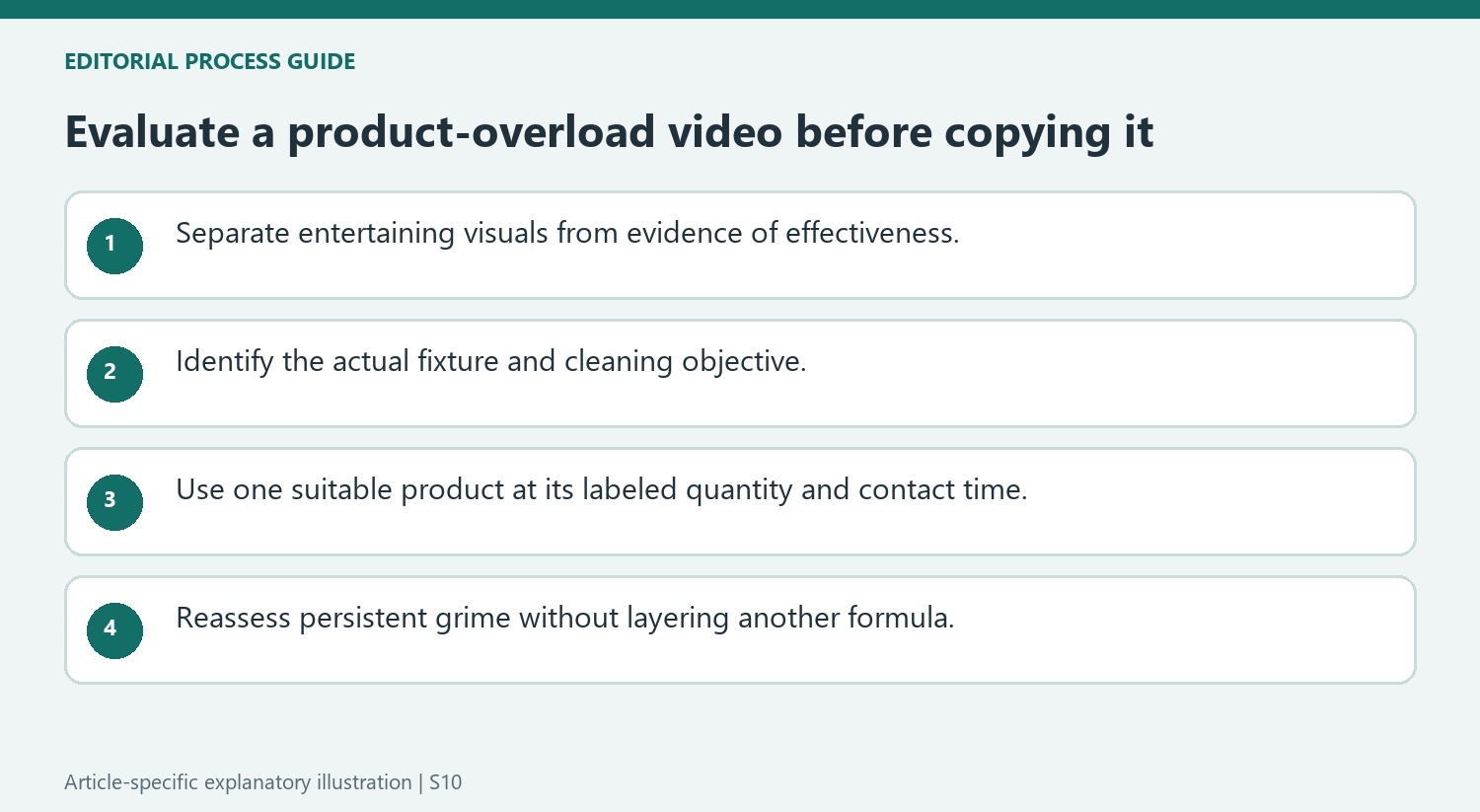
Jessica Ek of the American Cleaning Institute explains the problem with videos that layer large amounts of products for their appearance or sound. The viewer usually cannot verify the formulas, surface compatibility, or conditions behind the demonstration. A dramatic quantity does not show that a stain was removed more efficiently, nor does popularity establish that a method is safe. Choose a task-based method rather than recreating a visual effect in the sink or toilet.
Use patience within one supported method
The feature notes that accumulated grime can take more than one cleaning attempt. That is a reason to follow an appropriate procedure carefully, not to pour a second incompatible product on top of the first. Check the fixture manufacturer's restrictions, use the amount and contact time on the product label, and handle any rinse or disposal step as directed. If the surface is still stained, identify the stain and material before changing treatment. Keep the original container available for its warnings. A controlled repeat of a suitable method can be assessed; an undocumented combination of bottles makes both the result and the exposure harder to understand.
Ask what the video actually demonstrates
The feature distinguishes the attraction of appearance and sound from evidence of better cleaning. A viewer may see colored layers, foam and a final rinse without knowing the exact formulas, quantities or surface condition. That footage does not provide a controlled comparison showing that the extra products improved the result.
Popularity likewise says little about compatibility. A large view count can show that a video attracts attention, while leaving the chemical and material questions unanswered. Use the actual cleaning task as the starting point rather than trying to reproduce an effect designed for a short clip. The label and fixture instructions remain more relevant than the sequence of bottles shown on screen.
Account for the fixture and the waste as well as the fumes
The American Cleaning Institute representative identifies possible surface and plumbing damage alongside exposure concerns. Abrasive products can be unsuitable for a finish, and excessive quantities create more material to rinse or dispose of. A visually dramatic amount is not evidence that the cleaner is being used at the concentration or quantity intended by its maker.
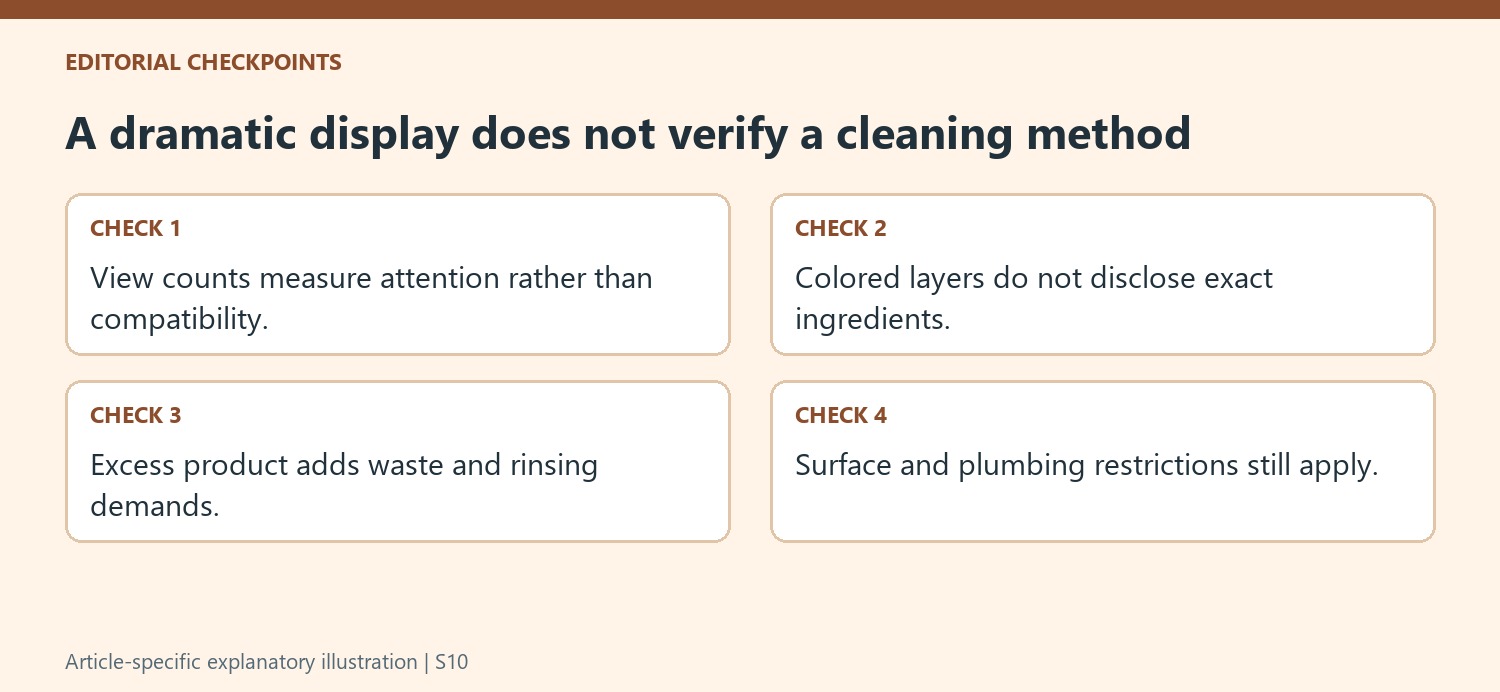
Choose one appropriate product and the specified procedure for the actual sink, bath or toilet. Check material restrictions before scrubbing a persistent mark. A stain may need a different supported approach, but adding another formula directly to the first makes both the residue and the potential reaction harder to assess.
Use repetition only within a suitable method
The source notes that accumulated grime may need more than one cleaning attempt. That is different from treating a second bottle as an automatic improvement. Allow the selected product its labeled contact time and complete the required rinsing or disposal step without mixing in another cleaner.
If the result remains poor, identify the stain and surface before deciding what to do next. Preserve product identity and get appropriate guidance where the method is uncertain. A controlled process makes the result easier to understand and avoids wasting whole bottles for a temporary visual effect. The useful lesson from the trend is to evaluate claims before copying them, keeping ordinary cleaning goals separate from entertainment.
References
- Why You Should Never Try the “Product Overload” TikTok Cleaning Trend. Better Homes & Gardens; Mary Cornetta.
Better Homes and Gardens discusses videos that pour multiple cleaning formulas into a sink, toilet or bath. The article consults the American Cleaning Institute and warns that the dramatic quantity and layered appearance do not establish better cleaning. Different ingredients can interact in ways the viewer cannot identify from the video.


Leave a Comment
Comments (0)