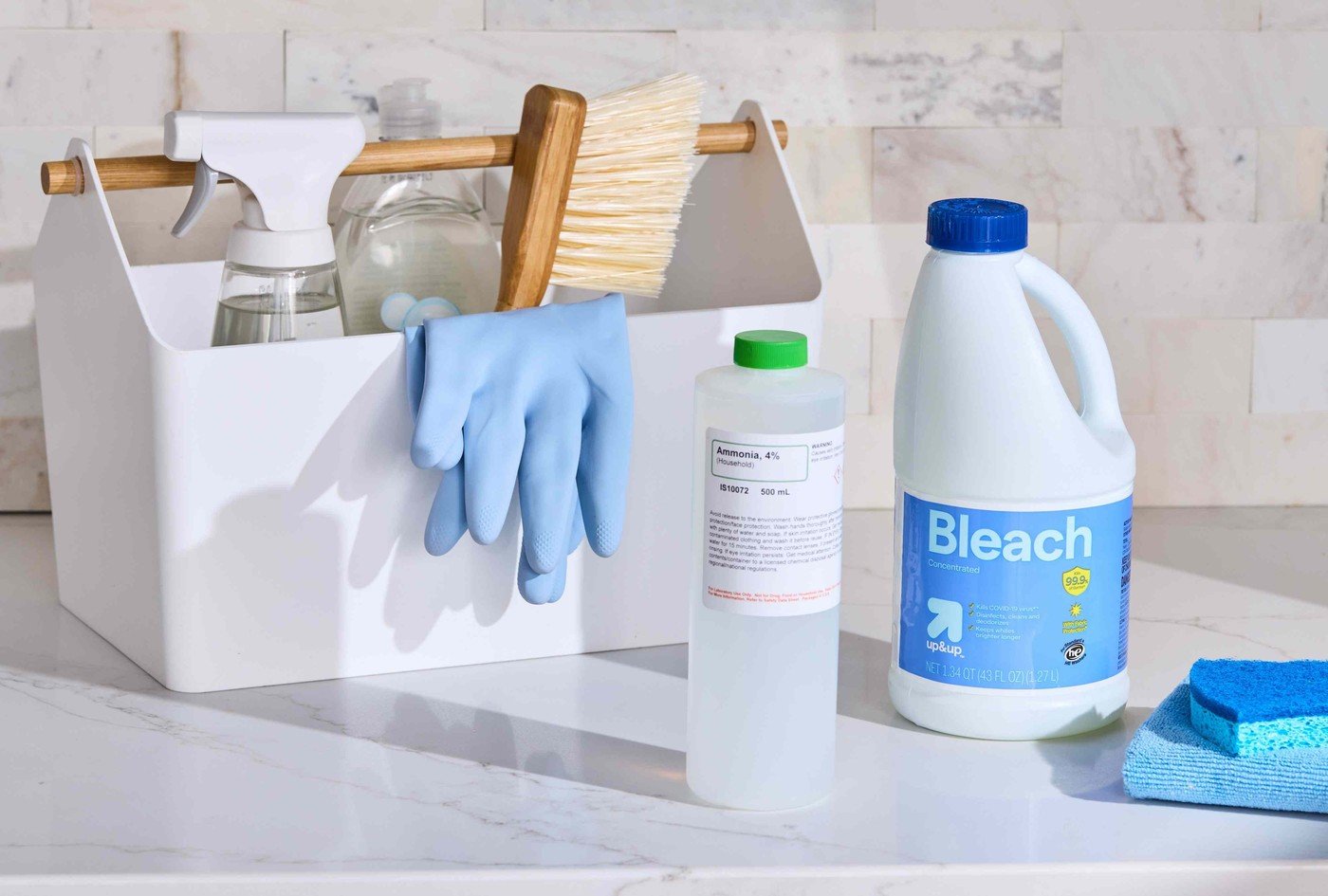
Do not combine bleach with another formula
The Spruce explains that bleach and ammonia can produce chloramine gases that irritate the eyes and airways and can cause serious injury. Ammonia may already be present in a glass, bathroom or other commercial cleaner, so avoiding only a bottle labeled plain ammonia is not enough.
Check warnings before changing methods
The guide advises reading product safety information and avoiding mixtures rather than guessing whether ingredients are compatible. It also warns against putting cleaners into containers that could be mistaken for drinks. Keep products identifiable and use the labeled method. If an incompatible mixture is suspected, stop exposure and obtain appropriate emergency or poison-control advice rather than trying to correct the reaction by adding another household product.
Look for the chemical role rather than a plain-ingredient bottle
The article describes ammonia as something that may be present in a commercial cleaner, not only a separately labeled household ammonia product. That matters when a user reaches for bleach after trying a window or bathroom formula. Read the product warnings before application, and keep incompatible products physically separate in storage. Do not assume a familiar scent or an apparently diluted liquid establishes that no residue remains from the earlier treatment.
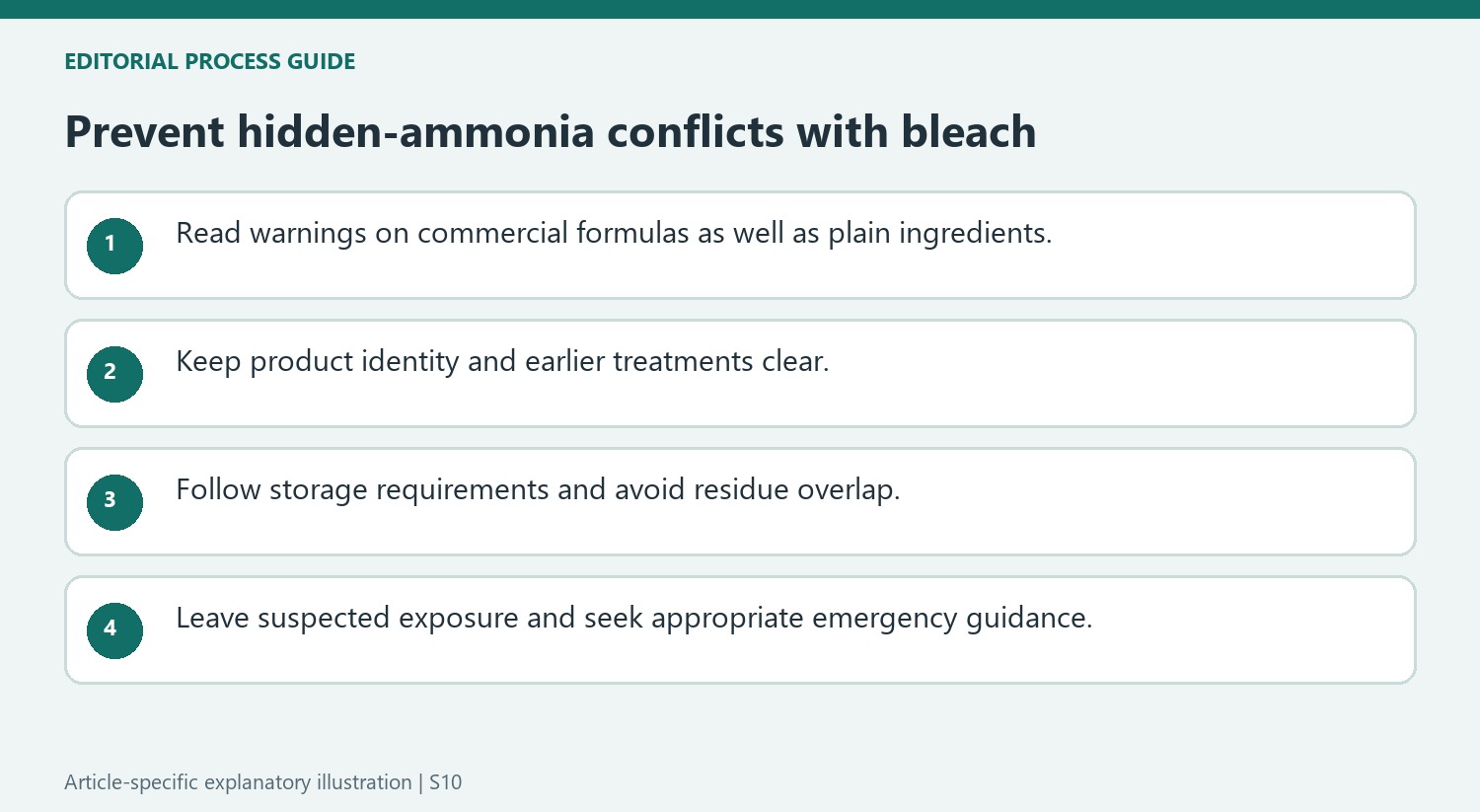
Keep the container identity and response plan clear
The Spruce warns against transferring cleaners into bottles that could be mistaken for drinks. An unmarked container removes exactly the ingredient and use information needed to prevent accidental combinations. Keep the product label available and use the recommended method rather than an improvised mixture. If a dangerous combination is suspected, leave the exposure and obtain appropriate medical or poison-control advice; adding another cleaner is not a supported rescue procedure. The practical lesson is to preserve product identity from storage through use and disposal. Protective equipment and ventilation still matter for proper use, but neither changes the incompatibility of bleach and ammonia.
Look beyond the presence of a separate ammonia bottle
The article's main practical concern is ammonia within a commercial formula. Someone may avoid plain household ammonia yet still reach for bleach after using a glass or bathroom cleaner that requires the same caution. Read the exact product warnings rather than treating the usual use of the bottle as a complete ingredient description.
Formulas can differ between products from the same brand and can change over time. Keep the current label available and ask the maker when information is unclear. Do not make a compatibility decision from scent, color or the assumption that a familiar cleaner is too mild to matter. A smaller amount does not establish a supported mixture.
Keep successive treatments from becoming an accidental combination
The problem is not limited to deliberately pouring two products into one container. Residues left on a surface or in a confined area can meet a later application. Before changing methods, follow the earlier product's directions and confirm an appropriate next step instead of assuming that another cleaner can be layered over it.
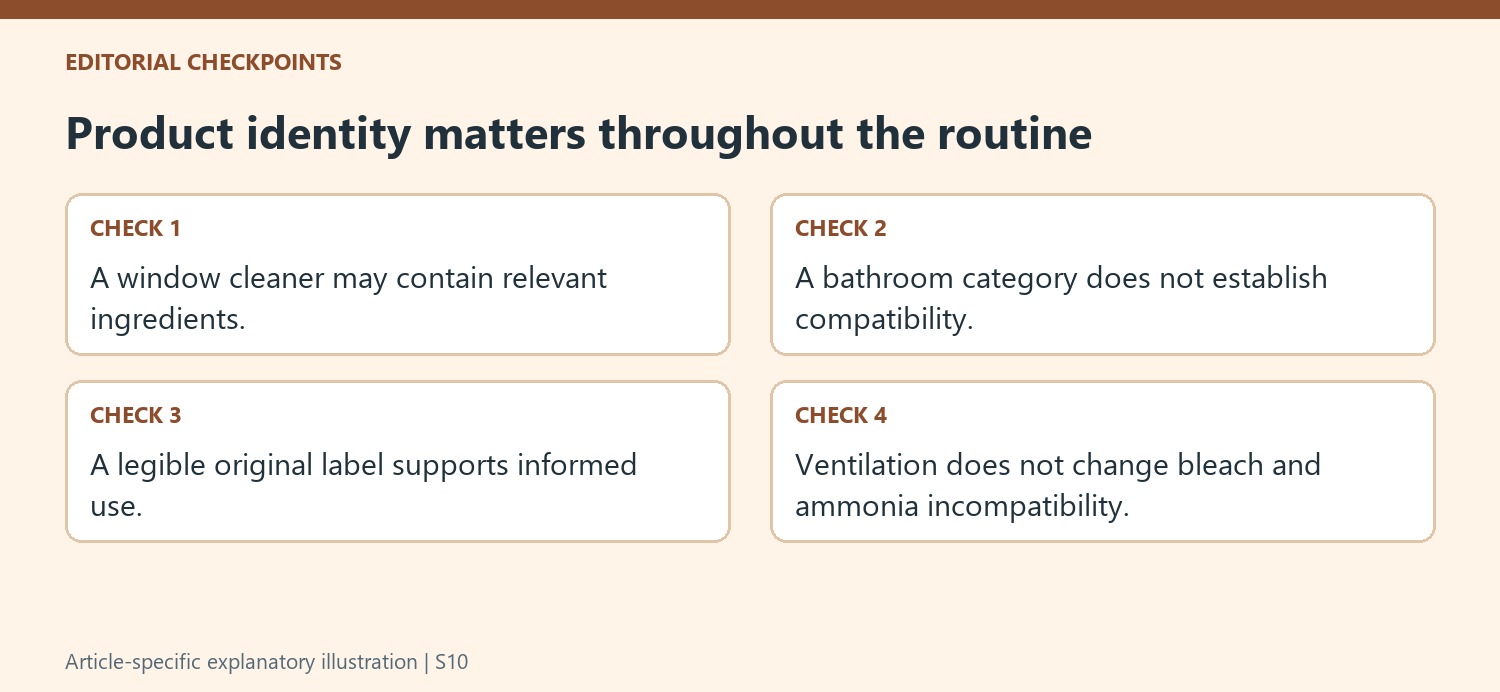
Store supplies with the same care used during application. Incompatible products should not be arranged where leaks can bring them together, and containers should stay identified from purchase through disposal. A neat room-based basket may improve convenience, but the fact that everything belongs in the bathroom does not establish chemical compatibility.
Preserve a clear response if an incident is suspected
The source describes chloramine-related eye and airway irritation and potentially serious exposure. Do not wait for a dramatic visual reaction before moving away from a suspected mixture. Leave the affected area and obtain appropriate emergency or poison-service instructions rather than trying to decide the exact reaction by smelling it.
Do not add another household substance as a rescue treatment or remain nearby to finish the cleaning. Product names and labels can help professionals advise on the situation when they can be provided without renewed exposure. For ordinary prevention, use one supported method and preserve the original warnings. Ventilation and protective equipment help with correct use, while the incompatibility of bleach and ammonia remains unchanged.
References
- Why Professional Cleaners Never Mix Bleach and Ammonia—And You Shouldn't Either. The Spruce; Mary Marlowe Leverette.
The Spruce explains that bleach and ammonia can produce chloramine gases that irritate the eyes and airways and can cause serious injury. Ammonia may already be present in a glass, bathroom or other commercial cleaner, so avoiding only a bottle labeled plain ammonia is not enough.


Leave a Comment
Comments (0)