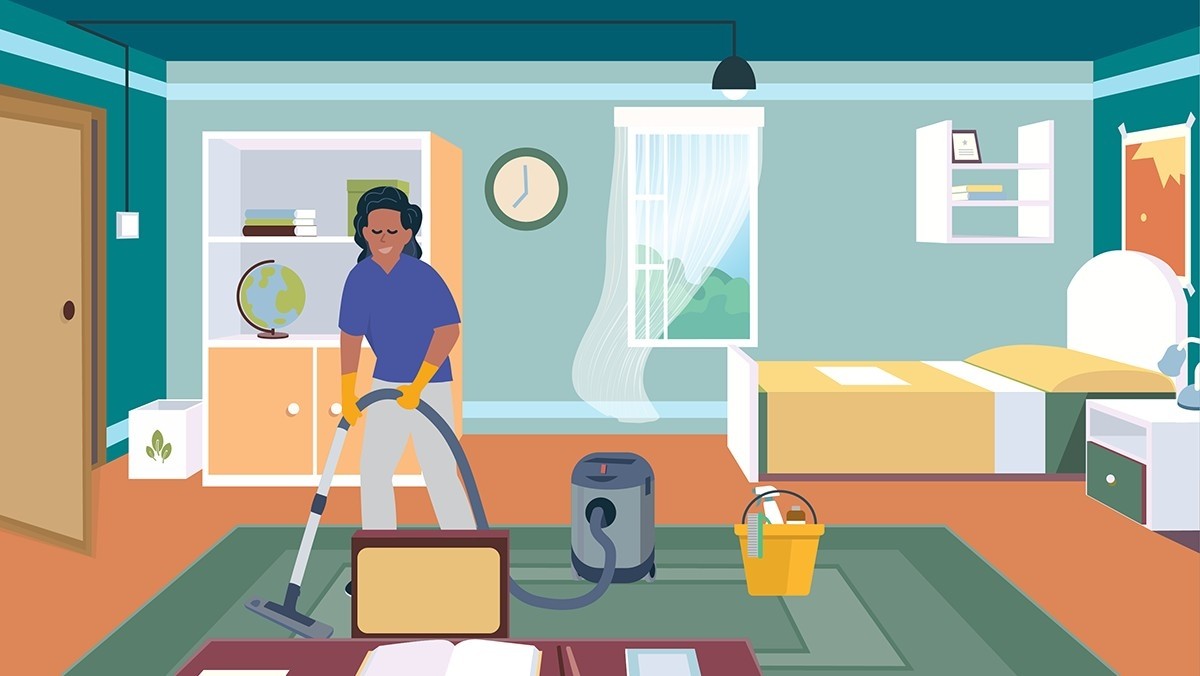
Ordinary cleaning is often the first step
CDC distinguishes cleaning that removes dirt and many germs from sanitizing or disinfecting. Clean visible soil before applying a disinfectant because residue can interfere with its action. More intensive disinfection may be needed when someone is sick or particularly vulnerable, rather than as an automatic substitute for every routine wipe-down.
Follow contact time and exposure precautions
CDC directs users to read labels, wear the recommended protection and ventilate indoor work. The surface must remain wet for the labeled contact time. Do not mix products, and keep chemicals away from children and pets after use. These requirements explain why a quick spray followed by immediate wiping may not perform the disinfecting task claimed on the bottle.
Choose the level of treatment for the situation
CDC explains that regular cleaning removes dirt and most germs, while sanitizing and disinfecting have different purposes. Routine disinfection is generally not needed in a healthy household simply because a surface has been used. Illness, higher vulnerability, or particular contamination can change the task. Match the product to the surface and the situation rather than using the strongest available treatment as an automatic daily step.
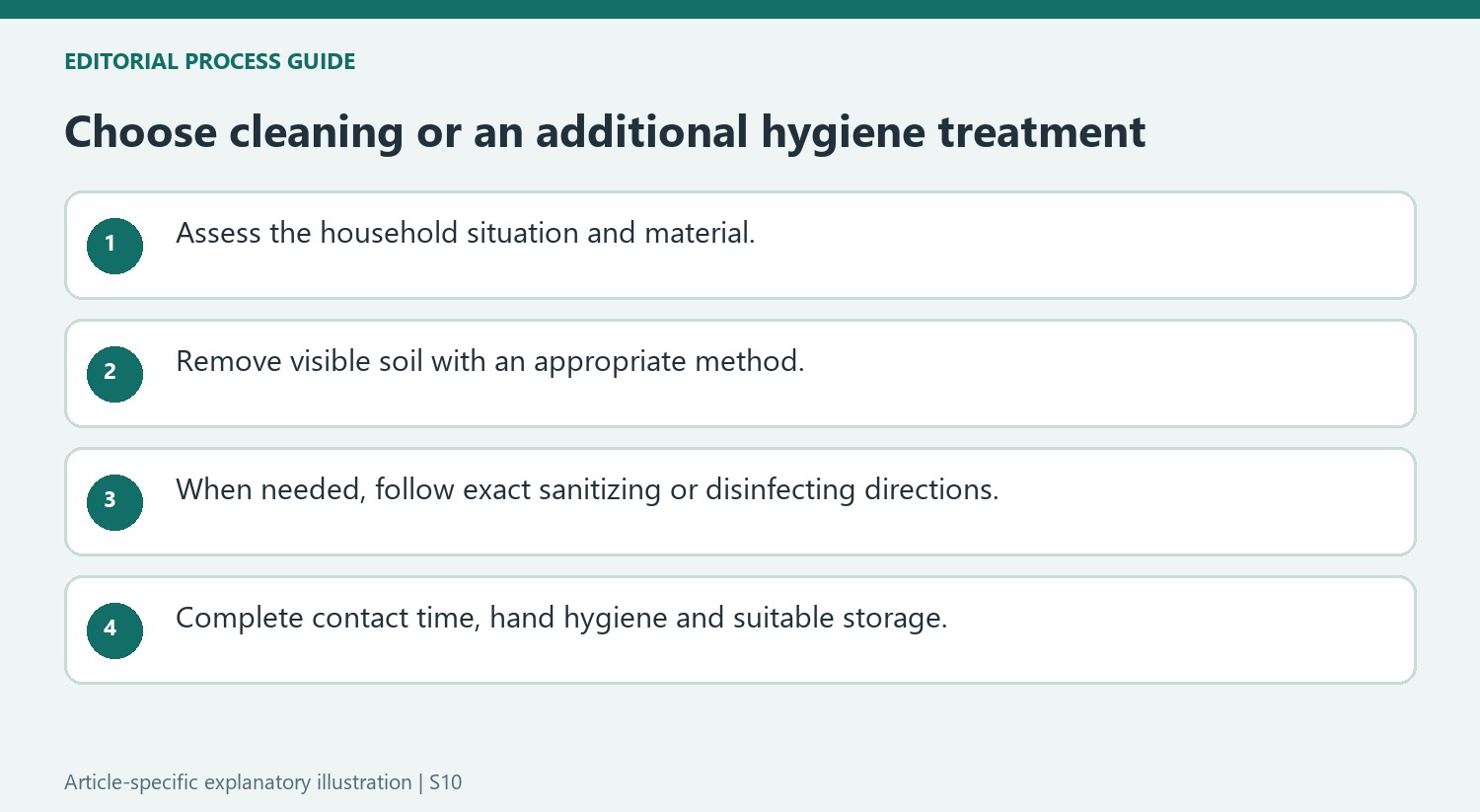
Include the full before-and-after procedure
For soft materials, CDC directs users toward suitable cleaning, laundering where permitted, and complete drying. Electronics instead require the manufacturer's cleaning guidance. When disinfection is appropriate, first remove visible soil, provide ventilation and the recommended protection, and keep the surface wet for the entire labeled contact time. Follow any specified dilution and post-use requirements, then wash hands and store the chemicals beyond children and pets. Do not apply surface disinfectants to people or animals. These steps distinguish an actual labeled disinfection process from a quick spray-and-wipe habit that may leave neither the required exposure time nor a properly maintained surface.
Choose the treatment level before selecting the strongest bottle
CDC separates removal of dirt and germs from the additional purposes of sanitizing and disinfecting. Begin with the household situation and the actual surface. Ordinary regular cleaning can meet many routine needs, while illness or particular contamination may call for a further step using a product suitable for that purpose.
The distinction prevents a stronger treatment from replacing the basic work of removing visible soil. Dirt can interfere with contact between a disinfectant and the surface it is intended to treat. Follow a complete appropriate procedure rather than interpreting a disinfecting claim as a reason to skip cleaning or combine several formulas in the same application.
Treat wet contact time as part of the task
The labeled contact time determines how long the surface needs to remain wet during disinfection. Spraying and immediately wiping may interrupt that condition. Read the exact product instructions before beginning so there is enough time to complete the process, including any specified dilution, material restriction or post-treatment step.
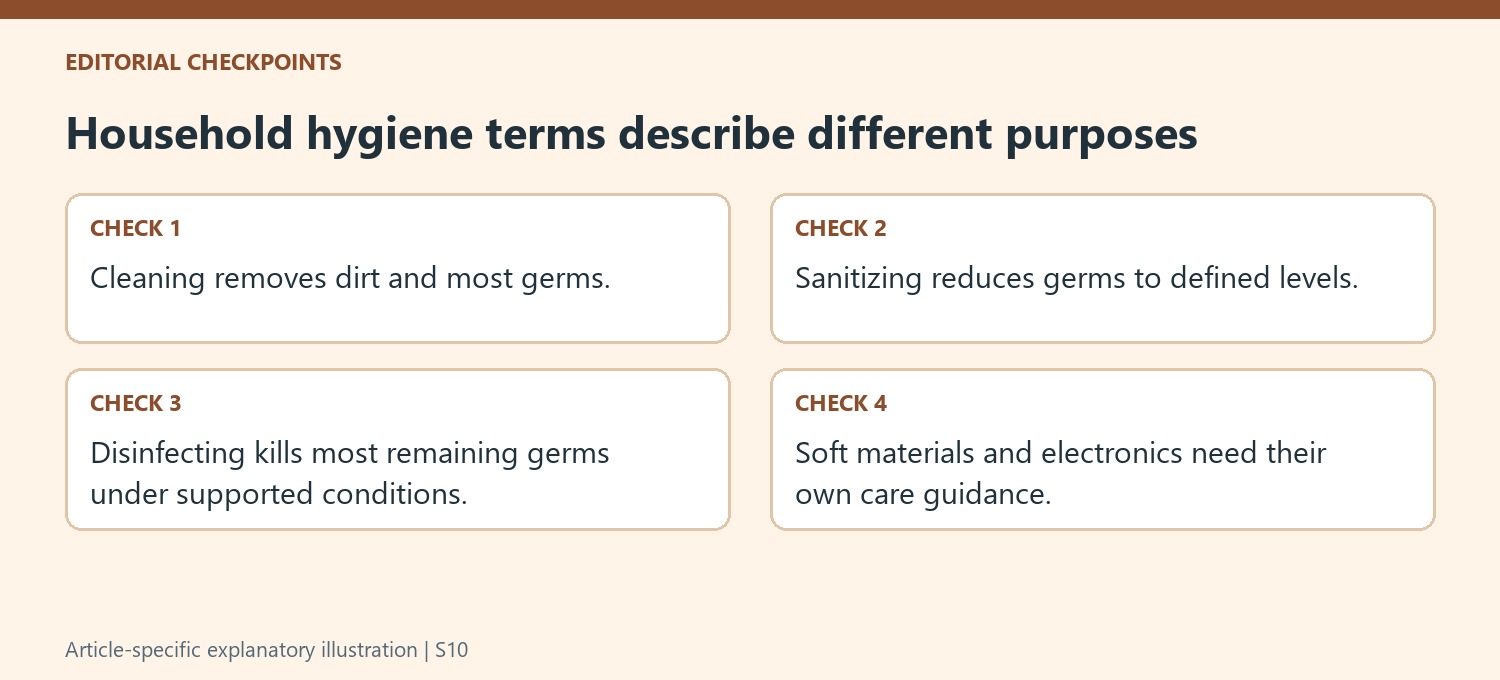
Check ventilation and the recommended protection at the same planning stage. These are conditions of proper use rather than substitutes for choosing a compatible surface or avoiding mixtures. Surface disinfectants should not be applied to people or animals. Keep other household members aware of a treated area while the process is still underway.
Use different care decisions for different household materials
The guidance treats soft surfaces, washable textiles and electronics separately. A suitable laundry process includes the item's permitted temperature and complete drying, while a device needs its maker's recommendations. A hard-surface disinfectant procedure should not be extended to a phone, rug or pillow simply because all can be touched frequently.
Finish with the required hand hygiene and appropriate storage of chemicals beyond children and pets. The practical value of the distinctions is a clearer routine: clean regularly, identify situations needing another treatment and then follow the actual labeled method. A pleasant fragrance or an abbreviated spray-and-wipe action does not establish that all the conditions of disinfection have been met. Keep the exact task and product information together so the next household member can understand the procedure already completed.
References
- When and How to Clean and Disinfect Your Home. Water, Sanitation, and Environmentally Related Hygiene (WASH).
CDC distinguishes cleaning that removes dirt and many germs from sanitizing or disinfecting. Clean visible soil before applying a disinfectant because residue can interfere with its action. More intensive disinfection may be needed when someone is sick or particularly vulnerable, rather than as an automatic substitute for every routine wipe-down.


Leave a Comment
Comments (0)