Clean first and do not mix formulas
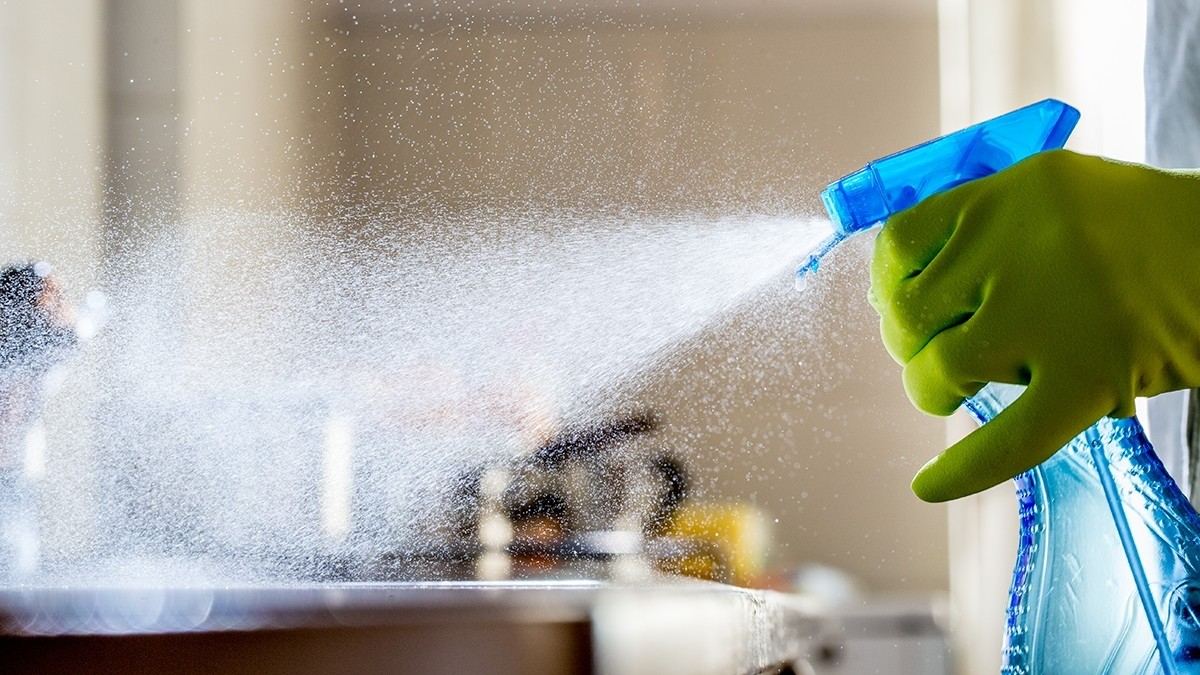
CDC explains that ordinary soap-and-water cleaning removes many germs and that disinfection is not always necessary. When bleach is appropriate, clean visible soil first and never mix it with other cleaners or disinfectants. Such combinations can release dangerous vapors rather than improve the cleaning result.
Check ventilation and protection before starting
CDC recommends good indoor ventilation and checking whether gloves or eye protection are required. Use the appropriate bleach product and dilution instructions, and keep the directions available rather than guessing from a familiar bottle. A protective glove does not make an incompatible mixture safe. Choose a suitable method, prepare the area and limit unnecessary exposure throughout the cleaning session.
Check the bleach product before preparing a solution
CDC's guidance concerns appropriate regular unscented household bleach and notes that some laundry or splashless products are not suitable for disinfection. Read the concentration and the bottle's own dilution instructions instead of transferring a ratio from a different formulation. The product must also be appropriate for the surface. A familiar brand name or white bottle is not enough to identify those requirements.
Plan contact time and solution freshness
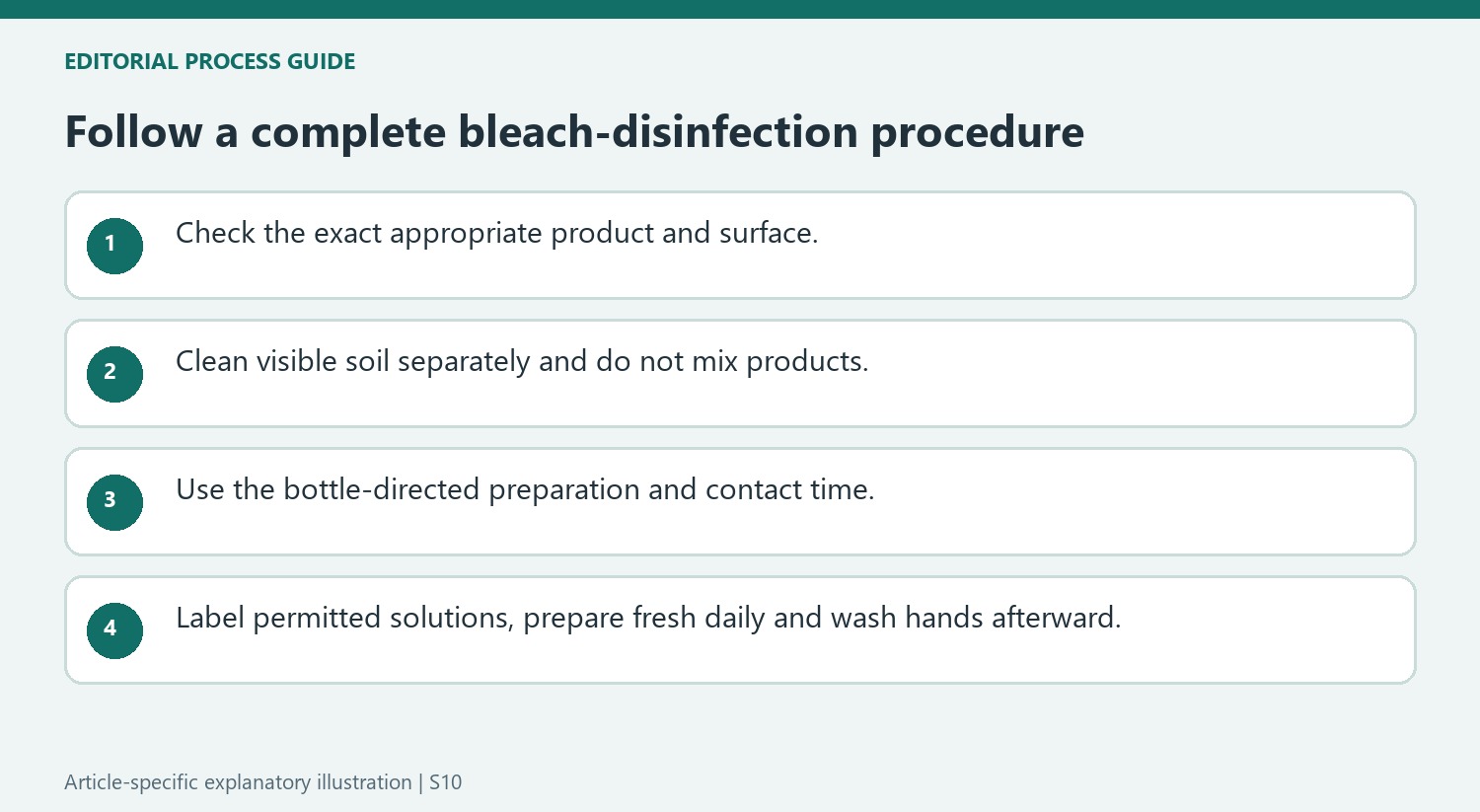
The surface needs to remain visibly wet for the applicable contact time, and the manufacturer instructions take priority. Wiping immediately after application may interrupt that process. CDC also notes that diluted bleach loses effectiveness with time and recommends making a fresh solution daily rather than keeping an unmarked batch indefinitely. Label a permitted diluted solution, keep chemicals inaccessible to children and pets, and wash hands after use. Cleaning visible soil first remains a separate step; it is not accomplished by combining soap or another cleaner into the bleach. Ventilation and the recommended protection support proper use without changing the no-mixing instruction.
Identify a suitable product before considering any dilution
CDC distinguishes regular unscented household bleach from versions that may not be appropriate for disinfection. Read the actual concentration and instructions instead of assuming that every laundry product sharing a familiar brand name is equivalent. The surface being treated also needs to permit the intended method.
The source gives general preparation guidance, but the bottle's directions remain central to the actual task. Do not borrow a ratio from another concentration or use an unspecified product as though it were the same formulation. Keep the original information available so the person preparing and applying the solution can follow one coherent set of instructions.
Separate the cleaning step from the disinfecting step
The guidance begins with cleaning visibly dirty surfaces using an appropriate household cleaner. That sequence does not mean soap or another disinfectant should be added into bleach. Complete the cleaning stage as directed and keep products separate rather than treating the two purposes as ingredients for a combined mixture.
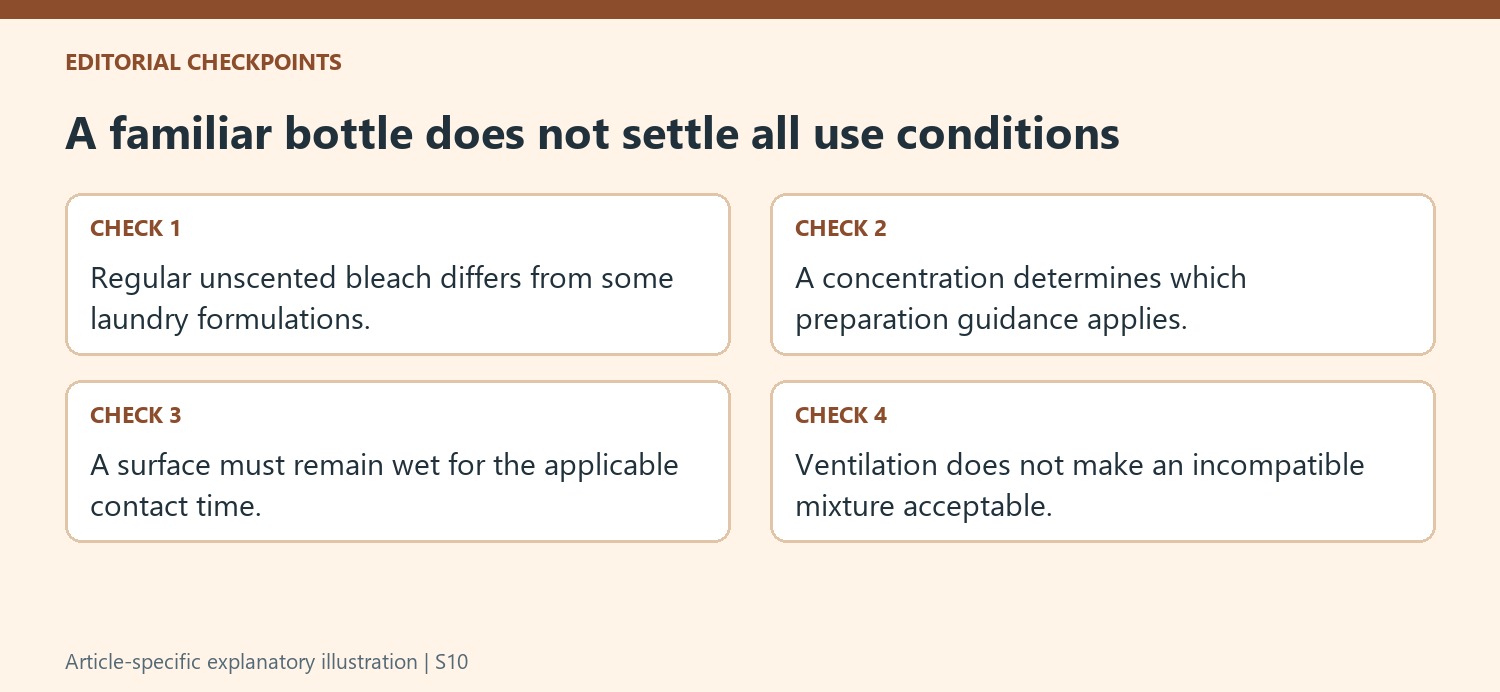
Prepare the working area with appropriate ventilation and any protection specified for the product. Confirm that the application can be completed without unnecessary interruption. A glove or open window does not resolve an incompatible mixture, and a stronger smell does not establish that the solution is being used correctly or will perform better.
Plan the whole contact and storage period
The surface needs to stay visibly wet for the applicable contact time. Check that requirement before wiping or returning the area to ordinary use. Follow the manufacturer's application directions, including any relevant restrictions or finishing steps, instead of shortening the process because the surface already appears clean.
CDC also recommends a fresh diluted solution daily because effectiveness declines after mixing with water. Label a permitted preparation clearly and keep it away from children, pets and food. Do not retain an unmarked batch indefinitely or assume yesterday's solution has the same supported performance. Wash hands after the task. The complete routine includes product identity, separate cleaning, correct preparation, adequate contact and appropriate handling afterward, with every stage contributing to a procedure that can be understood and repeated. Preserve that sequence when the next cleaning session involves another surface or a newly purchased bleach formulation.
References
- Cleaning and Disinfecting with Bleach. Water, Sanitation, and Environmentally Related Hygiene (WASH).
CDC explains that ordinary soap-and-water cleaning removes many germs and that disinfection is not always necessary. When bleach is appropriate, clean visible soil first and never mix it with other cleaners or disinfectants. Such combinations can release dangerous vapors rather than improve the cleaning result.


Leave a Comment
Comments (0)