Directions cover more than the dose
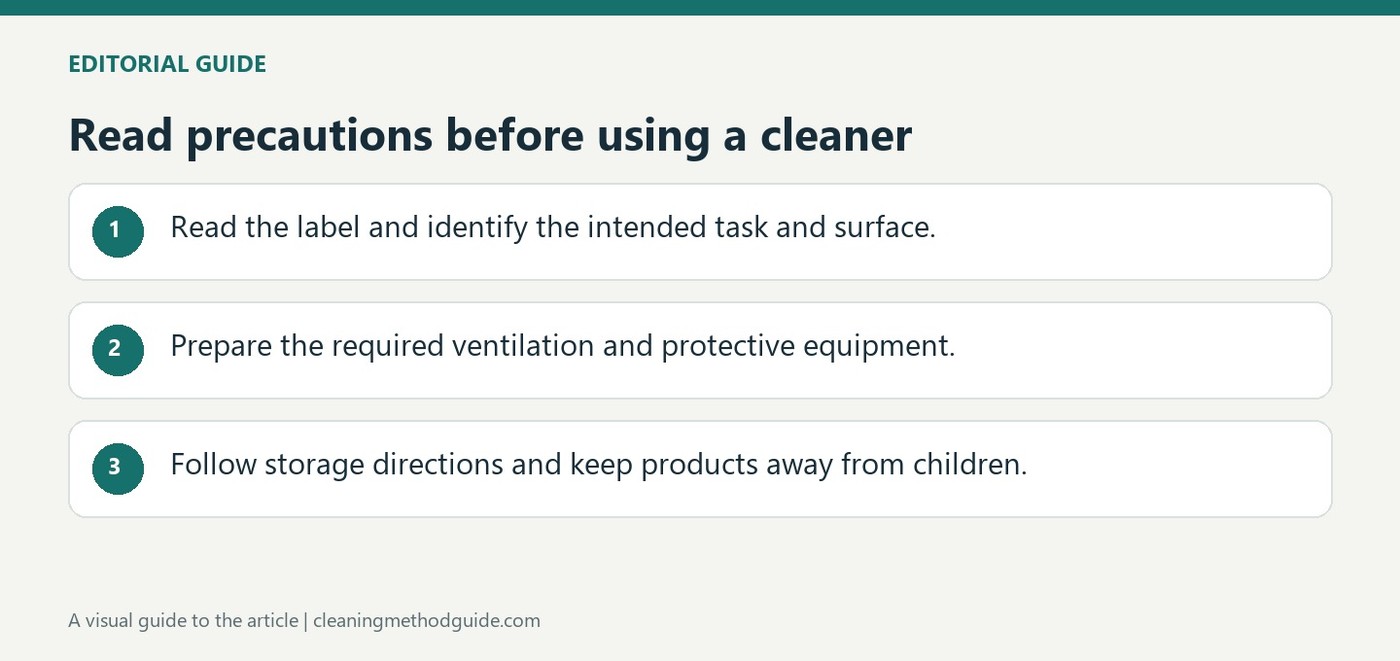
Better Homes and Gardens identifies product instructions, ventilation, incompatible mixtures and protective equipment as important parts of cleaning safety. A label can specify the amount to use, surfaces to avoid and protection for the user. Skipping those details can make a product less effective or create unnecessary exposure.
Plan the storage and working area
The article recommends keeping supplies in a cool, dry location away from children, pets and food. During use, check ventilation and the stated glove or eye-protection requirements rather than relying on a product's familiar smell or marketing language. Use one cleaning method at a time, and keep the directions available for the next user instead of treating an unmarked container as an acceptable substitute.
Use marketing claims as a reason to inspect the instructions
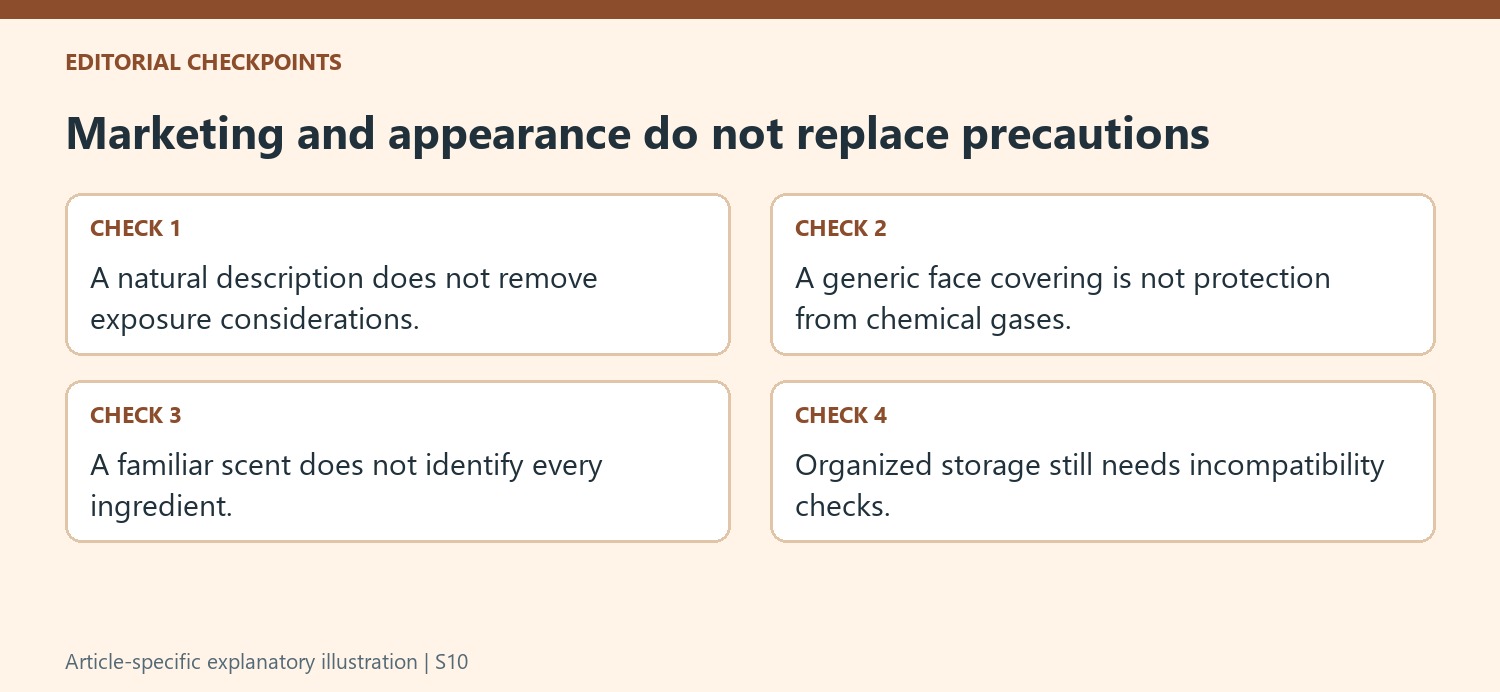
The BHG article discusses reducing exposure, but a natural, eco-friendly, or non-toxic description does not eliminate product-specific hazards. Vinegar is its example of a familiar substance that can still irritate when sprayed into the air. Check the intended surface, amount, application method, and exposure precautions before use. Select protective equipment specified for the actual product and task; a generic face covering should not be assumed to protect against chemical gases.
Make safe storage part of finishing the job
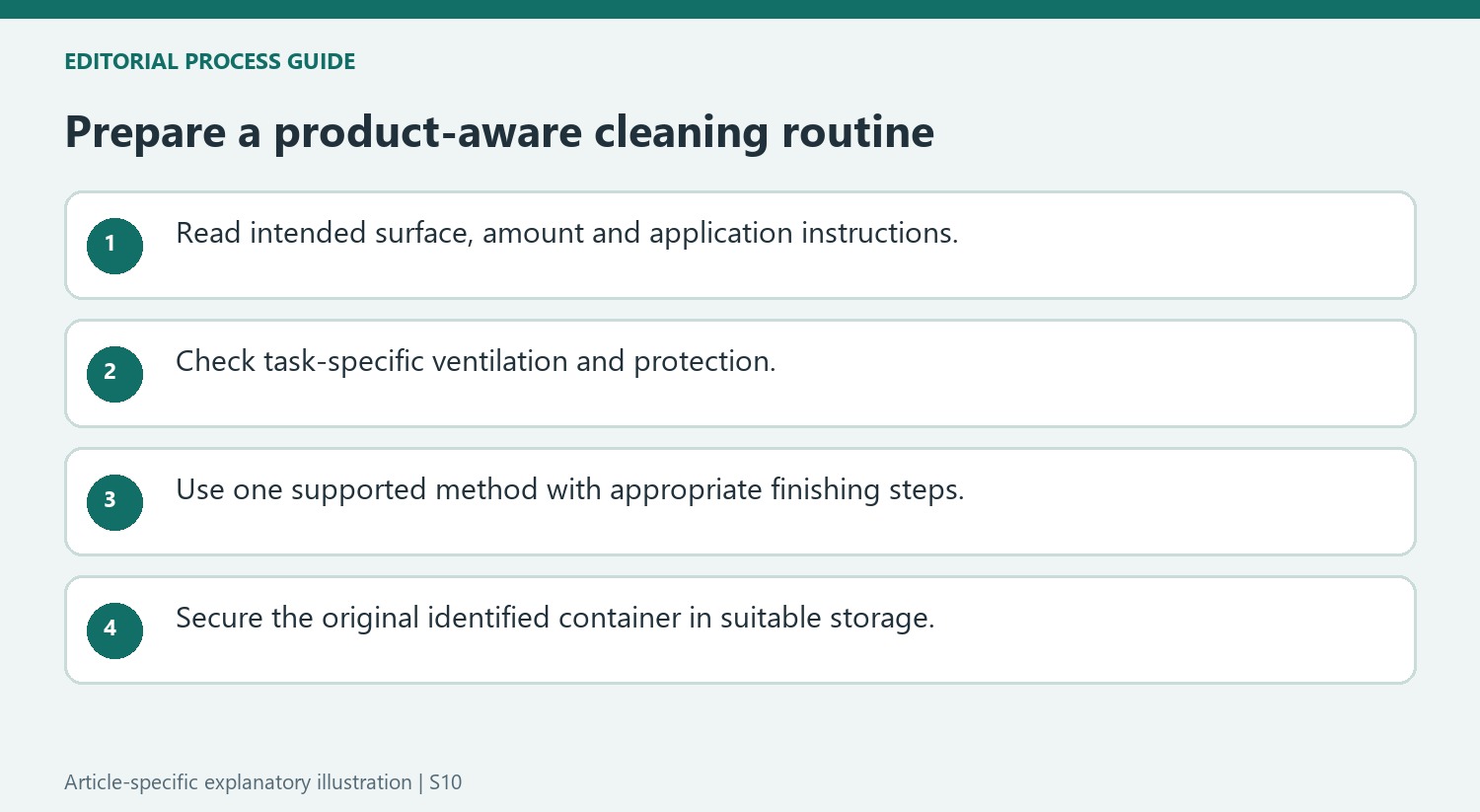
Diana Ciechorska emphasizes following manufacturer directions, including restrictions that can affect both results and surface damage. After the task, secure the original container and store it under the specified conditions, separated from food and inaccessible to children and pets. Keep incompatible products from accidental contact and leave the label available for the next person. If the first treatment fails, reassess the soil and material instead of layering a second formula. The practical routine covers preparation, application, rinsing or drying where directed, and storage. A pleasant smell or a product's popularity does not replace any of those checks.
Make label reading part of choosing the method
The article emphasizes manufacturer instructions because effectiveness, material damage and exposure all depend on how a product is used. Read the directions before preparing the area rather than checking them only after a poor result. Confirm the intended surface, application method and amount, including whether the product needs dilution or another finishing step.
A familiar scent or a front-panel natural claim does not answer those questions. The feature's vinegar example shows that a widely recognized substance can still have exposure considerations when sprayed. Evaluate the actual form and use of the product rather than assuming that household familiarity removes the need to read its warnings.
Choose protection for the specific exposure rather than by appearance
Follow the product's requirements for gloves, eye protection and ventilation. These should match the task and formula. A generic face covering should not be described as protection from chemical gases, and wearing more equipment does not make an incompatible product combination acceptable.
Prepare a working space that keeps food, children and pets away from the cleaning process. Use one supported method and avoid unnecessary aerosol or powder exposure. If the task or instructions remain unclear, obtain appropriate product guidance before proceeding instead of improvising a stronger-looking treatment to finish more quickly. Product awareness is part of preparation, not an optional addition afterward.
Complete the routine with identifiable storage
The source recommends suitable cool, dry storage separate from food and inaccessible to children or pets. Keep the original container secure and its label legible. Consider incompatibility as well as convenience so a leak does not bring unsuitable products into contact with one another.
Leave enough information for the next user to understand what the bottle contains and what has already been applied in the area. If cleaning was unsuccessful, record the issue rather than adding a second formula directly on top. The useful routine extends from preparation through application and any required rinsing or drying to storage. Marketing terms, popularity and fragrance cannot replace those product-specific decisions, even when the cleaning job is familiar or appears simple.
References
- Experts Say These 6 Cleaning Mistakes Could Be Putting Your Home in Danger. Better Homes & Gardens; Nafeesah Allen.
Better Homes and Gardens identifies product instructions, ventilation, incompatible mixtures and protective equipment as important parts of cleaning safety. A label can specify the amount to use, surfaces to avoid and protection for the user. Skipping those details can make a product less effective or create unnecessary exposure.


Leave a Comment
Comments (0)