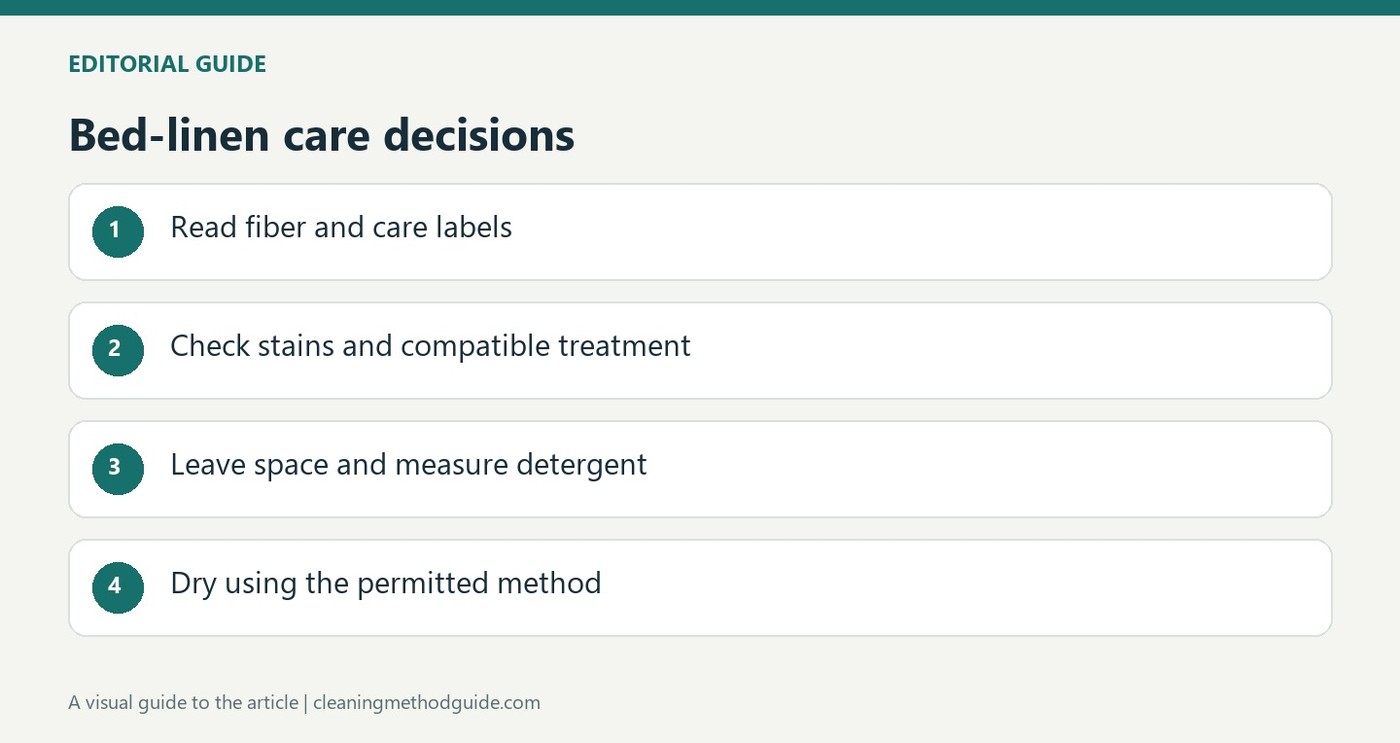
Homes & Gardens' bed-linen guide begins with the material and care label, since cotton, silk, bamboo and other sheets need different handling. Inspect for body-oil or sweat marks before washing and select a compatible pretreatment. Its instructions emphasize that bedding should have enough space in the machine rather than being compressed into an overloaded drum.
Separate sheets from unsuitable clothing and towels, and choose detergent, cycle and drying conditions for the specific fabric. The article suggests washing sheets regularly, with frequency adjusted for factors such as pets, sweating and household use. A single temperature or timetable is therefore less useful than a consistent routine that respects both the fabric and how the bed is used.
Sort by the actual textile
The guide distinguishes cotton from silk, linen, bamboo and other bedding fibers. A matching bedroom color scheme does not mean all those pieces belong in the same machine cycle. Read each label before assembling the load, including its drying restrictions. The practical goal is to give each textile the handling it needs while leaving enough room for sheets to move.
Choose treatment before the wash
Look for concentrated marks before loading rather than expecting the main cycle to resolve everything. Select a pretreatment that suits both the stain and the sheet, following its directions instead of combining several remedies. The source also emphasizes measured detergent: a large item does not automatically need a large dose. Match the amount to the product guidance and load conditions.
Finish with fabric-appropriate drying
Washing is only one part of the linen routine. The guide differentiates lower-heat or air-drying approaches for more delicate bedding from the handling allowed for sturdier fabrics. Use the actual care instructions rather than one dryer setting for every set. Put bedding away after it is dry, and let household use determine when the next change is needed.
Build the load around fabric instructions and room to move
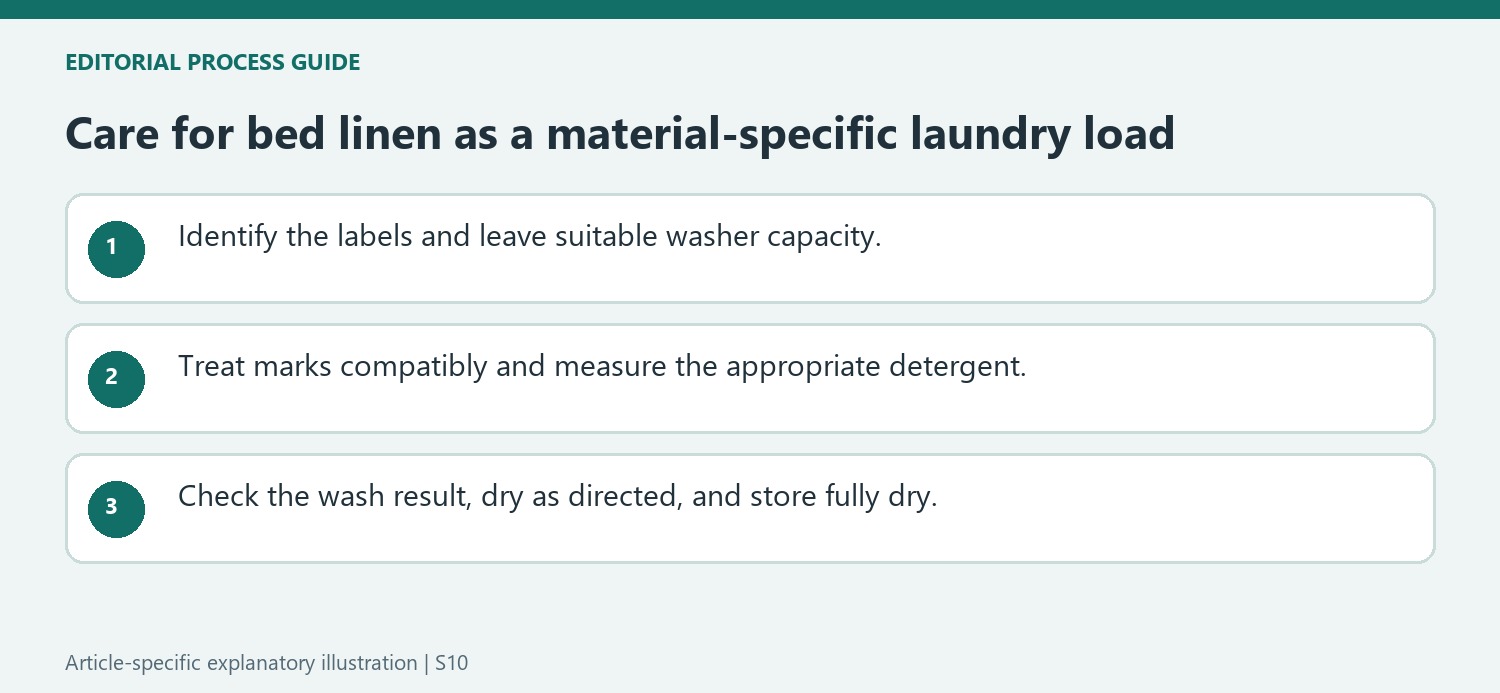
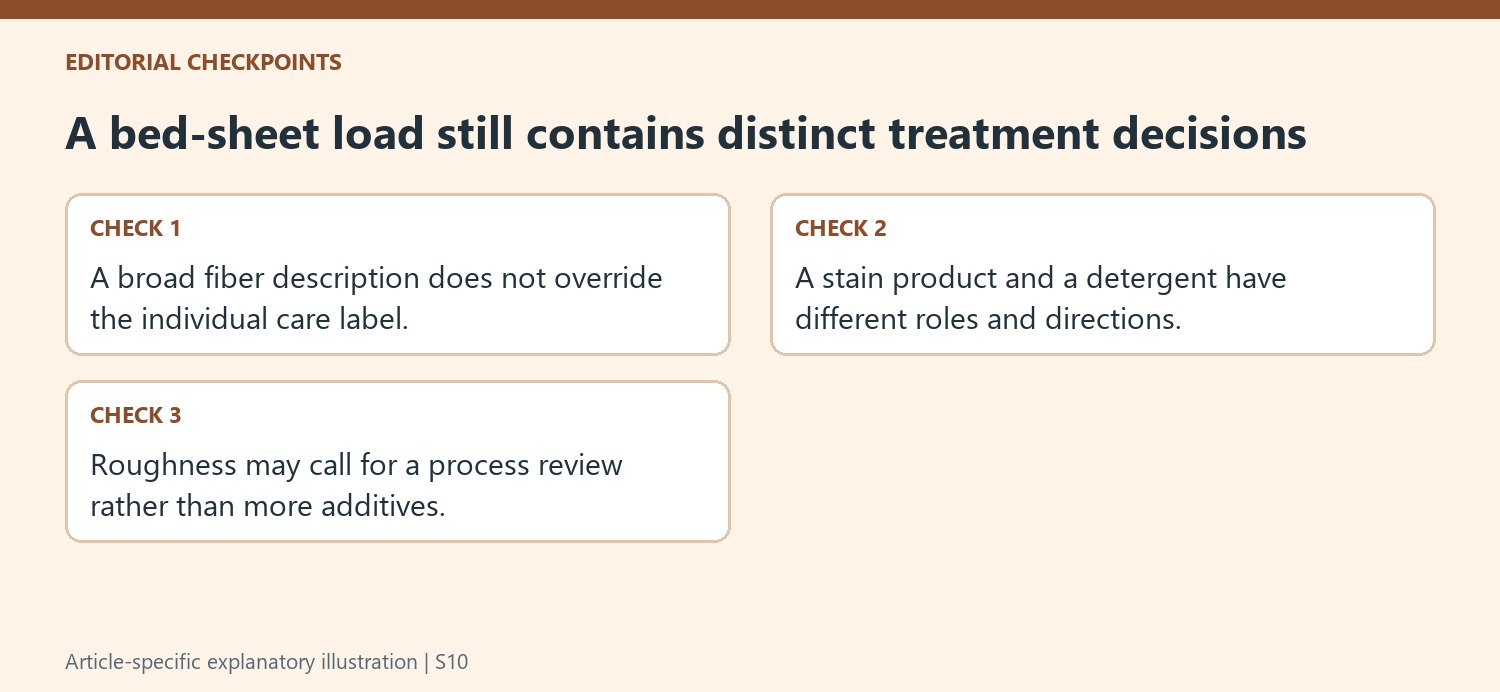
The source surveys several bedding materials, which makes the care label more useful than a single rule for everything called a sheet. Identify the actual fiber, construction, finish, and washing permissions before grouping items. Keep rough clothing and lint-heavy towels out of a sheet load when their care and texture conflict. Leave the washer's required capacity available for the textiles to move rather than tightly packing a large bed set into the drum. If the sheet requires hand care or another process, machine convenience does not override that direction. Prepare a suitable place for drying before starting, especially when the next clean set is needed on the bed soon.
Choose pretreatment and detergent as separate decisions
Inspect marks before laundering and use a treatment permitted for the stain, textile, and color. The article offers several household and commercial options, but they should not be combined into an improvised recipe. A natural ingredient or oxygen-based product still has compatibility limits. Follow the chosen treatment's dose, working period, and removal directions rather than applying a universal five-minute wait. Select detergent through the sheet's requirements and the product and machine guidance, measuring for the actual load and conditions. More detergent does not necessarily improve the result and can leave residue. A product's brand name or fragrance description also does not establish its enzyme content or suitability for a delicate fiber.
Complete the care cycle before judging softness
Use the permitted temperature, cycle, spin, and drying process for the individual set. Broad temperature examples in a feature are not a substitute for the label, and any special hygiene requirement needs its own appropriate guidance. Check treated areas before heat drying so an unresolved stain can be reassessed. Dry fully as directed, remove promptly where suitable, and store only clean dry linen. If sheets feel rough, review detergent dose, rinsing, loading, and drying before adding multiple softening ingredients. Do not promise that a soak or additive will restore every damaged fabric. Keep the practical record simple: which set was washed, any remaining mark, and any care restriction that should inform the next load.
References
- How to Wash, Dry, and Care for Bed Linen: Homes & Gardens Ultimate Guide. Homes and Gardens; Ottilie Blackhall.
Care labels, pretreatment and room in the drum help sheets wash without unnecessary wear.


Leave a Comment
Comments (0)