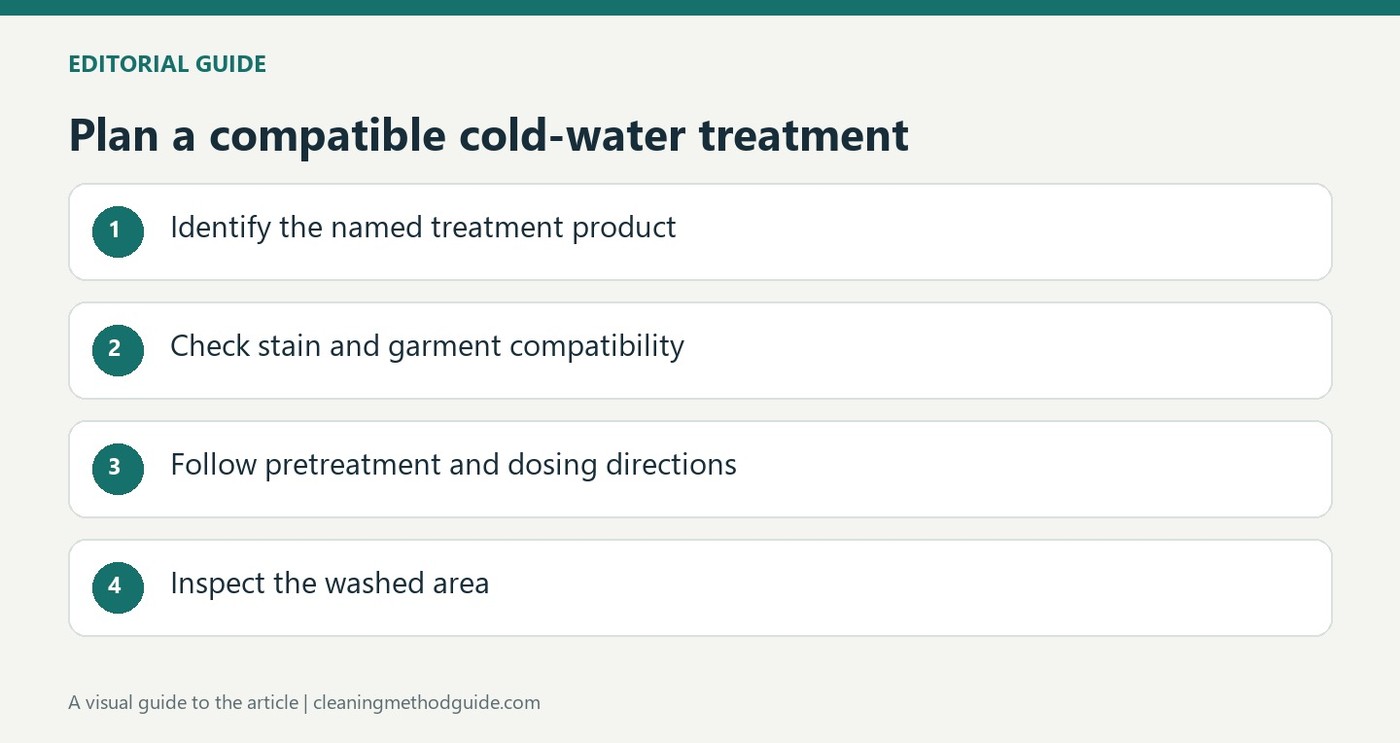
Tide's cold-water guide recommends applying its Oxi Boost liquid directly to suitable stains before a compatible wash. The company attributes performance to a formula designed for cooler water. That is a product-specific recommendation, so it should not be read as proof that every detergent or every stain behaves identically in cold conditions.
Using less hot water reduces the energy needed for water heating, but fabric-care instructions still govern the process. Check whether the clothing allows pretreatment and which cycle is appropriate. A cooler temperature does not by itself protect delicate construction from excessive agitation, and a detergent's cold-water claims should be considered alongside sorting, dose and inspection after the wash.
Identify what the recommendation covers
This source is a manufacturer guide for a named detergent, so its cold-water advice should be read in that context. It recommends direct application of the liquid to a suitable mark before washing. Keep that product identity attached to the method; another formula may have different application, timing or fabric restrictions even if its bottle looks similar.
Coordinate pretreatment and the main wash
Before applying detergent directly, read the current container instructions and check the garment's care requirements. Then select a compatible wash process rather than choosing cold solely because the pretreatment guide mentions it. A concentrated application and a machine dose perform different jobs. Follow the directions for each instead of assuming that adding more liquid everywhere is the source of the result.
Assess the result rather than the temperature alone
The article highlights reduced water-heating demand as a benefit of cooler washing. That gives a reason to consider cold water, but the finished garment still needs inspection for the original mark. Evaluate stain removal alongside fabric condition and the suitability of the cycle. Temperature is one choice in a coordinated laundry process, not an independent guarantee that every residue will disappear.
Treat the brand page as product-specific guidance
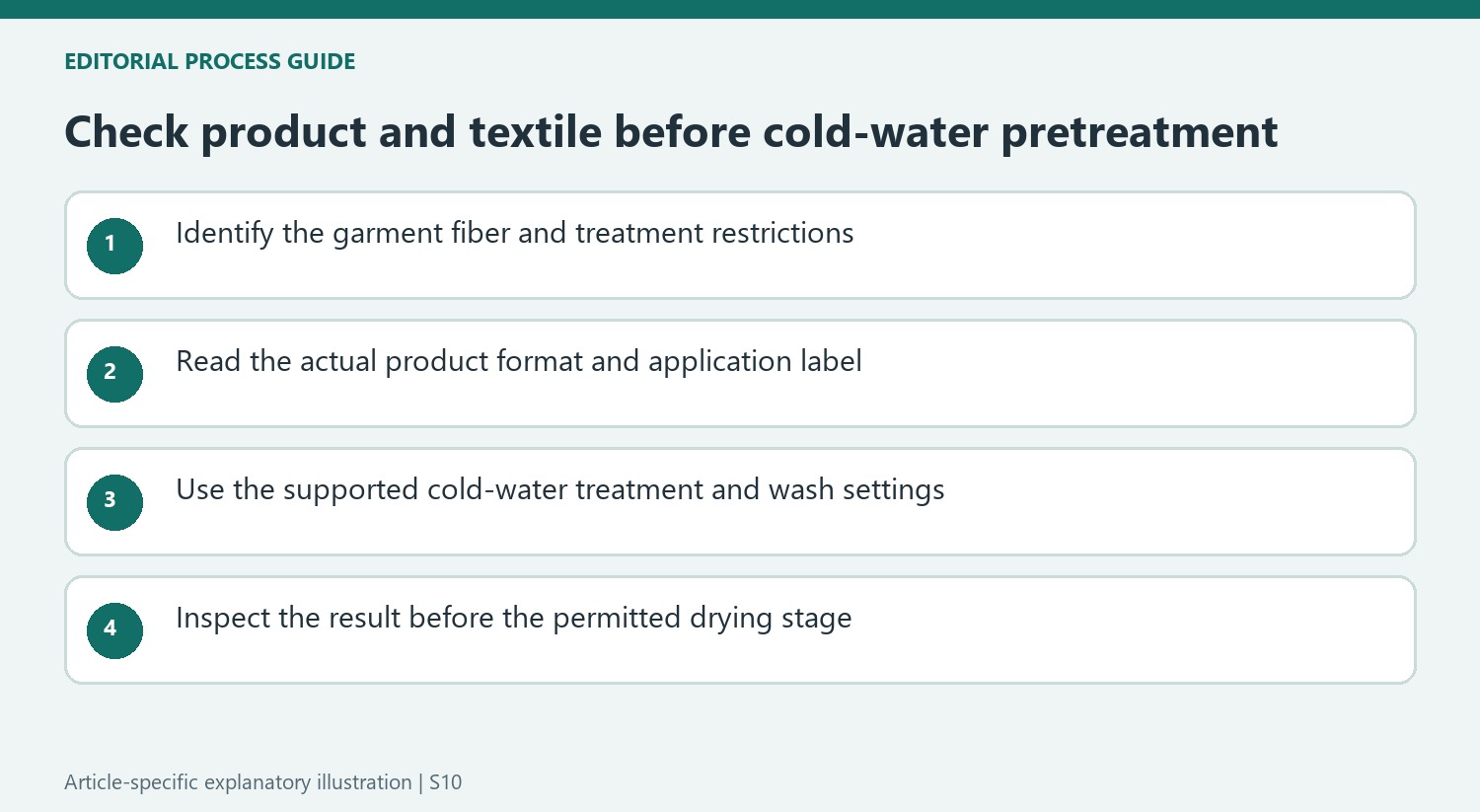
Tide's cold-water page promotes a named pretreatment formulation rather than proving that every laundry product performs identically at a lower temperature. Read the current label on the product actually available before applying it to a stain. A similarly named powder, pod or liquid may have a different intended use. The source's direct-application example should not become permission to open a laundry capsule or improvise a concentrated solution from another format.
The garment's instructions are the other half of the decision. Cold water can be compatible with many textiles without making every stain product suitable for silk, wool, unstable dyes or special finishes. Identify the fabric and any restricted treatments before starting. Acting quickly, as the source recommends, is useful when it means an appropriate early response, not rushing past the information needed to avoid changing the color or texture around the mark.
Distinguish water temperature from the complete washing method
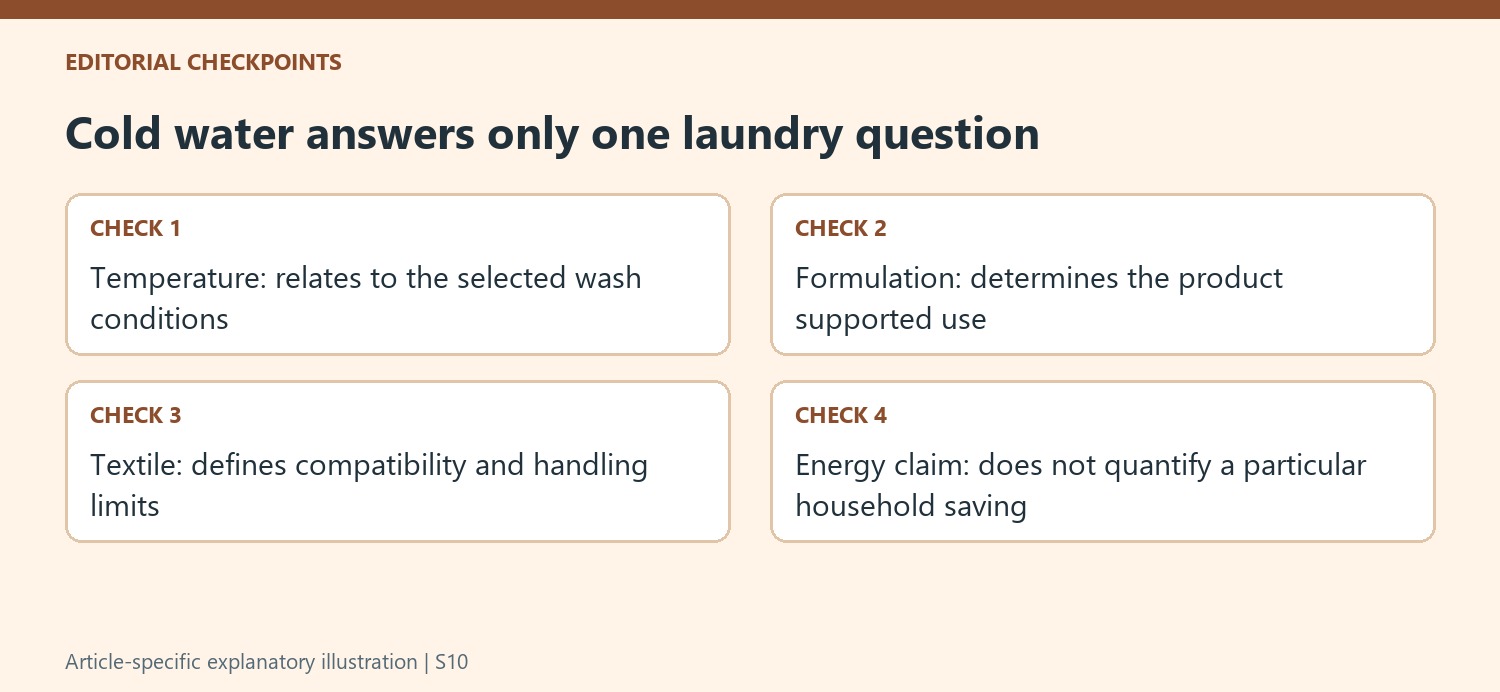
The article emphasizes a formulation designed to work in cold water. That makes temperature one part of a process that still needs the correct product dose, permitted pretreatment and wash settings. Lowering the temperature does not compensate for an overloaded drum, an incompatible cleaner or skipped residue removal. Keep the textile's supported routine and the product's actual application directions together rather than treating cold as a complete stain-removal instruction by itself.
The page's general language about results is a manufacturer's claim, not an independent comparison across every stain and washer. An old greasy mark and a fresh water-based spill can behave differently. Assess the particular residue and the care label rather than promising that one cold wash must remove it. If treatment is unsuccessful, inspect the result and seek a fabric-compatible next step instead of simply adding more concentrated product.
Describe energy benefits without inventing a household saving
The source links colder washing with reduced water-heating energy compared with hot washing. That is a useful directional point, but it does not supply a measured saving for an individual household. The washer, previous temperature choice and actual load routine affect the outcome. Avoid converting a general brand statement into a guaranteed bill reduction or numerical environmental claim that the page has not established for this particular use.
A practical change therefore begins with a load whose fabrics, soil and product all support the cold-water process. Follow the selected pretreatment and washing directions, then check the item before its permitted drying stage. Do not confuse a pleasant scent with evidence that the stain has gone or that the laundry has been disinfected. Cold-water convenience remains a product-and-textile decision, with the visible cleaning result assessed separately from the energy reason for choosing the cycle.
References
Tide's guide links cooler laundering to detergent formulation and lower water-heating demand.


Leave a Comment
Comments (0)