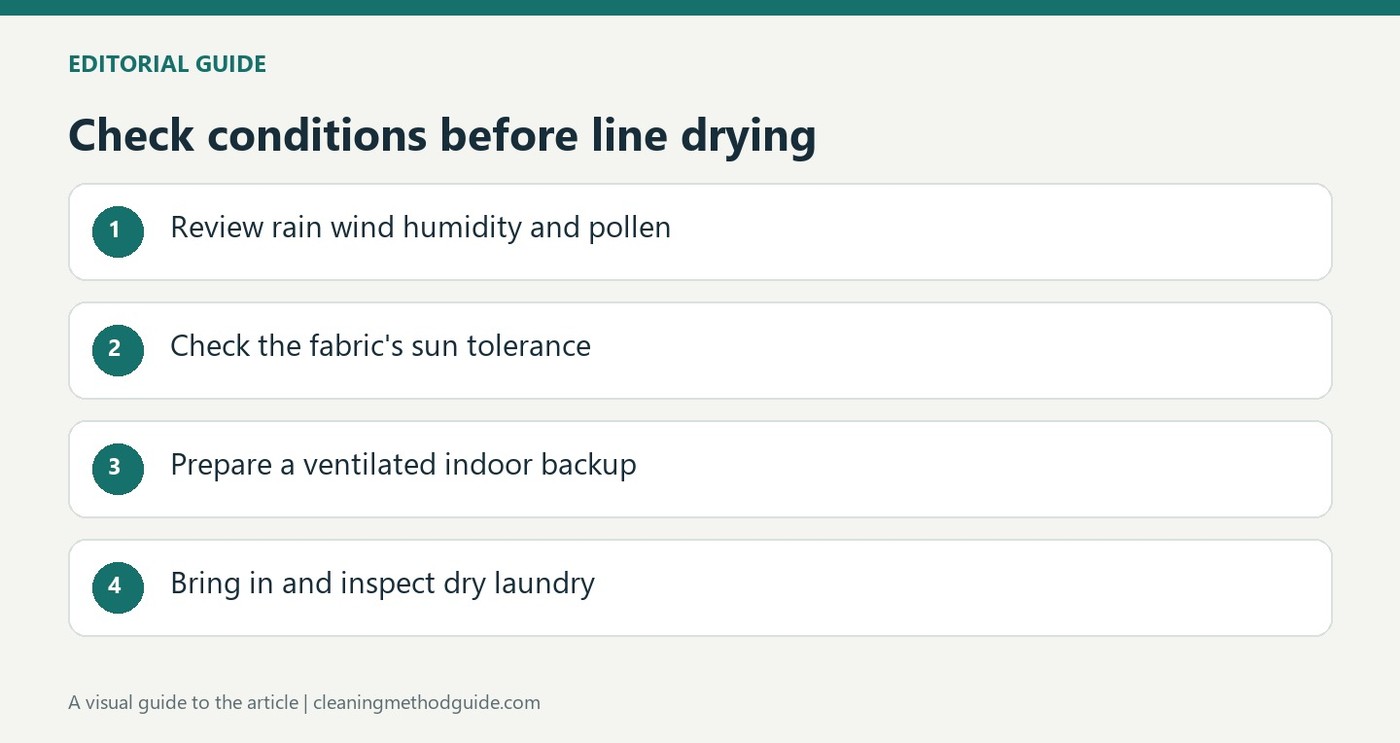
Homes & Gardens notes that a warm, breezy day is not the only consideration when drying clothing outdoors. Pollen can settle on damp fabric and travel back indoors on sheets, towels and garments. Sudden rain, dust and strong wind can also leave a clean load wet or dirty again.
Choose a drying location and time around local conditions, especially for a household affected by seasonal allergies. An indoor rack provides a backup, provided the room has enough airflow and moisture control. Strong sunlight can fade some fabrics, and local housing rules may also affect line drying. The most suitable method depends on the item and the environment rather than sunshine alone.
Check more than the rain forecast
The source separates several outdoor conditions that affect drying: pollen, strong wind, humidity and intense sunshine. A warm day can still leave fabric damp when the air is humid, while gusts may carry dirt onto clean laundry. Check the local conditions for the period the load will actually be outside rather than judging only the weather at washing time.
Choose exposure for the particular fabric
The article notes that prolonged strong sunlight can fade dark and bright textiles. Follow the item's care directions and consider an appropriate shaded location where outdoor drying is suitable. For a pollen-sensitive household, that choice may still leave an unwanted exposure. An indoor alternative is useful when outdoor conditions conflict with either fabric care or the household's practical requirements.
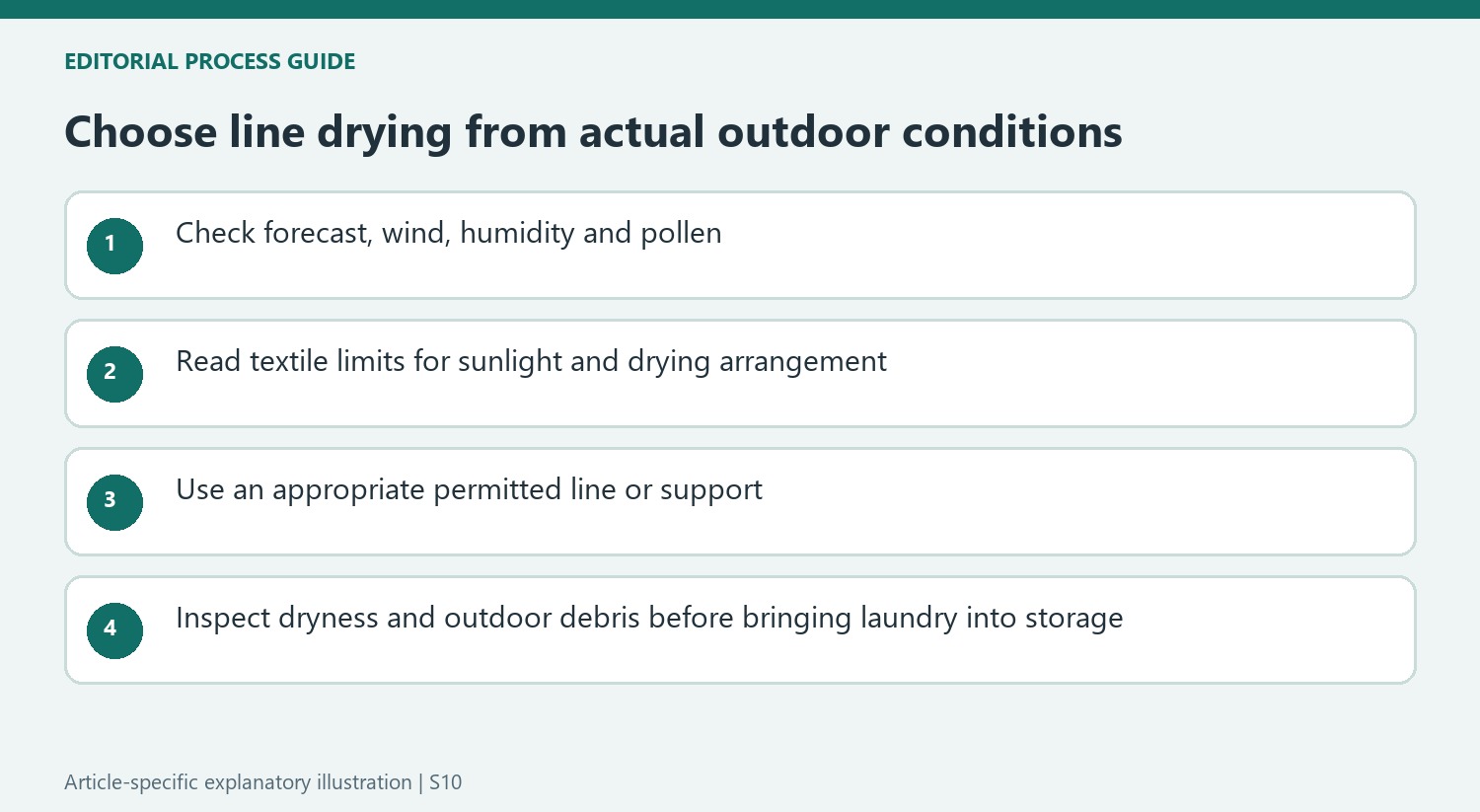
Complete the outdoor-to-storage transition
Bring laundry inside when it is dry instead of leaving it exposed indefinitely. The source suggests inspecting and shaking items to avoid carrying insects indoors. Check local housing rules before installing a line, and keep a ventilated indoor backup ready for a changing forecast. The drying method can change from load to load; there is no need to commit every fabric to one seasonal default.
Check conditions beyond whether the sun is visible
Homes & Gardens describes outdoor drying as useful in the right conditions while noting that warmth alone does not guarantee a quick result. Humidity, wind and a changing forecast can all alter the process. Consider the expected drying window before putting a large bedding load outside. A clear morning can still lead to a wet afternoon, and strong wind can introduce dust or compromise a poorly secured arrangement.
The guide's suggested drying times are expert context rather than a readiness deadline for every textile and climate. Check the actual fabric, particularly thick seams and overlapped areas, before deciding it can be folded. An item left damp for too long deserves appropriate reassessment and laundering where necessary, not simply an added fragrance. Use its care instructions for any rewash rather than applying the article's named additive indiscriminately to all fibers.
Include pollen sensitivity and dye exposure in the choice
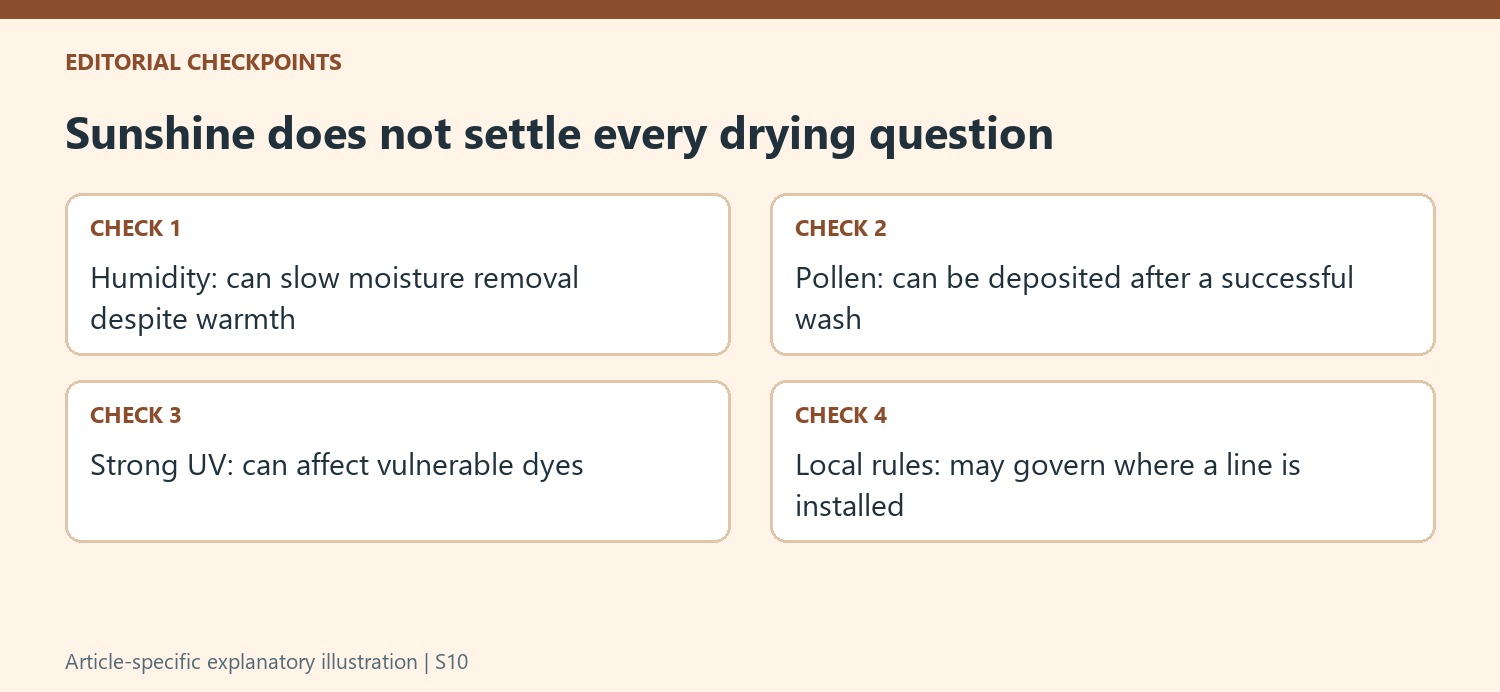
The source notes that damp outdoor textiles can collect pollen, which is relevant when the household is trying to reduce seasonal allergen exposure. A sensitive-skin detergent does not create a barrier against material deposited afterward on the line. Review local pollen conditions and the household's needs before choosing the drying location. Indoor drying through a suitable arrangement can be preferable even when outdoor sunshine initially looks attractive.
The article also discusses fading under strong sunlight, particularly on dark or vivid colors. Follow the textile's instructions about shade, orientation and permitted exposure rather than assuming that hotter sun always means better fabric care. Turning a compatible item inside out may help with appearance protection, but it does not eliminate all weather effects. The drying method must suit both the moisture task and the dye or finish the owner wants to preserve.
Plan the return indoors as part of line drying
The guide recommends bringing laundry in when it is ready and checking for insects or outdoor debris before folding. That final inspection prevents a successful wash from ending with unwanted material carried into storage. A quick shake may help with loose debris where appropriate, but it does not establish that pollen or every contaminant has been removed. Assess what happened during drying rather than treating outdoor freshness as proof of cleanliness.
Check applicable lease, community and local rules before installing a line; the source's discussion of legal protections varies by jurisdiction and is not a current legal determination for a particular home. Keep a suitable indoor fallback available for poor weather or high humidity. A practical plan chooses the location from textile care, conditions and household needs, then confirms the actual result before storage instead of treating outdoor air drying as automatically the best option every summer day.
References
- Laundry Experts Reveal 6 Reasons You Should Think Twice Before Drying Clothes Outside This Summer. Homes and Gardens; Jennifer Ebert; Ottilie Blackhall.
Outdoor drying saves machine use, but fresh fabrics can collect allergens, dust and moisture again.


Leave a Comment
Comments (0)