Match the use count with the hanging arrangement
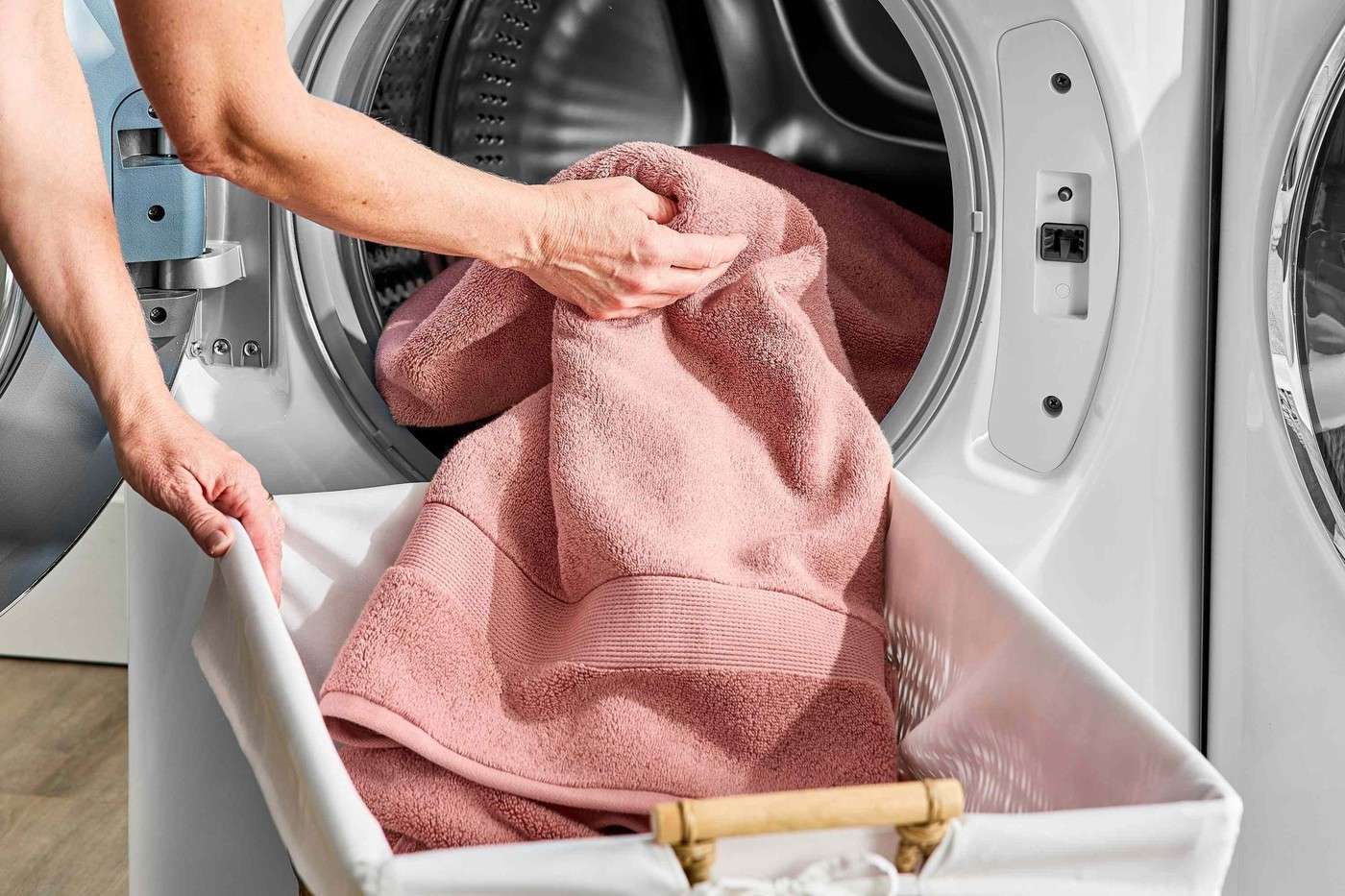
Better Homes and Gardens presents its bath-towel interval alongside a practical condition: the used textile must be hung to dry. Its experts favor a bar that spreads the fabric rather than a crowded hook, and warn against leaving wet laundry in the machine. Counting uses alone misses those intervening hours when folds or a pile can hold moisture against the towel.
Use washing frequency as a starting guide
Better Homes and Gardens describes bath-towel washing after about three uses or at least weekly, with hand towels and washcloths needing more frequent attention. These are practical guides, and a towel that is dirty or stays damp should not wait for an arbitrary number of uses.
Avoid a wet pile
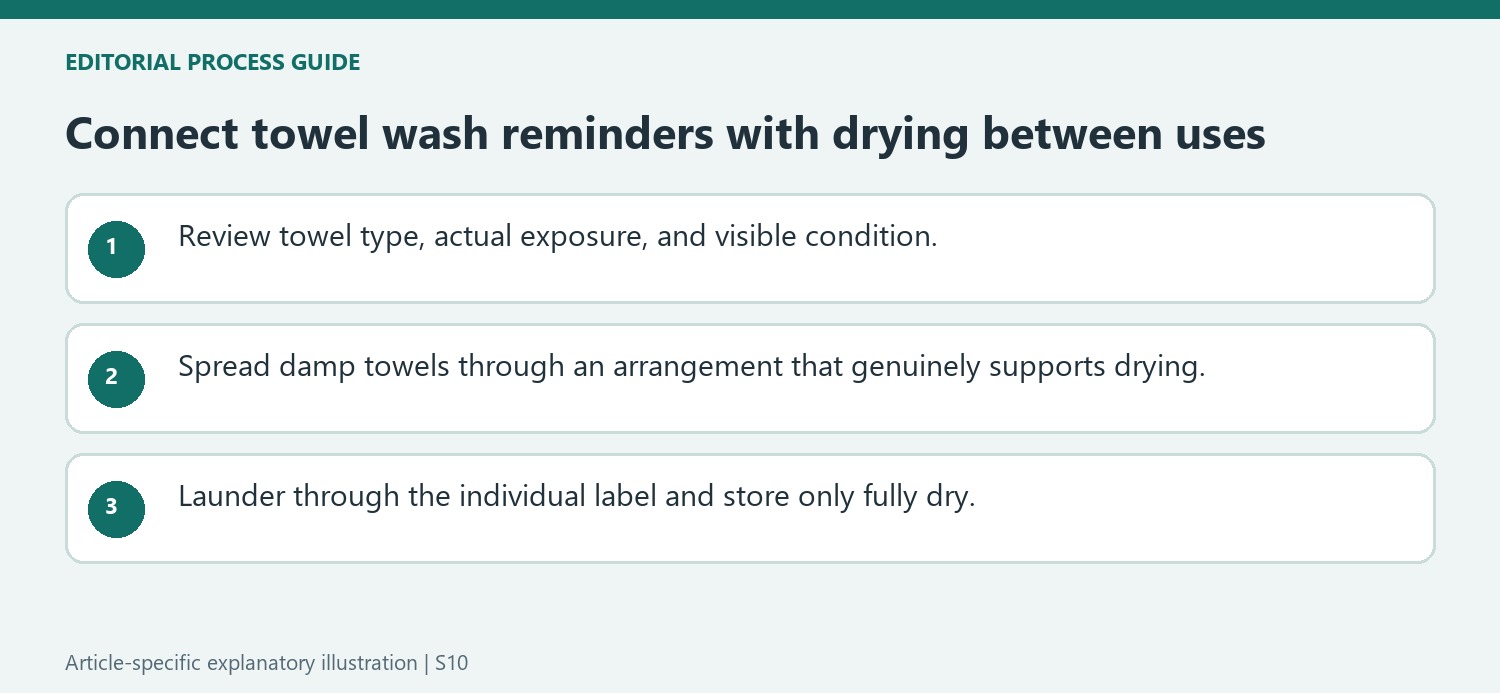
The article emphasizes full drying between uses, shaking towels before drying and not leaving wet fabric heaped together. Follow the care instructions when washing, including any restrictions on bleach or temperature. Keeping a towel fluffy does not require delaying cleaning indefinitely; suitable washing and prompt, complete drying help preserve both useful texture and a fresher bathroom routine.
Make drying space part of the schedule
The experts' preferred towel bar is useful because it exposes more fabric to the air than a tightly gathered hanging point. Check whether every frequently used towel actually has that space; adding a reminder to wash does not fix a damp pile between laundry days. The source also advises transferring wet laundry promptly instead of leaving it in the machine. Shake towels apart before the next drying stage and follow their permitted settings. Treat the suggested use count as a household planning aid: visible dirt, sustained dampness and the way a towel was used can all justify replacing it with a clean one earlier.
Use the wash reminder together with the way the towel was used
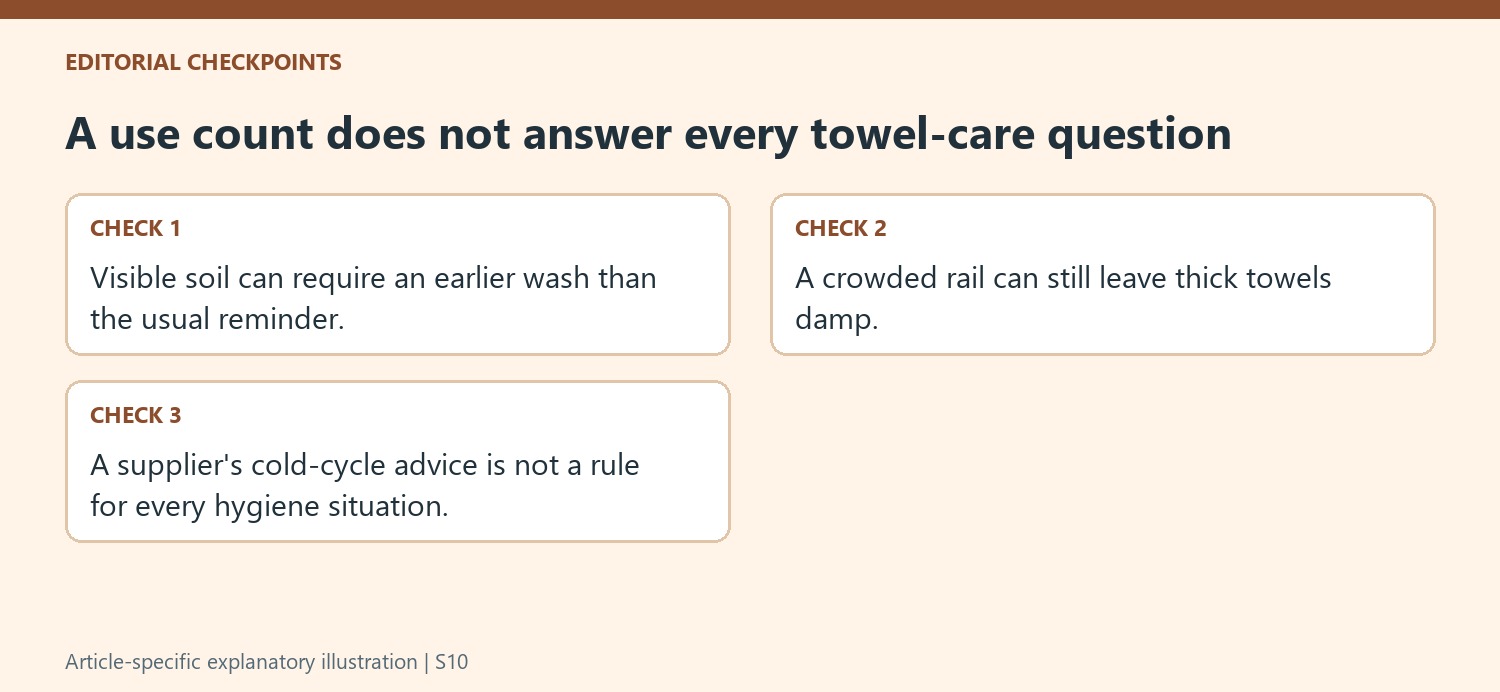
The source gives frequency examples for bath towels, hand towels, and washcloths rather than treating all three as the same task. Use those examples as prompts to review actual use and condition. A heavily soiled towel, one shared under unsuitable conditions, or one left damp may need attention sooner than a nominal use count. Keep clean replacements available so an earlier change is easy to make. Do not use a calendar to decide whether visible soil can remain until next week. The appropriate care process also depends on the textile label and any particular hygiene need, not only on the number of times a towel has touched water.
Make between-use drying a separate practical task
The source favors an arrangement that spreads the towel rather than compressing it on a hook or leaving it in a pile. Assess what actually dries in the available room. A rail crowded with overlapping thick towels may still trap moisture, while a drying location must remain suitable for its surroundings. Keep used damp towels away from clean folded storage. If the room or towel remains persistently wet, investigate that condition instead of assuming a heavier or more expensive towel will solve it. The source discusses cotton content and fabric weight as product characteristics, but those figures do not replace a workable drying arrangement or establish a universal useful lifespan.
Finish laundering through the label instead of a single temperature rule
The quoted source includes a cold-cycle recommendation from a towel supplier. Treat that within the context of the actual product and cleaning need rather than making it a rule for every material or situation. Choose compatible detergent and settings through the towel, washer, and product directions, avoiding unnecessary softening coatings. Transfer the washed load promptly into its permitted drying process and check that thick edges are dry before folding. Where suitable, shake towels out before tumble drying rather than leaving them tightly tangled. Maintain clean storage and record an unresolved odor or texture change. A useful towel routine links timely washing, drying between uses, complete post-wash drying, and material care without promising that one purchase specification guarantees cleanliness.
References
- You’re Probably Not Washing Your Towels Often Enough—Here’s the Right Schedule. Better Homes & Gardens; Veronica Toney.
Better Homes and Gardens presents its bath-towel interval alongside a practical condition: the used textile must be hung to dry. Its experts favor a bar that spreads the fabric rather than a crowded hook, and warn against leaving wet laundry in the machine. Counting uses alone misses those intervening hours when folds or a pile can hold moisture against the towel.


Leave a Comment
Comments (0)