Record what the kitchen cloth actually contacted
Real Simple contrasts a kitchen towel that dried clean hands with one used during raw-food preparation. A soy-sauce splash, frequent wetness and contact with raw meat pose different laundering questions, even when the cloths look alike after drying. The article's experts consequently discuss the towel's task history alongside its care tag when deciding on washing frequency and the appropriate cleaning process.
Use the care label and the actual contamination
Real Simple's kitchen-towel guidance distinguishes a cloth used for light drying from one exposed to raw meat or substantial food soil. Experts recommend checking the care label and selecting a suitable wash temperature rather than assuming every towel needs an identical cycle.
Keep cleaning and disinfection claims separate
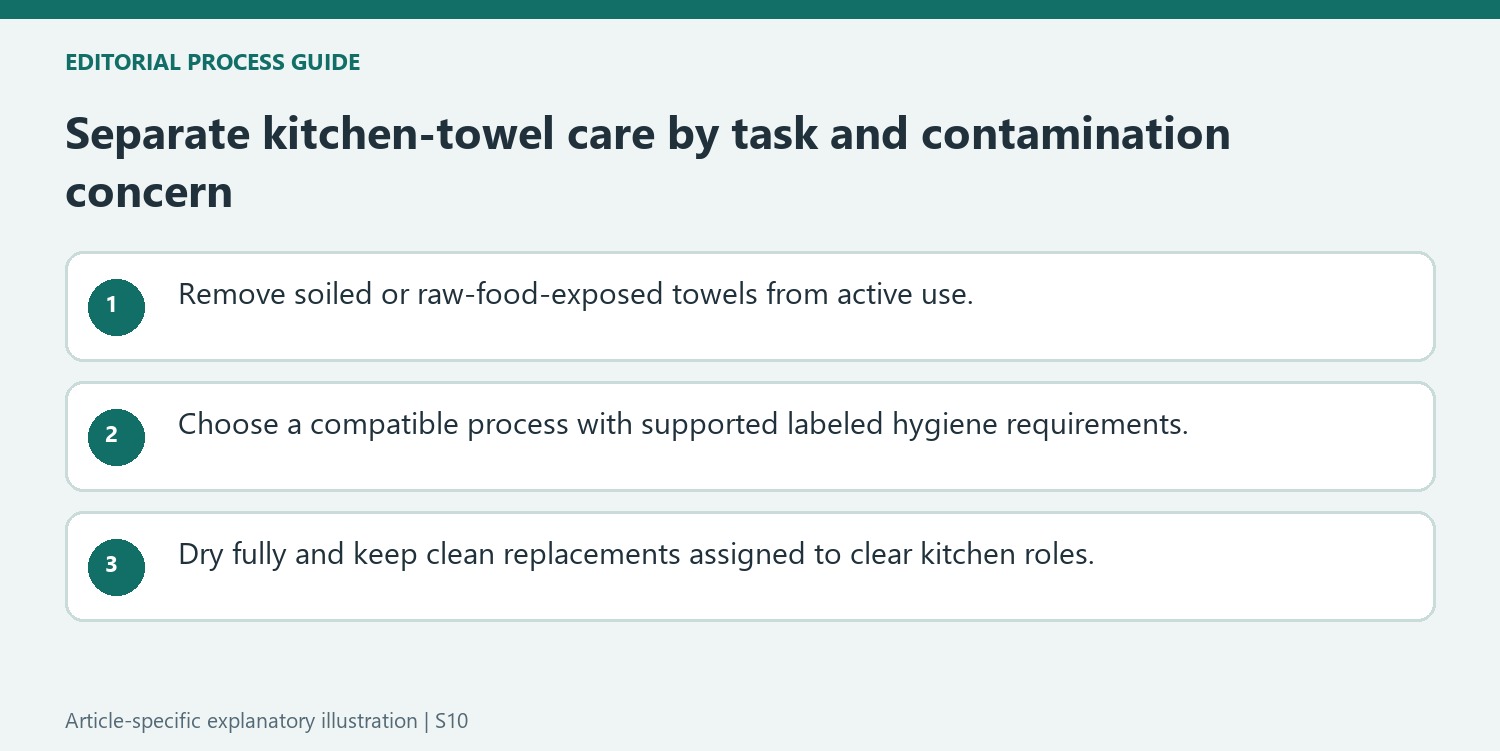
The article discusses additional laundry products, but their dilution and use instructions still control what they can achieve. Do not treat an ordinary stain-removing additive as a guaranteed disinfectant without its label saying so. Keep heavily contaminated kitchen textiles separate from ordinary clothing, wash them promptly and dry them completely before they return to food-related work.
Keep cooking cleanup distinct from hand drying
The article's examples show why a towel's location alone is insufficient for sorting. A cloth beside the sink may only have dried clean hands, while another may have collected raw-food liquid during preparation. Remove the latter from service promptly rather than letting it return to dishes or counters. Select the cleaning process for the actual exposure while respecting the towel's label. Where a disinfecting laundry product is needed, its stated use, dose and conditions determine the result; a pleasant smell or lack of visible stains does not establish disinfection. Finish by drying the cleaned textile completely before returning it to the kitchen. Keep a clean replacement available while the used cloth awaits washing.
Identify the kitchen task before grouping the laundry
The source contrasts a towel used on raw-food residue with one used lightly to dry clean hands. That distinction should guide handling and the next care decision. Remove a towel from use when it is soiled or has contacted a high-risk food spill rather than leaving it available for another person to dry a dish. Keep such items away from clean textile storage and avoid spreading the residue while collecting them. A shared wash load should be chosen for compatible care and the actual contamination concern, not merely because the items are all described as towels. The article's household examples do not establish that every bath towel and kitchen towel should automatically be combined.
Choose a process with an appropriate supported hygiene purpose
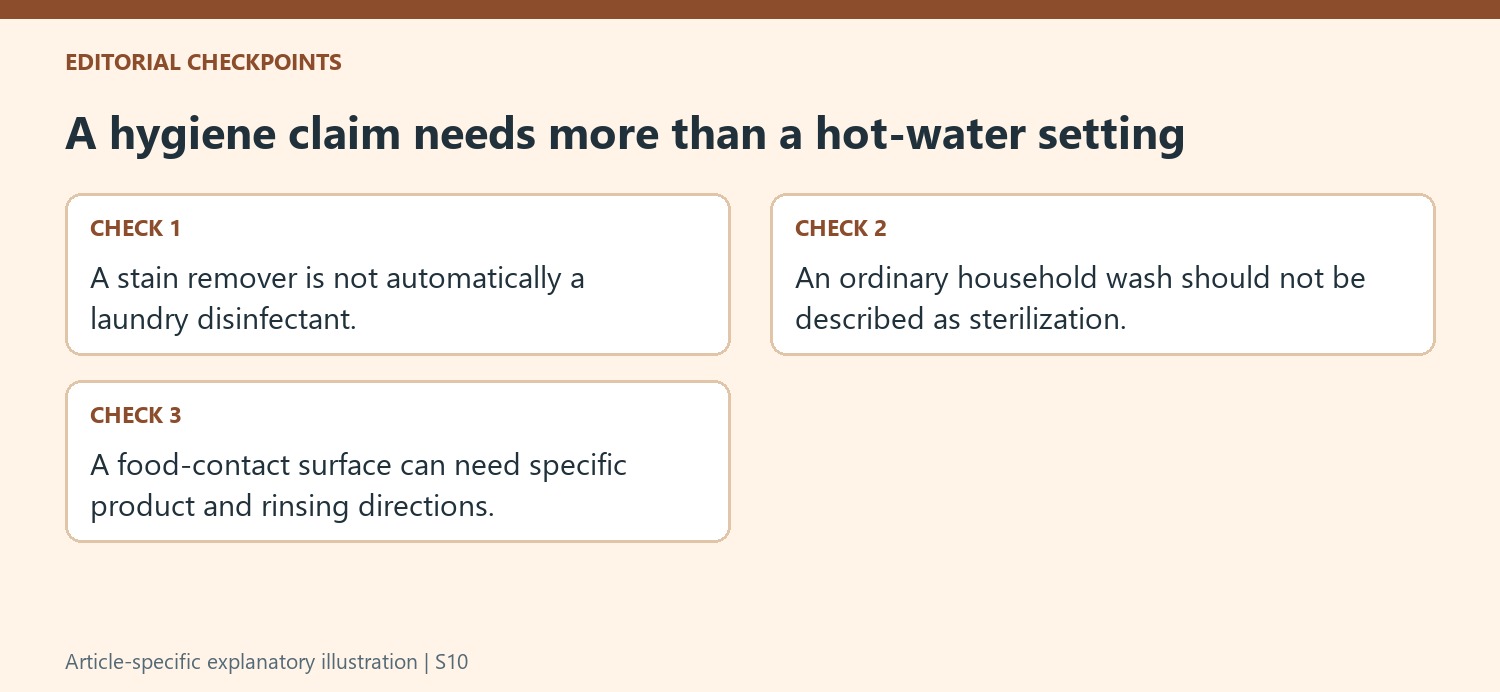
Check the towel label and machine directions before selecting a hotter or sanitizing cycle. Temperature alone is not a description of the complete laundering process, and a cycle name should not be treated as a guarantee independent of its instructions. If a laundry disinfecting or sanitizing product is appropriate, use one with the relevant labeled claim for the intended application and follow its dose and contact requirements. An oxygen-based stain remover is not automatically equivalent to a disinfectant, and an ordinary home wash should not be called sterilization. Never improvise bleach concentration or combine it with incompatible products. The source quotes differing preferences, so keep the recommendation tied to the demonstrated process rather than to one person's preferred temperature.
Prevent the next towel from becoming an all-purpose spill tool
Keep clean replacements available and distinguish drying clean hands from wiping food spills or cleaning the counter. Follow appropriate food-surface guidance for high-risk spills; a disinfectant wipe is not automatically suitable for every food-contact surface without the required directions and rinsing. Wash frequently wet or visibly soiled kitchen textiles promptly through their suitable route. Dry fully as directed before returning them to clean storage, and inspect recurring marks or odor instead of masking them. A practical arrangement makes the towel's role clear during cooking and reduces the temptation to reuse the nearest cloth for an incompatible task. Record any separate care requirement so the next laundry load does not rely on guesswork.
References
- Kitchen Towels Can Hold Onto More Germs Than You Realize—Here’s How to Wash Them Right. Real Simple; Madeline Bilis.
Real Simple contrasts a kitchen towel that dried clean hands with one used during raw-food preparation. A soy-sauce splash, frequent wetness and contact with raw meat pose different laundering questions, even when the cloths look alike after drying. The article's experts consequently discuss the towel's task history alongside its care tag when deciding on washing frequency and the appropriate cleaning process.


Leave a Comment
Comments (0)