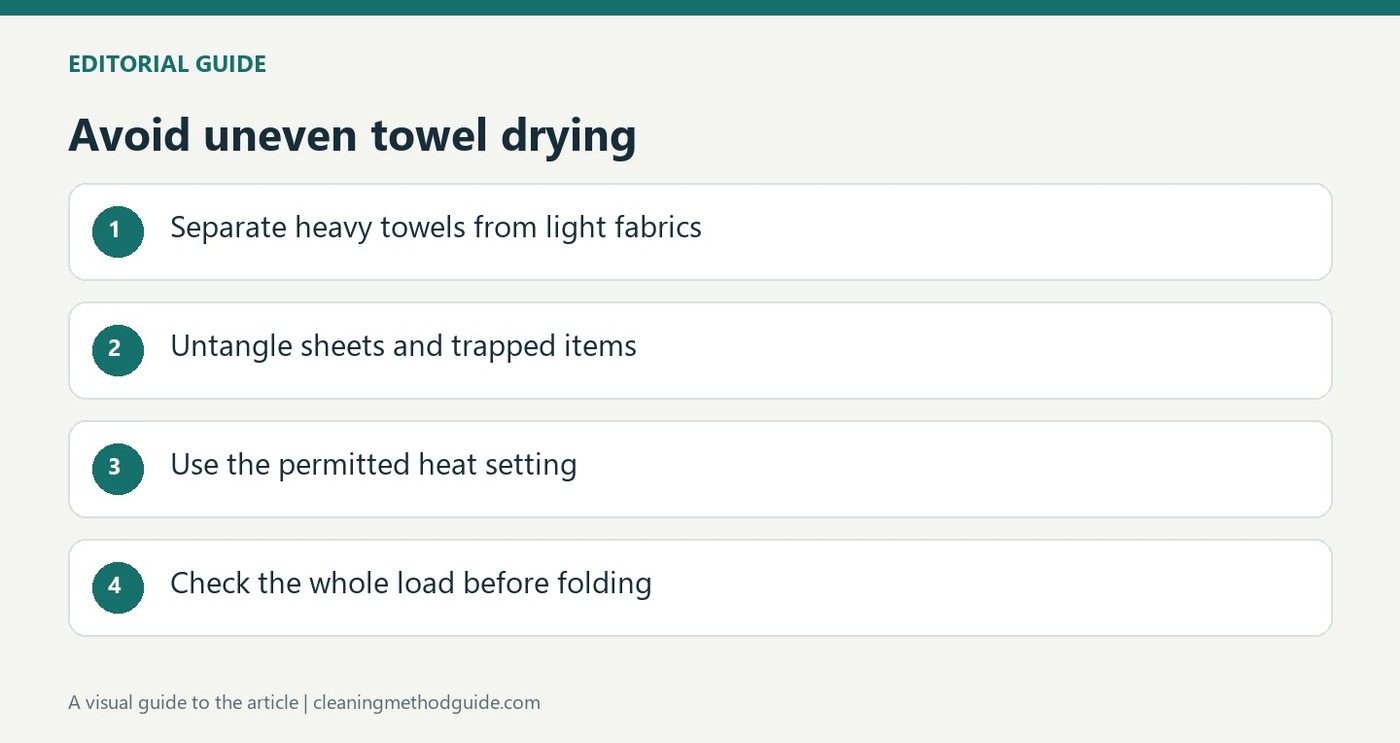
Check for a wet towel hidden inside a sheet
The Spruce's experts describe sheets winding around other laundry, including heavy towels, and restricting the movement of air through the load. That makes mixed drying harder to judge than touching the first dry item near the door. Their recommendation to group similar fabrics addresses both the retained moisture in towels and the damage that their wet weight can cause to delicate clothing.
Match items with similar drying needs
The Spruce explains that towels retain substantial moisture and can take longer to dry than lighter laundry. Sheets can wrap around other items and restrict airflow, while heavy wet towels can be rough on delicate fabrics. Sorting therefore matters in the dryer as well as in the washing machine.
Avoid a mixed load's false finish
The article's experts recommend drying similar fabrics together so the load finishes more evenly. A light sheet that feels dry does not establish that a bundled towel is ready for storage. Check the permitted heat setting and avoid overfilling the drum. Separating the items can make the cycle easier to judge and reduces unnecessary extra heating of pieces that finished earlier.
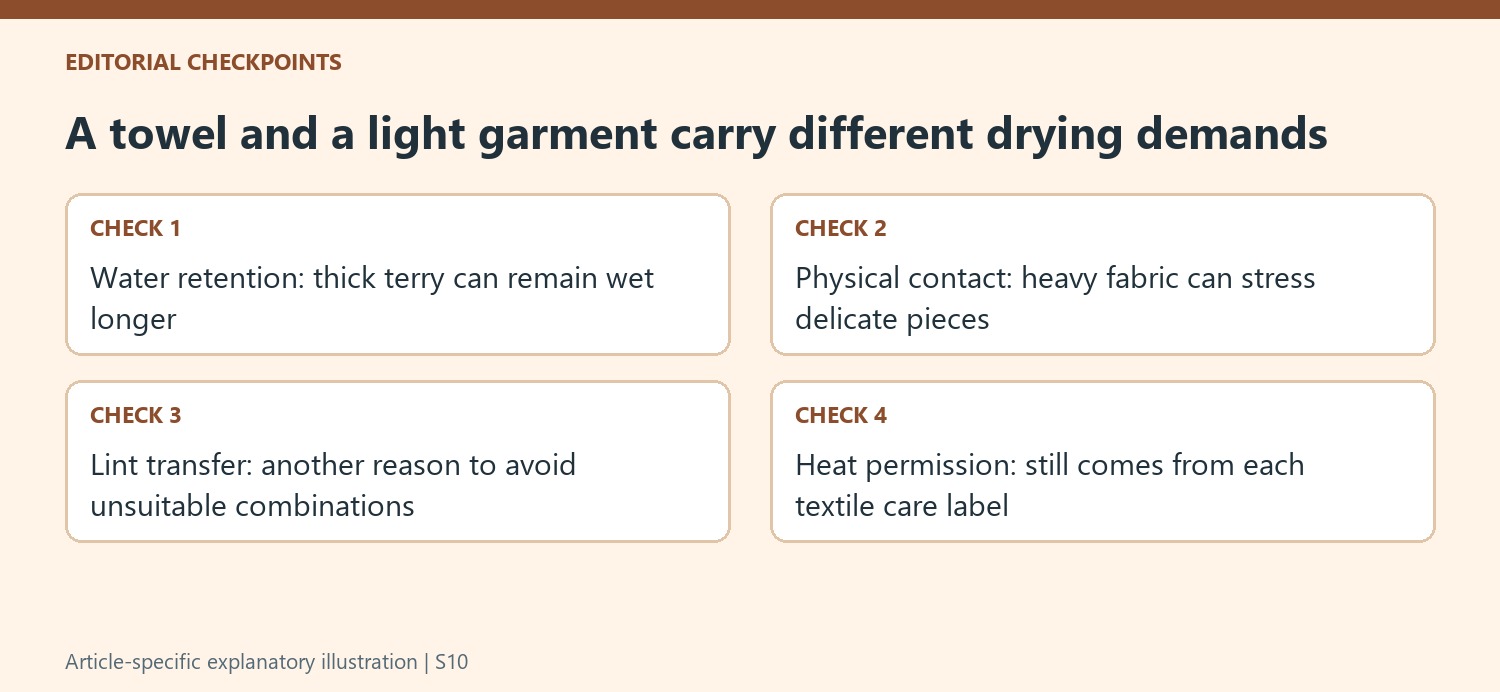
Check for a towel hidden inside bedding
The experts describe sheets wrapping around other pieces, which helps explain why touching one dry section of the load can be misleading. Untangle the items and check whether a fitted sheet has collected a towel inside it. The source favors grouping similar textiles so their drying requirements are easier to judge. It also highlights towel lint as another reason to keep vulnerable clothing separate. Avoid solving a mixed load's uneven result by repeatedly extending the time for every item. Start with compatible groups, respect each label and leave sufficient room for movement so the dryer can treat the load more evenly.
Match moisture load rather than only the count of pieces
The Spruce's experts explain that heavy towels retain more water than lighter garments. Counting a towel and a shirt as one item each misses that difference. Follow dryer capacity and textile instructions with the actual bulk and wet weight in view. A load can fit physically while still restricting movement and airflow, particularly when a large sheet wraps around other items and creates a damp bundle inside the drum.
Separate towels from lighter vulnerable pieces where their care needs differ. The source links the combination with uneven drying, potential wear and lint transfer, not simply a longer timer setting. Extending the cycle for everything can expose the garment unnecessarily while failing to open a tangled sheet. Better matching at the start addresses the load's structure instead of repeatedly adding heat to compensate for a poorly arranged mixture.
Keep dryer accessories conditional on the appliance and textile
The article mentions wool dryer balls as a way to separate fabric and encourage movement. Use only accessories supported by the dryer and textile directions rather than treating them as a substitute for appropriate loading. An accessory does not make a prohibited tumble-dry route acceptable or eliminate the differences between a delicate top and a saturated thick bath towel. Maintain the underlying sorting decision even when a helper product is added.
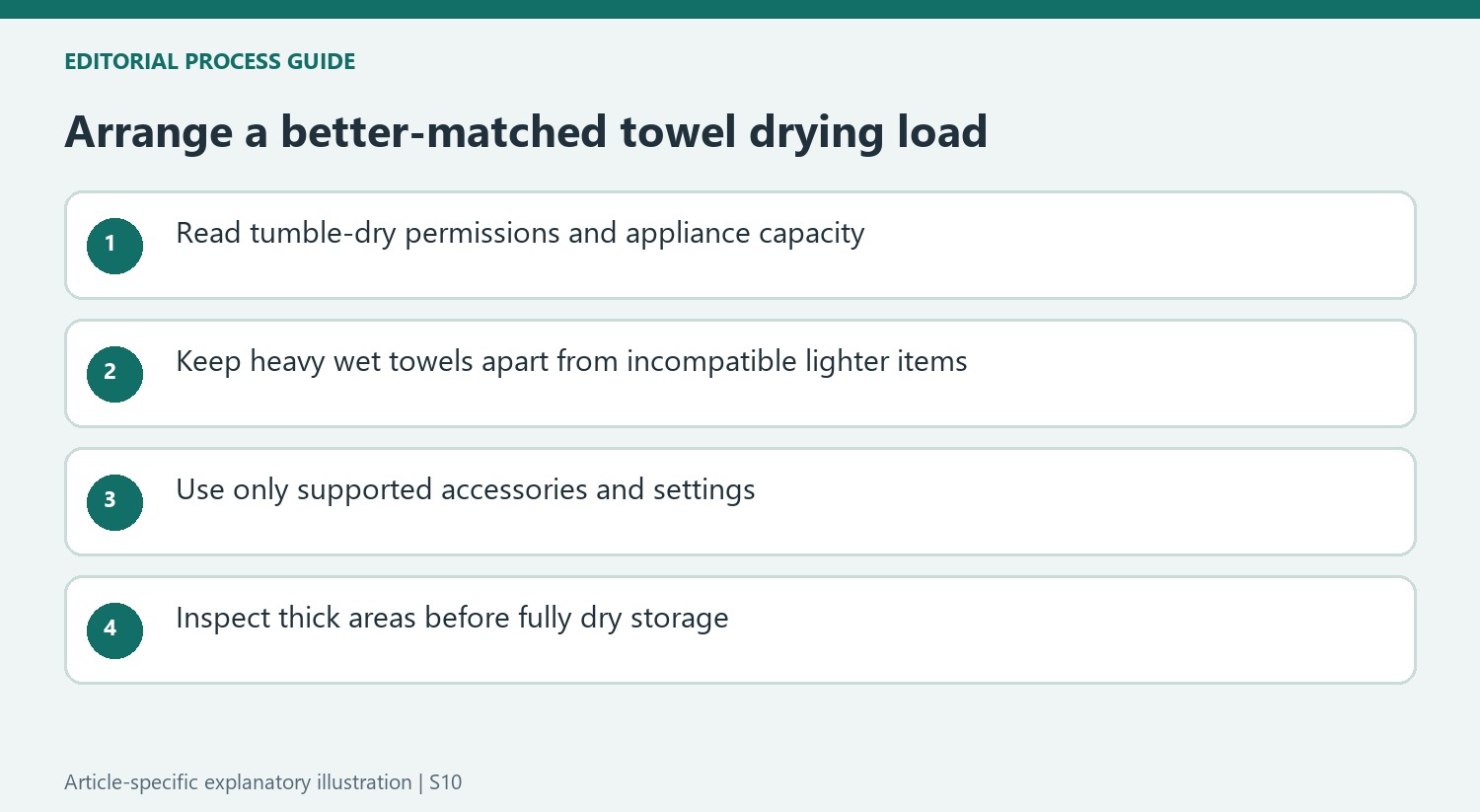
The source also suggests considering purpose alongside weight, with performance garments and lingerie needing their own handling. Match the actual label's drying permission and temperature instead of assuming that all light items share one program. Items requiring flat or line drying should leave the machine route entirely. The correct end point is readiness under the garment's care instructions, not merely the shortest possible time for every item in the laundry basket.
Assess efficiency without promising a fixed saving
The interviewed experts connect more even drying with reduced unnecessary running, but the article does not establish a measured bill reduction for every household. The appliance, load and selected process affect any saving. Keep the practical reason clear: similarly suited textiles are easier to assess and less likely to need conflicting drying conditions. Avoid converting that useful principle into an unsupported guarantee that one separation rule always lowers energy use by a particular amount.
Inspect the towels before storage, including thick hems and folded sections, and remove ready items rather than continuing heat solely because another piece remains damp. Follow the appliance's lint and maintenance instructions as part of the routine. Sorting helps the load, while a maintained dryer supports the drying system itself. Together these decisions preserve fabric function and make a completed cycle more likely to correspond to a genuinely ready textile.
References
- Separating Towels From the Rest of Your Laundry Could Cut Drying Time—Here’s What Laundry Pros Say. The Spruce; Maria Sabella.
The Spruce's experts describe sheets winding around other laundry, including heavy towels, and restricting the movement of air through the load. That makes mixed drying harder to judge than touching the first dry item near the door. Their recommendation to group similar fabrics addresses both the retained moisture in towels and the damage that their wet weight can cause to delicate clothing.


Leave a Comment
Comments (0)