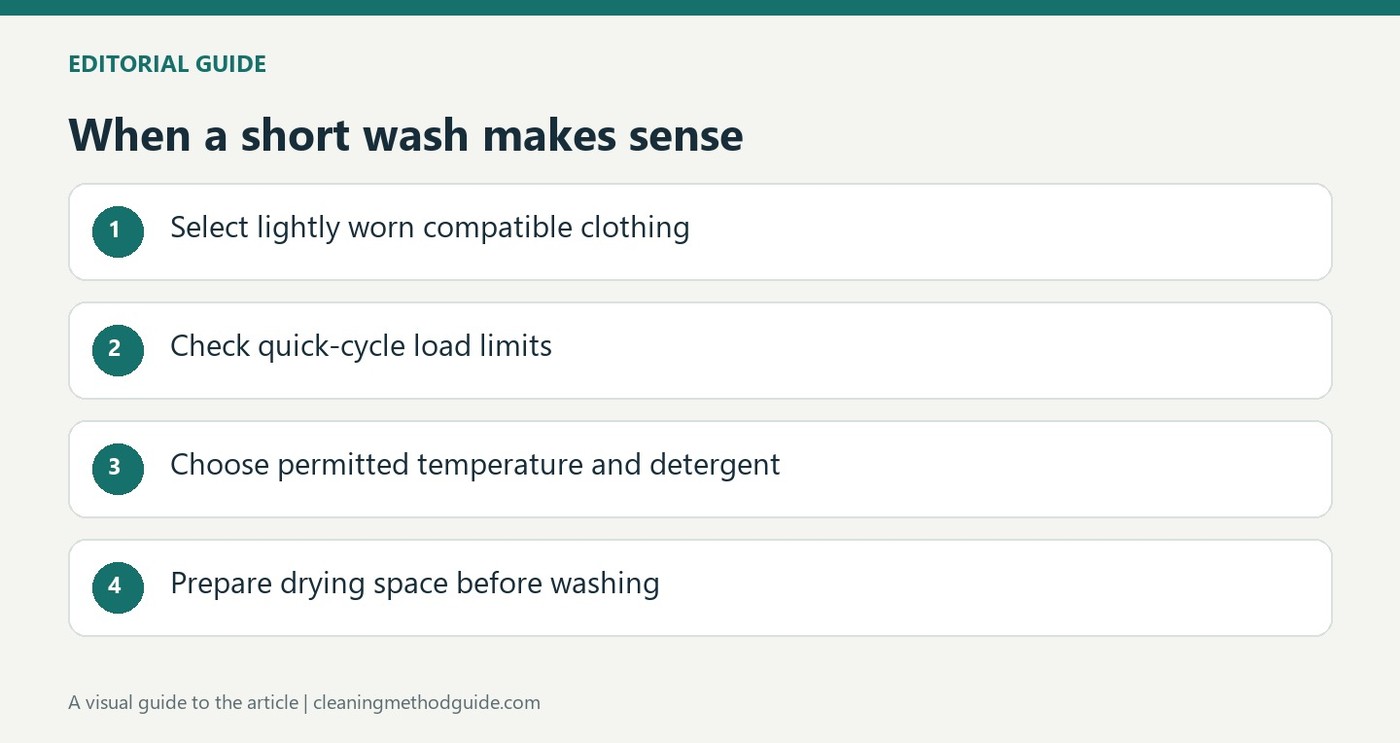
The thirty-minute laundry approach discussed by Homes & Gardens favors shorter, cooler cycles for lightly worn everyday clothing. The article links much of a washer's energy demand to heating water, making temperature choice an important part of the potential savings. It does not establish that every load should use a quick program.
Gym clothing after heavy use, visibly soiled items and other demanding loads may need a different cycle. Check the appliance's quick-wash load limit, the detergent directions and each garment's label before changing the routine. Choosing a suitable short cycle can reduce unnecessary processing, but insufficient washing or overloading can lead to another wash and erase the intended time saving.
Choose the load before choosing speed
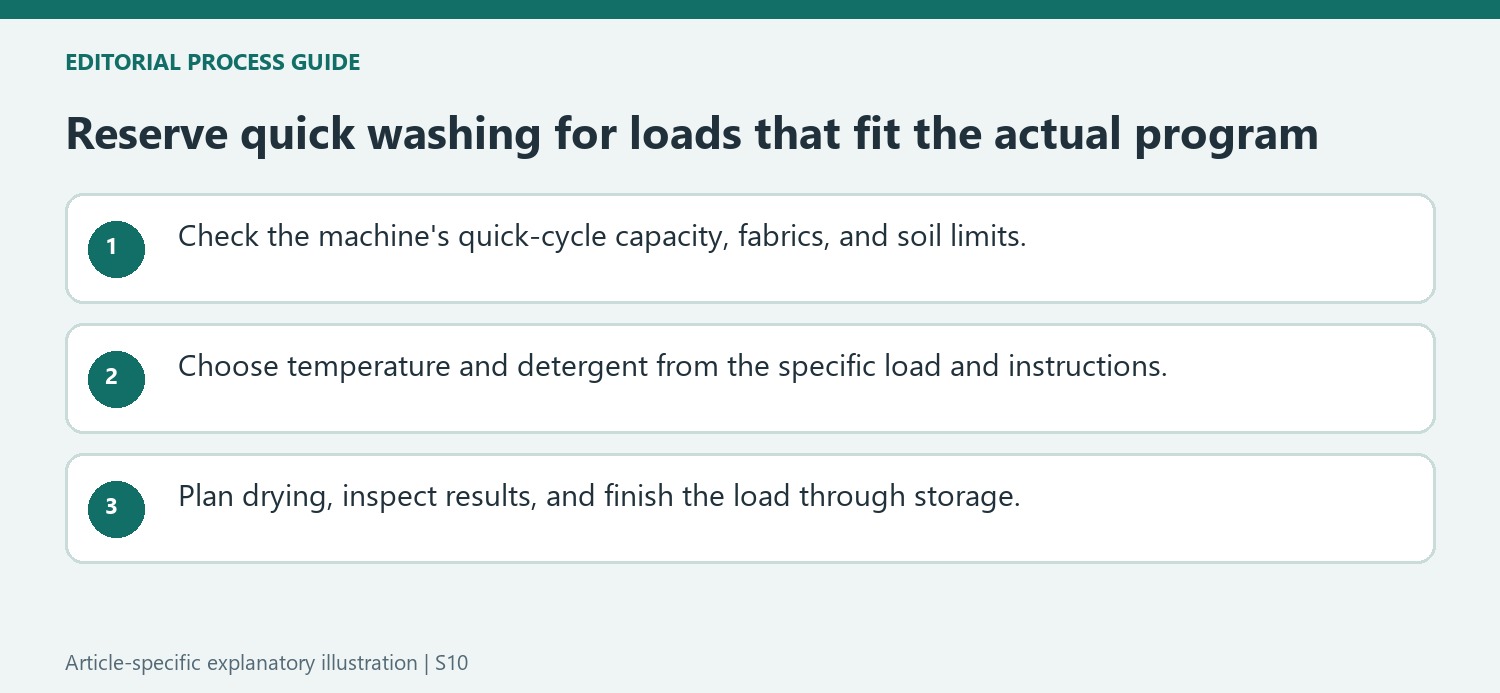
The article's shorter-cycle suggestion is aimed at lightly worn clothing such as ordinary layers, rather than all items waiting in the hamper. Separate those from heavily soiled clothes and more demanding household textiles first. Then check what the machine's quick program actually allows. A full drum that suits a normal cycle may exceed a short program's recommended load.
Consider temperature alongside running time
The source emphasizes water heating when discussing energy use, so selecting a shorter program alone does not describe the entire change. Check the wash temperature, detergent suitability and garment instructions together. Treat numerical savings as dependent on the equipment and previous routine rather than guaranteed for every household. The useful decision is whether a gentler, cooler process can adequately clean this particular load.
Plan where the wet load will go
The article also identifies winter drying as a separate bottleneck. A washer finishing sooner will not help if the rack or dryer is already occupied. Leave space between air-dried items and manage ventilation appropriately for the room. Complete the cycle through drying and putting away; otherwise several short washes can simply create a larger queue of wet clothes.
Choose a quick cycle through the machine's stated purpose
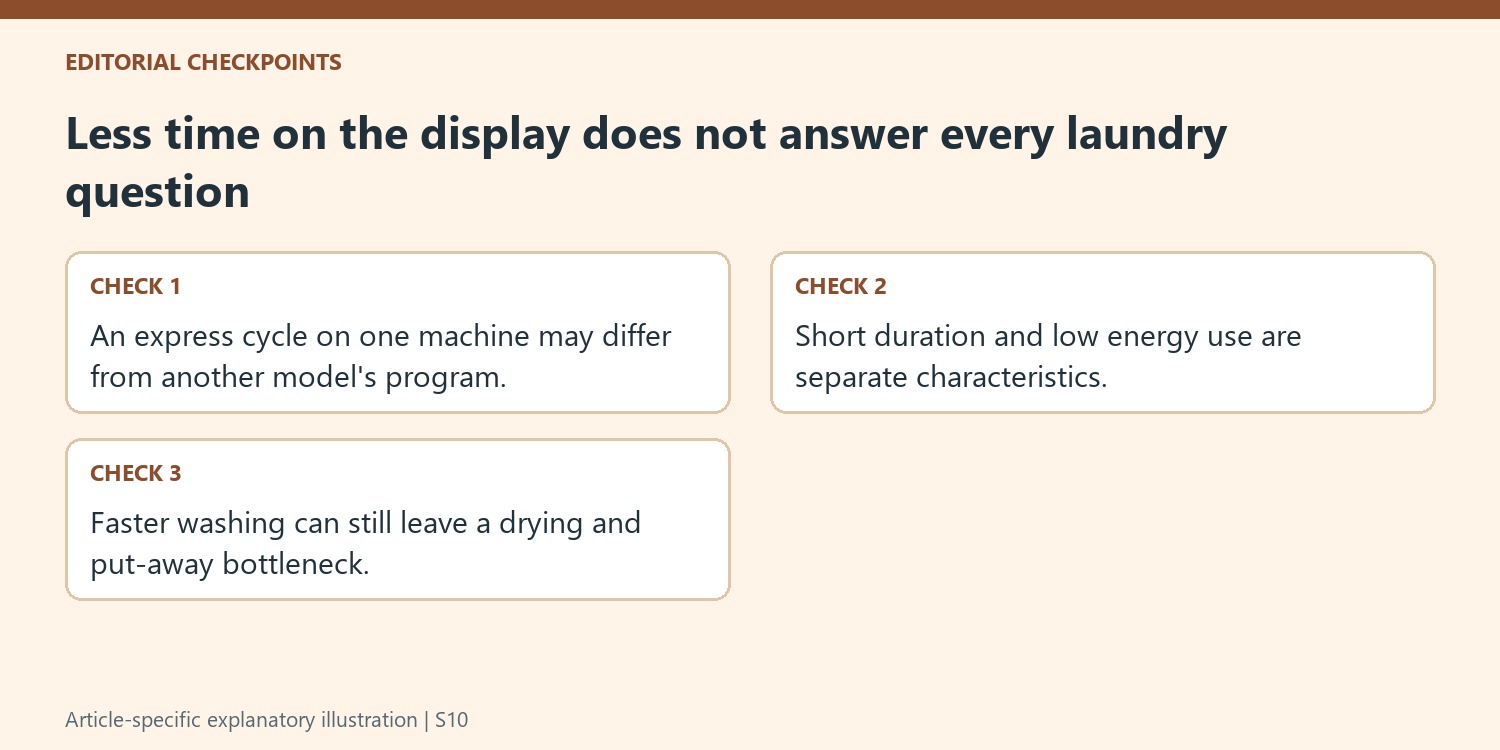
The source's short-cycle idea is aimed at suitable everyday lightly worn clothes rather than every item in the hamper. Read the washer's instructions for the quick program, including its maximum load, supported fabrics, temperature options, and expected soil level. A cycle called express on one machine may not behave like the thirty-minute example described in an article. Keep heavy towels, badly soiled items, special hygiene needs, and fabrics requiring a different method in their appropriate care groups. A smaller suitable load can be a useful convenience, but repeatedly under-cleaning an unsuitable load and washing it again would defeat the purpose of choosing the shorter process.
Keep washing temperature and cycle duration as separate choices
The source discusses energy associated with heating water, but a short program is not automatically the same as a low-energy one. Check the actual program information rather than promising a fixed saving from the time display alone. Select detergent and dose through the product, machine, and textile guidance for the conditions chosen. Pretreat a mark only through a compatible method and inspect the result afterward. Do not treat a preferred branded stain remover or a general claim about modern detergents as evidence that every short cool wash will meet every cleaning need. The useful decision is whether this particular load suits this particular program, not whether shorter always means better.
Plan the drying stage to avoid moving the bottleneck
The article identifies winter drying as a separate practical problem. Confirm the garment's drying permissions and available rack or dryer capacity before starting another quick load. For suitable indoor drying, provide adequate spacing and an appropriate moisture-management arrangement rather than packing wet clothing into an unventilated corner. A portable product recommendation is not proof that the room's dampness issue has been resolved. Transfer washed items promptly through the permitted process, dry fully, and put them away so a faster washer cycle does not create a growing pile of wet or clean unfinished laundry. Review whether the routine actually reduced effort and repeated work before extending the short-cycle choice to other loads.
References
- Why the '30-Minute Laundry Rule' Could Be Your February Game-Changer – It Will Save You Time, Money, and Your Clothes. Homes and Gardens; Megan Slack.
A cooler, shorter routine can help everyday laundry, while heavy soil and care requirements need different treatment.


Leave a Comment
Comments (0)