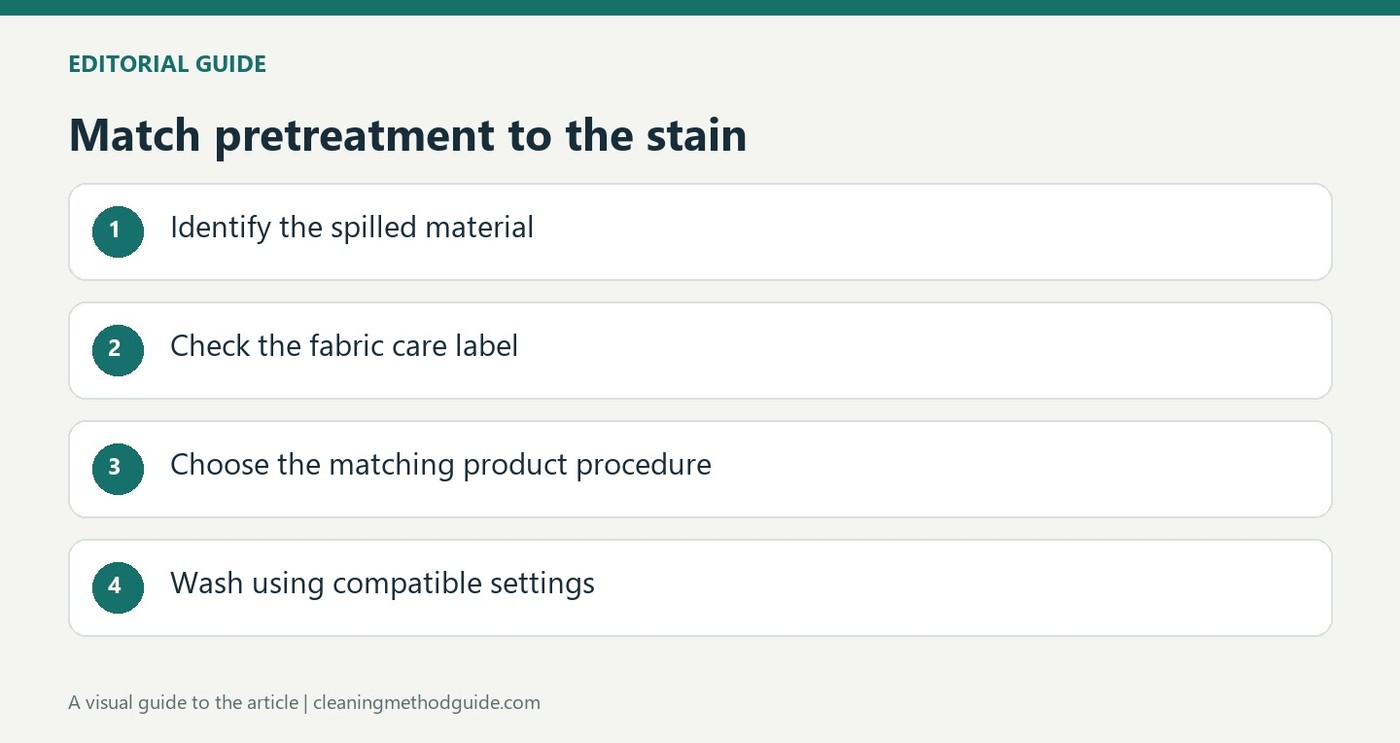
Tide's practical stain guide does not prescribe one temperature for every mark. It recommends acting quickly on blood and rinsing with cold water, while its oil and grease example uses liquid pretreatment before a fabric-compatible wash. Grass and wine are addressed through their own detergent-based procedures.
For methods that specify a five-minute pretreatment, follow the directions of the actual named product rather than treating that time as universal. The garment label remains the limit on water temperature and other treatment. This distinction helps prevent a common mistake: copying the strongest-looking step from one stain procedure and applying it to a different residue or a fabric that cannot tolerate it.
Identify the stain before selecting heat
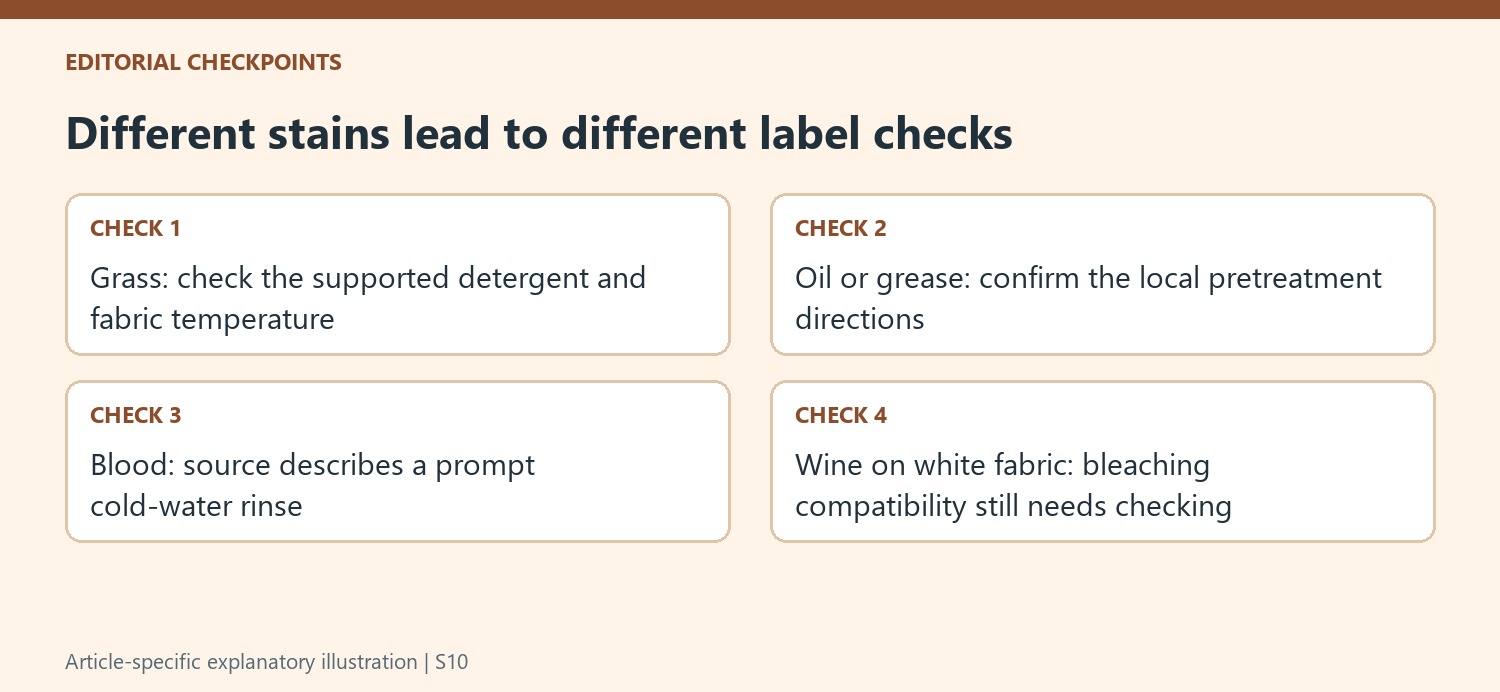
The source separates grass, grease, blood and wine because the initial response differs. Its blood advice begins with prompt cold rinsing, while the oily example pairs liquid pretreatment with a fabric-permitted wash. That contrast is the important decision point: the warmest permitted temperature in one procedure is not a reason to heat every fresh mark.
Keep the product and waiting time together
Where the guide describes leaving a liquid treatment for five minutes, the timing belongs to that specified procedure. Read the actual product directions before repeating it on another fabric. The article is a branded guide, and its recommended liquid, powder and rinse products are not automatically interchangeable. Do not apply a concentrated laundry capsule as if it were bottled pretreatment.
Build a short decision sequence
Start with what was spilled, then the garment label, then a compatible stain treatment. Move to the wash only after those decisions agree with each other. The source emphasizes acting before marks dry into the fibers, so an accessible label and treatment bottle can make the response easier. Prompt action still needs suitable handling; urgency does not justify ignoring a delicate textile's restrictions.
Use the stain identity to read the relevant instruction
Tide's practical guide separates grass, greasy residues, blood and wine rather than giving one temperature for everything. Read the specific section that matches the mark, then retain the garment's care limitations. Its cold-water blood rinse and warmer permitted washing suggestions for some oily soils are not contradictory universal rules; they describe different residues. An unidentified stain deserves assessment before the hottest available program is chosen simply because it sounds stronger.
The source also emphasizes treating a mark promptly before it dries further into the fibers. That recommendation does not remove the need for compatible products or appropriate handling of a soiled item. Address only what the fabric and actual treatment label allow. A familiar white textile can still have a sensitive fiber, trim or finish, so color alone is not enough information to select a stain product or bleaching treatment.
Keep product format and application instructions together
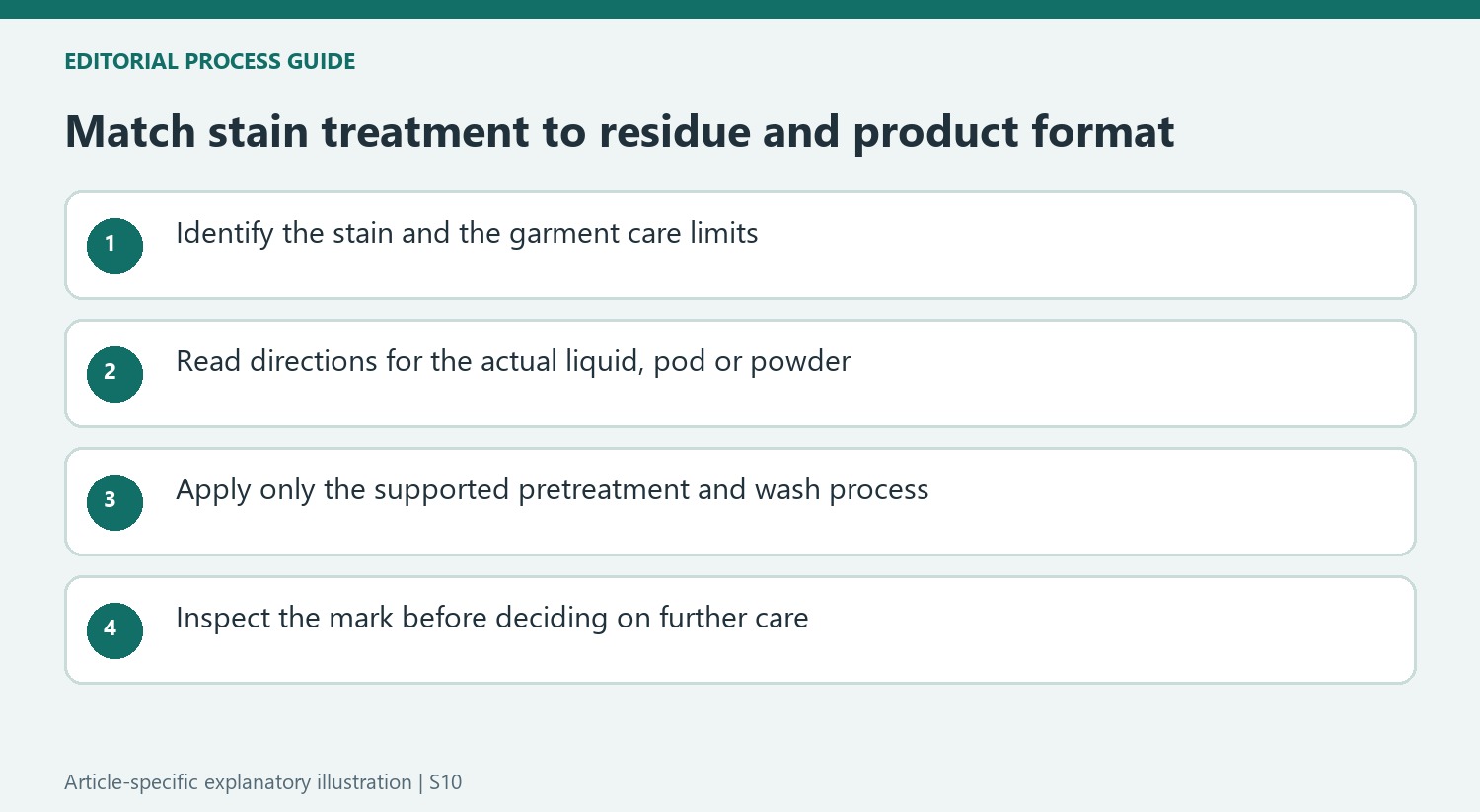
The page discusses named liquid, pod and powder products across its examples. Those formats are not interchangeable at the point of pretreatment. Follow the current label for the exact formulation and never infer from a broad product-family mention that a capsule should be opened or rubbed directly onto a mark. A liquid labeled for local pretreatment offers a different application route from an in-wash product used through the washer's supported procedure.
Where the source gives a brief dwell before washing, keep it connected to that product example rather than using it as a universal timing rule. Other labels can require a different process or exclude a fiber altogether. Similarly, an oxygen-based product example for a compatible white fabric does not establish suitability for every pale garment. Use one supported method and complete its stages instead of combining several brand suggestions into a stronger improvised mixture.
Judge the stain result independently from fragrance or brightness
After the permitted wash, inspect the treated area under useful light before moving into the garment's drying routine. A fresh scent or brighter surrounding fabric is not evidence that the original residue has been removed. Compare the particular mark and assess whether a repeat treatment is actually supported. Avoid increasing temperature or product concentration simply because the first result was incomplete; that changes more than one part of the procedure at once.
The source is a brand guide, so its performance language should remain attributed to the manufacturer rather than presented as a guaranteed independent finding. Its useful structure is the separation of stain type, care-label temperature and product-specific pretreatment. Preserve those distinctions in routine laundry: identify the residue, select a compatible labeled approach, wash under the fabric's limits and decide the next step from the actual result rather than a promise that every stain behaves alike.
References
Tide's tough-stain guide distinguishes blood treatment from oil, grass and wine methods.


Leave a Comment
Comments (0)