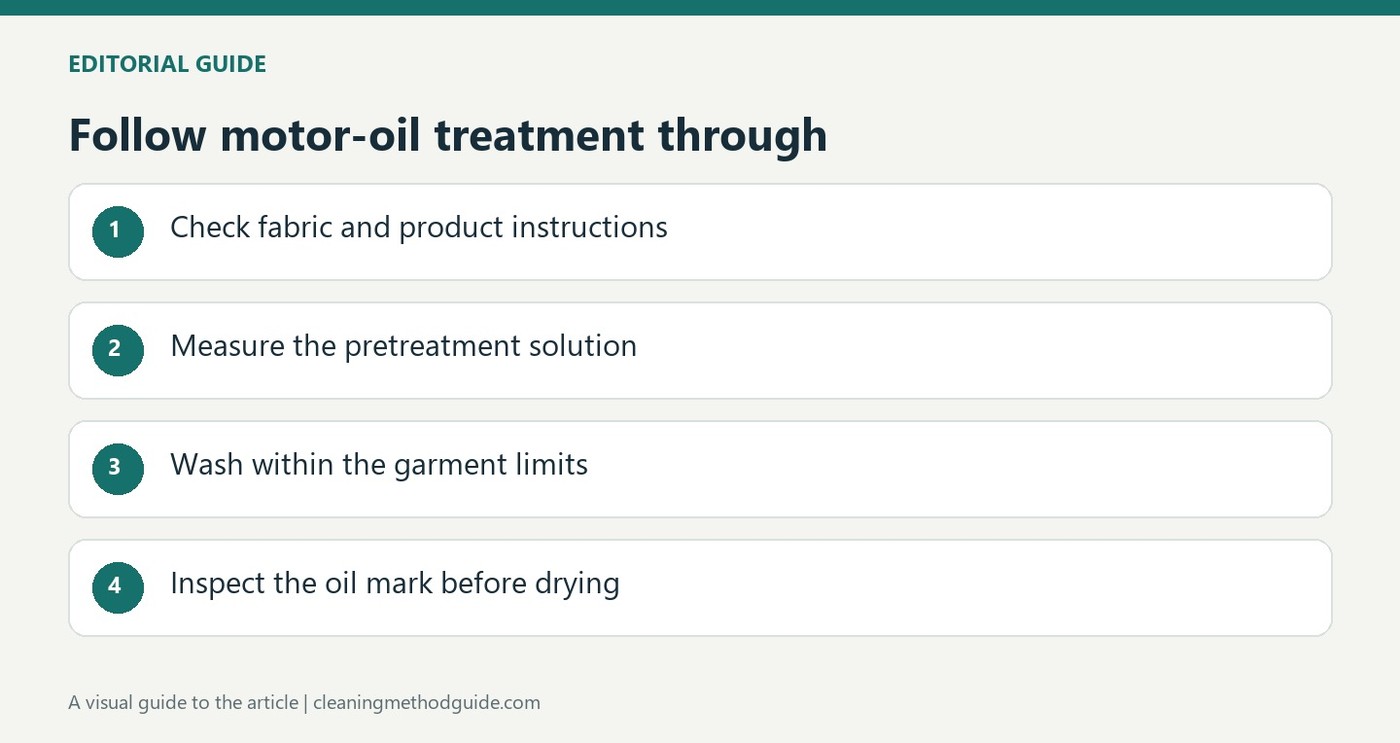
Tide's motor-oil guide describes a short detergent soak before the affected garment enters the washer. Its example uses Tide Ultra Stain Release Liquid, so the current product directions should determine the dilution and dose. The washer type also affects whether detergent goes into a dispenser or directly into the drum.
Wash only within the clothing label's permitted temperature and cycle, then unload promptly. If oil remains, Tide advises repeating an appropriate treatment before using the dryer, since drying can set the stain. This inspection step is important even when the rest of the load looks clean; product fragrance and a completed cycle do not show whether the original oily patch has disappeared.
Use a controlled pretreatment
Tide describes a short soak with its named liquid detergent before machine washing. The measured solution is intended to contact the affected fabric, so follow the current product directions for concentration and time rather than estimating from the size of the stain. Confirm that the garment permits the treatment and keep the soaking stage distinct from the detergent dose for the washer.
Match detergent placement to the machine
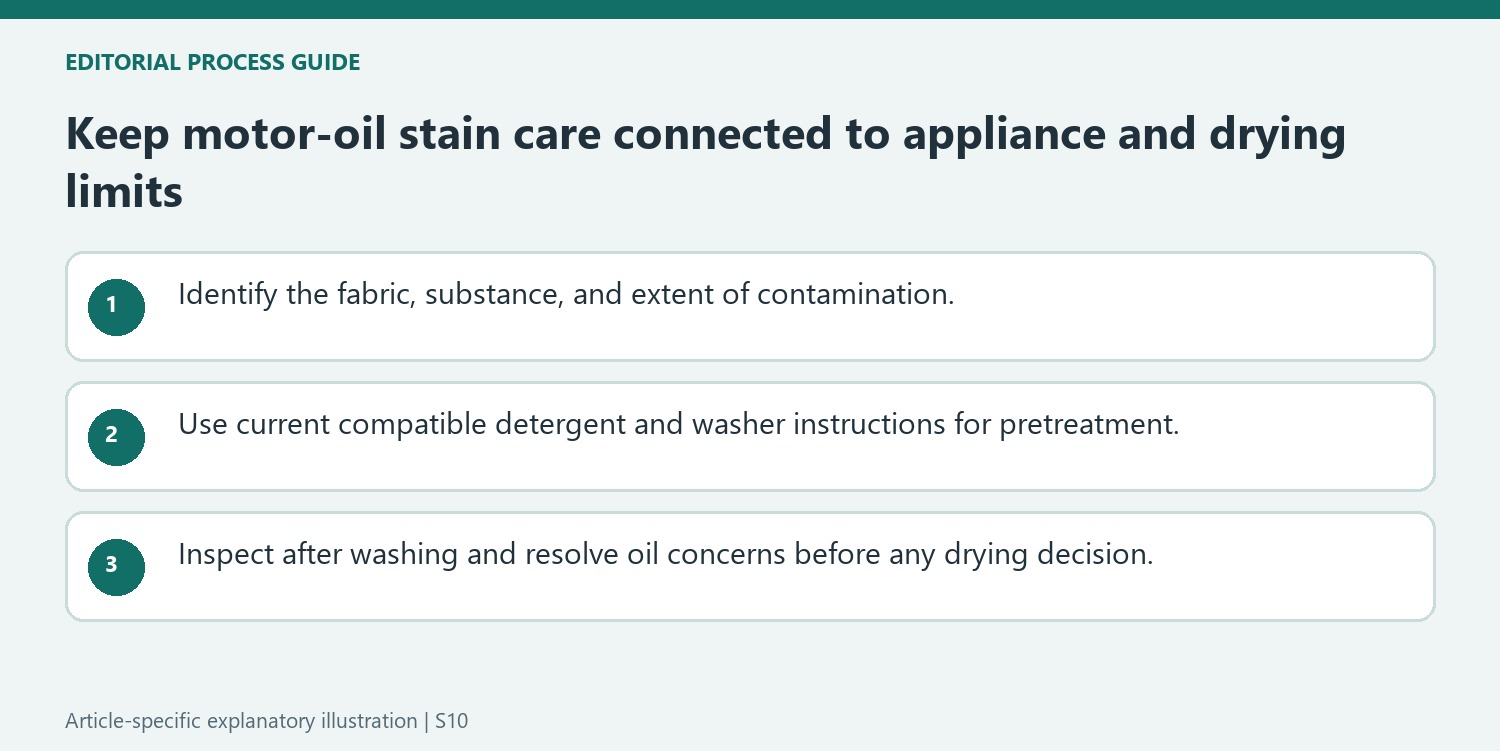
The source differentiates a high-efficiency machine's dispenser from direct drum dosing on the other machine type it describes. Check the appliance instructions instead of treating placement as interchangeable. The subsequent wash remains limited by the garment's permitted cycle and temperature. A stain-removal guide can help organize treatment, but it does not override restrictions on the material or the washing equipment.
Keep the inspection before any dryer heat
Unload promptly after the wash and examine the oily area itself. Tide instructs readers to repeat appropriate treatment if the stain persists before using the dryer. That creates a deliberate checkpoint between washing and drying, rather than one uninterrupted automatic routine. If the mark remains difficult to assess or the garment cannot tolerate another treatment, seek garment-care advice before continuing with heat.
Check the garment and contamination before starting the recipe
The source offers a sequence for motor-oil marks on washable clothing using a named detergent. Begin with the care label and the actual extent of the contamination. A localized patch is not the same situation as a garment heavily soaked in petroleum, which may be unsuitable for an ordinary household laundry process. Follow the relevant appliance and product restrictions and obtain appropriate advice where necessary. Keep soiled work clothing away from clean items and avoid adding flammable solvent as an improvised pretreatment. Note the substance involved and the previous treatment, especially if professional cleaning is needed. The web page's ordinary stain example should not be extended to every automotive fluid or every fabric.
Follow the current product directions through pretreatment and washing
The page describes a brief measured soak before loading and choosing the hottest wash temperature permitted by the garment. Read the current detergent label rather than copying a garbled unit or assuming its concentration has never changed. Confirm that the chosen pretreatment and machine process are appropriate for both the textile and the contamination. Keep the dose and dispenser placement aligned with the actual washer type. Do not add unrelated products to the soak or use more detergent as a substitute for an appropriate process. If the label excludes washing or the machine excludes the contamination involved, use a suitable alternative rather than pressing on because the article presents only a few simple steps.
Make the post-wash inspection a decision point
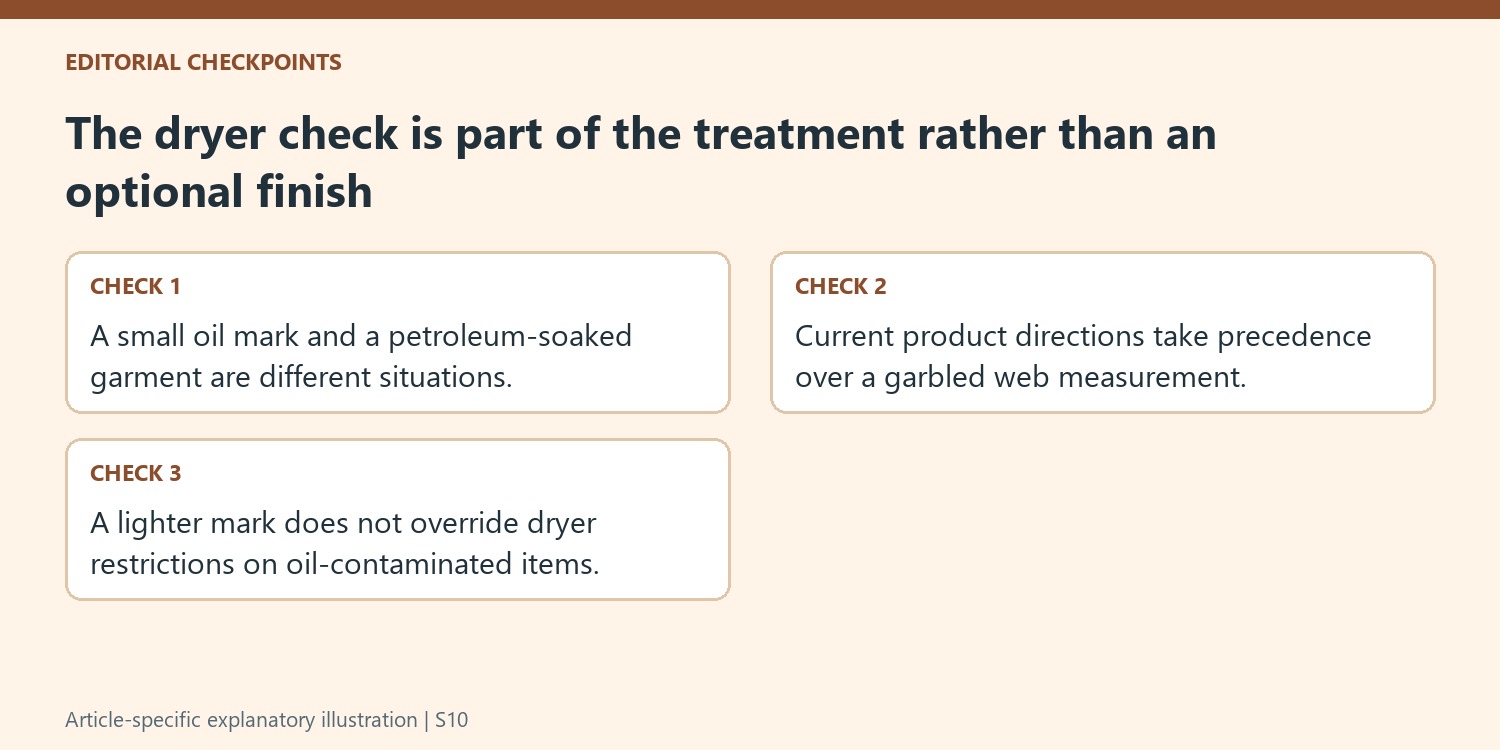
The source explicitly says to inspect the garment and repeat suitable treatment if the mark remains before using the dryer. Keep that checkpoint visible in the laundry routine so a helper does not move the load straight into heat drying. An oily mark needs more than a quick glance at a wet dark fabric, and an apparently reduced stain does not override a dryer's restrictions on oil-contaminated items. Follow the equipment's fire-safety guidance and do not tumble-dry a garment while an oil concern remains unresolved. Use an appropriate permitted alternative and seek advice if unsure. Record the result and keep the item separate from clean wearable clothing until its care has been completed suitably.
References
- How to Get Motor Oil Out of Clothes Expertly. tide.com.
Tide's instructions place inspection before drying, rather than treating the end of the wash as proof of removal.


Leave a Comment
Comments (0)