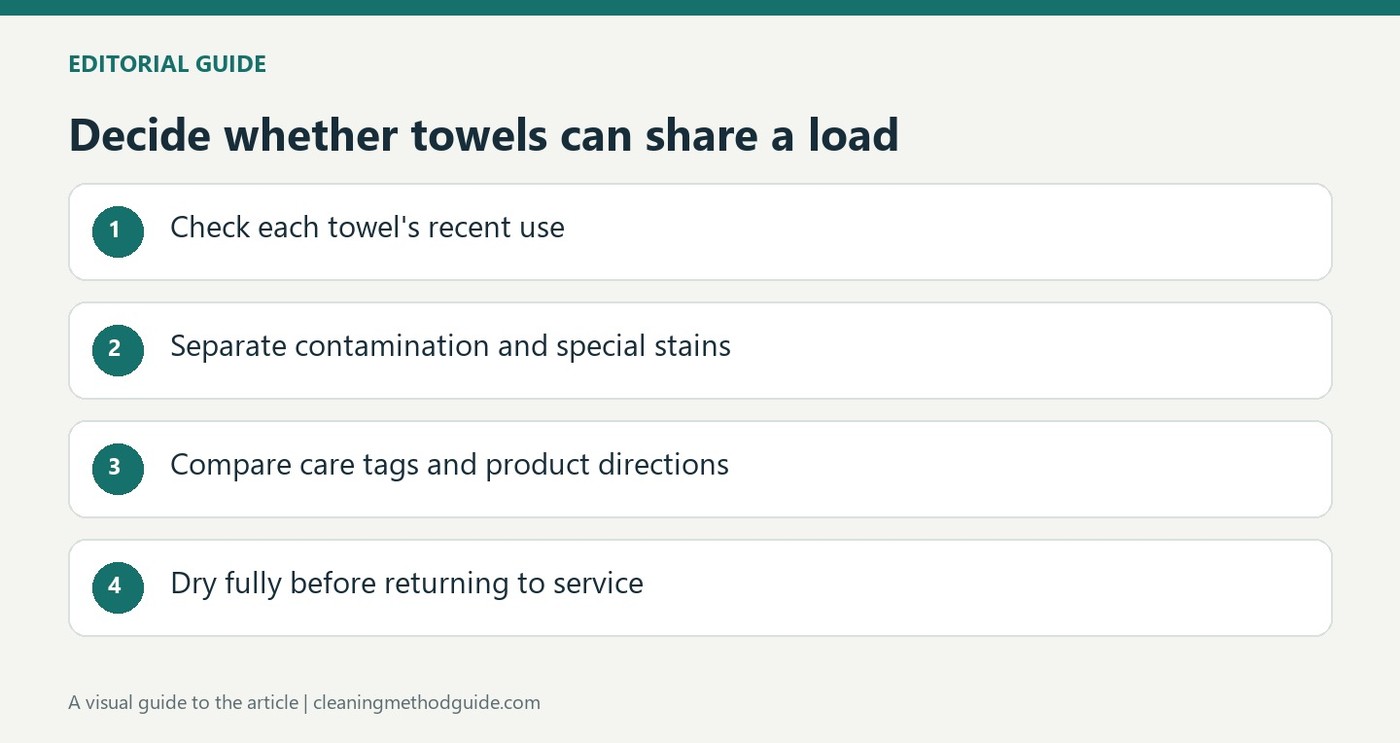
Separate ordinary drying from exceptional contamination
Better Homes and Gardens allows compatible lightly used kitchen and bath towels to share laundry, but names specific exceptions involving raw-food contact, illness and stains needing different treatment. That is a narrower claim than treating all towels as interchangeable. The cloth's recent job determines whether a familiar mixed load remains appropriate, while its label still controls the allowed temperature and products.
Light use differs from food contamination
Better Homes and Gardens explains that lightly used kitchen and bath towels can sometimes share a wash if their care instructions agree. A kitchen towel used only to dry clean hands or dishes differs from one carrying food residue or substantial grease. The word towel alone is not enough to choose the load.
Check the tag and the task history
Compare permitted temperature, cycle, bleach restrictions and drying requirements. Separate heavily soiled items rather than assuming that a common fabric removes every contamination concern. This creates a useful household-linen sorting rule: combine compatible, lightly used textiles when appropriate, while keeping the item's actual use and cleaning needs visible. Dry the finished load completely before storing it.
Recognize the exceptions before combining towels
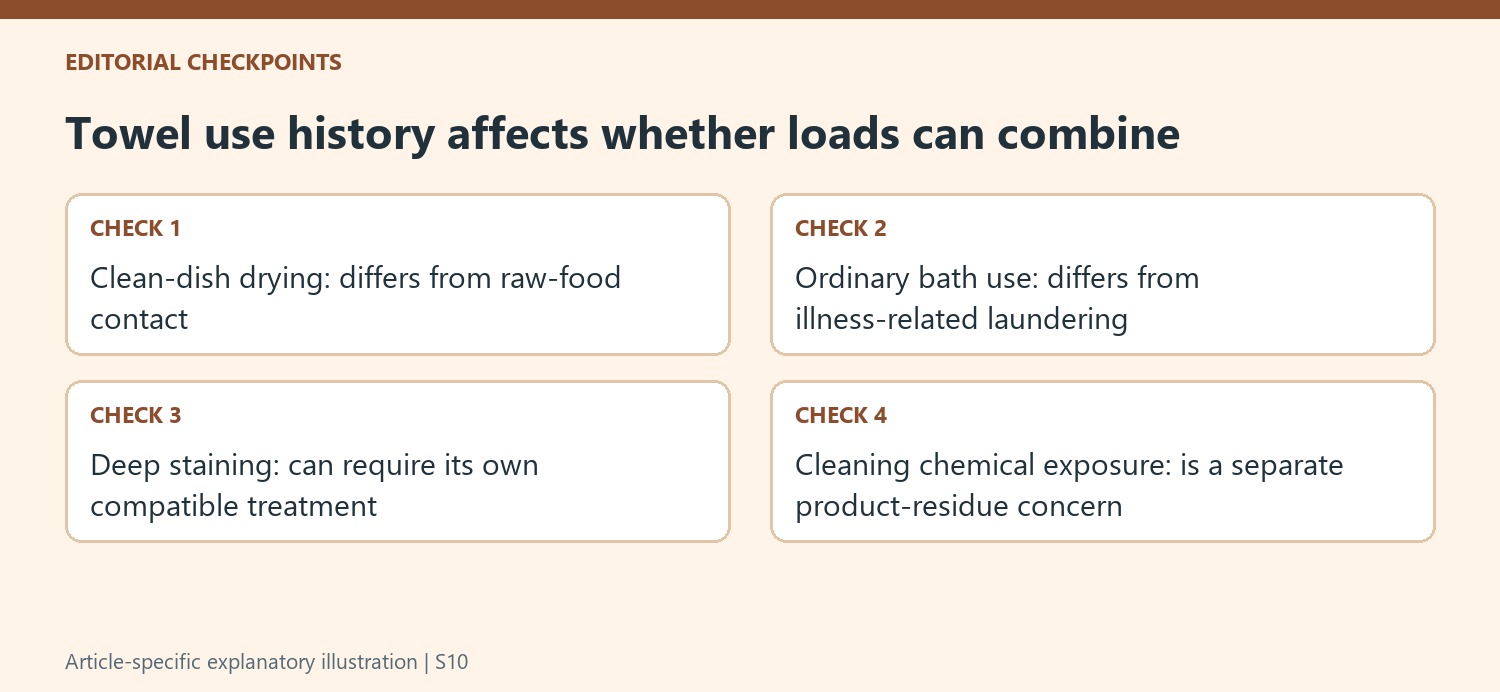
The source names three reasons for a separate assessment: contact with raw meat or seafood, use by someone who is sick, and a stain requiring a different permitted treatment. Keep that history available when laundry is collected instead of expecting the person loading the machine to infer it from appearance. Then compare detergent, temperature and any additive instructions with each towel's care tag. The article also cautions against extra detergent and coating additives that can undermine absorbency. Complete drying remains necessary whether the towels were washed together or separately; avoid folding a still-damp load simply because the wash program has finished.
Define lightly used by the towel actual history
Better Homes & Gardens makes its conditional approval depend on use, not the room name woven into a label. A kitchen towel used to dry clean dishes differs from one used around raw food, while a bath towel hung open between ordinary uses differs from one left wet in a heap. Consider what each piece contacted before selecting a shared wash. The fact that both objects are towels is not enough information.
The source singles out raw meat, poultry or seafood contact, illness-related use and substantial staining as reasons for a separate appropriate process. Keep those cases visible during sorting rather than trying to identify them after the load is already wet. Follow relevant textile and hygiene guidance for the actual situation. A warmer cycle may be part of the supported routine, but simply choosing hot does not by itself establish a validated disinfection result.
Match the labels even when the use histories are compatible
The guide asks readers to consult care tags because towel temperatures, products and drying instructions vary. A lightly used group still needs compatible fibers, colors and treatment permissions. Do not select the toughest bath towel's program for a more delicate kitchen textile merely because the soil level is low. Leave enough washer space for the selected items and keep any chemical-exposed cleaning cloth outside an ordinary towel combination unless its own laundering instructions support it.
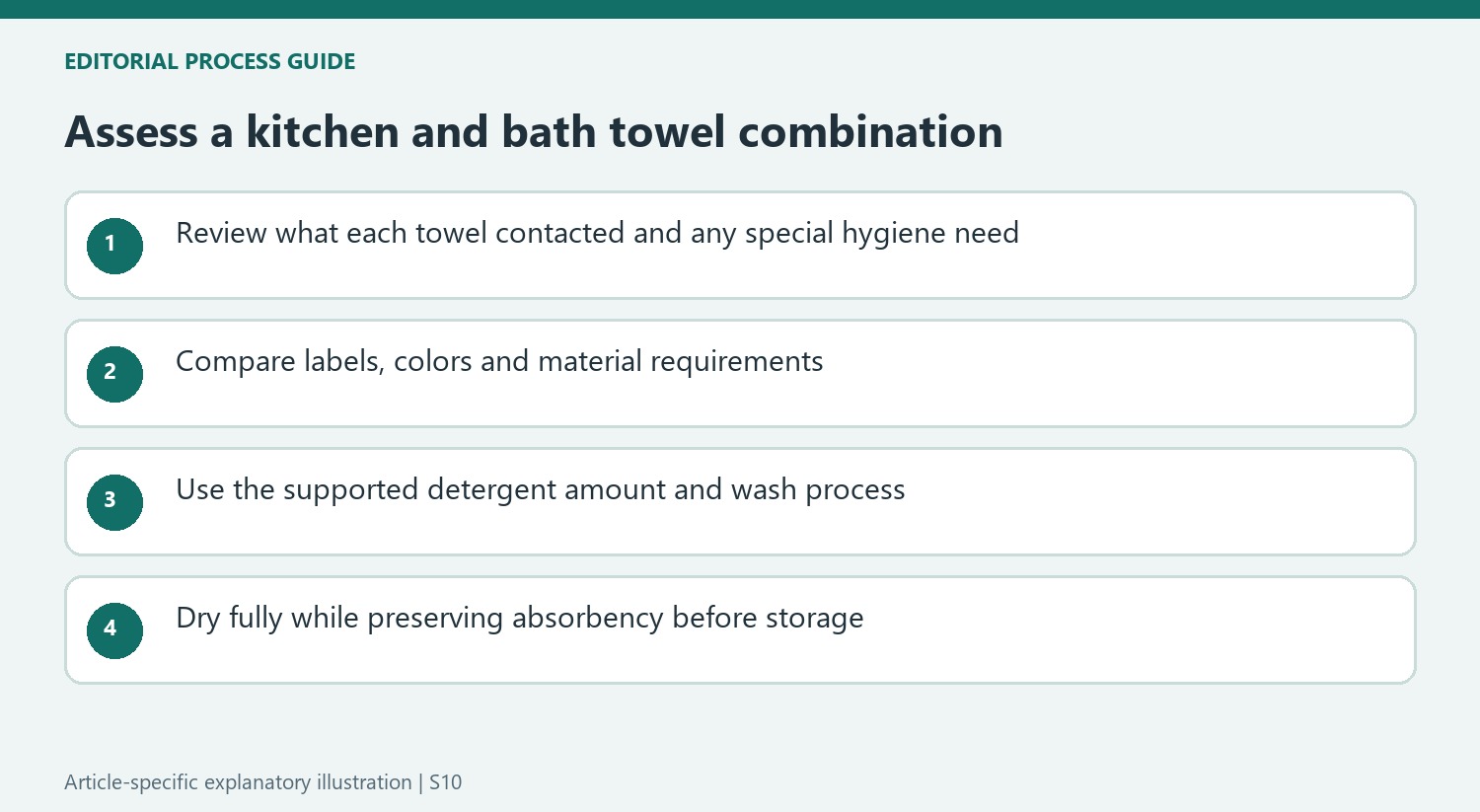
It also emphasizes the correct detergent amount. Excess can leave residue and make towels feel stiff, so adding more is not a useful default response to uncertainty about a shared load. Choose the current labeled dose for the actual conditions and complete the rinse. A strong perfume or very foamy wash does not demonstrate that the textiles have been cleaned appropriately, and it cannot replace assessment of contamination or product compatibility.
Keep absorbency and complete drying as the finish criteria
The article warns that softening coatings and dryer-sheet residues can reduce towel absorbency. Judge product choices against the towel's purpose instead of assuming a smoother scented finish always means better care. An additive suitable for another garment load may be undesirable on towels. Follow the towel maker and current product instructions rather than transferring the rest of the household's laundry preferences without checking their effect on these textiles.
Complete drying matters before storage, but avoid unnecessarily extending heat once an item is ready. Thick and thin towels may need different attention even after a compatible shared wash. Inspect the actual condition rather than relying entirely on the end of a timer, then fold and store only ready pieces. The practical decision has three parts: compatible use history, compatible care labels and a drying finish that preserves both cleanliness and the function of the fabric.
References
- Can You Wash Kitchen Towels and Bath Towels Together? What Experts Recommend. Better Homes & Gardens; Jolie Kerr.
Better Homes and Gardens allows compatible lightly used kitchen and bath towels to share laundry, but names specific exceptions involving raw-food contact, illness and stains needing different treatment. That is a narrower claim than treating all towels as interchangeable. The cloth's recent job determines whether a familiar mixed load remains appropriate, while its label still controls the allowed temperature and products.


Leave a Comment
Comments (0)