
Homes & Gardens identifies overloaded heavy loads as one reason autumn clothing and linens can smell damp. Jeans, towels and thick layers can bunch together, making rinsing and spinning less effective. Use the machine's load guidance rather than packing the drum to the volume that worked for lighter summer clothing.
Indoor drying also needs airflow and moisture control. Space items on the rack and check dense sections before storing them; a dry exterior can conceal damp seams or folds. Dryer settings must remain compatible with the garment label. Adding more fragrance does not solve trapped moisture, so prioritize effective washing, complete drying and suitable storage conditions.
Adjust the drum load for autumn fabrics
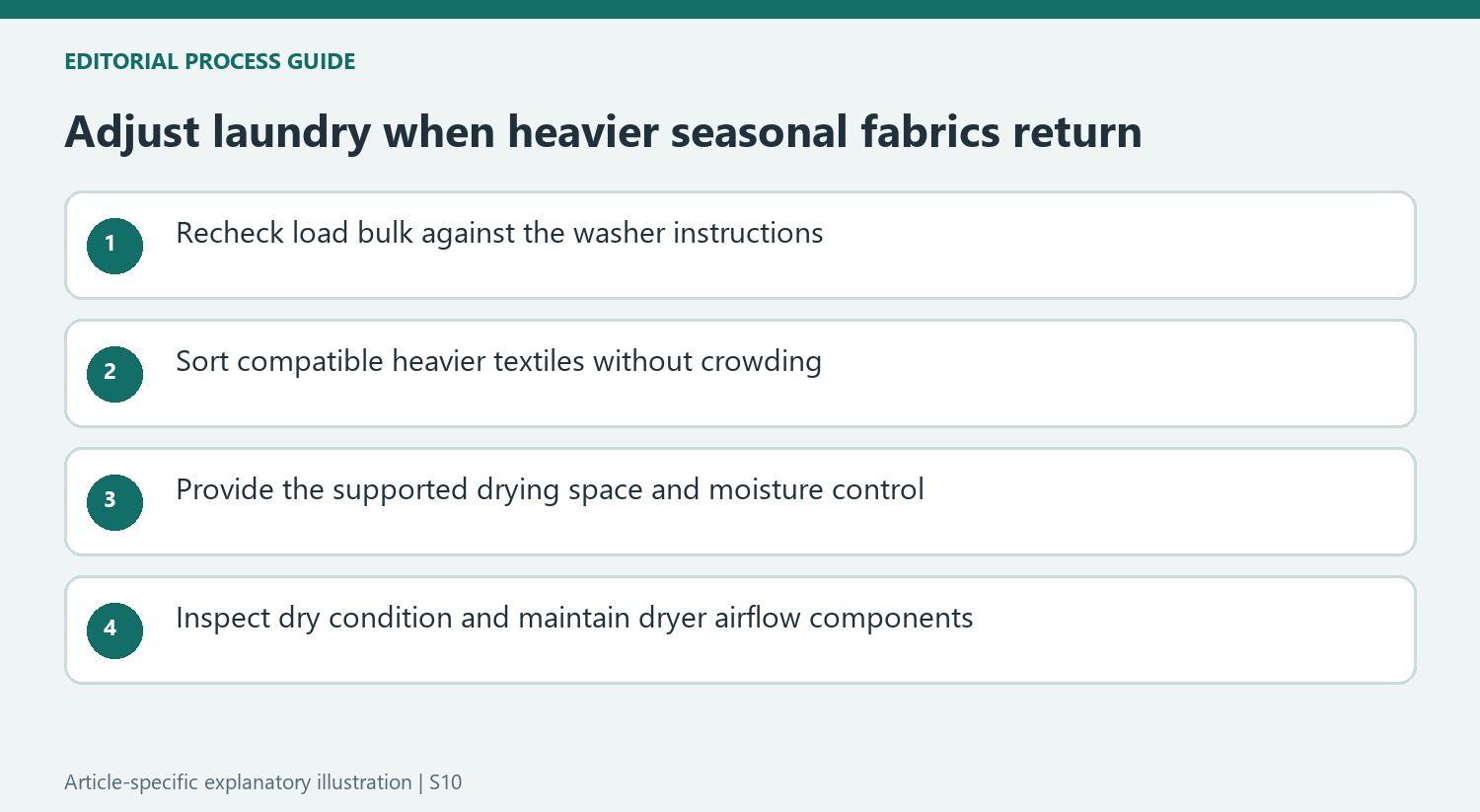
A hamper's volume can be misleading when thin summer clothing gives way to denser pieces. The source describes heavy items clumping together and retaining water when washing, rinsing and spinning are restricted. Recheck the appliance's capacity guidance for the selected program. Separate incompatible thick items rather than forcing the same number of pieces into every seasonal load.
Treat indoor drying as moisture management
The article recommends airflow when racks move indoors. Leave gaps between pieces and choose suitable ventilation or humidity control for the space. Check dense seams and folded sections before assuming the load is finished. Use the garment's permitted drying conditions; a longer wait is not a reason to expose a vulnerable fabric to a heat setting it cannot tolerate.
Include dryer airflow in maintenance
The source also connects restricted dryer airflow with slower drying. Maintain the lint filter and vent arrangement according to the appliance instructions instead of compensating indefinitely with longer cycles. Once a load is dry, move it to suitable storage rather than enclosing uncertain damp sections. Together, load size, drying conditions and equipment maintenance address the seasonal problem more directly than additional fragrance.
Reconsider the load when the wardrobe becomes heavier
Homes & Gardens describes the seasonal move from light fabrics to thick sweaters, hoodies and bedding. The same number of pieces can occupy more practical load space and retain more moisture. Recheck the washer's actual capacity instructions instead of repeating the summer habit automatically. Its expert's suggested empty space illustrates the need for movement, but the appliance's own loading guidance remains the rule for the particular drum and textile type.
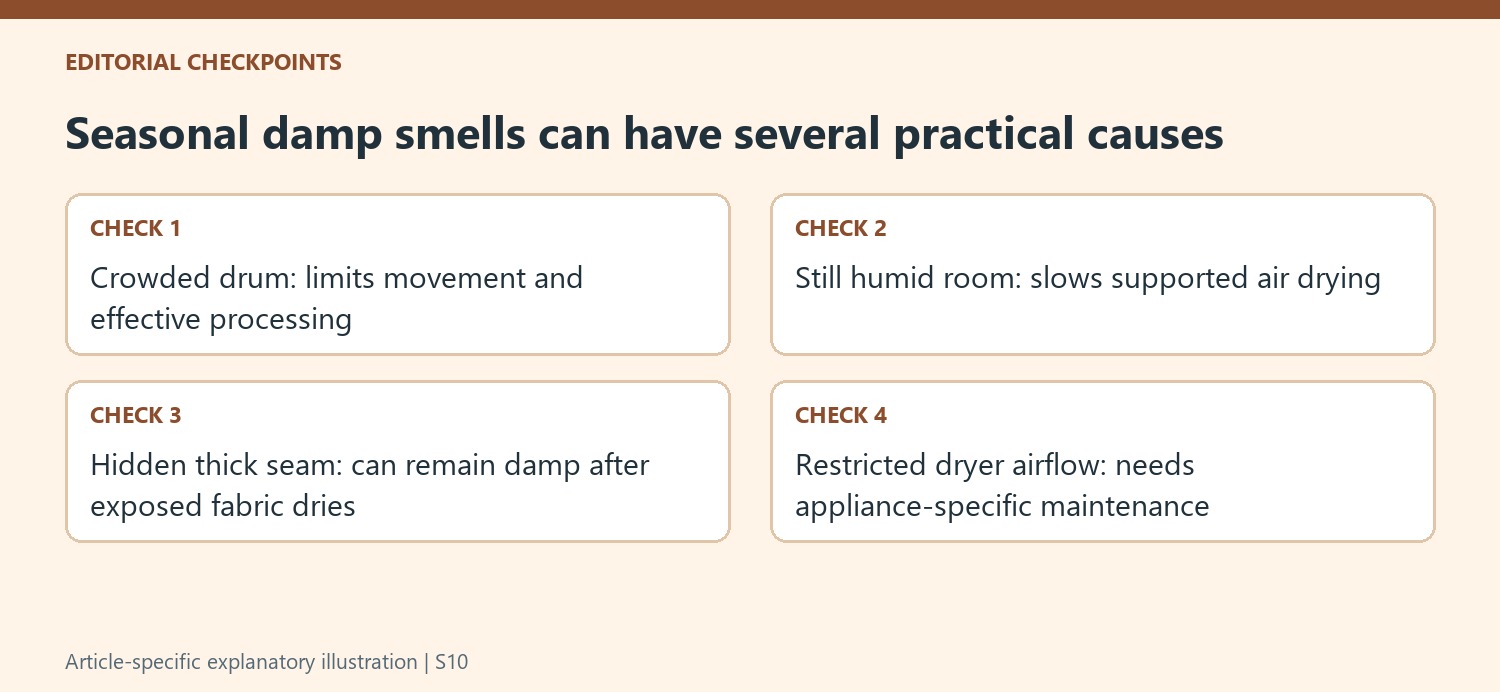
The article associates crowded heavy fabrics with uneven washing, rinsing and spinning. More fragrance does not resolve those mechanical limits. Sort the heavier items into compatible groups and keep the chosen detergent dose tied to the label and conditions. A musty result deserves assessment of loading, drying and appliance upkeep rather than immediate certainty that the detergent brand has failed or that a stronger scent is the missing ingredient.
Treat indoor drying as a moisture-management task
The source emphasizes airflow when colder weather shifts laundry indoors. Spread fabrics under their permitted drying arrangement and use suitable ventilation or moisture-control equipment where needed. An attractive rack position is not necessarily an effective one if garments overlap densely or the room remains humid. Follow appliance placement and electrical instructions rather than copying a photographed dehumidifier arrangement beneath wet textiles without checking the actual equipment's limits.
Dense fabric can conceal damp areas after an apparently successful timed cycle. Where machine drying is allowed, use the textile's approved settings and assess the result rather than increasing heat beyond its limits. Where air drying is required, allow the necessary space and conditions to finish. Shaking out suitable items can reduce bunching, but no handling trick cancels a care label or makes a partly damp piece ready for a closed drawer.
Include the appliance airflow path in the seasonal check
The article highlights the dryer lint filter and vent because poor airflow can accompany longer drying times. Maintain them under the appliance maker's procedure and obtain appropriate service where the vent is inaccessible or performance remains abnormal. A laundry sorting improvement cannot correct an obstructed exhaust path. Conversely, clearing a filter does not establish that an overloaded or incorrectly sorted batch now meets every textile's care requirements.
Before storage, inspect heavier seams and layers rather than relying on an extra fixed airing time as proof of dryness. Keep clean textiles in suitable dry conditions and address recurring moisture instead of using closet fragrance to disguise it. The seasonal routine therefore changes in several connected ways: appropriate load size, compatible grouping, effective drying conditions and maintained equipment. Those decisions respond to the heavier laundry itself without assuming that one universal hotter cycle is the answer to colder weather.
References
- 5 Fall Laundry Mistakes That Make Everything from Bed Linen to Clothes Smell Damp – And What to do About It. Homes and Gardens; Chiana Dickson.
Autumn loads need enough wash space, drying airflow and a check for hidden dampness.


Leave a Comment
Comments (0)