
The laundry experts quoted by Homes & Gardens explain that wool and cashmere sweaters often need less frequent washing than garments worn directly against the skin. A base layer can reduce direct exposure to perspiration. Their suggested wear counts vary, showing why a fixed universal interval is a poor substitute for examining the sweater.
Visible soil, heavy sweating and strong odor are reasons to act sooner. Repeated unnecessary washing adds friction that can contribute to pilling, stretching and misshaping. Follow the label when cleaning is needed, and consider the actual fiber and construction. Reducing excess washing means making a condition-based decision, not storing dirty knitwear until an arbitrary number of wears is reached.
Read wear counts as examples
The experts give different suggested intervals for wool, cotton and synthetic knits, and even their wool estimates vary. Their common reasoning is more helpful than choosing one number: fiber, contact with skin and visible condition influence when cleaning is needed. A sweater over a base layer has different exposure from the same garment worn against sweaty skin.
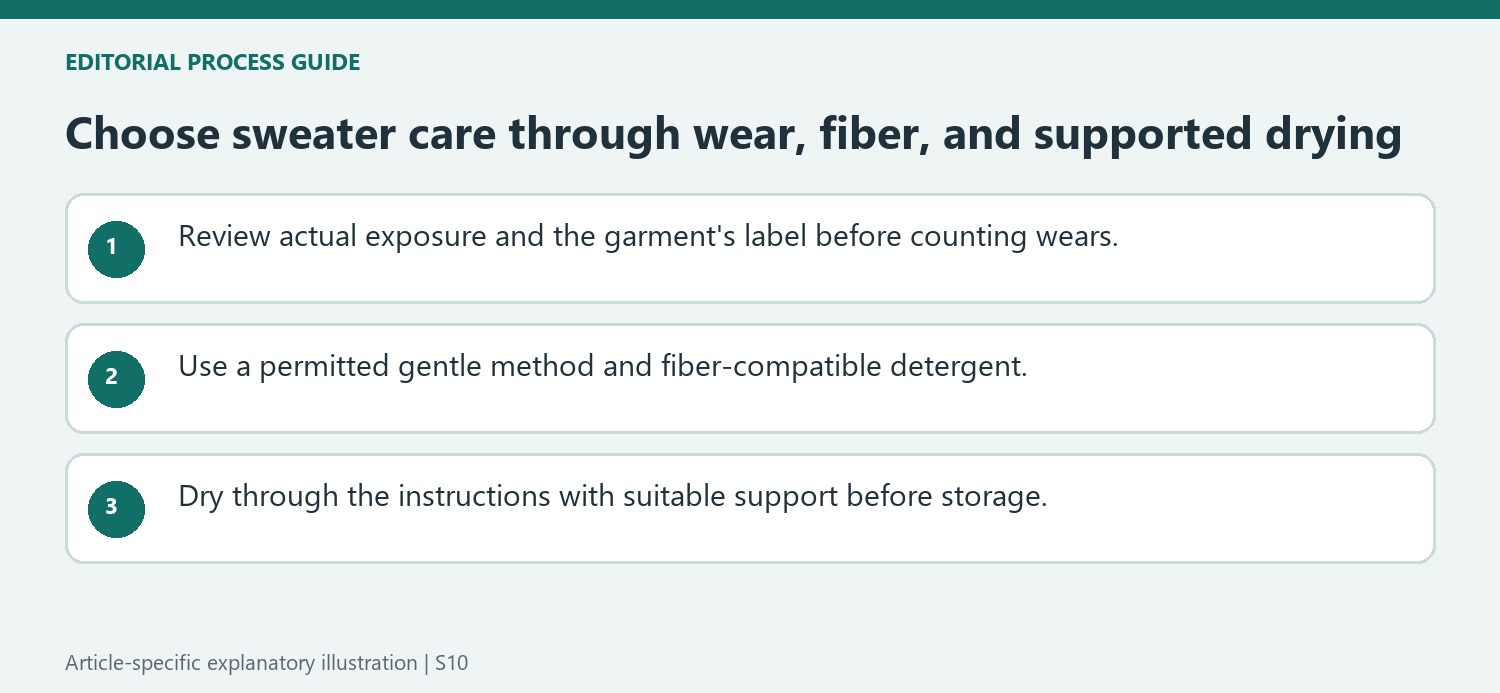
Reduce friction when washing is required
The source recommends wool-appropriate detergent and gentle handling for vulnerable knitwear. Where machine washing is allowed, turning the sweater inside out and using a protective mesh bag can limit contact with other items. Check both the textile and product labels before choosing a cycle. Reducing wash frequency does not compensate for using an unsuitable detergent or an aggressive process when washing eventually happens.
Support the shape through drying
For the knitwear discussed, the experts favor reshaping damp sweaters and drying them flat rather than letting their wet weight pull from a hanger. They also describe flat airing between wears as a light refresh. Neither action removes the need to clean a genuinely soiled item. Treat storage and drying as part of garment care, with the specific label controlling the final choice.
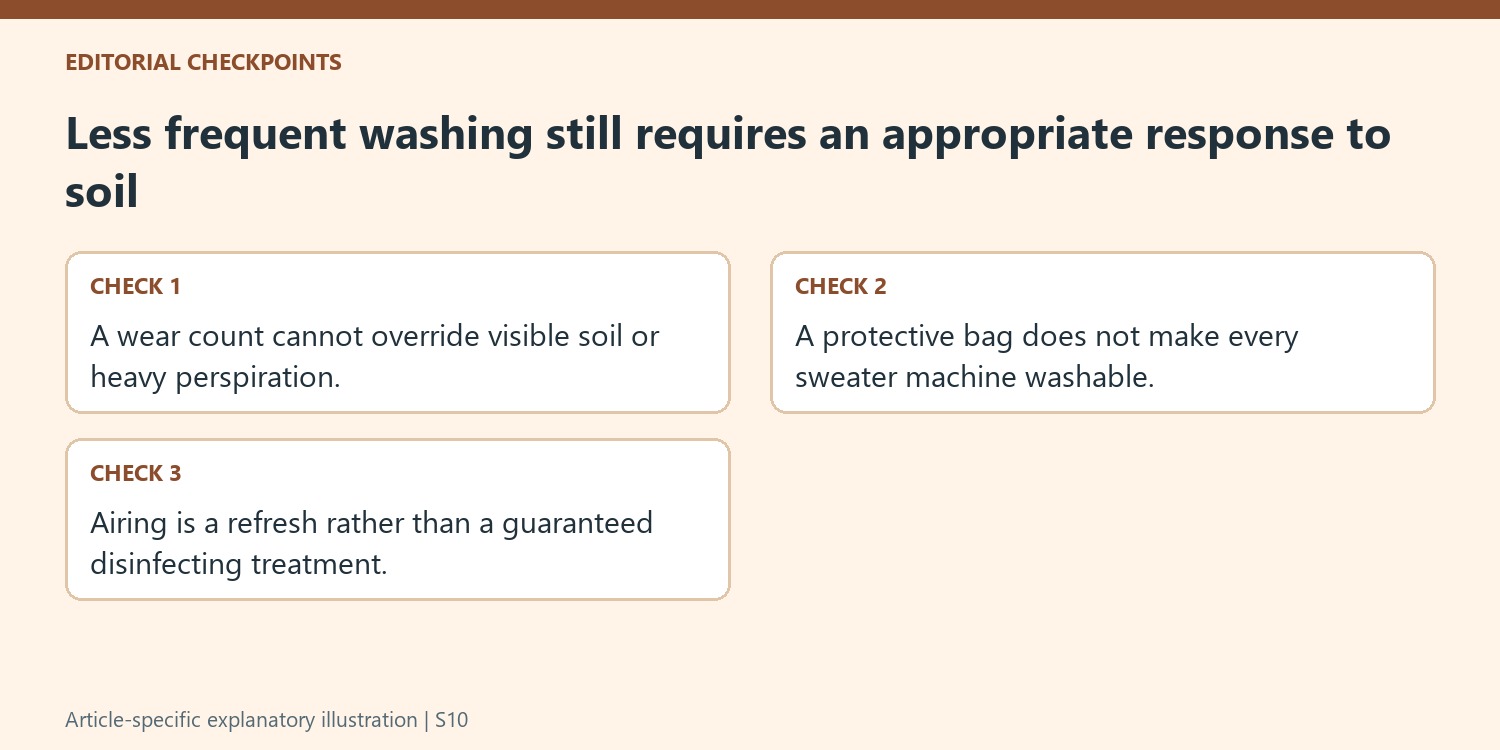
Read wear counts as examples of exposure rather than deadlines
The source quotes professionals who give differing intervals for wool, cashmere, cotton, synthetics, and heavier knits. The useful shared point is to review the material and actual wear instead of washing every sweater automatically after one outing. A base layer and brief light use can create different exposure from direct skin contact, heavy perspiration, or a visible spill. Odor and soil call for an appropriate response even if the suggested wear count has not been reached. Conversely, reaching a number in an article does not identify one universal wash method. Keep the garment's care instructions and its observed condition together when deciding what should happen next.
Reduce friction through a process the garment permits
The article favors gentle care for delicate knitwear. Read the label before choosing handwashing, a wool cycle, or professional cleaning, and use a detergent explicitly suitable for the actual fiber. A familiar general detergent is not automatically appropriate for wool or cashmere. Measure the dose as directed rather than adding extra product to compensate for a short cycle. Turn the garment or use a protective bag only where that fits the permitted method. Do not wring, scrub, or expose the knit to unsuitable heat in an attempt to speed the job. A gentler routine aims to limit avoidable wear, but it cannot guarantee reversal of existing pilling, felting, or stretching.
Plan drying and storage before the wash begins
For the source's delicate sweater examples, supported flat drying and appropriate reshaping are preferable to hanging a heavy wet knit. The actual label remains the authority for the garment. Prepare enough suitable surface space so the sweater can dry fully without being compressed into a damp pile. Keep it away from an unapproved heat source and avoid using a household dryer simply because the wash stage went well. Between wears, appropriate airing can be a modest refresh when needed; it is not evidence of disinfection or a replacement for required soil removal. Store the clean dry garment in a way that supports its shape. Review recurring marks or odor separately rather than indefinitely extending the interval between washes.
References
- This Is the 1 Item You're Washing Too Much This Winter. Homes and Gardens; Ottilie Blackhall; Alicia Sokolowski.
Winter knitwear may not need a wash after every outing, but visible soil and odor still require attention.


Leave a Comment
Comments (0)