
Winter warmth does not remove flannel's washing needs
The Spruce's flannel feature focuses on the brushed sheet surface, which can hold body oils and lint even during colder months. Its experts pair a regular washing interval with gentle care that protects that texture. Towels are a particular sorting concern because their shedding can add lint, while high heat introduces a different problem through potential shrinkage of the cotton bedding.
The brushed fabric retains more than warmth
The Spruce reports laundry experts recommending flannel-sheet washing roughly every one to two weeks, with more frequent care where pets or lotions add soil. The thicker fabric can retain oils and lint, so winter use does not mean the bedding stays clean indefinitely.
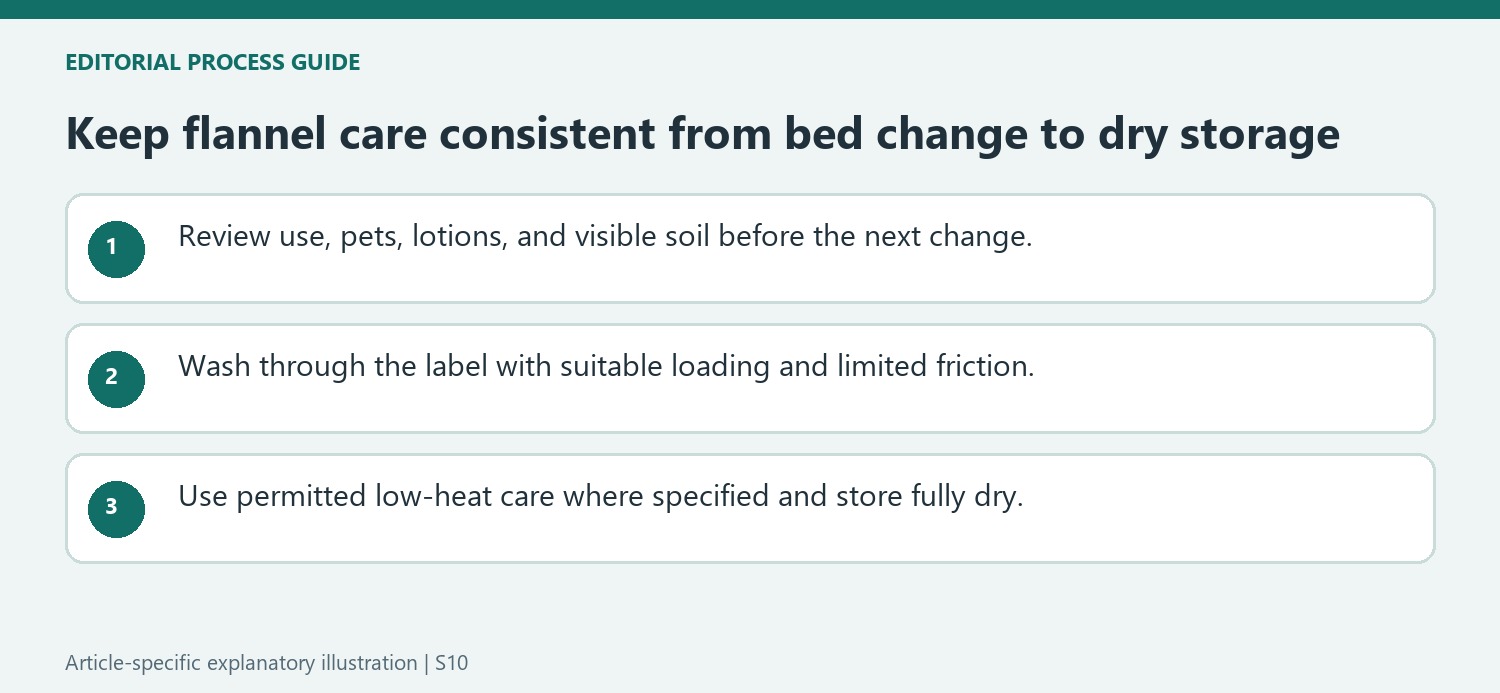
Use gentler heat and compatible loads
The guide recommends cool to warm water, avoiding fabric softener and keeping lint-heavy items out of the load. Low-heat drying and prompt removal help preserve softness and reduce shrinkage. Check the actual sheet label, since a flannel routine should still reflect the manufacturer's directions rather than assuming every warm-feeling bedding set can withstand the same wash and dry cycle.
Protect the brushed finish through the whole cycle
The experts describe consistency as more useful than adding softener to compensate for rough handling. Flannel's brushed surface needs attention at sorting, washing and drying, not simply a different detergent. Keep shedding towels out of the load where possible, use the permitted gentler temperature, and remove sheets promptly after low-heat drying. Check the first wash instructions before the set enters regular use. Thereafter, choose the next wash date by its contact with sleepers, pets and lotions. Cold weather may change the bed's warmth requirements, but it does not stop oils and lint from accumulating in a frequently used sheet set.
Use the winter routine without overlooking actual exposure
The source presents a one-to-two-week washing baseline for flannel while noting that pets and bedtime lotions can create a need for more frequent care. Cool weather does not mean bedding receives no body oil or ordinary soil. Review the bed's actual use, visible condition, and the sleeper's needs when choosing the next change. Keep a spare suitable set if that makes the change easier to complete without rushing the wash. The calendar should help remember the task, not serve as a measurement of fabric cleanliness. Respond to a spill or unusually soiled area through its appropriate care process instead of waiting until the planned interval.
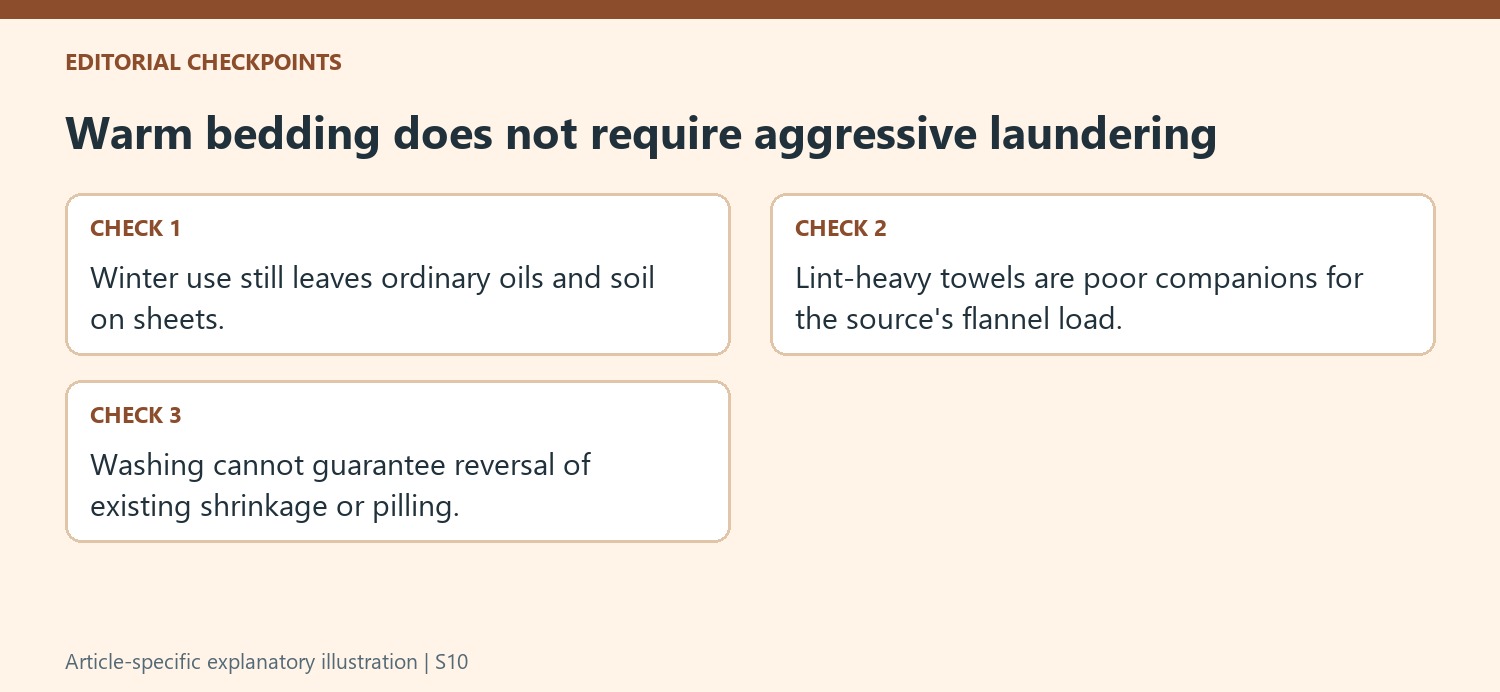
Protect the brushed texture during washing
Read the set's care information before its first wash and keep those directions available for future loads. Flannel's soft surface can be affected by unsuitable heat and friction, so the source emphasizes gentler treatment and moderate or low temperatures. The specific label still controls the allowed method. Give the sheets enough space in the machine and avoid mixing them with lint-heavy towels or rough items. Measure an appropriate detergent dose rather than assuming thick bedding needs extra product. The source advises skipping fabric softener; do not use a coating additive as the automatic answer to a sheet that feels less soft. Review loading, rinsing, and care conditions first.
Treat drying as part of preserving the surface
Use the allowed drying method and heat setting, with the source favoring low heat for its flannel examples. Remove the set at the appropriate end point rather than leaving it compressed in the dryer for an extended period. Confirm it is fully dry before storing or remaking the bed, while avoiding unnecessary over-drying beyond the textile's guidance. If pilling, shrinking, or a texture change appears, note when it occurred and check the previous wash and dry choices. Washing cannot always reverse physical wear or shrinkage. Keep clean sheets separate from the soiled set's holding area and return them to dry storage. A consistent routine should preserve usable bedding through suitable treatment, without treating the feature's longevity language as a guarantee of decades of life for every sheet.
References
- Here's What Pros Say About When To Wash Flannel Sheets in the Winter. The Spruce; Sarah Lyon.
The Spruce's flannel feature focuses on the brushed sheet surface, which can hold body oils and lint even during colder months. Its experts pair a regular washing interval with gentle care that protects that texture. Towels are a particular sorting concern because their shedding can add lint, while high heat introduces a different problem through potential shrinkage of the cotton bedding.


Leave a Comment
Comments (0)