A pillowcase can be due before the next sheet change
Real Simple's bedding table gives pillowcases a weekly place even where sheets follow a longer interval. It also changes the suggested cover routine depending on whether a top sheet separates it from the sleeper. The useful distinction is exposure: a small removable case, an outer cover and the filling beneath them need individual reminders instead of one undifferentiated appointment for the entire bed.
Use contact with skin to set priorities
Real Simple's bedding schedule identifies pillowcases as a weekly washing item, alongside regular sheet changes. The article explains that recommendations vary with use and freshness, so a calendar provides a starting point rather than a reason to ignore obviously soiled bedding.
Do not apply one interval to every layer
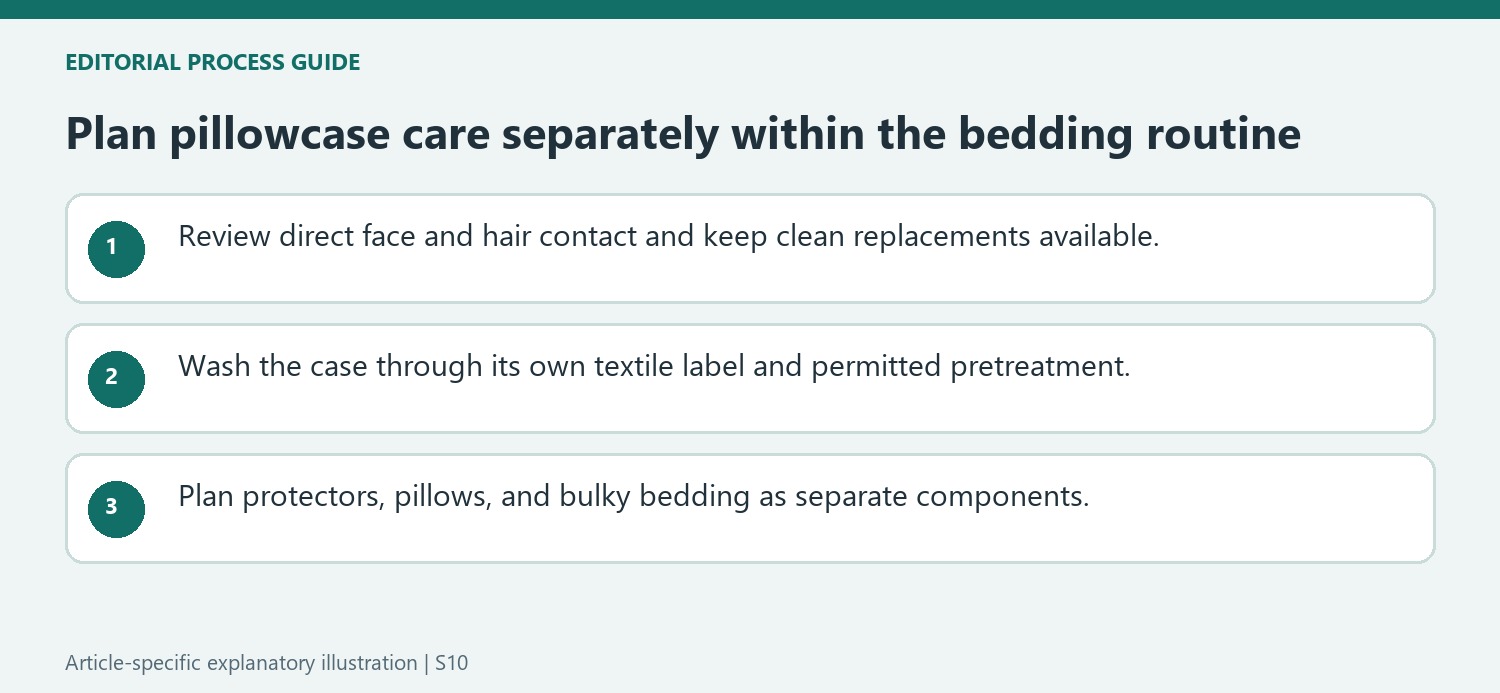
A duvet cover used with a top sheet may need a different routine from one touching the sleeper directly. Pillows themselves also differ from their removable cases. Identify the item being cleaned and follow its label for washing and drying. Keeping those distinctions visible prevents either neglecting a frequently used pillowcase or treating a delicate filled pillow as an ordinary sheet load.
Make the pillowcase change easy to remember
The source's schedule means that a household washing sheets every other week can still change pillowcases in between. Record those as two separate reminders if necessary, rather than waiting for the whole bed to be stripped. Also note whether the duvet cover touches the sleeper or sits behind a top sheet, because that changes its exposure to everyday soil. These are scheduling distinctions, not interchangeable wash instructions. A silk case, a cotton sheet and a filled insert still need their own permitted processes. Spills or obvious loss of freshness are reasons to act sooner than a calendar's next reminder.
Give pillowcases a reminder independent of the main sheet load
The source highlights pillowcases because they contact the face and hair directly. If the household chooses a longer sheet-change interval, the case can still be removed and cared for earlier. Keep enough clean replacements to make that action practical without waiting for a large bedding load. Consider actual use, visible residue, sweating, hair products, and personal needs rather than assuming the same interval suits every person. The article quotes clinicians about possible irritation, but a laundry routine should not be presented as a guaranteed treatment or prevention for an individual's skin condition. Persistent concerns belong with appropriate professional advice as well as ordinary textile care.
Select the method for the case rather than the pillow beneath
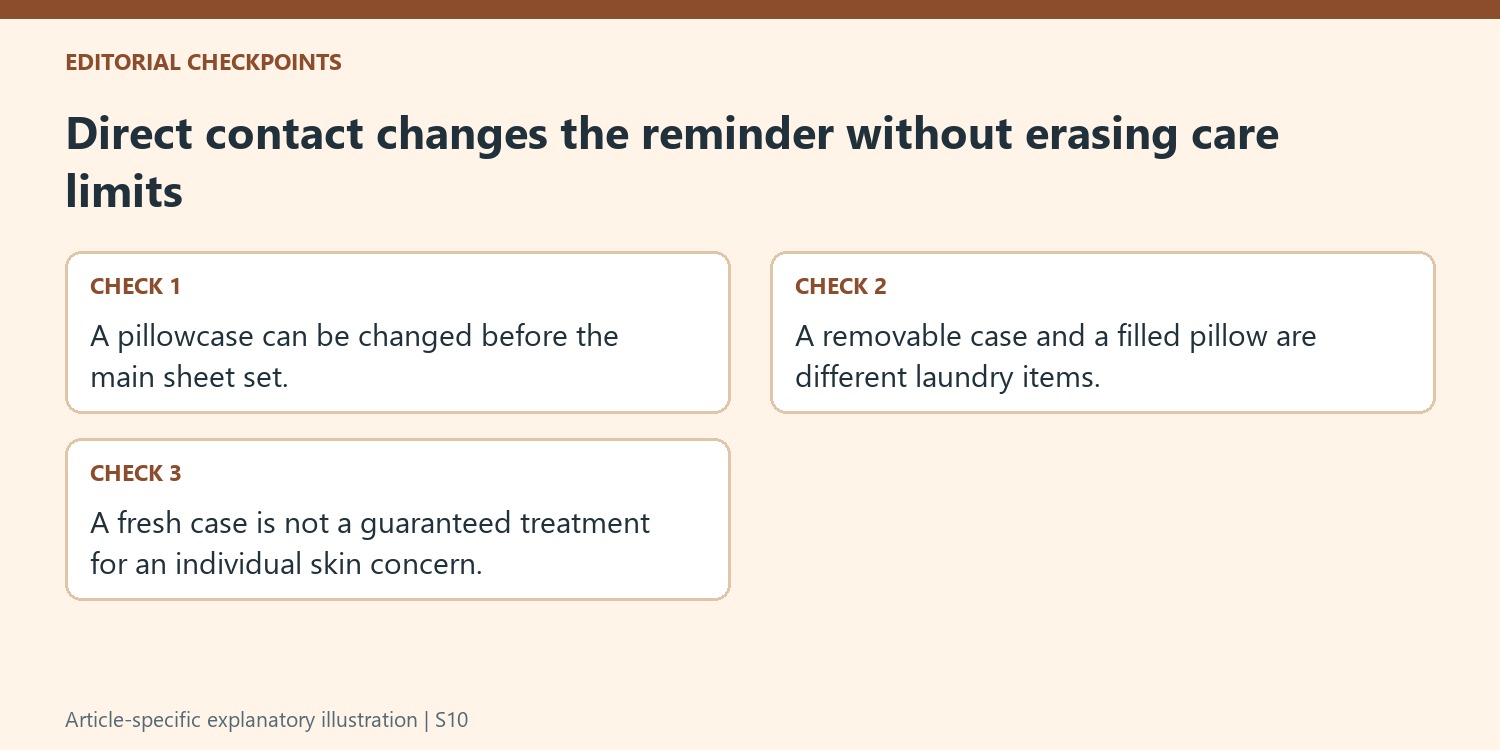
A removable case, a protective cover, and a filled pillow are separate components. Find the label for the item actually being washed and confirm its temperature, detergent, cycle, and drying permissions. Silk and other delicate cases may need a gentler method than an ordinary robust sheet set, and a protective bag is useful only where appropriate to the care process. Do not assume a zipper or removable shape establishes machine-washability. Inspect marks before laundering and choose compatible pretreatment without mixing products. Keep soiled cases away from clean replacements while the wash is pending, and avoid crowding a small delicate item into an unsuitable rough load.
Connect the case change with the rest of the bed's care
The source distinguishes sheets and cases from duvet covers, inserts, mattress protection, and heavier bedding. Review how much direct contact each component receives, then use its own instructions and actual condition to plan care. A top sheet or protector may change exposure, but it does not make the covered item maintenance-free. Bulky bedding also has capacity requirements that do not apply to a simple case. Complete drying before returning any item to the bed or storage. Note the set currently in use and whether a mark remained after washing. The useful outcome is a repeatable component-by-component routine rather than one universal wash temperature or a promise that a fresh pillowcase will solve every sleep or health concern. Keep that distinction clear when recording the reason for an earlier case change or a different textile choice.
References
- This Is How Often You Should Really Be Washing Your Sheets and Other Bedding. Real Simple; Rachel Sylvester; Leslie Corona.
Real Simple's bedding table gives pillowcases a weekly place even where sheets follow a longer interval. It also changes the suggested cover routine depending on whether a top sheet separates it from the sleeper. The useful distinction is exposure: a small removable case, an outer cover and the filling beneath them need individual reminders instead of one undifferentiated appointment for the entire bed.


Leave a Comment
Comments (0)