Identify the protective layer before scheduling the filling
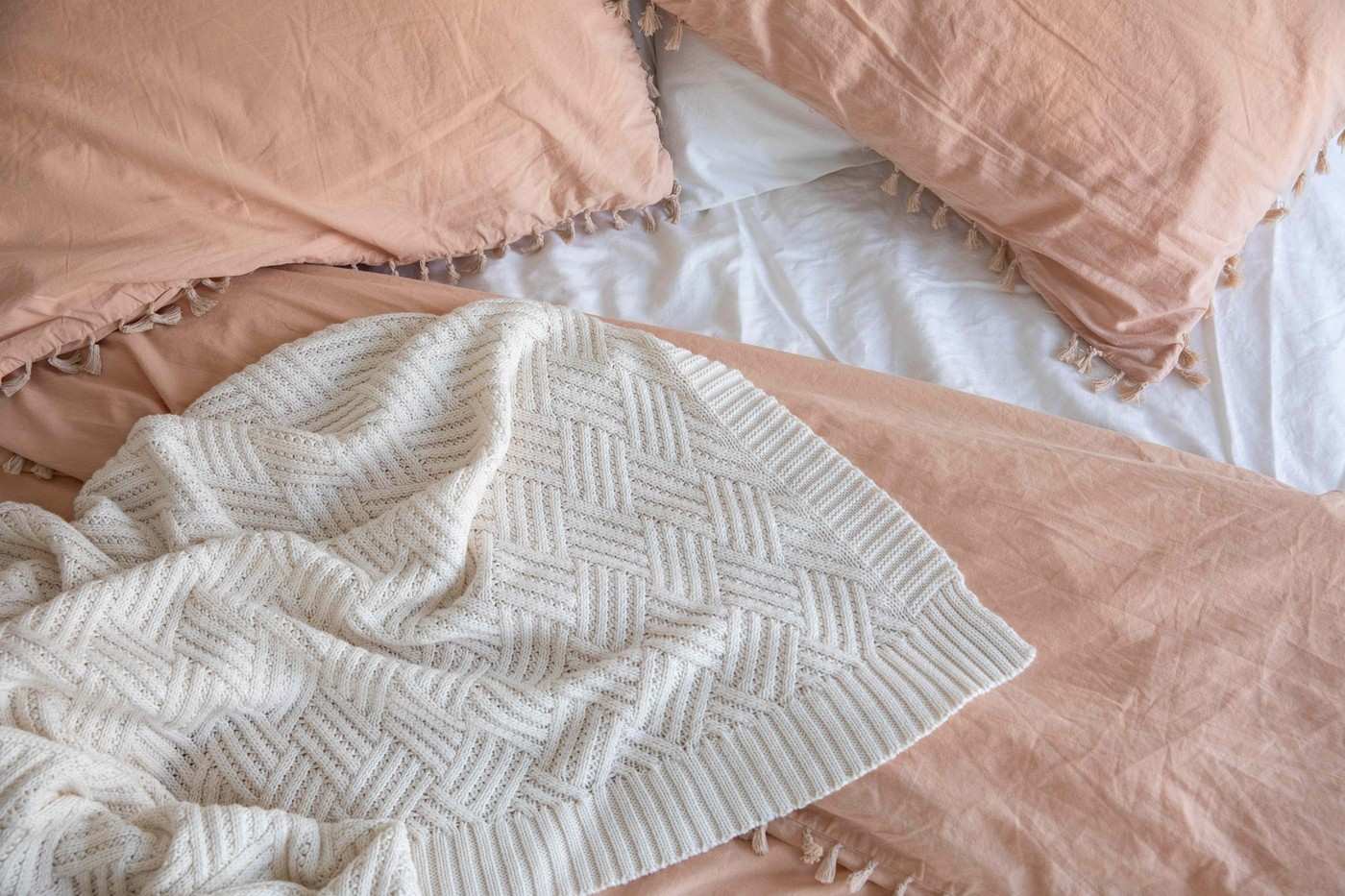
The Spruce's bedding schedule differentiates pillows with protectors from those without them, and distinguishes comforter covers from the bulky pieces they protect. Those layers do not acquire identical cleaning needs simply by sharing a bed. The guide also includes decorative textiles such as bed skirts and curtains, whose limited direct contact gives them a different role from nightly used sheets and pillowcases.
Read each item's label first
The Spruce's bedding guide separates sheets and pillowcases from pillows, blankets, comforters and other bedroom textiles. Items touching the skin regularly tend to need more frequent laundering than protected layers. Its schedule lists weekly care for sheets and pillowcases, while other pieces have different intervals.
Choose the allowed cleaning method
The article recommends stain pretreatment, a suitable detergent and the hottest temperature permitted by the particular label. Drying instructions matter just as much, especially where excess heat can cause damage or shrinkage. Do not combine every bedroom textile into one generic load; fiber, construction, size and filling can require different handling even when the items all belong to the same bed.
Separate removable protection from the filling
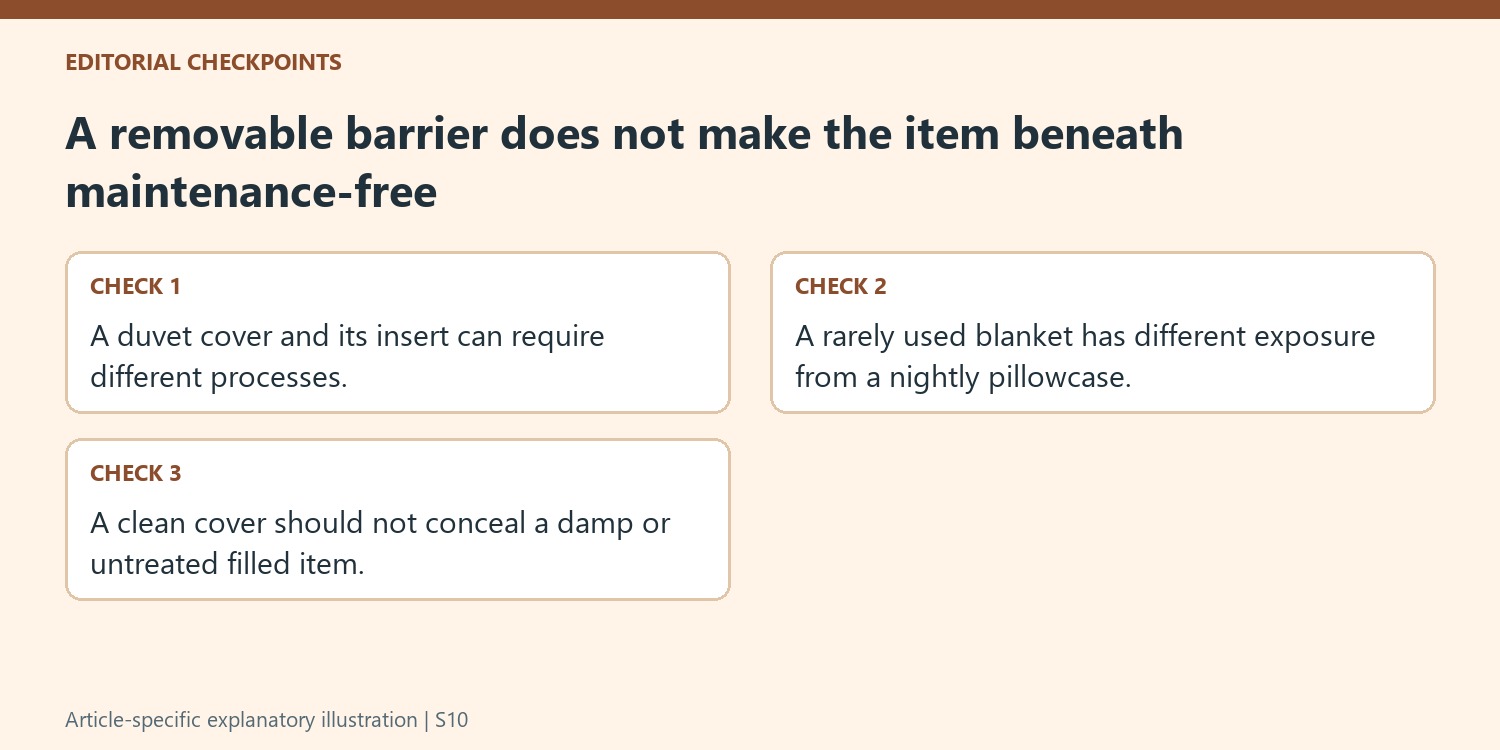
A pillowcase, a protector and the pillow underneath perform different jobs and may need different cleaning intervals. The source treats protection as a way to reduce soil reaching a filling, while still scheduling care for the protective layer itself. Check that each part is washable and that the machine can handle its size and balance requirements before starting. Similar reasoning applies to a covered comforter: removing a washable cover is not the same operation as laundering the bulky insert. Keep the label information with the household plan so a less frequent job does not become an improvised ordinary sheet load.
Map the bedding components before writing the schedule
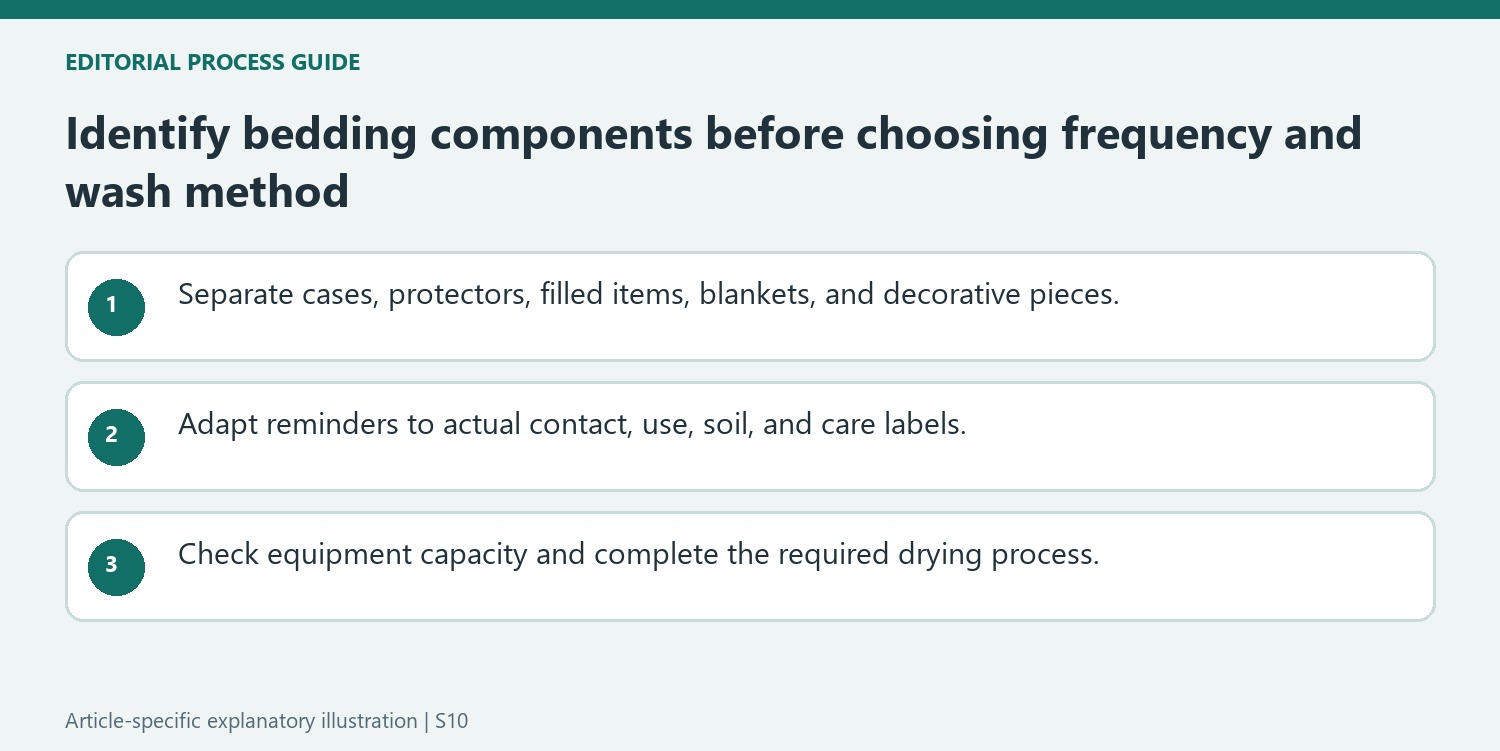
The source lists sheets, pillowcases, pillows, blankets, covers, and decorative bedroom textiles separately. That distinction matters because a bed is not a single washable object. Identify what directly contacts the sleeper, what serves as a removable barrier, and what contains filling or another special construction. Review the actual labels before assigning either a process or a frequency. A duvet cover may be straightforward to wash while its insert needs a different load, equipment capacity, or professional service. A decorative canopy can have installation and fabric limitations unrelated to an ordinary sheet. Keep those differences visible on the checklist instead of shortening every task to wash bedding.
Let condition and use qualify the frequency examples
The article provides broad intervals, but it also distinguishes a frequently used blanket from one seldom unfolded. Use that principle when adapting the list to the household. Spills, visible soil, unusual moisture, and particular hygiene needs can require earlier attention. Conversely, a rarely used decorative component has a different exposure pattern from a pillowcase used every night. A protector can reduce direct soiling of the item beneath without making it permanently clean. Avoid interpreting general bedding health language as a diagnosis of a specific symptom. Special situations such as illness or a pest problem need appropriate situation-specific guidance rather than one generic laundering formula copied from a household schedule.
Check capacity and complete drying for filled items
Confirm whether the actual pillow, comforter, or mattress cover can be laundered in the available machine and dried through an allowed process. Bulky items need adequate space and the loading arrangement specified by the equipment and textile instructions. Do not force an oversized piece into a small drum or assume all filled pillows share the same method. Pretreat marks only with suitable products and inspect the result before an inappropriate heat step. Complete drying as directed before replacing covers or returning an item to storage. Fragrance and airing can change how bedding seems, but neither substitutes for needed cleaning. Finish by identifying what was washed and what still needs separate care, leaving the bed ready without hiding damp or untreated components inside clean covers.
References
- The Right Schedule for Washing Sheets, Blankets, Pillows, and More for a Cleaner, Healthier Bed. The Spruce; Sarah Aguirre.
The Spruce's bedding schedule differentiates pillows with protectors from those without them, and distinguishes comforter covers from the bulky pieces they protect. Those layers do not acquire identical cleaning needs simply by sharing a bed. The guide also includes decorative textiles such as bed skirts and curtains, whose limited direct contact gives them a different role from nightly used sheets and pillowcases.


Leave a Comment
Comments (0)