Consider stain type as well as bedding fiber
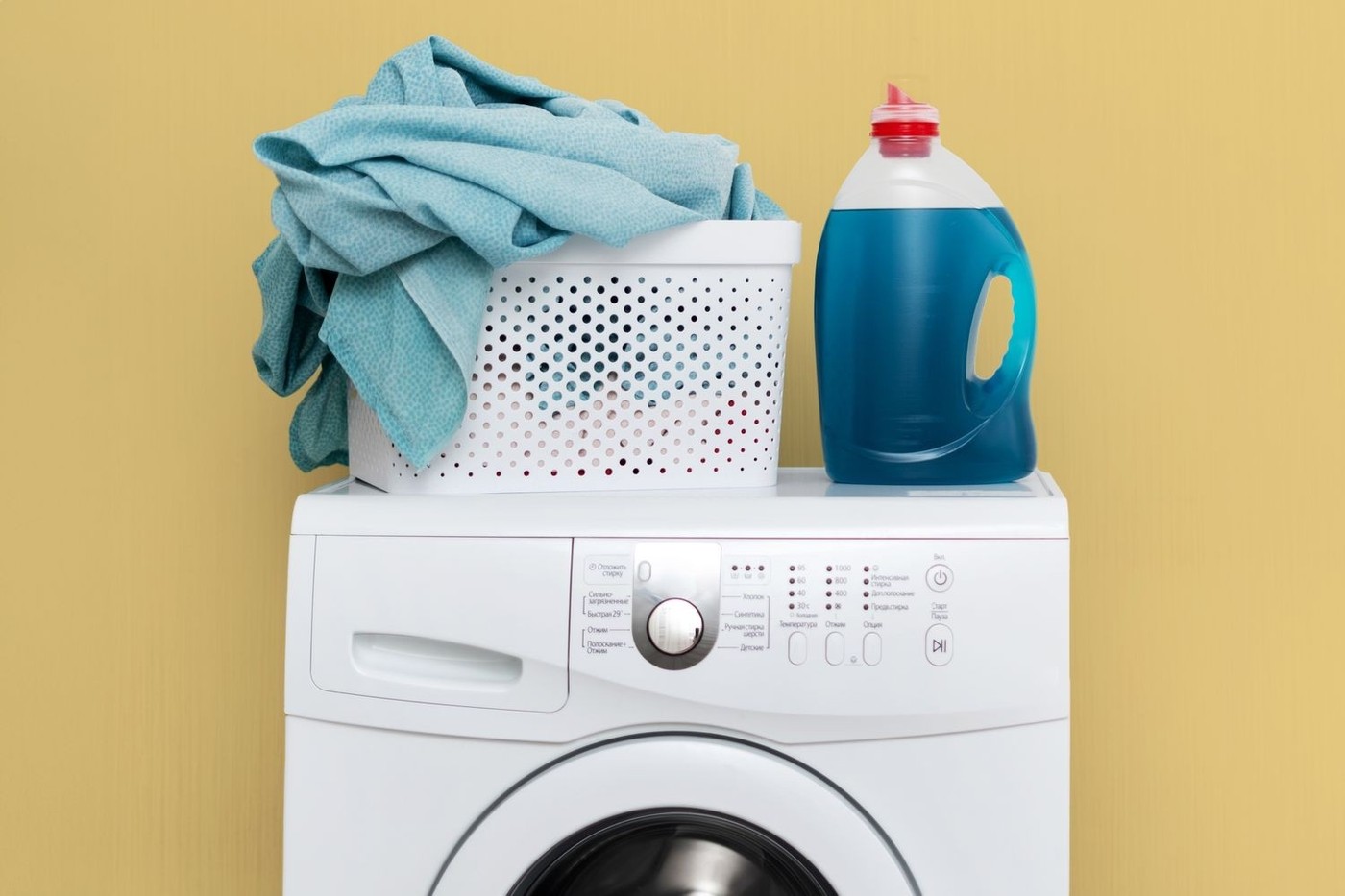
Real Simple's temperature guide contrasts sturdy cotton with delicate silk and discusses how bright dyes can respond to heat. It also notes that different stains create competing treatment needs: the response to a coffee mark should not automatically be applied to a protein-based stain. Choosing the wash therefore begins with the actual sheet and residue, rather than an assumption that hotter always means cleaner.
Hotter is not always better
Real Simple explains that sheets collect sweat, oils and other soil, but that does not mean every load requires the hottest available cycle. Fabric and color affect the appropriate temperature. Check the care label first, because excessive heat can shrink or fade bedding and shorten its useful life.
Separate routine care from special needs
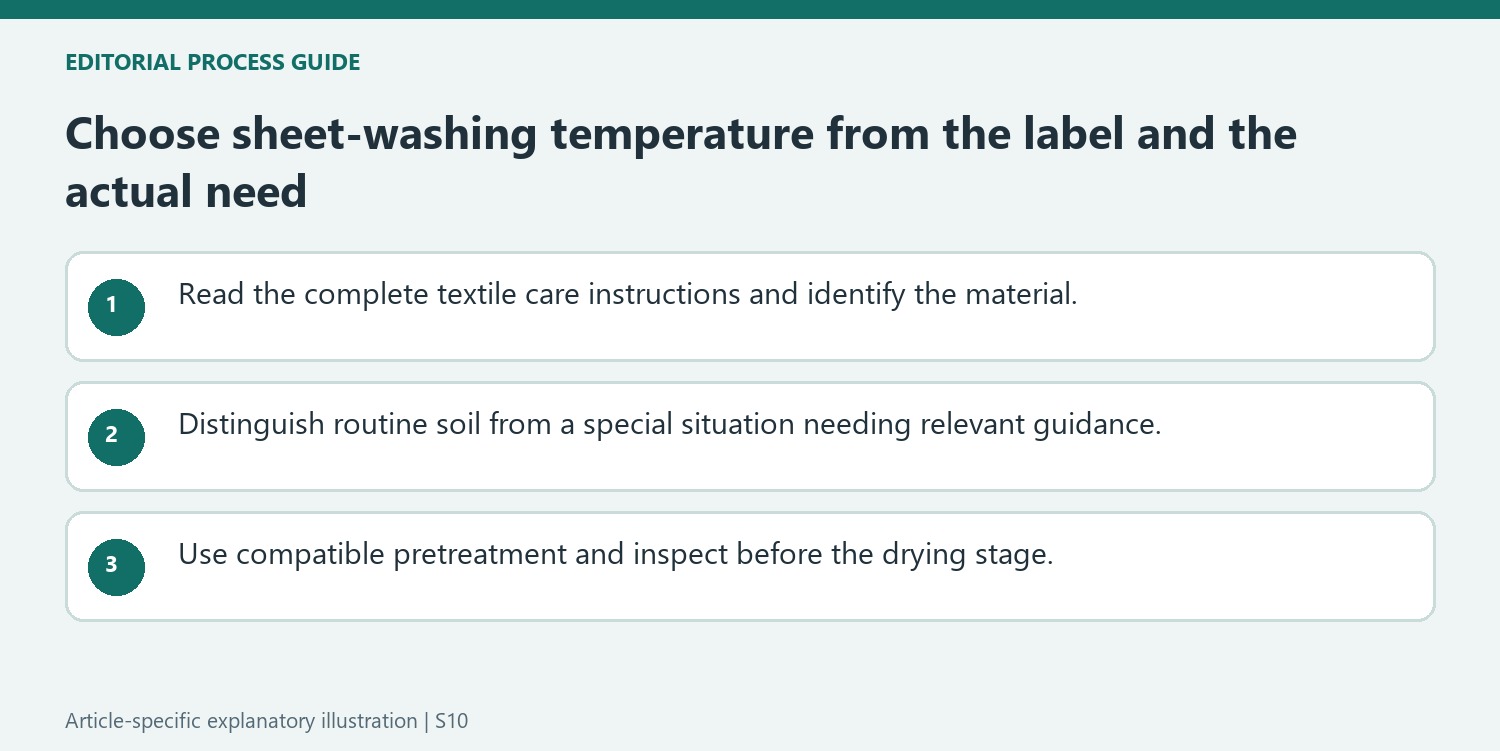
Cotton and delicate silk do not tolerate identical handling. The article discusses situations where hotter washing may be useful, while emphasizing the material's limits. Apply the allowed temperature, detergent and drying method to the actual bedding rather than treating a general hygiene goal as permission to ignore its instructions. Regular laundering remains important even when a cooler cycle is the appropriate choice.
Make temperature a deliberate choice
The source lists fiber and color as two reasons to choose a cooler permitted setting for routine care. Heat can affect bright dyes and fabric dimensions even when the bedding looks sturdy. Stains add another consideration: different residues do not respond to the same temperature, so identify a mark and pretreat compatibly before washing. Special situations such as illness or pests call for relevant care guidance rather than a guessed universal setting. Keep the washing and drying limits visible together. A routine that cleans regularly within those limits is more useful than repeatedly selecting maximum heat without checking what the sheet can tolerate.
Read temperature as one part of the complete care label
The source's central recommendation is to check the sheet instructions before selecting a wash temperature. Identify the permitted cycle, spin, detergent limitations, and drying method at the same time. A fabric's broad name is useful context but does not describe every dye, finish, blend, or construction. If the label is missing, seek the set's product guidance rather than relying on one general material table as permission for maximum heat. Bright colors and delicate fibers may have additional restrictions. The aim is to choose a process appropriate to both the textile and the cleaning need, not to make hotter water the default proof that the load will be cleaner.
Distinguish an ordinary load from a special hygiene requirement
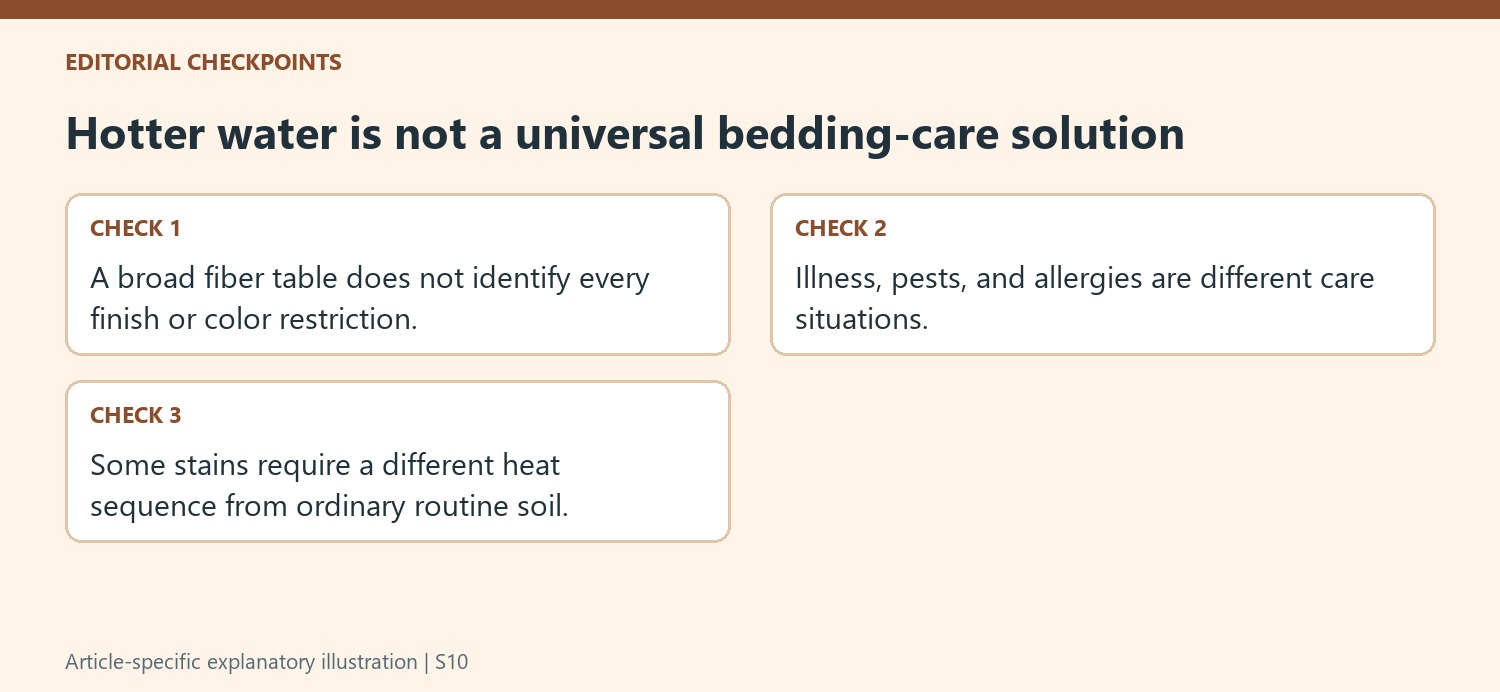
For routine bedding care, use the allowed method and an appropriate measured detergent dose. The source discusses illness, pests, and allergies as circumstances that may change the desired process. Those situations are different from each other and require relevant reliable guidance; a generic hot cycle is not an all-purpose assurance of successful treatment. Confirm what the textile and machine can actually perform before choosing a sanitizing setting or additive. Product claims and required conditions matter, including any separate drying requirement. Do not combine bleach or other products experimentally. If the necessary process is incompatible with a particular sheet, seek a suitable alternative instead of silently disregarding its care limits.
Let the stain influence the permitted treatment sequence
A coffee mark and a protein-based stain can respond differently to heat, a distinction the source uses to explain why temperature should not be selected from appearance alone. Identify the stain where possible, choose a compatible pretreatment, and follow that product's directions before washing. Inspect the result before heat drying rather than setting an unresolved mark through an unsuitable next step. Keep washer capacity, load grouping, and drying restrictions in the decision as well. Record an effective approved process for that set so the next wash does not begin with the same guesswork. A sustainable routine balances actual soil removal, textile preservation, and any justified hygiene requirement without promising that one water temperature solves all three in every circumstance.
References
- Here's When You Should—and Shouldn't—Wash Your Sheets in Hot Water. Real Simple; Lisa Milbrand.
Real Simple's temperature guide contrasts sturdy cotton with delicate silk and discusses how bright dyes can respond to heat. It also notes that different stains create competing treatment needs: the response to a coffee mark should not automatically be applied to a protein-based stain. Choosing the wash therefore begins with the actual sheet and residue, rather than an assumption that hotter always means cleaner.


Leave a Comment
Comments (0)