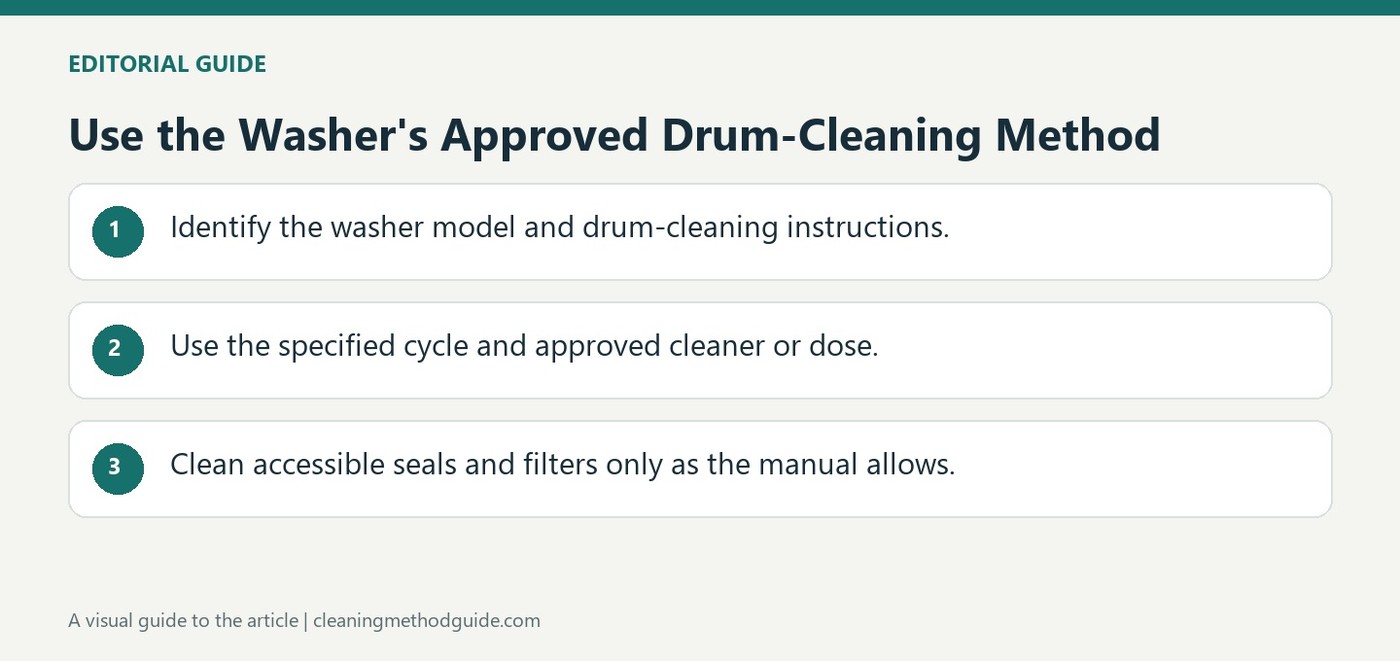
Homes & Gardens' washing-machine feature questions using a strong cleaner simply because it has a reputation for disinfection. Seals, internal materials and residual product all matter when selecting a maintenance cycle.
Check the washer manual for its drum-cleaning procedure and approved products, including whether chlorine bleach is permitted. Follow the dose and required rinsing, with an empty drum where directed. Never mix cleaners or assume vinegar is a universal substitute, since a homemade alternative also needs to be compatible with the machine.
Distinguish a columnist recommendation from the machine manual
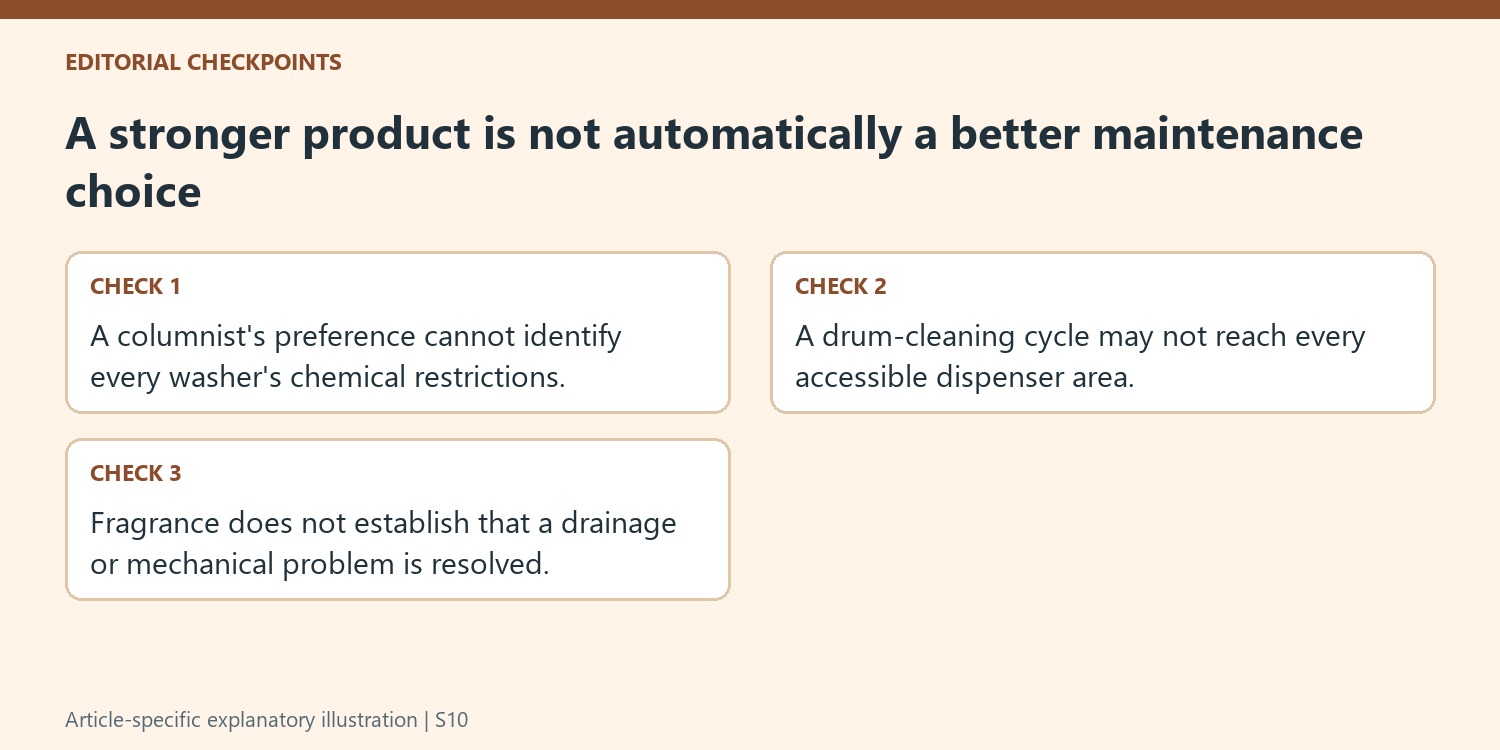
The source warns about potential residue and damage from inappropriate bleach use, but that does not establish that every washer prohibits chlorine bleach. Some machines specify particular products or cleaning compartments, while others have different restrictions. Check the model's drum-cleaning cycle and approved chemical before choosing an additive. The same scrutiny applies to vinegar, oxygen products, and other suggested alternatives: a familiar household ingredient is not a universal substitute.
Inspect the areas the maintenance cycle does not automatically resolve
The feature identifies seals, dispensers, and other damp areas as places where residue can collect. Follow the manual for accessible cleaning, the required empty cycle, and any additional rinsing. Use the correct detergent type and dose in ordinary laundry so that repeated overuse does not undermine maintenance. Allow the permitted ventilation or drying arrangement between loads while preserving household safety. If an odor persists, investigate the cause rather than adding another fragrance or increasing the strength of an unapproved product. Record the procedure and cleaner used so that appliance support can assess the actual history if further help is needed.
Find the maintenance instructions for the exact washer
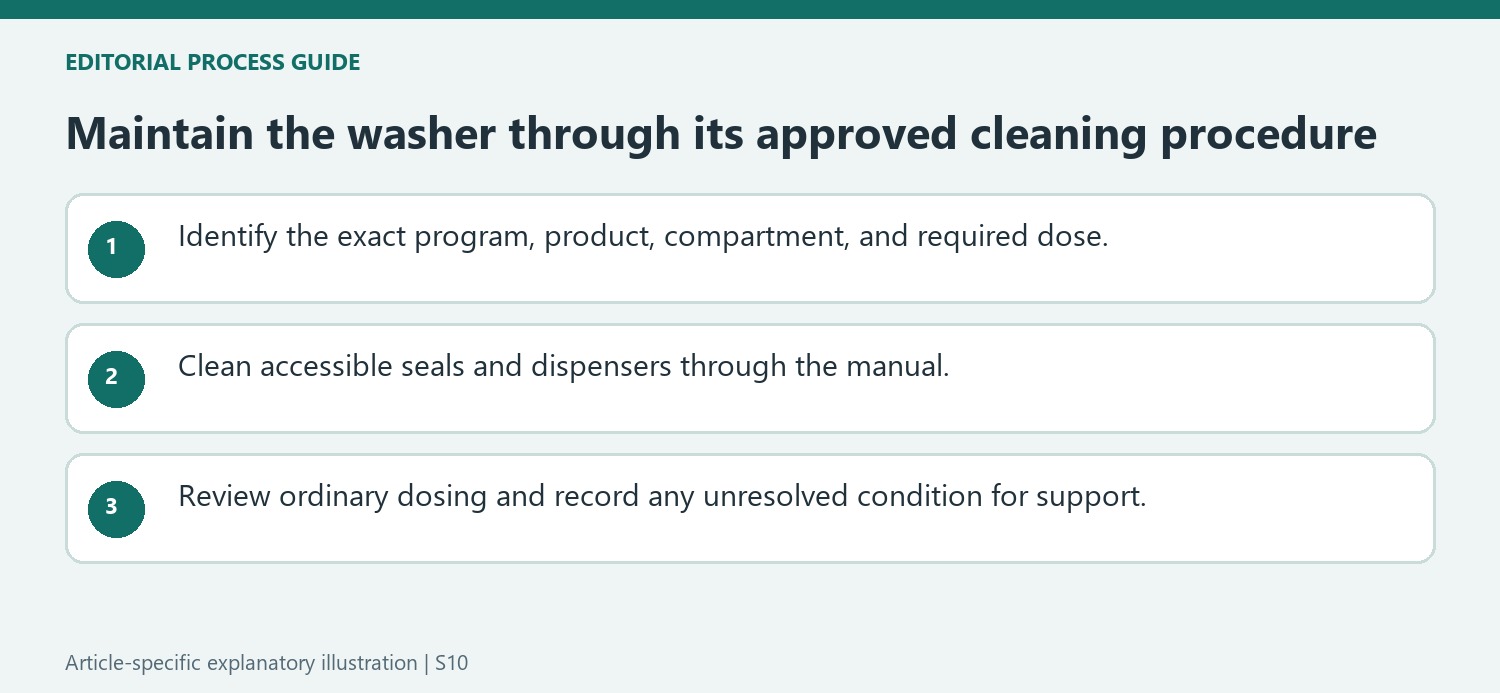
The source questions strong cleaners used simply because of their reputation, but the controlling information is the actual machine manual. Identify the drum-cleaning program, approved product, intended compartment, dose, and any follow-up rinsing. Check whether the procedure requires an empty drum and whether the machine provides a reminder or a model-specific frequency. Do not convert a columnist's preference into a universal statement that all washers prohibit bleach or that all washers accept vinegar. A cleaner sold for washing machines also needs to match the model's restrictions and the product directions. Keep those instructions available so the procedure is repeatable rather than reconstructed from memory each month.
Treat accessible seals and dispensers as separate maintenance areas
A powered cleaning cycle may not remove residue from every accessible fold, tray, or exterior contact point. Follow the manual for the parts the user can remove or wipe, including power and water precautions where required. Use compatible tools and avoid pulling seals, probing internal openings, or dismantling a component that is not described as user-serviceable. Keep cleaner quantities controlled and remove residue as directed. Do not combine a commercial tablet, bleach, vinegar, and another ingredient to make the cycle more powerful. A household recipe still has chemical and material limits. Clean the surrounding storage and return supplies securely after the machine process is complete.
Use ordinary laundry practice to support the maintenance result
Check that the detergent type and measured dose suit the washer, load, and water conditions. Repeated overuse or unsuitable loading can create a recurring problem that an occasional cleaning cycle does not fully address. Follow the appliance's permitted between-load ventilation or drying arrangement while maintaining appropriate household access protection. A pleasant scent after treatment does not demonstrate that a persistent mechanical, drainage, or residue problem is solved. Record the product and procedure used, plus any continuing odor, leakage, or unusual behavior, so support can assess the actual history. Seek appropriate service when the issue extends beyond user maintenance. The goal is suitable continuing care, not the strongest available chemical or an unverified promise that one hot cycle restores every washer. Keep the next reminder linked to the approved procedure, and check whether a changed detergent, water condition, or household laundry pattern calls for reviewing ordinary use as well.
References
- Can you use bleach to clean your washing machine? Expert warn it'll do more harm than good, and what to use instead. Homes and Gardens; Chiana Dickson.
Homes & Gardens' washing-machine feature questions using a strong cleaner simply because it has a reputation for disinfection. Seals, internal materials and residual product all matter when selecting a maintenance cycle.


Leave a Comment
Comments (0)