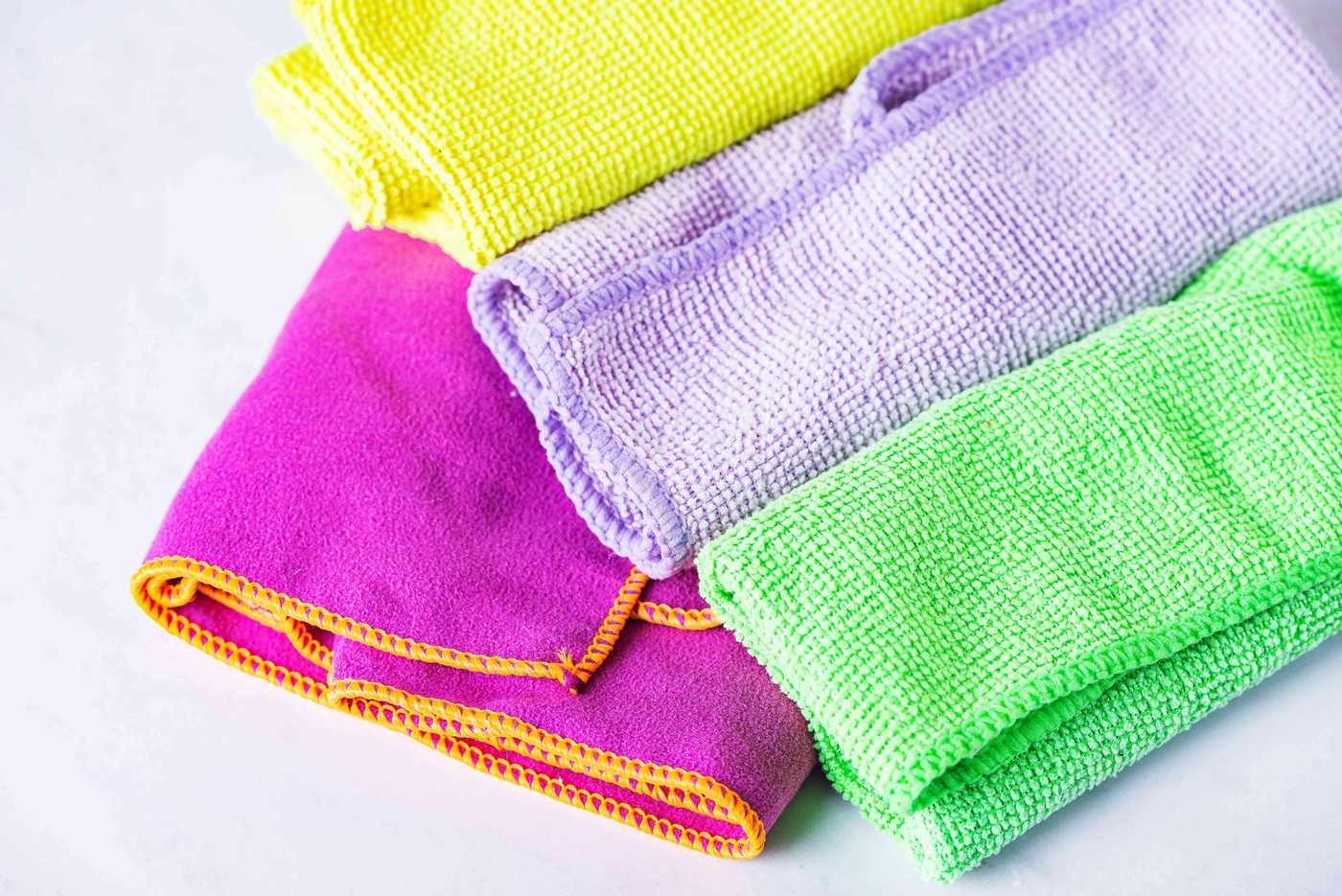
The Spruce's explanation of microfiber covers bedding and upholstery as well as cleaning cloths, so the material name alone does not identify a cleaning function. Its examples range from smooth glass cloths to textured, absorbent tools. That range is a useful starting point when a shop shelf presents several products under the same label: inspect the construction and intended use before deciding whether the item belongs beside a mirror, on a mop, or in the laundry cupboard.
Different uses call for different properties
The Spruce describes microfiber as very fine synthetic fibers used in cleaning cloths, clothing, upholstery and bedding. Fiber combinations and construction can change the material's softness, strength, absorbency and water resistance. A cleaning rag and a sheet made with microfiber therefore share a fiber category without necessarily sharing the same weave or care requirements.
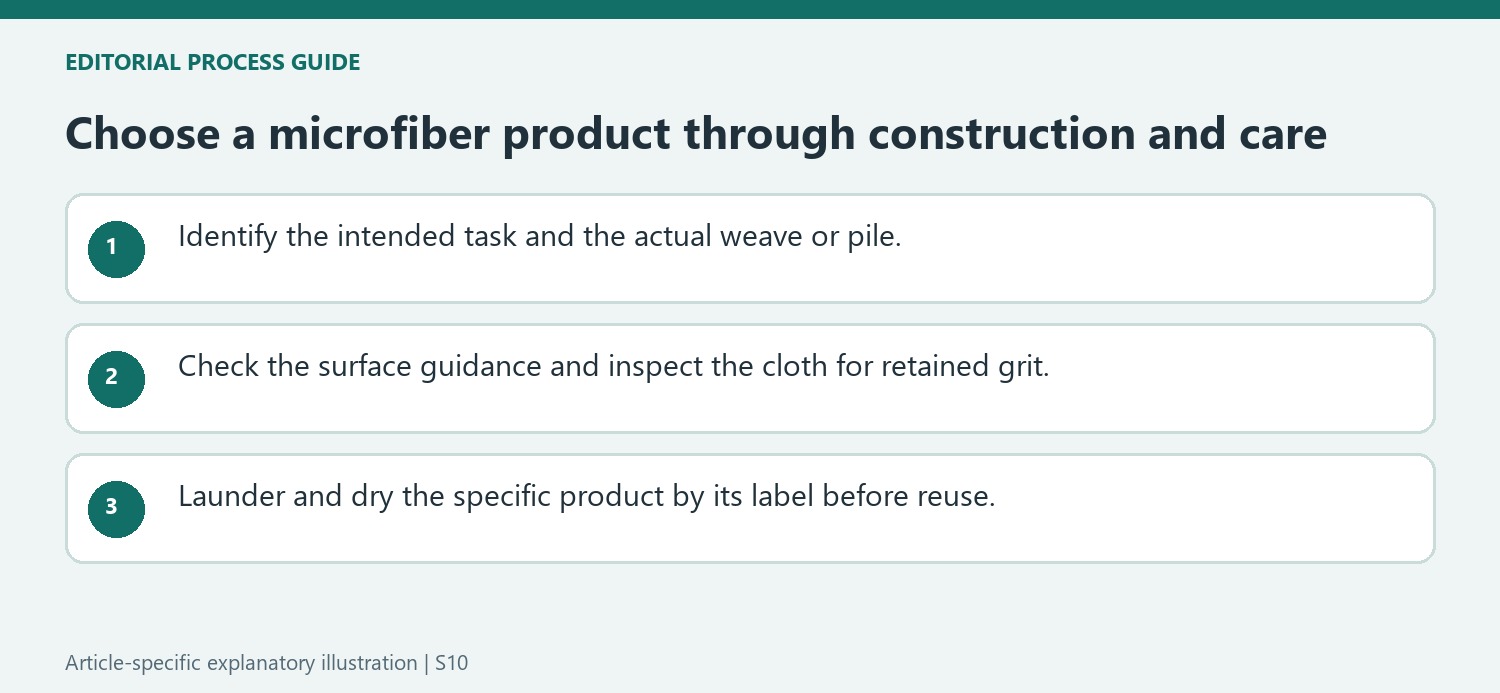
Choose the product for the job
Cleaning cloths and mop covers use fine fibers to collect dust and grease without leaving the lint associated with some cotton rags. Those properties do not make the cloth self-cleaning or a substitute for every disinfecting procedure. Check the intended surface and product instructions, then wash and dry the actual item according to its label rather than applying one universal microfiber routine.
Read the weave and care label together
The Spruce's examples contrast lightweight screen or glass cloths, plush polishing cloths, waffle-textured fabrics and absorbent chenille tools. Those constructions change how a product holds moisture and reaches a surface; they are not simply different colors of the same rag. The article also distinguishes water-repellent upholstery from absorbent cleaning fabric, despite both using fine synthetic fibers. After a cleaning task, remove collected dirt through the item's permitted wash rather than carrying it onto another surface. Avoid fabric-softener residue and unsupported high drying heat. A cloth that picks up particles still needs maintenance, and physical removal should not be described as automatic disinfection of every object it touches.
Use construction to interpret the material label
The Spruce's examples show why microfiber belongs to a broad fabric family. A smooth cloth for a lens, a plush polishing towel, and a chenille mop head expose different surfaces to the object being cleaned. Look at the actual weave, pile, edge finish, and intended use together. Fine fiber size alone cannot establish that every finished item will absorb water equally or tolerate the same cleaner. The source contrasts water-resistant upholstery with absorbent cleaning products, which is especially useful when the shared name sounds like a single performance specification. Select a cleaning tool by its construction rather than borrowing a property from unrelated microfiber bedding or furniture.
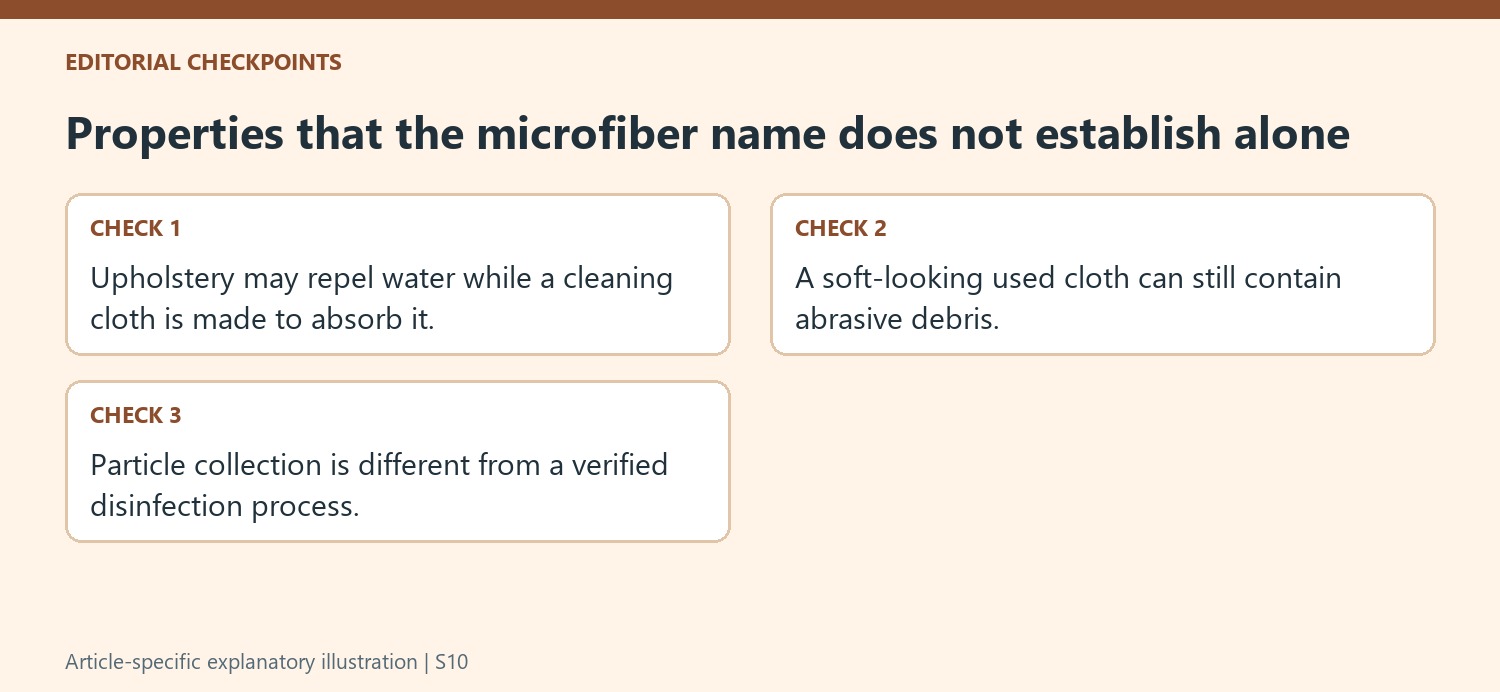
Make maintenance part of the surface-protection decision
A cloth that collects small particles can also retain them until it is properly cleaned. Before using it on a delicate finish, inspect for trapped debris and confirm that the surface maker permits the chosen cloth and technique. A visually soft material is not a guarantee against scratching when grit is present. Assign different cloths to different tasks and move a soiled one out of service instead of expecting another pass to remain clean. The source's account of lint attraction also explains why washing with shedding cotton can undermine the intended finish. Keep clean cloths protected from the dust and debris they will later be used to remove.
Evaluate care and replacement for the particular item
Read the label for detergent, additives, temperature, and drying rather than choosing one routine for all fine-fiber products. The article warns about fabric-softener buildup and damaging heat, which can affect the properties that made the cloth useful. Observe whether a properly maintained item still performs its assigned task and whether its seams or surface remain suitable. A material's ability to pick up particles is not evidence that it kills them or disinfects every surface. Keep any required labeled disinfection process separate. The practical value of microfiber comes from matching a suitable construction to the job, removing the collected soil afterward, and returning a clean tool to service. That cycle matters more than treating the fiber name as an all-purpose promise.
References
- Discover Microfiber Clothes and Linens and How to Use and Wash Them. The Spruce; Mary Marlowe Leverette.
The Spruce's explanation of microfiber covers bedding and upholstery as well as cleaning cloths, so the material name alone does not identify a cleaning function. Its examples range from smooth glass cloths to textured, absorbent tools.


Leave a Comment
Comments (0)