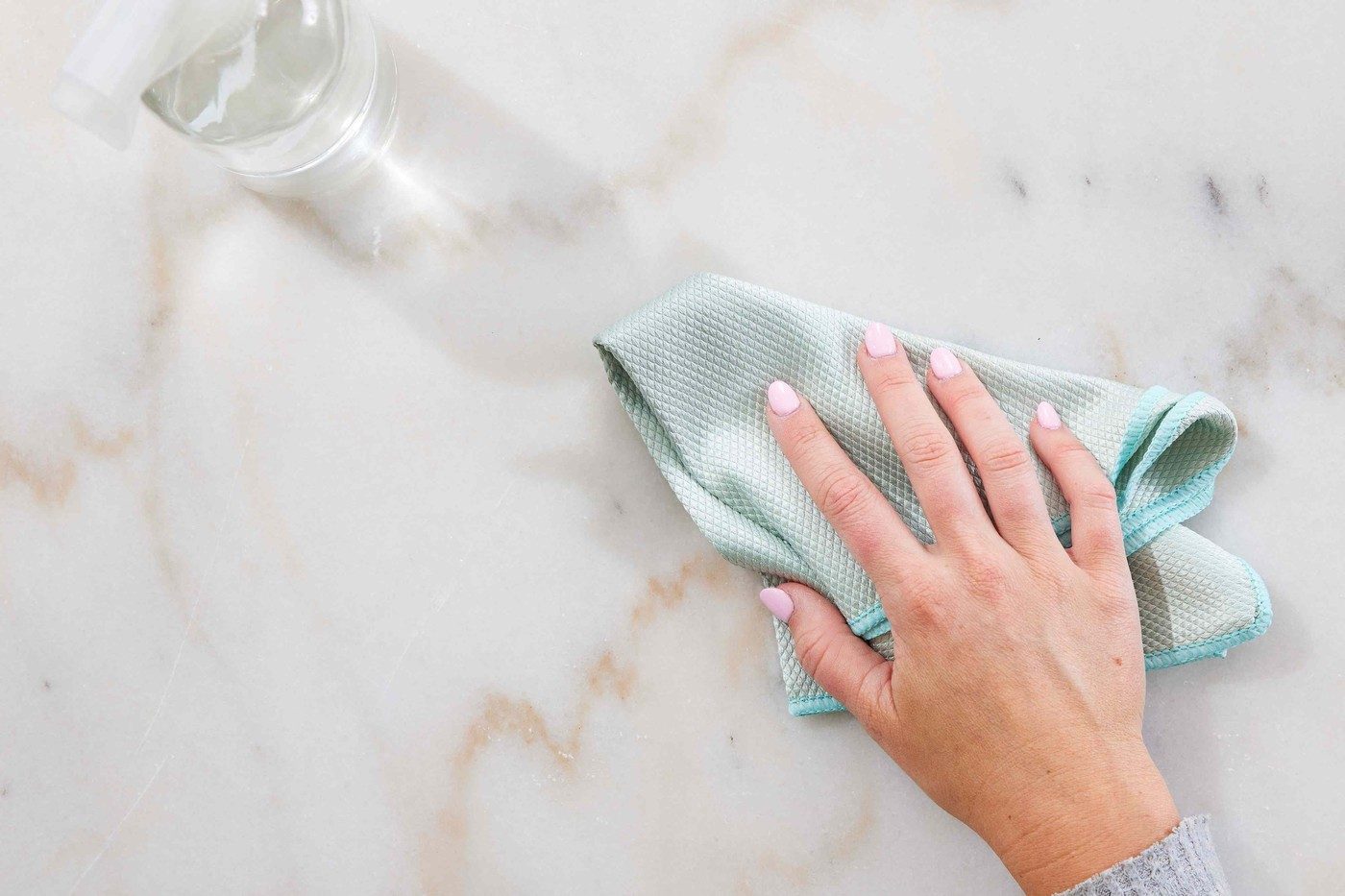
Better Homes and Gardens begins microfiber care with removing loose dust and lint outdoors, then separates washing choices by the amount of soil. Its condition checks also include fraying, changed softness or absorbency, and odor that persists after appropriate laundering. Those details make inspection more useful than relying on an advertised number of wash cycles. Before returning a cloth to a delicate surface, consider what it picked up, how thoroughly it was rinsed, and where it dried.
Shake out loose dust first
Better Homes and Gardens advises releasing loose dust and lint outdoors before washing microfiber cloths. The fabric's many fine synthetic fibers hold dirt and grease effectively, but those retained particles must be removed before the cloth is used again. Otherwise, the tool can redistribute soil or scratch a different surface.
Match washing to the amount of soil
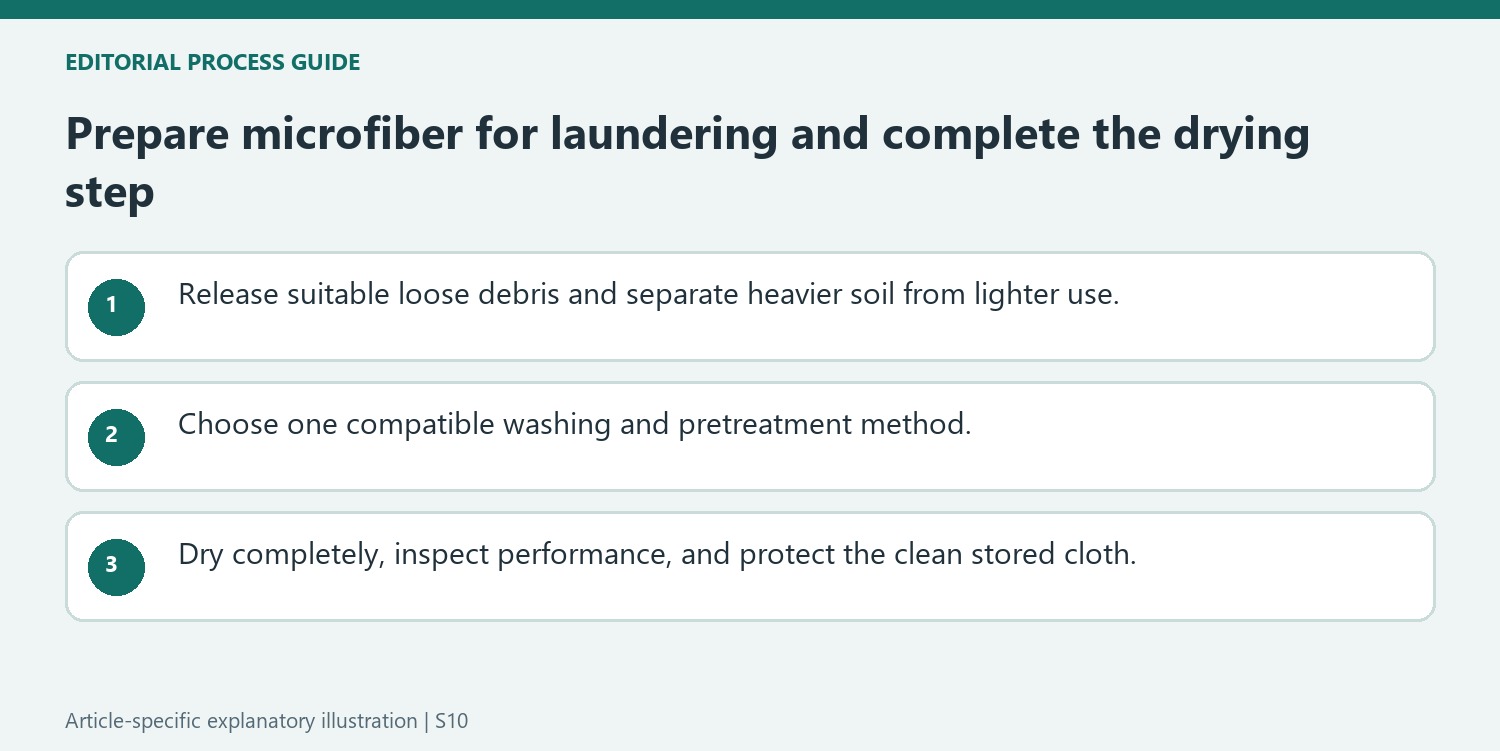
The guide recommends a gentle cold wash for light soil and warmer water for dirtier cloths, subject to the care label. It also describes hand washing in cool water. Regular washing and complete drying prevent odors and preserve the cloth's useful texture. Do not assume a cloth is ready for another delicate surface merely because it still looks reasonably clean.
Inspect condition after laundering
BHG lists loss of absorbency or softness, persistent odor and fraying as signs that replacement may be needed. A theoretical number of wash cycles is less useful than the condition of the cloth actually in hand. Its washing advice also separates lightly soiled cloths from heavily soiled ones, which limits redistribution of greasy dirt within the load. Follow the label for pretreatment and drying rather than adding scented products to disguise a remaining odor. After air drying or approved low-heat drying, fold the cloths into clean storage. Keep task-specific groups identifiable so the next person does not take a bathroom cloth for a food-preparation surface.
Reduce loose loading before the main laundering step
The source recommends releasing excess dust and lint before washing microfiber. Use the permitted preparation method in an appropriate place and avoid spreading contamination into a freshly cleaned area. Heavily soiled cloths deserve separate consideration from lightly used ones, both to remove their soil effectively and to protect the next use of the cleaner group. Inspect for particles that should not enter the washing process. This preliminary step does not replace detergent cleaning where needed; it makes the subsequent approved wash more focused on the soil still held in the fabric. Keep the cloth's care label available when choosing how much handling it tolerates.
Treat an odor or stain through an appropriate method
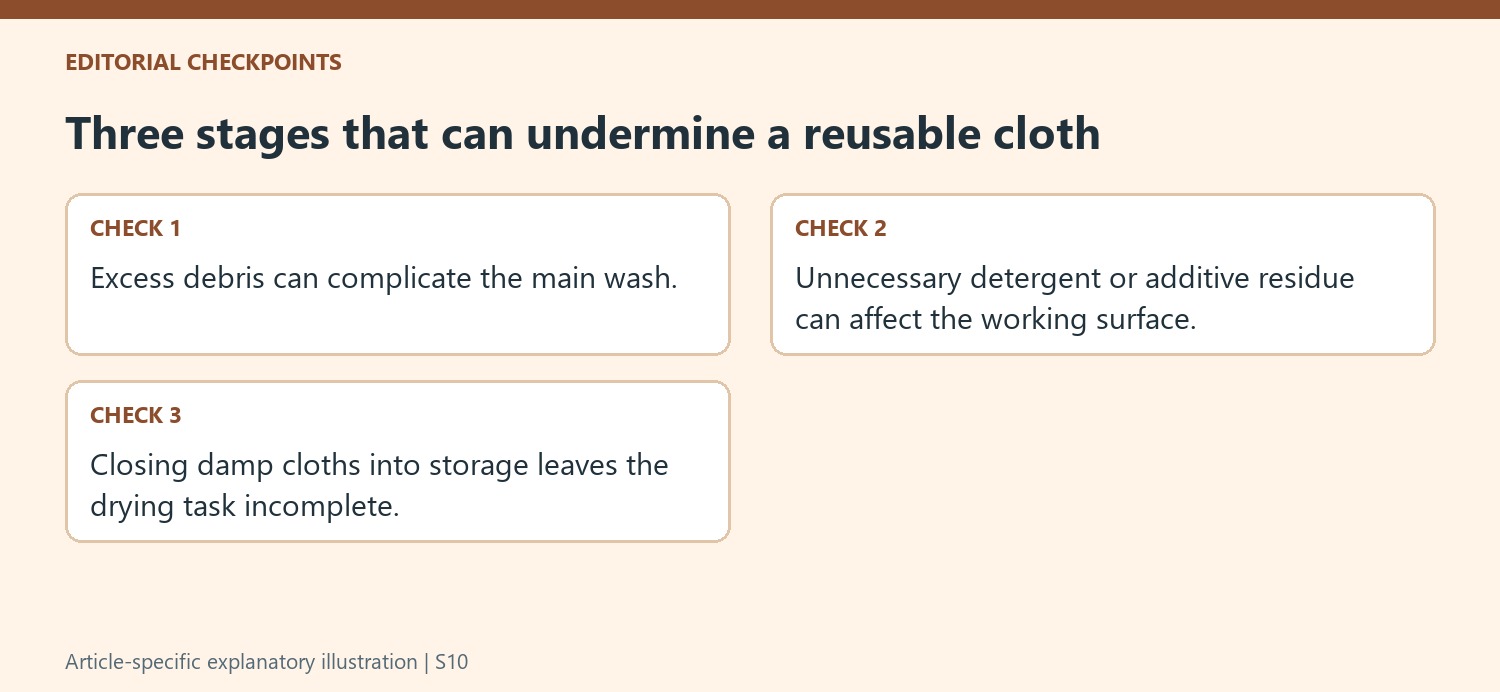
The guide includes pretreatment and different hand- or machine-washing approaches. Choose the one permitted for the actual cloth and soil rather than combining every suggestion into a stronger mixture. Measure a compatible detergent and avoid chlorine bleach or softening additives where the textile instructions exclude them. A time or temperature given in a general article is not a substitute for the product's conditions. Rinse through the chosen method so the working surface is not left carrying unnecessary residue. Physical washing can remove collected material, but it should not be described as automatically completing every required disinfection procedure. Any such need calls for a compatible labeled process.
Do not end the routine at the washer door
Dry the cloth completely before it enters a drawer or closed container. Follow the actual permitted method and heat setting rather than assuming any quick dryer program is harmless. Store clean microfiber apart from shedding textiles and dirty cleaning tools. Before reuse, check absorbency, softness where relevant to the task, fraying, and any persistent odor after proper care. The source's estimated years or wash counts describe an expected range rather than an expiry date shared by every cloth. Replacing a damaged working surface can be appropriate sooner, while a cosmetic stain alone needs a more careful interpretation. The practical aim is a clean, effective contact face ready for its assigned job, with old grit and moisture removed instead of sealed into the storage box.
References
- Wash Microfiber Cloths This Way to Keep Them Working Like New. Better Homes & Gardens; Nafeesah Allen.
Better Homes and Gardens begins microfiber care with removing loose dust and lint outdoors, then separates washing choices by the amount of soil. Its condition checks also include fraying, changed softness or absorbency, and odor that persists after appropriate laundering.


Leave a Comment
Comments (0)