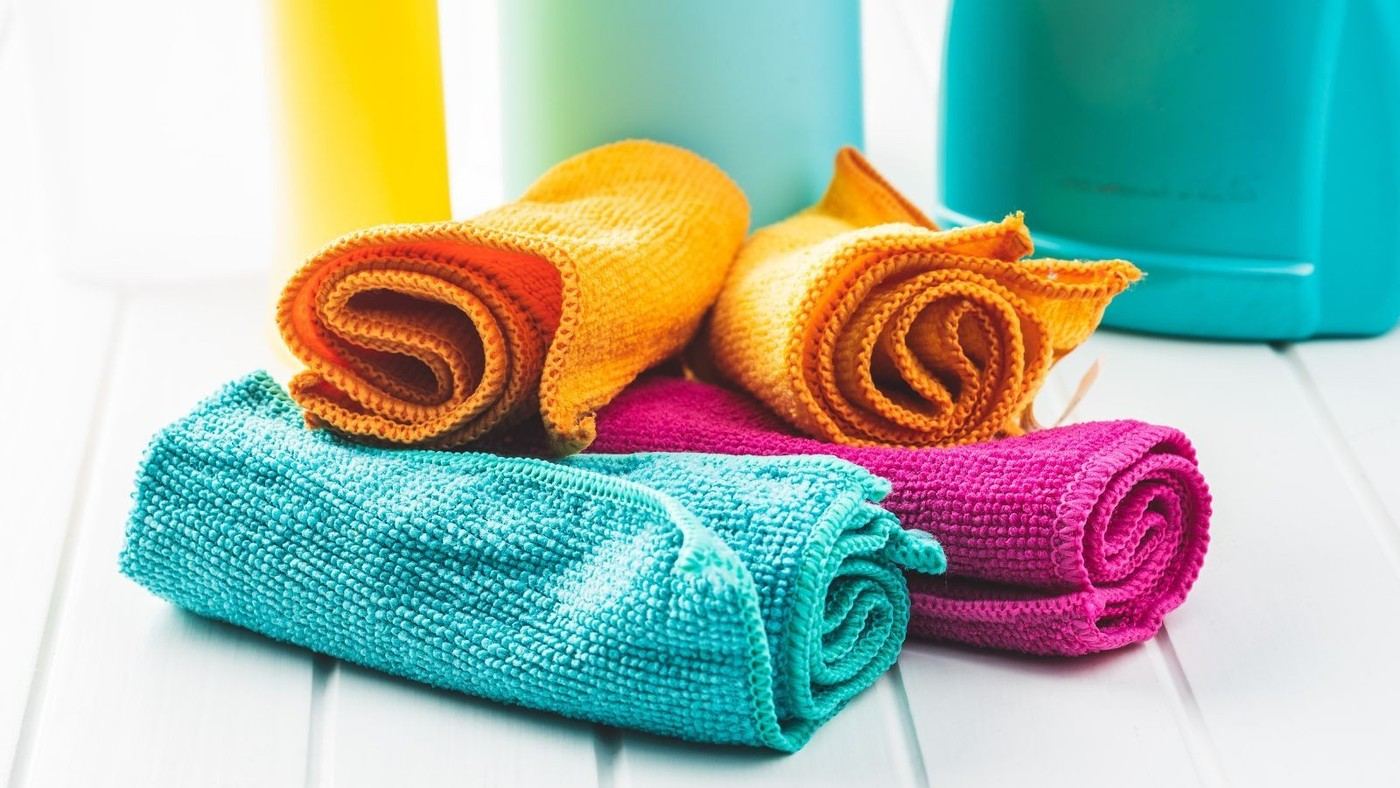
Homes & Gardens' microfiber-care feature explains that fabric softener can coat fine fibers and interfere with their ability to collect moisture and dirt. A cloth may feel softer while becoming less effective at the cleaning job it is meant to perform.
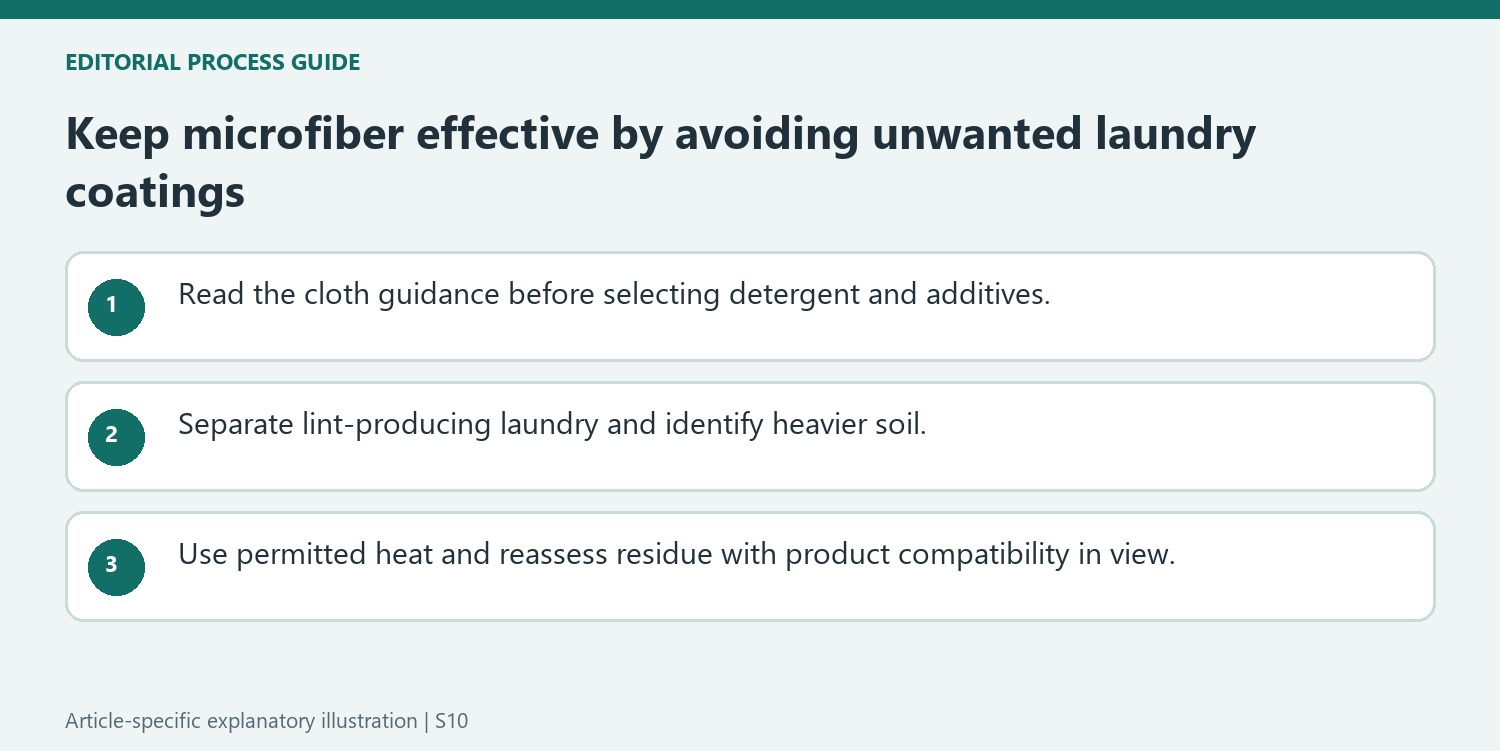
Follow the cloth's washing label, using suitable detergent and avoiding incompatible additives. Keep heavily soiled cloths appropriately separated and dry them using the permitted method. Maintaining the material's performance helps extend its useful life without assuming a freshly scented cloth is necessarily a better cleaning tool.
Separate the load from lint sources
Homes and Gardens' interviewed cleaners recommend keeping microfiber away from lint-shedding garments so the fine spaces in the cloth remain available to collect dirt. That is especially relevant beside cotton towels, whose lint can be captured during washing. A laundry bag can organize small cloths but should not be treated as a guarantee that incompatible fabrics cannot shed onto them.
Choose additives for function rather than fragrance
The source quotes Jennifer Rodriguez describing fabric softener's coating effect. The same concern applies to dryer sheets, which also leave a conditioning film. Use the detergent and quantity permitted by the cloth's label, and avoid assuming that a scented result demonstrates cleaning performance. Any optional residue-removal treatment must also fit the washer and cloth instructions, without combining incompatible chemicals.
Control heat and reuse timing
The article recommends cooler washing and restrained drying temperatures because excessive heat can damage the fine synthetic structure. Air drying is an option when allowed, provided the cloth hangs in a clean place and dries completely. A grease-cleaning cloth needs washing after that task, whereas light dusting presents a different soil load. Inspect what the cloth collected rather than reusing it according to fragrance or appearance alone.
Understand the practical effect of a softening coating
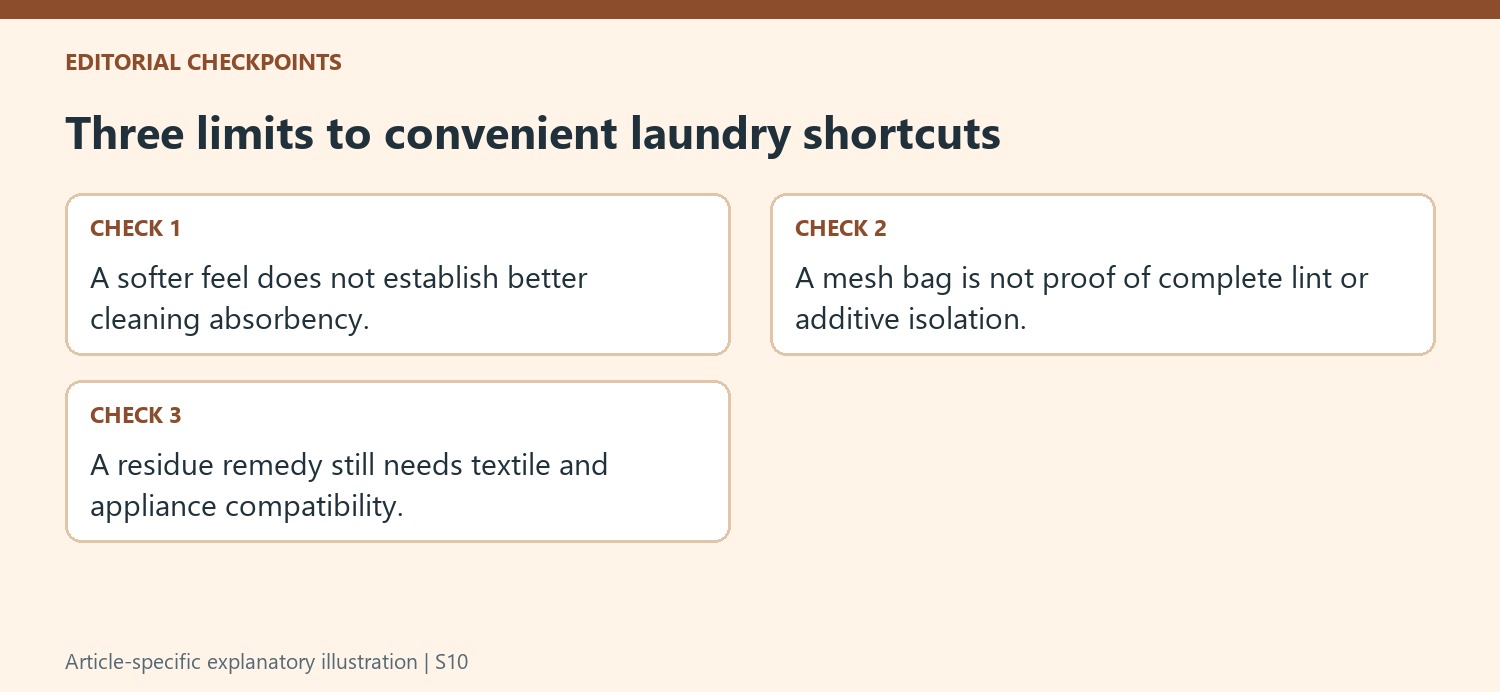
Homes and Gardens centers its advice on keeping microfiber effective rather than making it feel like a conventional soft towel. The experts describe softener residue coating the fibers and reducing the liquid handling needed for cleaning. Compare the actual detergent and additive instructions on the selected cloth before running the machine. A familiar household softener can be inappropriate for a textile chosen specifically to absorb moisture or collect fine debris. The source's simplified explanation of fiber behavior is not necessary to make an exaggerated scientific claim: the useful takeaway is to preserve the product's specified cleaning surface and avoid an unwanted coating.
Separate the cloth load rather than relying on a bag alone
The article recommends separating microfiber from lint-producing laundry and suggests a mesh bag when a small collection is inconvenient. A bag may organize or protect items through a permitted wash, but it does not establish complete isolation from every particle or additive in the same water. Follow the actual cloth guidance and keep shedding fabrics out where required. Distinguish clean dusting cloths from heavily soiled kitchen or bathroom tools when planning the load. A small supply of appropriate spares can make this routine more practical without repeatedly returning a dirty cloth to service simply because the washer is not yet full.
Use care instructions to evaluate heat and residue remedies
The experts advise avoiding damaging heat and support air drying where suitable. Check the specific temperature and drying method allowed by the product rather than assuming warm or low has an identical meaning on every machine. The source also discusses vinegar as a residue remedy; that suggestion should not override appliance, textile, or chemical compatibility instructions. Never combine an acidic treatment with bleach. If the cloth still leaves streaks after approved care, inspect it for trapped soil and consider the cleaner and finish involved before blaming the fabric alone. A successful routine returns an absorbent, clean working face to a defined task. It does not need a stronger fragrance or softer feel to count as effective maintenance. Retain the label with the assigned cloth group for future washes.
References
- How to wash a microfiber cloth – this common mistake may be ruining yours. Homes and Gardens; Chiana Dickson.
A laundry additive can reduce the absorbency that makes these cloths useful.


Leave a Comment
Comments (0)