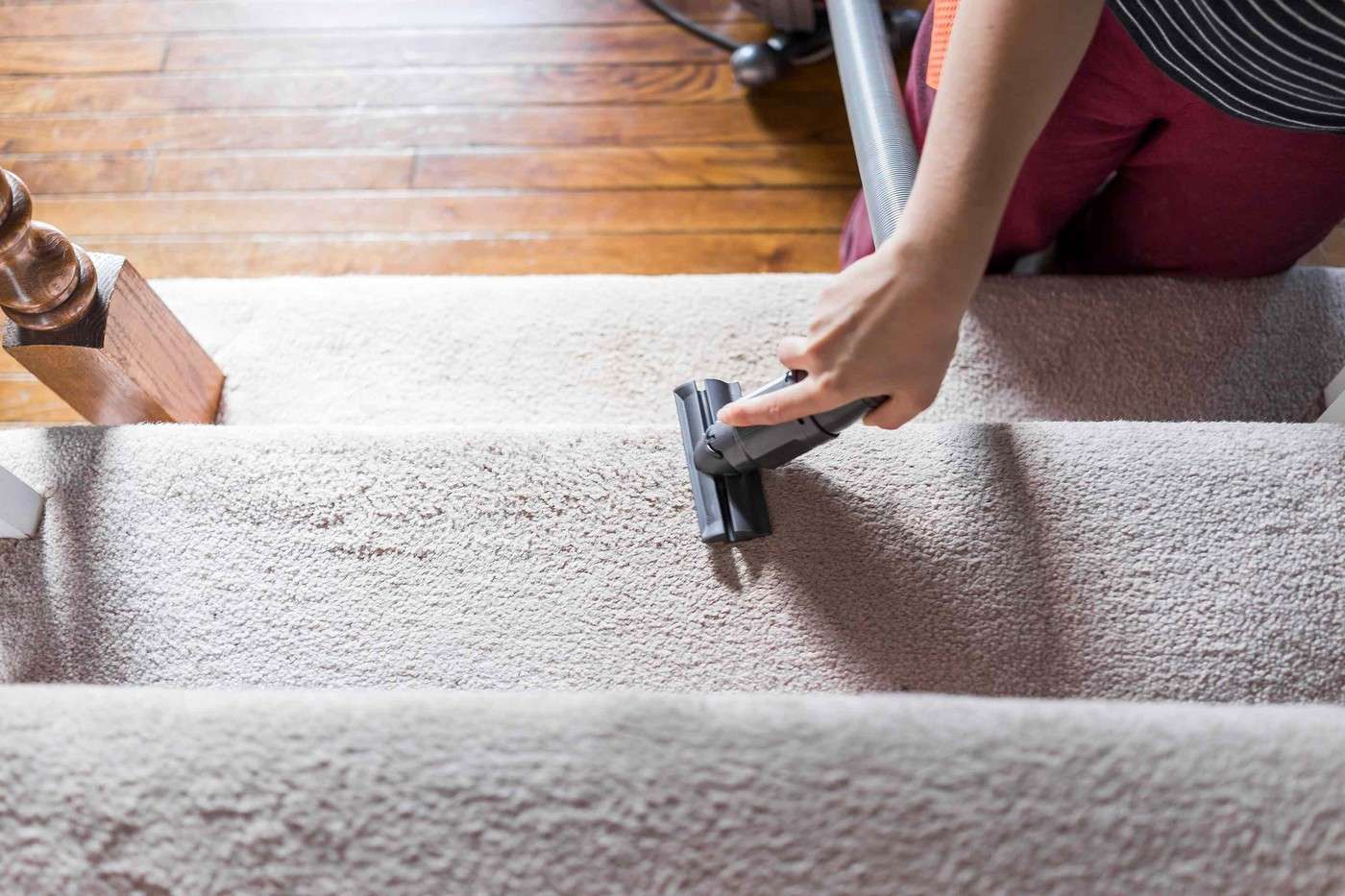
Better Homes and Gardens explains how changing the end of a vacuum hose changes the job it can do. A soft dust brush surrounds the opening with bristles, a crevice nozzle concentrates access into a narrow gap, and an extension wand increases reach. Fabric, mattress, and pet-hair tools add further options. Start by identifying which of these came with the machine and which fit its connections, before attempting to use a floor head on furniture or a delicate object.
Soft bristles and narrow openings do different jobs
Better Homes and Gardens explains that a dust brush uses soft bristles around the opening, while a crevice tool reaches narrow gaps along edges and between objects. An extension wand increases reach without requiring the main vacuum body to fit into the same space. These tools make the hose more useful than a bare opening alone.
Add fabric tools where appropriate
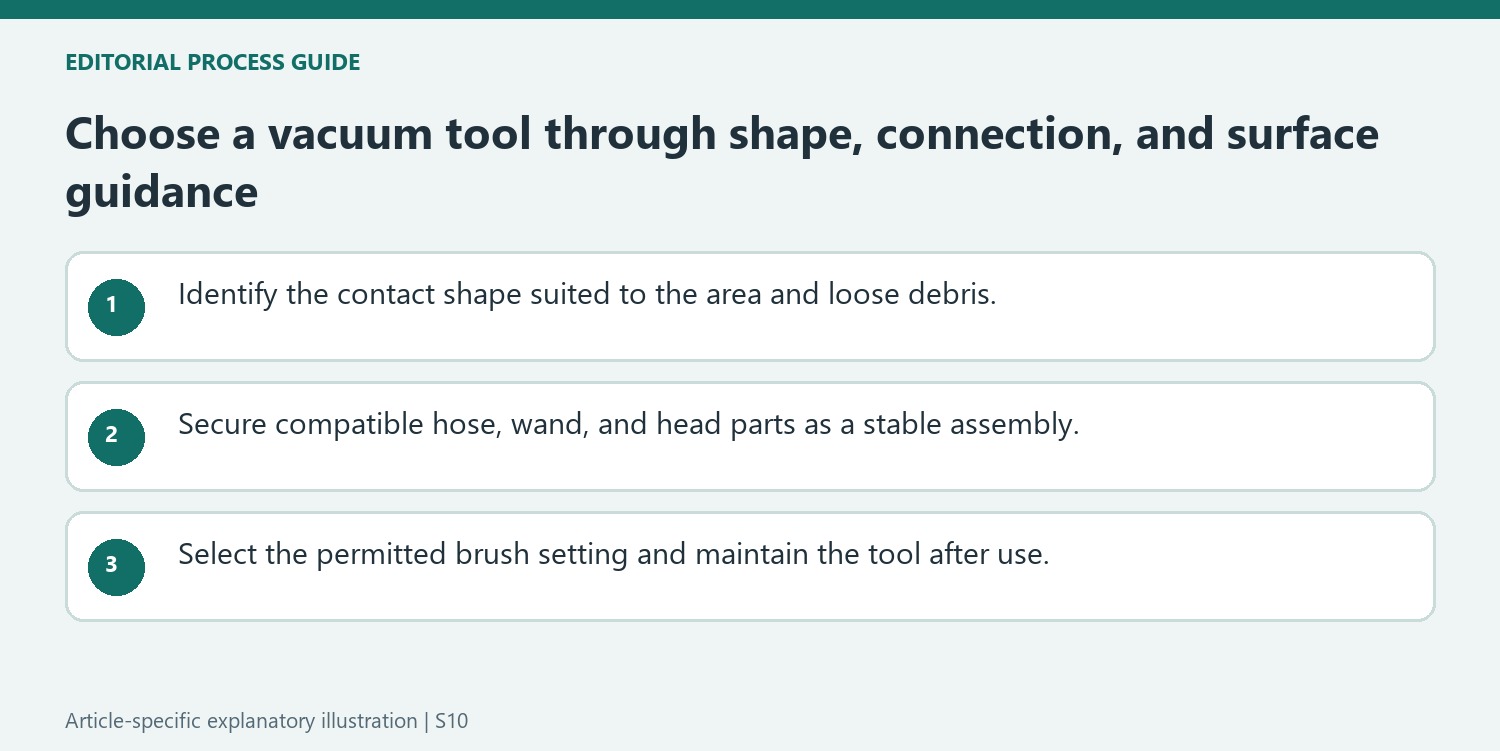
The guide also describes upholstery, mattress and pet-hair attachments. Check what is supplied with the vacuum and whether additional tools are compatible with its connection. Choose the head for the material rather than forcing a floor brush across every object. Delicate finishes and electronic equipment still need their manufacturer's cleaning instructions, even when a dusting attachment appears convenient.
Use attachments without turning reach into force
BHG describes pairing an extension wand with either a soft dust brush or a narrow crevice head. The combination extends access, but the opening and bristles still need to match the surface. Its upholstery instructions favor gentle sweeping movements over vigorous brushing, while hard-floor and carpet heads use different designs. Check suction controls and any rotating brush restrictions before touching a delicate fabric or rug. The source also notes that hose punctures reduce efficiency, making storage part of maintenance. Keep the hose from sharp bends and inspect it when reach or pickup changes, rather than assuming every poor result requires a more aggressive attachment.
Use the attachment's contact shape to identify its role
The source describes a long-soft-bristled dust brush, a narrow angled crevice tool, and a smaller rectangular upholstery head. Compare those shapes with the collection that needs removing and the surface underneath it. A broad floor nozzle may be inefficient in a narrow gap, while a small crevice tool is a poor substitute for covering an entire room. Verify the attachment against the actual vacuum manual, because names and features differ between models. A brush described generally as gentle does not automatically belong on every coated screen or fragile object. The item's care instructions still determine whether vacuum contact is appropriate.
Check reach and connection as a complete assembly
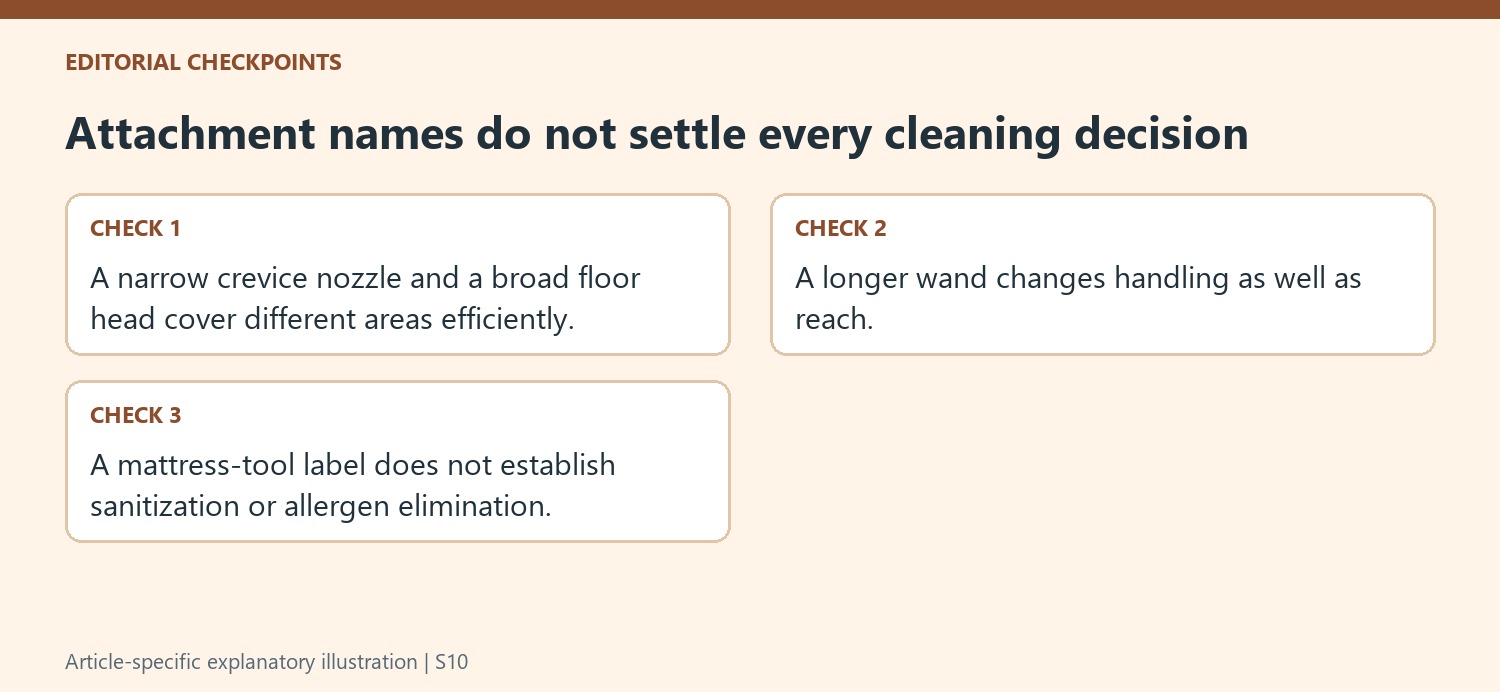
The guide pairs an extension wand with a hose and another tool to reach higher or more awkward areas. Confirm that the parts are compatible and properly secured before working. A longer assembly changes handling and can pull against the vacuum body, so maintain a stable position and avoid relying on a stretched hose for support. Inspect the hose for damage that could reduce airflow. Choose a comfortable route around furniture rather than forcing an attachment into a gap it cannot enter cleanly. The source's generic hose-length examples should not replace the specified reach or storage method of the machine actually in use.
Match moving heads to the surface maker's guidance
Some floor heads have adjustable settings while others are separate tools. Confirm which configuration is intended for the floor or rug, including whether a powered brush should operate. An attachment marketed for pet hair may use a rotating element that is not suitable for every upholstery or delicate textile. Mattress and upholstery tools can remove loose material within a permitted care routine, but their names do not establish sanitization, allergen elimination, or a health outcome. Clean the attachment and maintain the vacuum according to its instructions before storing the set together. Learning a few appropriate tools makes the appliance more versatile without assuming every accessory should be used on every object the hose can reach.
References
- A Guide to the Most Common Vacuum Attachments (and What to Use Each One For). Better Homes & Gardens; Maria Sabella.
Better Homes and Gardens explains how changing the end of a vacuum hose changes the job it can do. A soft dust brush surrounds the opening with bristles, a crevice nozzle concentrates access into a narrow gap, and an extension wand increases reach.


Leave a Comment
Comments (0)