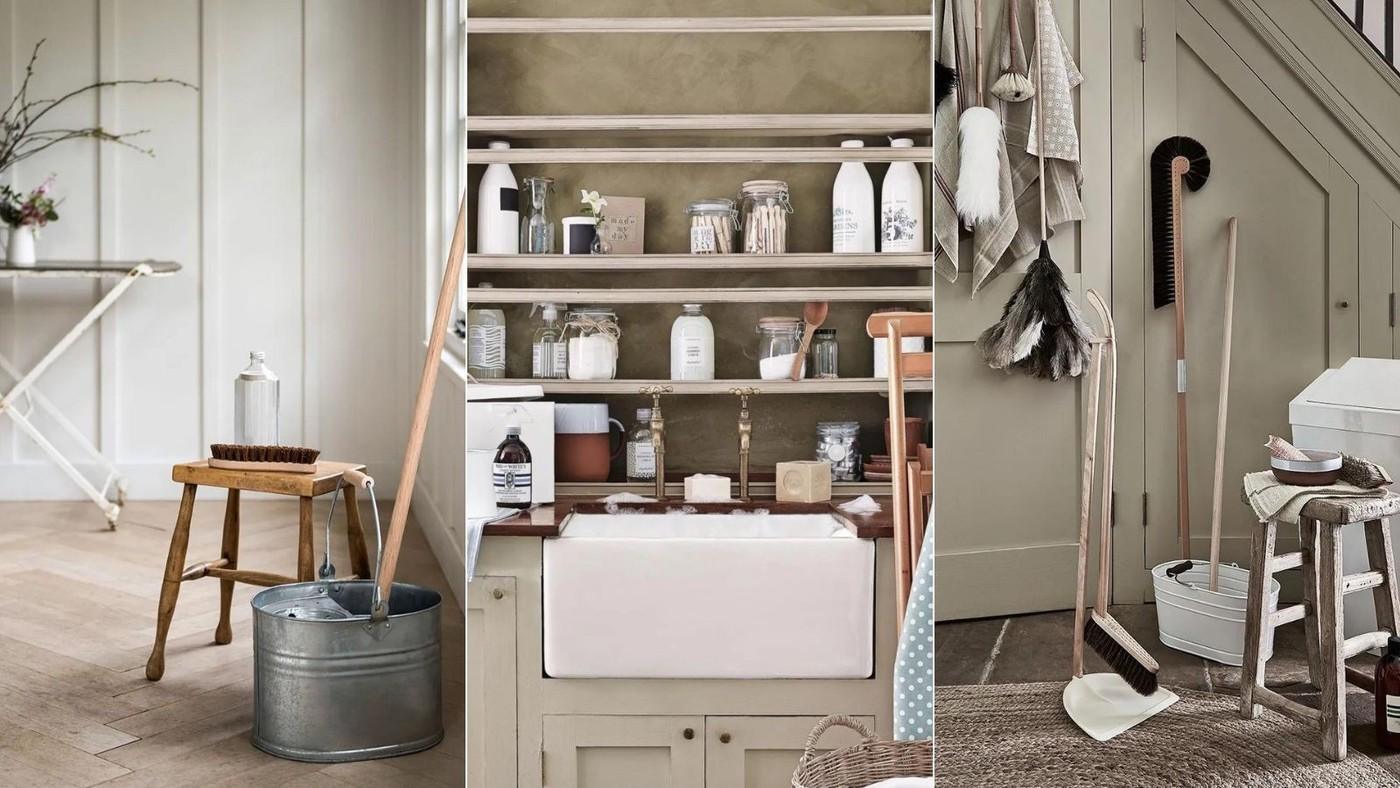
Homes and Gardens separates the working cleaning caddy from unopened reserve supplies, using an inventory to prevent new bottles being opened unnecessarily. It also discusses divided carriers and higher-sided bins for keeping a selected group upright. This makes the portable kit one part of a storage system rather than the entire chemical collection. Check the carrier's load and closures, then plan where both working products and reserves will rest safely after the cleaning session has ended.
Group bottles by their use
Homes and Gardens recommends clear or labeled bins, upright storage and a compartmentalized caddy for commonly used supplies. Grouping by purpose reduces searching and makes it easier to carry an appropriate kit between rooms. A larger collection may suit a cart, provided its storage location remains safe.
Read the storage directions on the products
The guide calls for a cool, dry, ventilated location away from children and pets, with label-specific precautions taking priority. Keep products identifiable rather than moving them into unlabeled containers for appearance. A convenient caddy is only the transport part of the system; between cleaning sessions, chemicals still need suitable separation, stable containers and controlled access.
Keep reserve stock distinct from the working kit
Homes and Gardens advises keeping unopened extras separate so new containers are not opened while a usable bottle remains. A running inventory makes that system practical and helps prevent unnecessary purchases. Choose safe storage for the reserve too; moving it outside the caddy does not remove its temperature or access restrictions. High-sided bins can help keep bottles upright, while a divided caddy makes a selected set easier to carry. Check that the handle and base support the load and that product closures remain secure. At the end of a session, return the kit to its proper location instead of leaving an otherwise organized chemical collection beside the work area.
Decide who needs access before deciding where to put the caddy
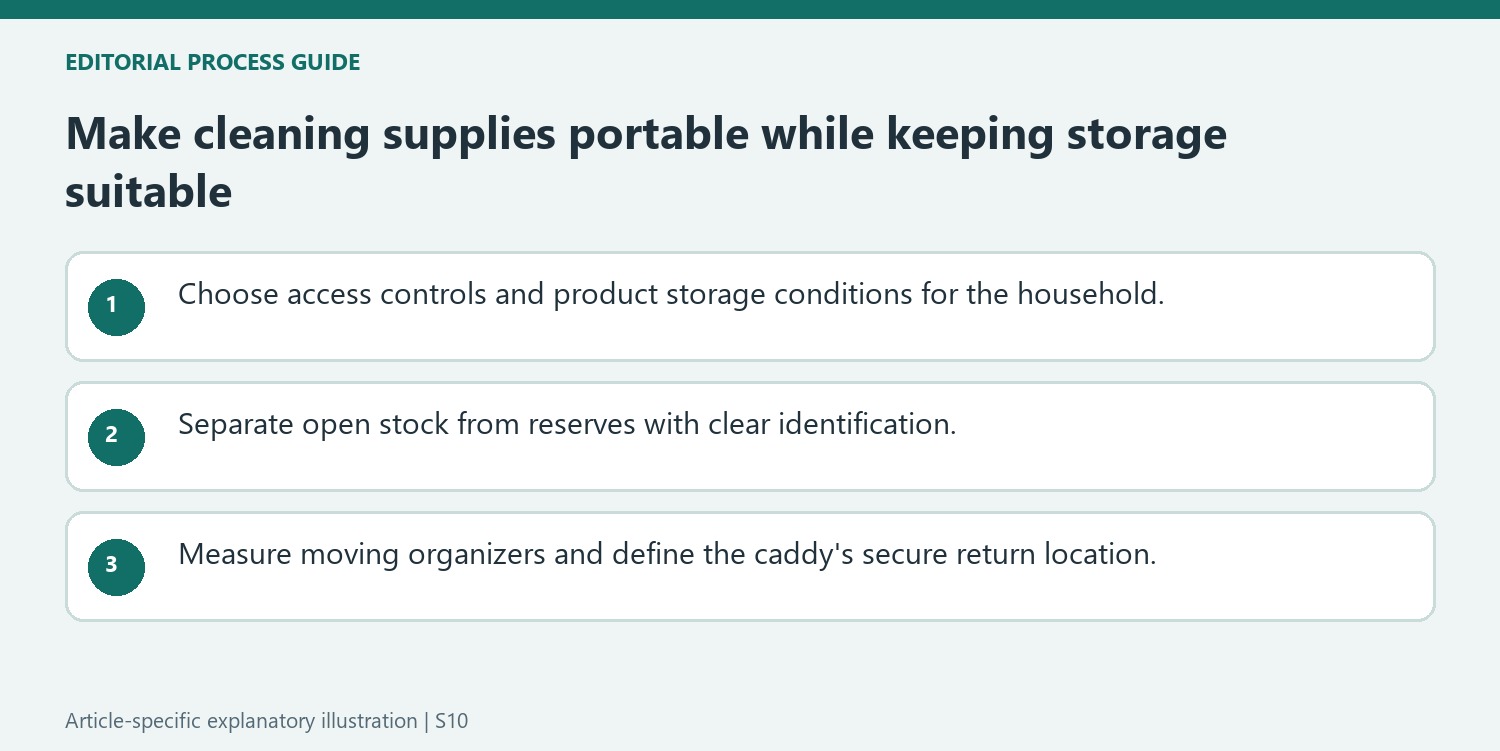
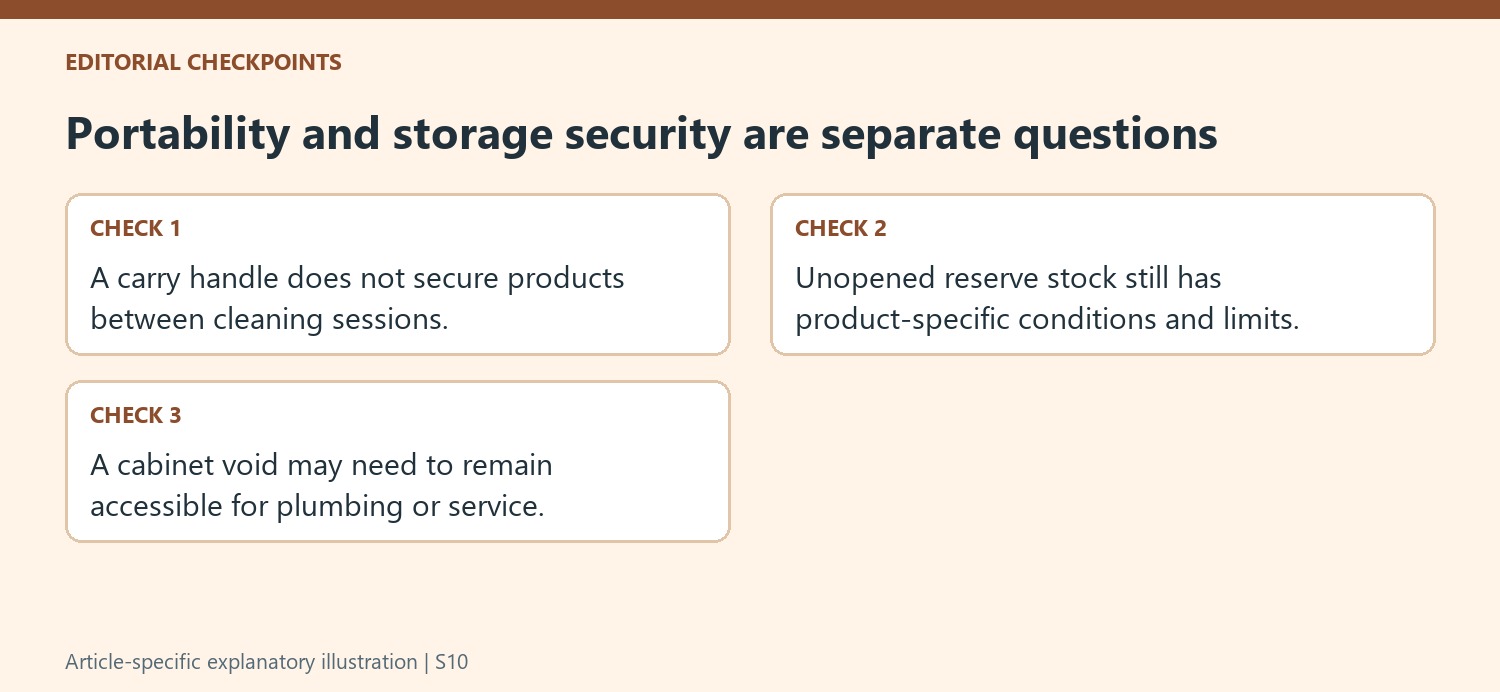
The Homes and Gardens feature makes safety part of efficient storage. Choose an appropriate location with the household's occupants in mind and follow the actual labels for conditions and segregation. A portable caddy does not provide secure storage merely because its handle makes it convenient to carry. Plan where it returns immediately after use rather than leaving it on a counter or floor. Products advertised as natural still have handling and storage requirements. A room-specific supply group can be useful only when the location maintains the same access controls and product conditions as the main collection.
Separate open stock from reserves without losing visibility
The source advises keeping backstock distinct so another bottle is not opened simply because an existing one is difficult to find. Maintain an inventory of what is available and where it is stored. Check actual expiry and opening instructions rather than assuming unopened products remain effective indefinitely. Clear bins can reveal the collection, while opaque containers need readable labels. Keep the original product identity and directions available in either case. Review the stock before shopping so an organizer does not silently fill with multiple versions of an item the household already owns but cannot locate.
Adapt the cabinet around operation and service access
Adjustable shelves, pull-out bins, hooks, rails, and turntables can improve retrieval when their dimensions and load limits fit. Measure the moving path of bottles and drawers around pipes, hinges, and neighboring containers. Keep required access to plumbing and equipment rather than filling every apparent void. A cart offers mobility but still needs a suitable stable parking place where the contents remain appropriately stored. Clean reusable tools before returning them and keep fresh cloths protected from used equipment. The useful outcome is a system that reduces rummaging without creating another exposed stash. Each container should have a clear place in the active kit or reserve stock, and each tool should return ready enough for the task it is meant to perform next. Keep the active inventory readable.
References
- How to store cleaning supplies to maximize efficiency – and keep them safely accessible. Homes and Gardens; Tara King.
Homes and Gardens separates the working cleaning caddy from unopened reserve supplies, using an inventory to prevent new bottles being opened unnecessarily. It also discusses divided carriers and higher-sided bins for keeping a selected group upright.


Leave a Comment
Comments (0)