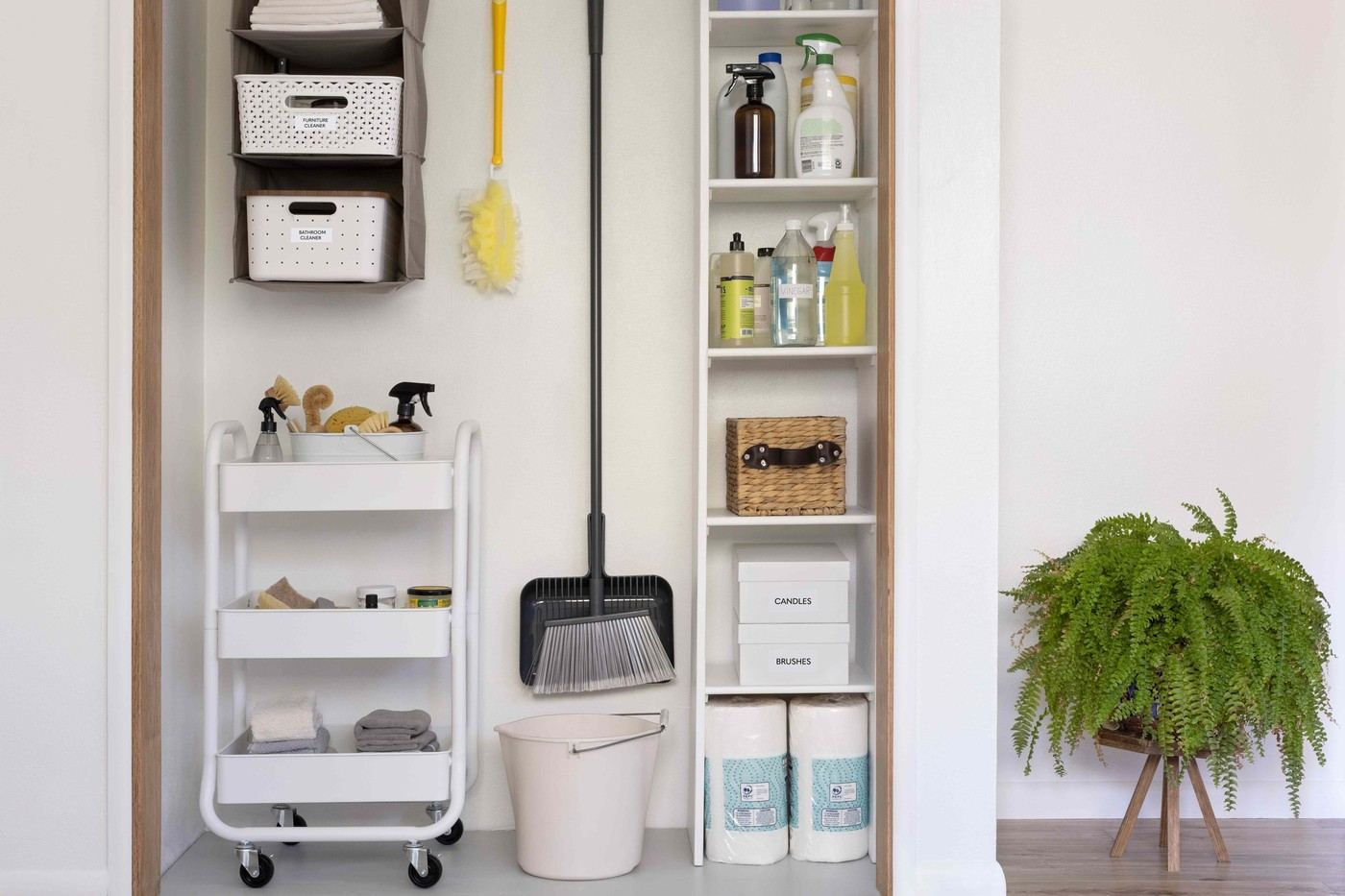
The Spruce's supply-storage ideas include turntables, labeled bins, vertical racks, and room-based caddies, but choosing a container is only part of the decision. Hidden stock can lead to repeated purchases, while a convenient open location can create unsafe chemical access. Review the contents and actual bottle dimensions first. A good arrangement makes the needed tool easy to identify and reach during work, then returns hazardous products to the stable, restricted storage required by their labels.
Make the commonly used kit easy to find
The Spruce suggests caddies, labeled bins and vertical storage so cloths, brushes and suitable products can be found without searching through a crowded cupboard. Separate room-based kits can reduce repeated trips. Review worn tools and rarely used products before buying additional containers, since organization works better with a useful collection.
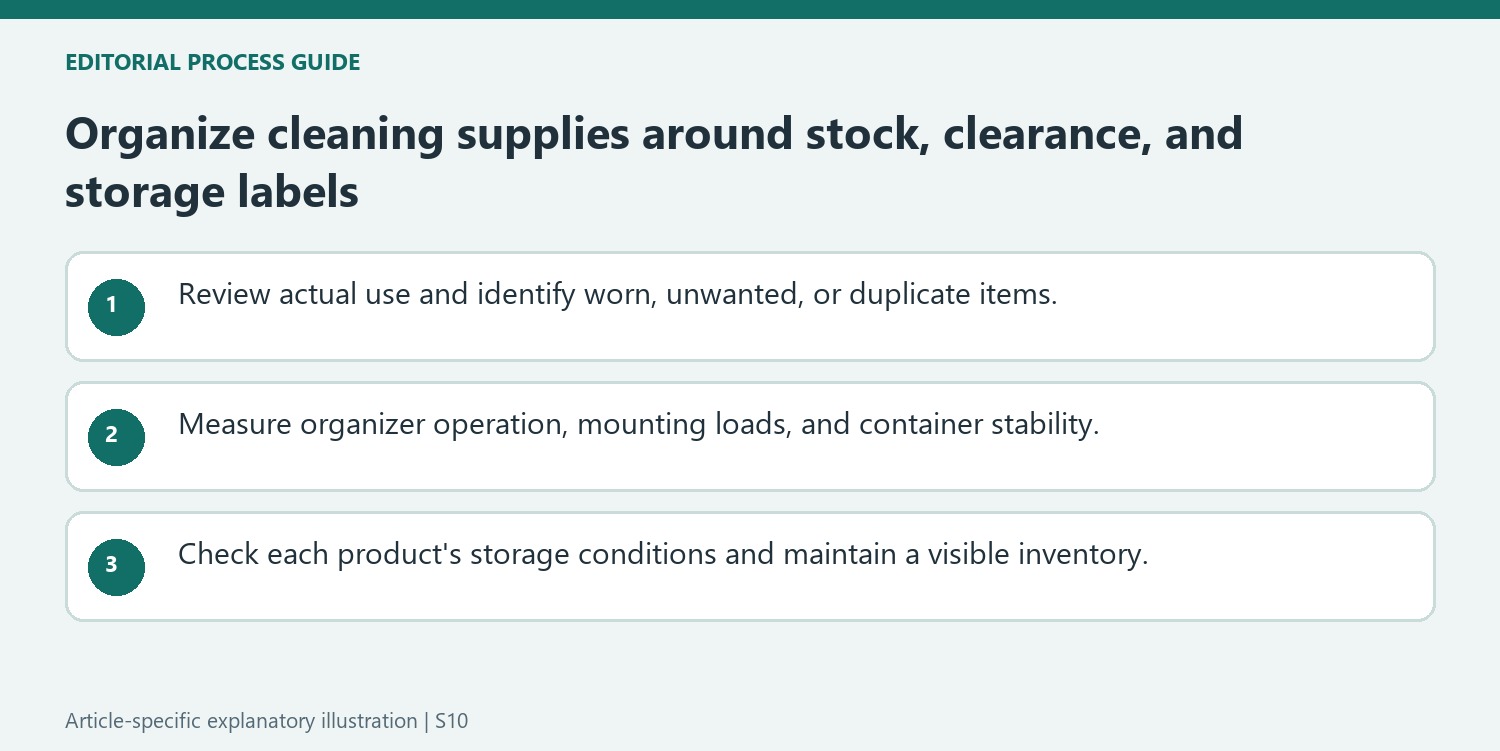
Keep chemicals identifiable and inaccessible to children
The guide warns never to mix different cleaning formulas and recommends dry, temperature-controlled storage away from heat. Supplies should remain out of reach of children, pets and vulnerable adults. Convenience must fit those constraints: an attractive open trolley is not appropriate if it makes hazardous products easy to access. Keep the actual product instructions available when grouping bottles in bins.
Design storage around visibility and access control
The Spruce's turntable, door racks and labeled-bin ideas all address a common problem: products hidden behind other products are easy to overlook and buy again. Check actual bottle heights and support before adding a hanging rail or rack, and leave warning labels readable. Its tool review also distinguishes wasteful duplicates from a purposeful set on another floor. Keep spare stock identifiable and follow product disposal directions when an item is no longer useful. Although some organization advice discusses combining partial bottles, retaining original containers avoids uncertainty about changed formulas and labeling. Storage should simplify selection without turning the cabinet into a collection of unknown mixtures.
Review the collection before buying more storage
The Spruce begins with evaluating tools and products rather than filling every available shelf. Take stock of what is actually used, what is worn or empty, and which duplicates have a genuine role. A second set on another floor can be useful, but an unidentified cluster of half-used bottles makes the collection harder to manage. Keep chemicals in their identified containers and do not consolidate different formulations merely because their purpose sounds similar. Even two products sold under one brand can have different ingredients or directions. Use the current labels and local disposal guidance when dealing with unwanted or expired stock.
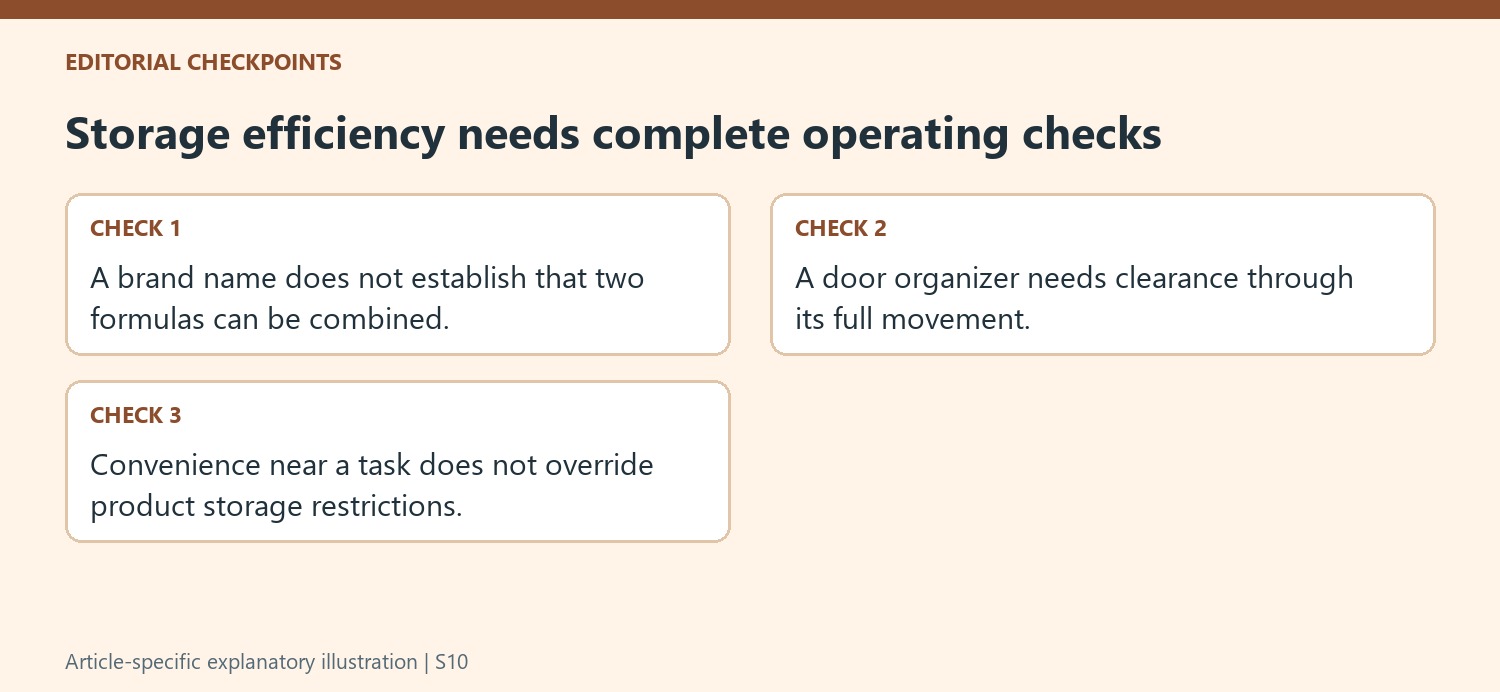
Measure the working clearance of the chosen organizer
Door racks, hooks, baskets, rails, and turntables can make supplies easier to see, provided they fit the actual cabinet. Check the door's full movement, the space around pipework, and the height of bottles as an organizer rotates or pulls out. Follow mounting and load instructions for hooks and tension fittings instead of assuming a spray handle will safely support any full bottle. A rolling cart needs a secure appropriate parking place rather than being left where its contents become accessible to unintended users. The attractive storage footprint is only part of the design; retrieving and returning items should work without tipping neighboring containers.
Keep access subordinate to the product's storage conditions
A frequently used cleaner may be convenient near its task, but that does not override its temperature, ventilation, segregation, or access restrictions. Read the individual storage labels and account for the household's children, pets, and other occupants. Avoid damp, hot, or flame-adjacent positions that conflict with those requirements. The source gives broad shelf-life examples, which should not replace the actual expiry or opening instructions. Keep a simple inventory so a replacement is purchased because stock is genuinely needed. A useful system makes the correct item easy for the intended user to find while retaining safe, clearly identified storage. It should also leave enough visibility to notice a leak, worn tool, or product that no longer belongs in the collection.
References
- 6 Smarter (and Safer) Ways to Store Your Cleaning Supplies. The Spruce; Mary Marlowe Leverette.
The Spruce's supply-storage ideas include turntables, labeled bins, vertical racks, and room-based caddies, but choosing a container is only part of the decision. Hidden stock can lead to repeated purchases, while a convenient open location can create unsafe chemical access.


Leave a Comment
Comments (0)