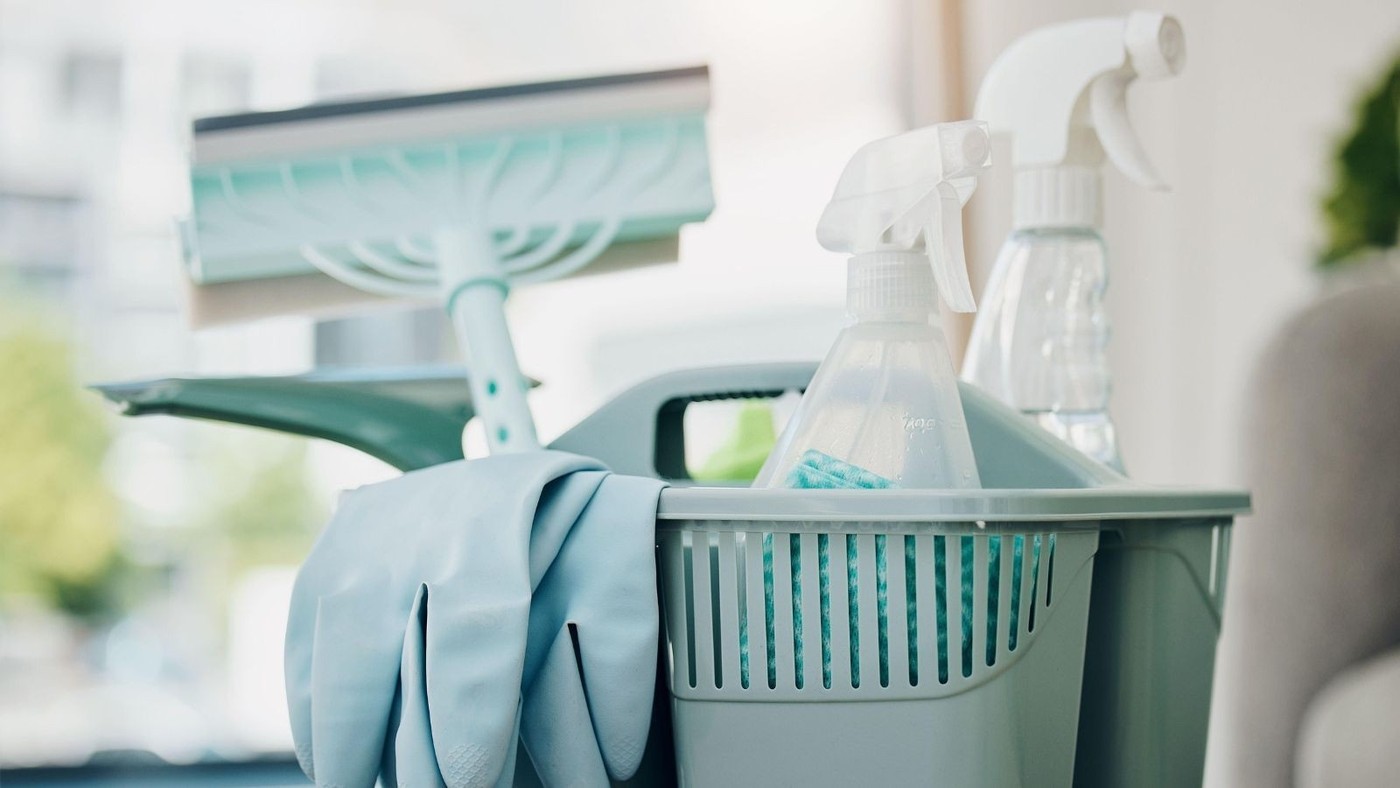
Homes and Gardens' cleaning-cabinet guide begins with reviewing duplicates and worn tools before fitting bins around plumbing or adding a turntable. That order matters: an organizer that fits the cupboard poorly can leave bottles unstable, and a new bin can simply conceal forgotten stock. Measure clearance, identify the supplies actually used, and keep clean reusable cloths distinct from damp equipment. The portable caddy should contain a selected working set, while reserve storage remains visible and appropriately secured.
Reduce duplicates before adding organizers
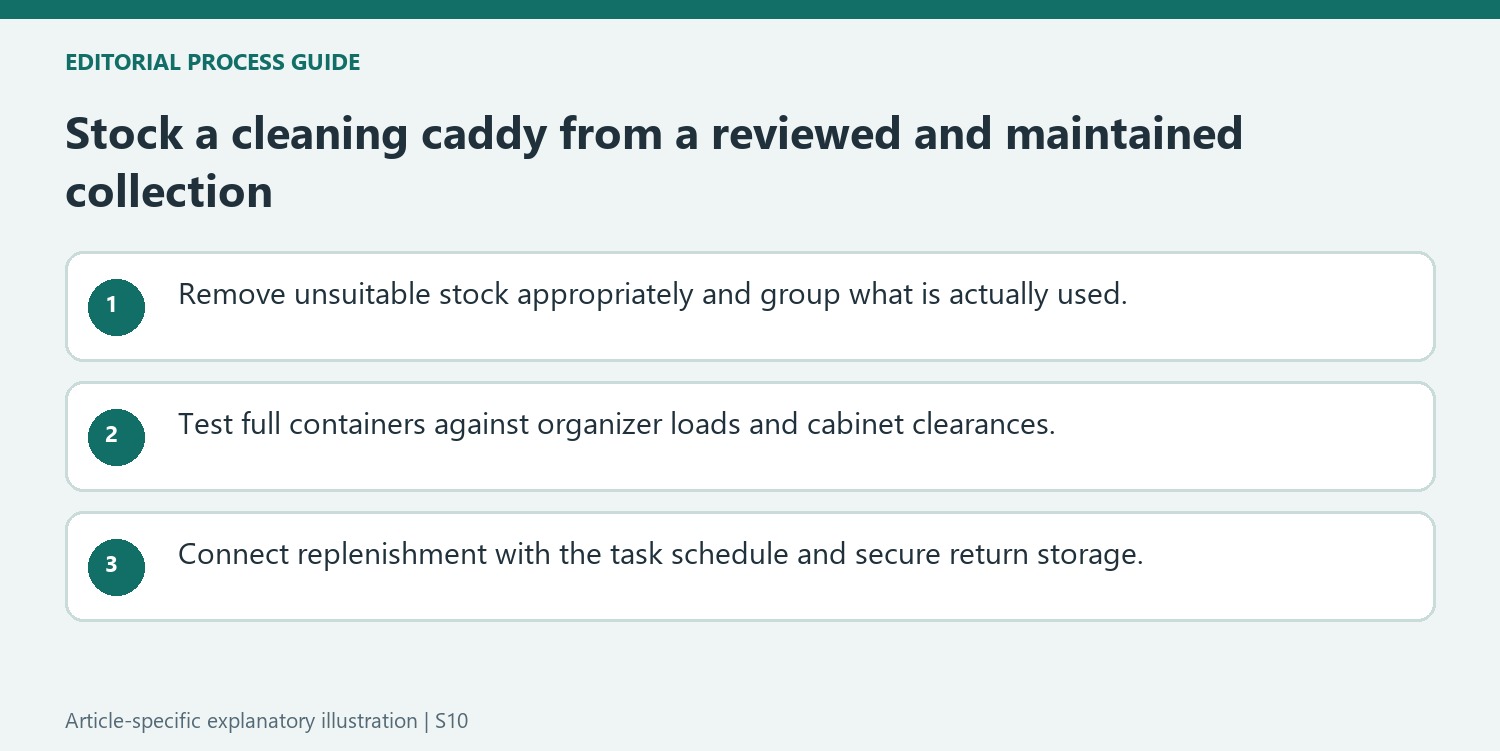
Homes and Gardens recommends assessing the products and worn tools already stored in the cleaning cabinet. Remove items that are no longer useful according to appropriate disposal instructions, then group the remaining supplies by task. Containers are most helpful after this review, rather than being used to hide an ever-growing collection.
Keep the portable kit focused
The article suggests cloths, sponges and commonly needed products for a caddy, with labels or divided storage to make them easy to find. Choose only products suitable for the intended surfaces and keep incompatible formulas separate. Grouping bottles in a caddy never means mixing their contents, and the kit must return to a location that follows product storage precautions.
Fit the organizer to the actual cabinet
Homes and Gardens discusses bins and drawers arranged around under-sink pipework, along with turntables for deeper storage. Measure the space and check clearance before buying: a tall bottle that hits plumbing cannot rotate safely on a carousel. Store clean reusable cloths where they remain dry and distinct from used equipment. Its room-based basket idea can reduce searching, but each basket still needs stable bottles and suitable secure storage. Keep a simple inventory when reducing duplicates so a new organizer does not hide forgotten stock. Where disposal is needed, follow the product and local instructions rather than emptying an unfamiliar chemical into the sink for convenience.
Make the reviewed collection smaller before assigning compartments
Homes and Gardens recommends decluttering the supply collection before fitting organizers. Identify products that are empty, expired, unsuitable for the surfaces owned, or no longer used. Follow label and local disposal directions instead of emptying unwanted chemicals together. Group the remaining items by actual use, keeping their identities and instructions clear. A caddy with compartments can organize the active group without requiring every reserve bottle to travel. This prevents the portable kit becoming a heavy copy of the entire cupboard. Keep the current cleaning tasks in view so a category reflects work that really happens rather than an appealing label on an unused bin.
Test the storage helper with full containers and doors moving
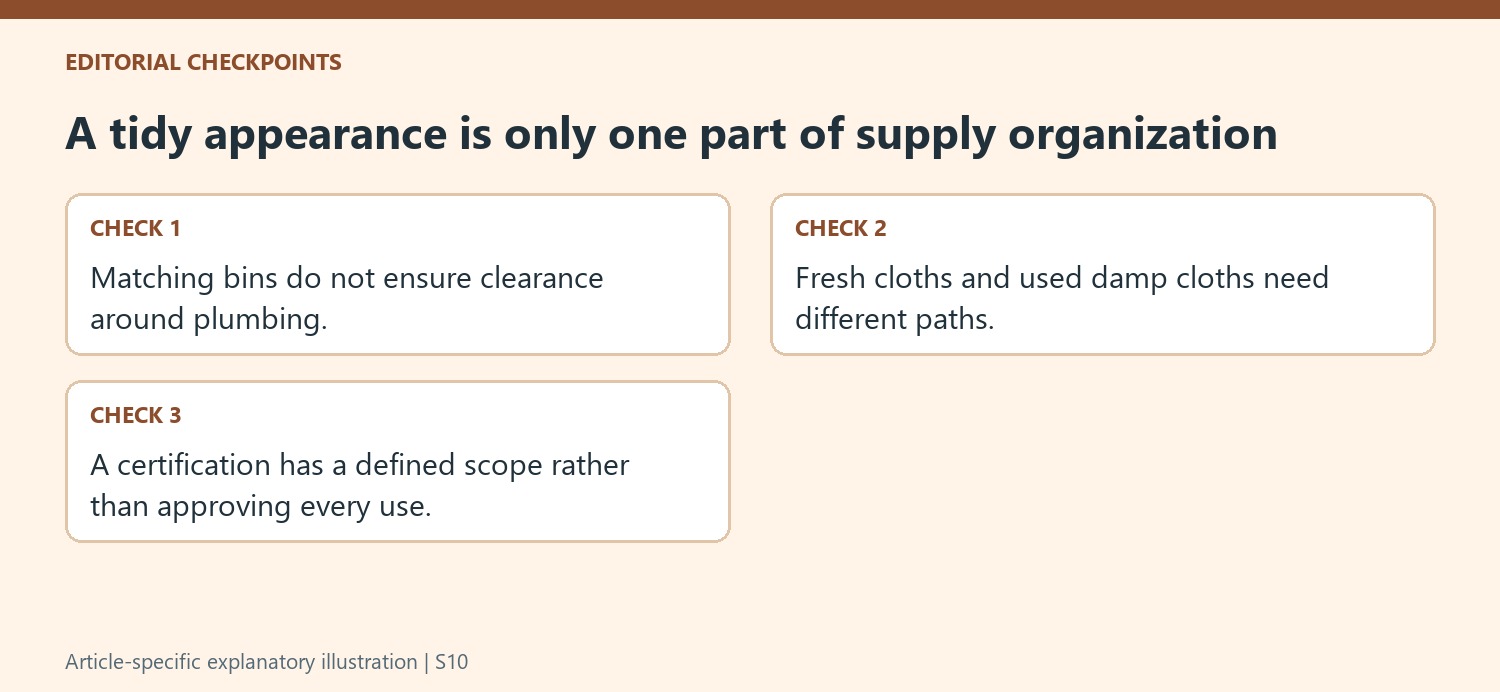
The source includes under-sink drawers, turntables, rails, hooks, and door organizers. Fit the actual bottles and check whether pipework or the disposal obstructs rotation or retrieval. A full container's weight matters when hanging it, and adhesive fittings need suitable surfaces and load guidance. Leave necessary access for inspection or service rather than packing every gap around plumbing. Containers for clean cloths should protect the working surfaces, while wet or dirty cloths need their own maintenance path. A uniform appearance is optional; compatibility, stability, and clear identification are more useful than buying matching bins that cannot operate in the available space.
Link the inventory with the repeated cleaning schedule
A visible task list can show which supplies need replenishment before work begins. Review actual consumption and keep reserve stock distinct from open products, within each label's storage conditions. Room-specific baskets can make setup quicker if their contents remain appropriate and securely stored. Product certifications, where relevant, have defined scopes and should not be treated as blanket proof that any use or mixture is harmless. Choose the labeled product for the particular task rather than interpreting the source's list of household ingredients as a mixing instruction. A successful cleaning-caddy system makes starting easier while preserving what matters afterward: identified chemicals, clean reusable tools, manageable weight, and a clear place to return everything when the session ends.
References
- How to organize cleaning supplies – 12 tips to clean up your cleaning cabinet. Homes and Gardens; Chiana Dickson.
Homes and Gardens' cleaning-cabinet guide begins with reviewing duplicates and worn tools before fitting bins around plumbing or adding a turntable. That order matters: an organizer that fits the cupboard poorly can leave bottles unstable, and a new bin can simply conceal forgotten stock.


Leave a Comment
Comments (0)