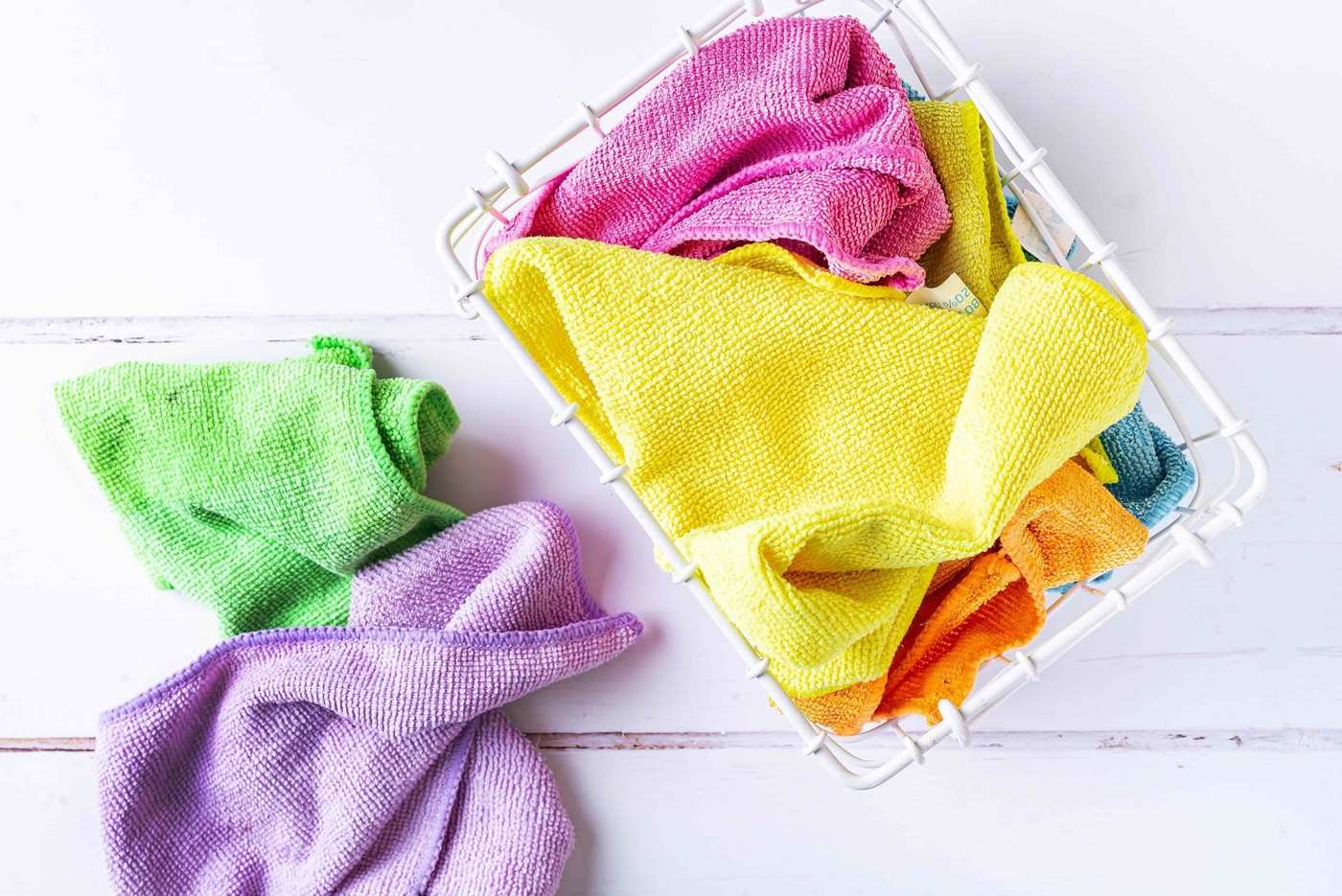
The Spruce distinguishes lightly soiled microfiber from dirtier cloths when discussing water temperature and washing, then gives storage its own attention. A clean cloth placed beside dusty equipment can collect particles again before the next job. Evaluate the complete route from the used cloth to a separate, dry storage space, including suitable detergent, rinsing, and heat limits. Visible staining, retained grit, and persistent odor are different observations, so appearance alone is not a sufficient decision about reuse.
Choose a gentle separate load
The Spruce recommends washing microfiber separately from other laundry, using cold water for lighter soil and warm water for dirtier cloths. A gentle cycle and a modest amount of fragrance-free, additive-free detergent help limit residue. Read the individual care label, since an item made from microfiber may have additional handling requirements.
Store only after thorough drying
The guide emphasizes correct drying and storage so clean cloths do not immediately attract dust and lint. Avoid hot water and high dryer heat that can damage the fibers. A lightly used dusting cloth and a wet, heavily soiled cleaning cloth do not need identical handling, but neither should be left damp in a pile before the next use.
Separate odor, staining and retained particles
The Spruce treats visible stain pretreatment as optional but calls for releasing dirt and rinsing detergent out. That distinction helps assess whether a cloth remains useful: discoloration alone is different from grit that could scratch the next surface or a persistent smell after suitable washing. Its storage advice favors a separate clean drawer or container once the cloth is dry. Keep the washed fabric away from lint and dust instead of leaving it beside dirty cleaning equipment. Air drying is presented as a way to avoid heat damage, but the drying surface itself must be clean. A properly washed cloth can be recontaminated before the next job.
Choose the next wash from the actual use
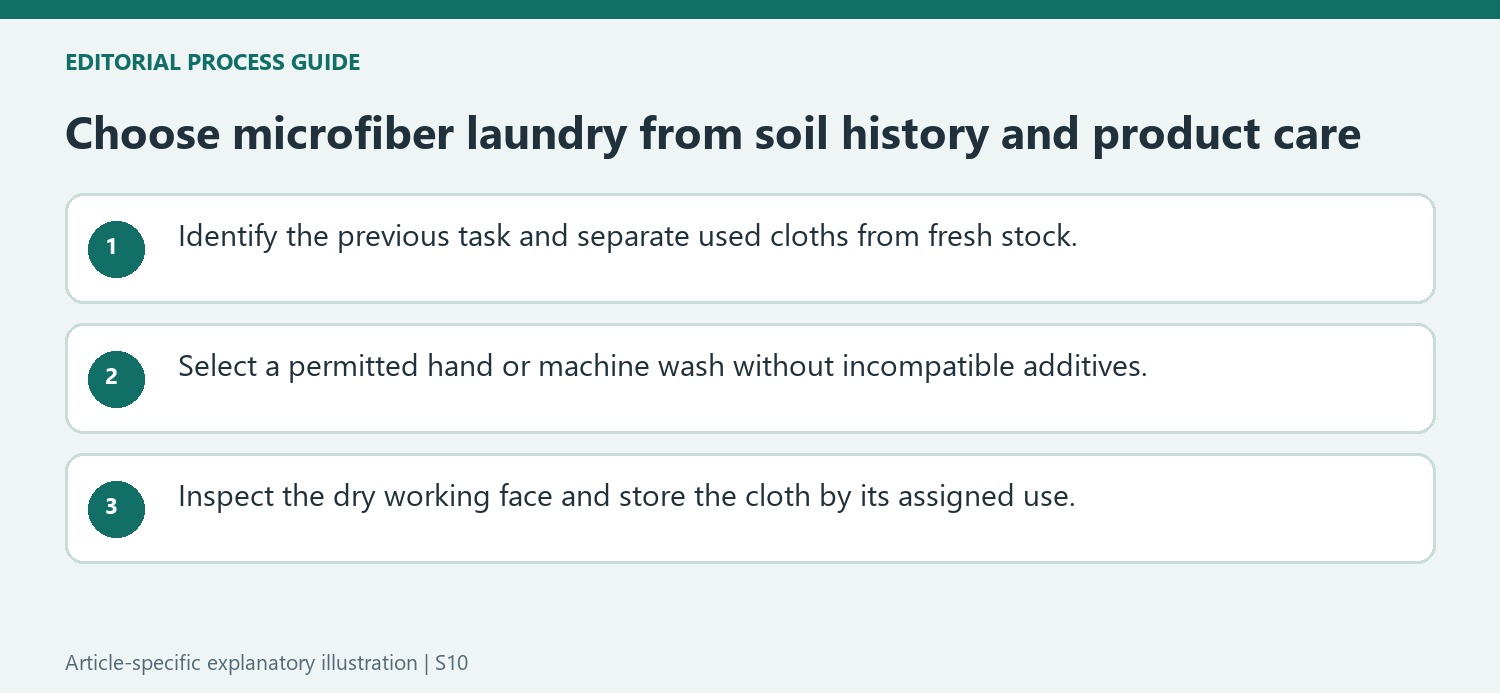
The Spruce distinguishes light routine dusting from wet or heavily soiled work. Treat that distinction as a prompt to inspect the cloth's history and the surface it will touch next, rather than a fixed allowance to reuse every cloth a certain number of times. A bathroom task, greasy spill, or gritty area can require cleaning before another job even if little time has passed. Follow any cloth and hygiene requirements relevant to the work. Separate the used group from clean stock so the next person does not have to guess whether a folded square is fresh or merely set aside.
Keep load preparation and care instructions together
The source discusses hand washing as well as a separate machine load. Check which method the actual care label allows and select detergent and temperature accordingly. A recommended reduced detergent amount in a general guide should not replace the product's dosing guidance for the machine, load, and soil. Avoid additives that coat fibers or conflict with their care. The article presents several vinegar suggestions with different contexts, so do not combine quantities from separate passages into an improvised treatment. If an odor persists after an approved wash, investigate remaining soil, incomplete drying, or deterioration instead of repeatedly adding an ingredient without resolving the cause.
Inspect the working condition after the cloth is dry
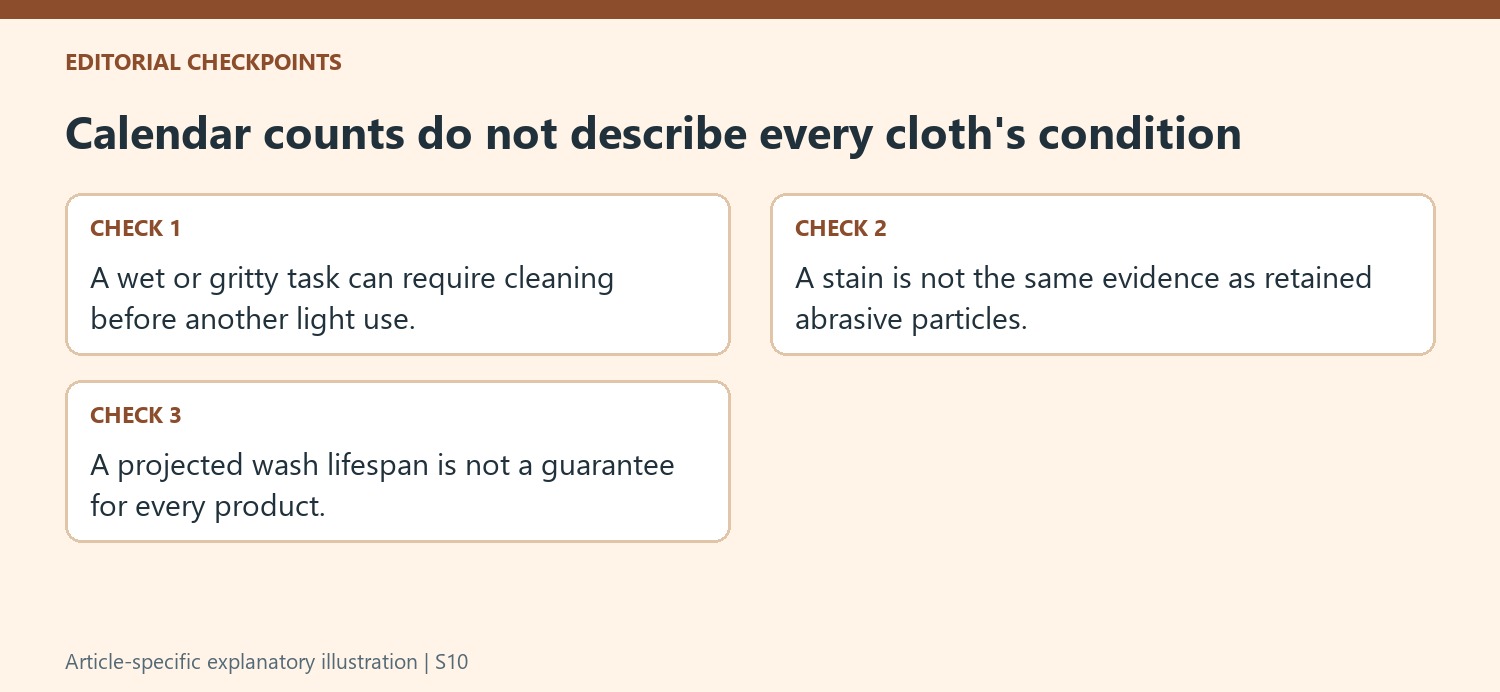
A visible stain does not necessarily describe whether a textile can still perform, while retained particles or damaged fibers can matter even if it looks fairly clean. Inspect the contact face before returning a cloth to glass or another delicate item. Dry fully by a permitted method and store separately where the clean cloth will not attract environmental dust. Suggested numbers of washes or years in the source are broad expectations, not a warranty for every product and use. Evaluate absorbency, effective pickup, seams, and persistent odor alongside the label's replacement guidance. A useful laundry routine makes the next cleaning task predictable: the right cloth is clean, appropriate for its assigned area, and maintained well enough to perform the job for which it was selected.
References
- How to Wash and Clean Microfiber Cloths. The Spruce; Heather Bien.
The Spruce distinguishes lightly soiled microfiber from dirtier cloths when discussing water temperature and washing, then gives storage its own attention. A clean cloth placed beside dusty equipment can collect particles again before the next job.


Leave a Comment
Comments (0)