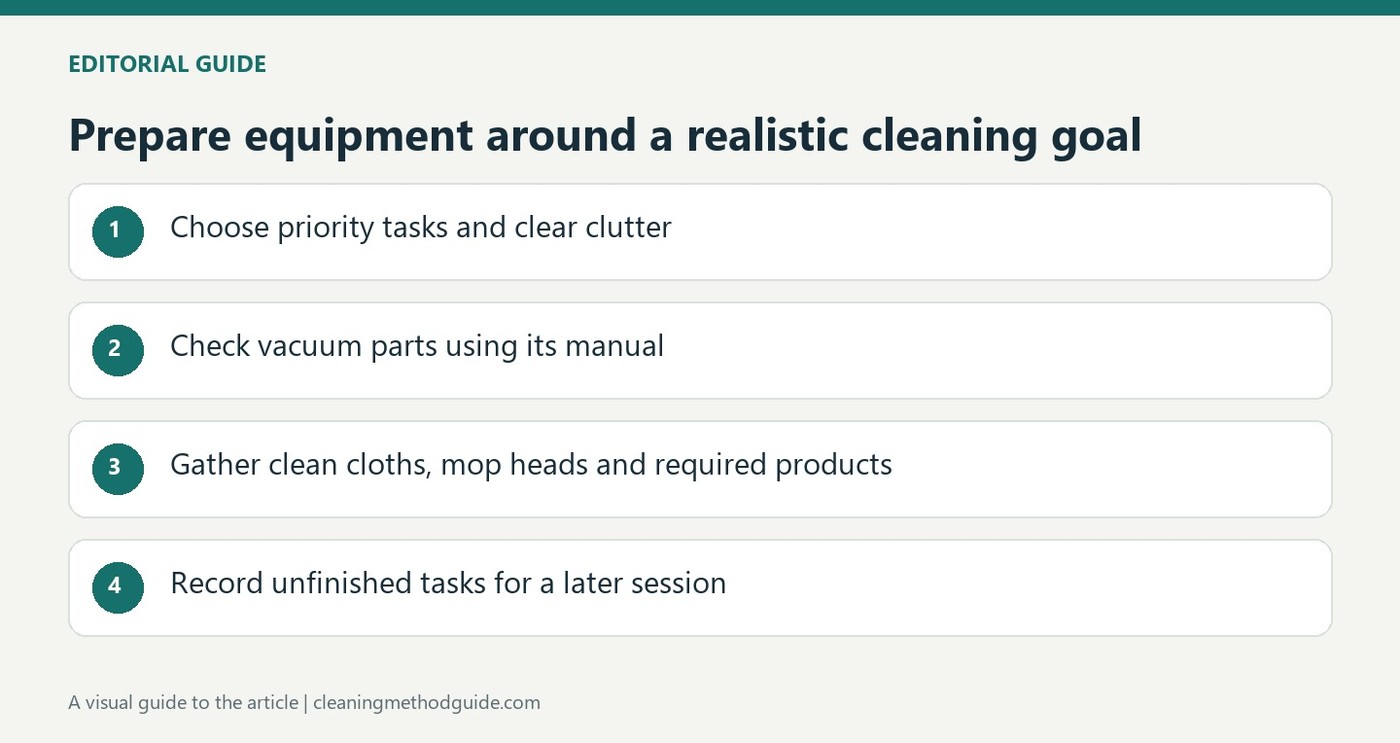
The Spruce's spring-cleaning preparation guide treats an emptied vacuum container, an untangled roller, usable cloths, and available supplies as part of the work before the first room is cleaned. It also asks the cleaner to choose a goal. Those two decisions belong together: a narrow, achievable room plan is easier to finish when the equipment is ready. Inspect the tools required by the chosen jobs before expanding the checklist to every neglected surface in the house.
Prepare tools as well as products
The Spruce's spring-cleaning advice emphasizes decluttering and checking supplies before beginning. Inspect the vacuum's roller, empty its container and make sure the required attachments are available. Clean cloths and mop heads also belong in the preparation stage; dirty equipment can undermine the work before it starts.
Set a realistic goal
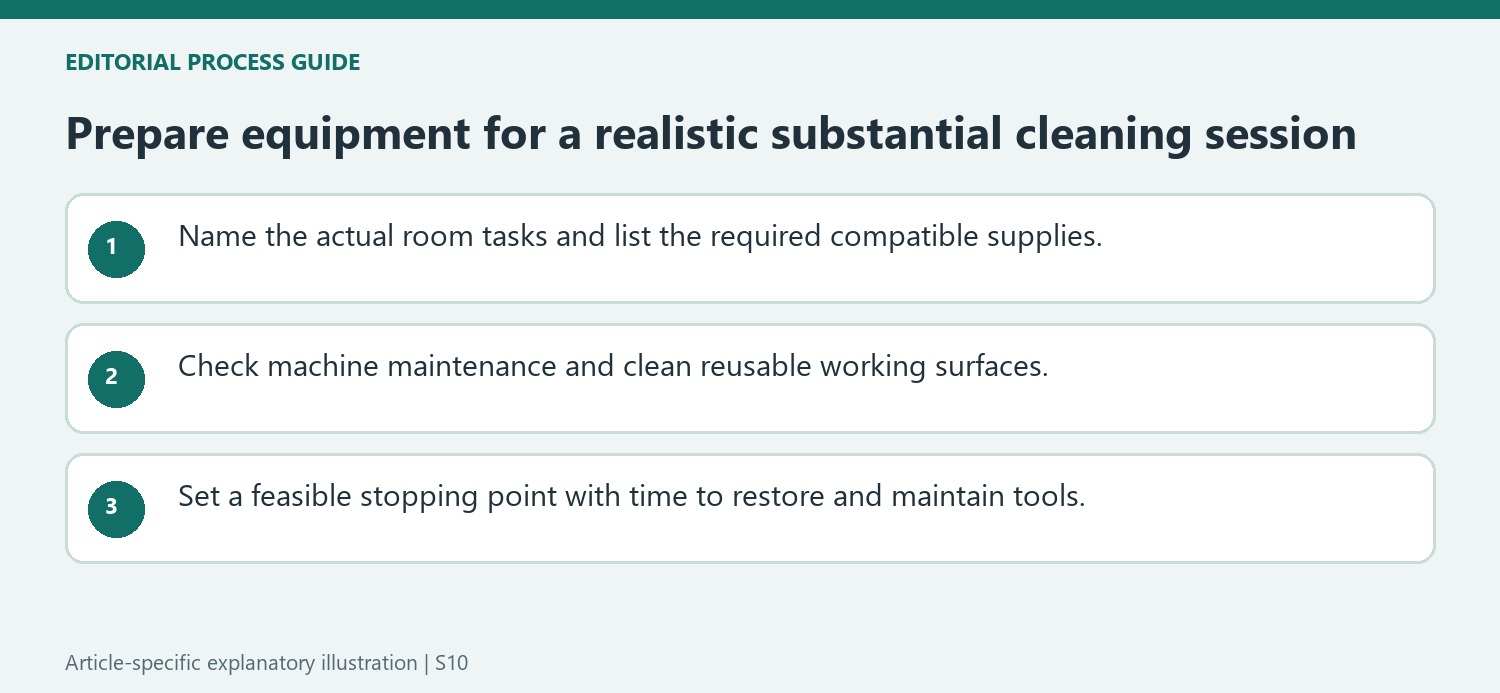
The article recommends deciding what the session should accomplish instead of drifting between unrelated jobs. Break the plan into tasks and use a checklist to track them. Running out of supplies or discovering a blocked vacuum halfway through can encourage rushed work, so preparation is useful even for a shorter routine that covers only one room or a few priority surfaces.
Prepare the checklist before adding more tasks
The Spruce quotes Katie Berry on how missing supplies or unready equipment can interrupt a planned cleaning session. Its preparation includes roller-bar threads, the dust container, filters and available attachments, with the actual machine's manual controlling maintenance. Jennifer Rodriguez's goal-setting advice then narrows what the session should accomplish, while Becky Rapinchuk recommends keeping unfinished items for another date. That combination supports a realistic one-room plan: clear access, prepare the appropriate tools and list the priority surfaces. Do not let a discovered missing accessory turn the session into unrelated shopping or an attempt to improvise a risky substitute for the required equipment.
Turn the spring-cleaning goal into a feasible equipment list
The Spruce's experts recommend removing clutter and checking supplies before a substantial cleaning session. Walk through the intended areas and name the actual tasks, rather than making an open-ended promise to clean the whole home. Note which need a vacuum accessory, fresh cloths, an approved mop head, or a particular labeled product. Distinguish ordinary cleaning from repairs or specialist work that should not be improvised during the same session. A written plan helps prevent a missing tool from turning a manageable task into a sequence of unrelated purchases and furniture rearrangements. Keep unfinished work visible on the list instead of treating a long session as the only measure of success.
Check readiness through condition rather than ownership
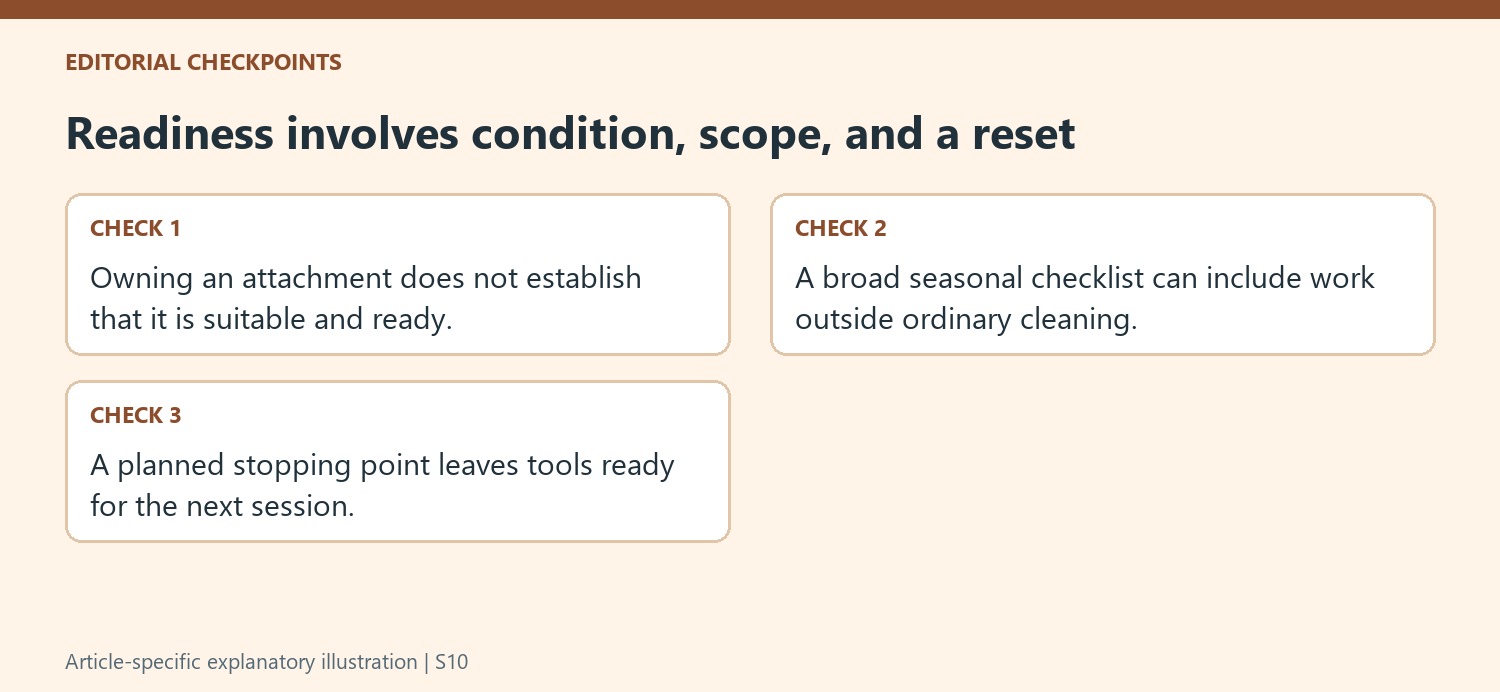
Having a vacuum in the cupboard does not mean it is ready to collect another room's debris. Follow its instructions for the collection compartment, filters, and brush roll, isolating power before maintenance. Confirm the attachments needed for edges and upholstery are available and suitable. Clean cloths, dusters, and mop heads matter because a dirty working surface can redistribute soil instead of removing it. Inspect the bristles and handles of tools that will be used for longer work. Verify the selected products against the actual surfaces before beginning, rather than assuming a familiar all-purpose label resolves every finish or material in the house.
Schedule a stopping point and a practical reset
The feature acknowledges that a thorough seasonal clean can extend over multiple days depending on the household and scope. Choose a realistic block of work and leave time to clean the tools, restore furniture, and store products appropriately. Allocate tasks by ability and supervision rather than assuming every resident can safely perform every example in a broad checklist. Keep donation or disposal sorting distinct from containers that need to return to the room. If an appliance or fitting requires access beyond its ordinary care instructions, plan appropriate help. The benefit of preparation is a session that reaches a useful stopping point with equipment ready for the next stage, rather than a hurried final pass using exhausted supplies or dirty cloths. Review the remaining checklist before deciding what to tackle next.
References
- 39 Expert-Approved Tips for Successful Spring Cleaning. The Spruce; Mary Marlowe Leverette.
The Spruce's spring-cleaning preparation guide treats an emptied vacuum container, an untangled roller, usable cloths, and available supplies as part of the work before the first room is cleaned. It also asks the cleaner to choose a goal.


Leave a Comment
Comments (0)