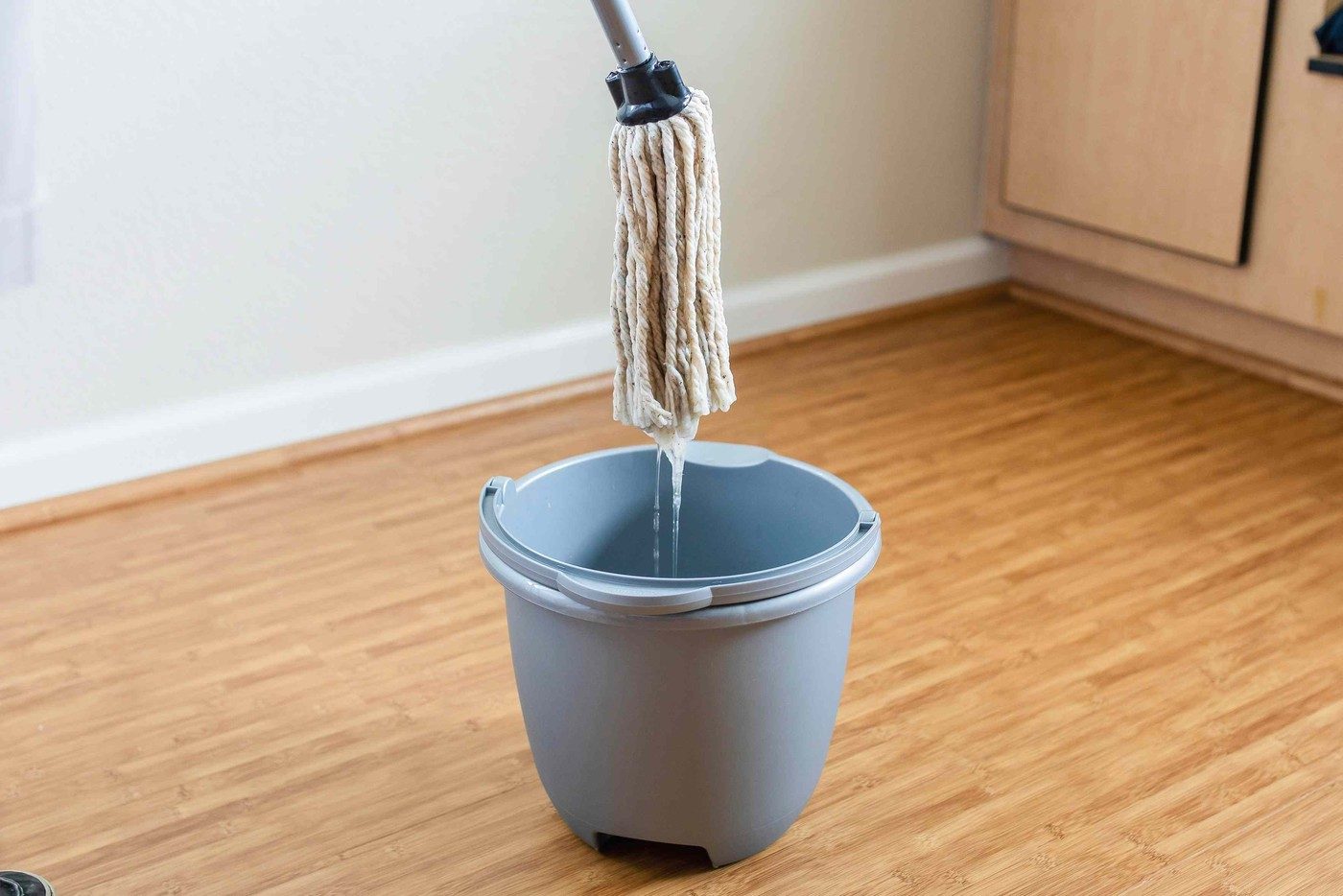
The Spruce's mopping guide starts before the wet mop touches the floor: sweep or vacuum loose material, choose the method for the surface, and prepare clean wash and rinse water. That sequence avoids turning grit and dust into a dirty film. It also distinguishes mop motions and wringing needs rather than prescribing one technique for every tool. Use the floor's actual finish and permitted moisture level to set the method, especially where wood or laminate is involved.
Remove dry debris first
The Spruce recommends sweeping or vacuuming before mopping so loose dust and dirt do not become a muddy film. It distinguishes a dry flat mop used for routine dust from damp cleaning of suitable hard surfaces. The mop and solution should follow the floor type, rather than a single household preference.
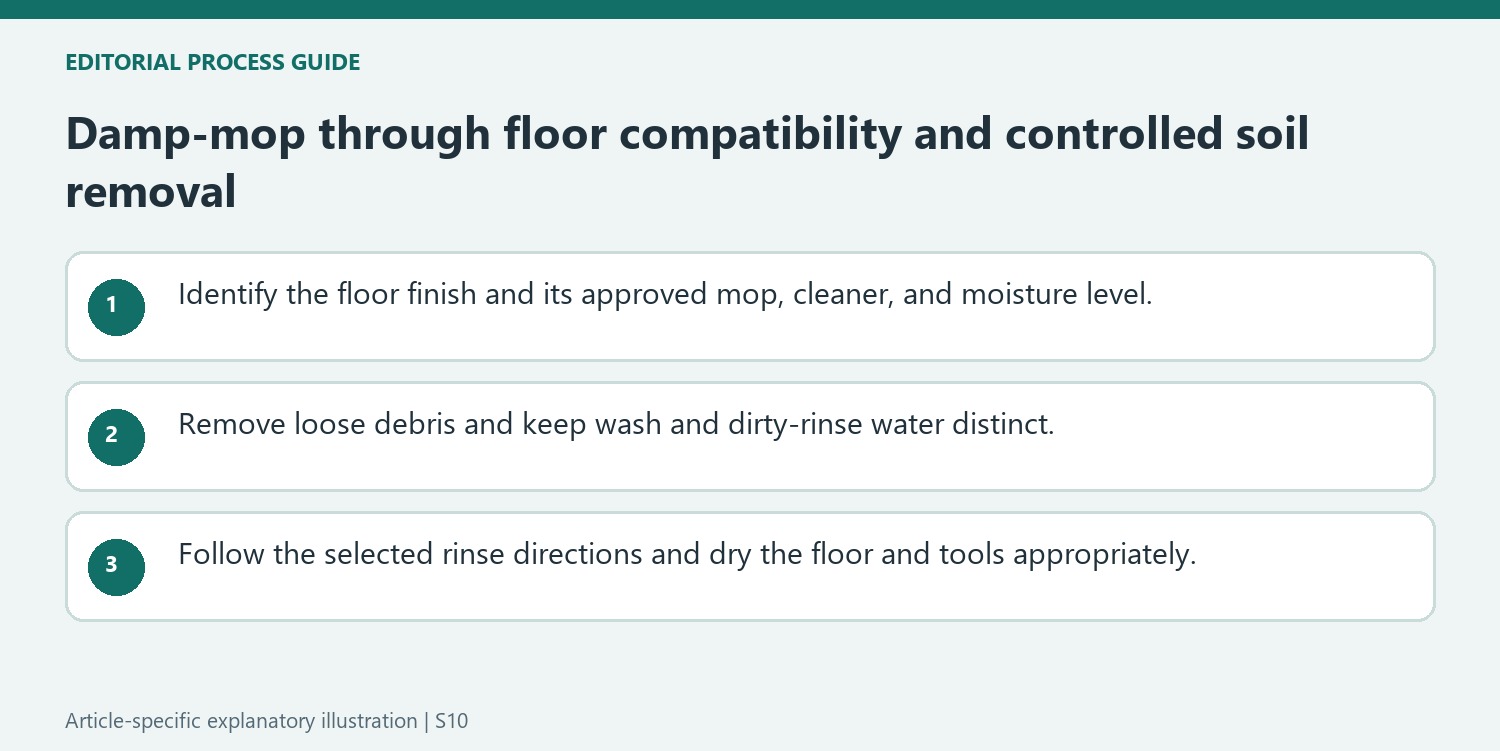
Limit water on vulnerable materials
The guide cautions against heavy wet mopping on wood and laminate, even where a properly sealed surface permits an occasional damp wipe. Sponge and other mop styles have different strengths on smoother or textured flooring. Check the floor manufacturer's instructions and wring the tool appropriately; a larger amount of water does not automatically provide a deeper or safer clean.
Keep wash water separate from rinse water
The Spruce describes two buckets so lifted dirt is not repeatedly carried back in the detergent solution. Work in manageable sections, wring the head appropriately and change water when it becomes visibly dirty. Its straight-line and figure-eight motions relate to different mop styles rather than one rule for all tools. Remove stubborn local residue with a compatible method instead of flooding the whole floor. Finish any required rinse with fresh water and allow the surface to dry before walking over it. The mop and buckets also need cleaning and drying afterward, otherwise the next session begins with retained soil and damp equipment.
Build the wet-cleaning method around the floor's requirements
The Spruce starts with selecting a suitable mop and detergent for the actual floor. Identify the material and finish before choosing moisture, temperature, and cleaning solution. A general mopping guide cannot establish that every sealed-looking floor tolerates the same amount of water. Use the floor maker's approved method for wood, laminate, vinyl, tile, or stone as applicable. Remove compatible loose debris first through sweeping or vacuuming. That separates dry collection from the damp stage and reduces the chance of pushing grit through a wet film. Set aside any stain that requires its own appropriate treatment rather than repeatedly flooding the area.
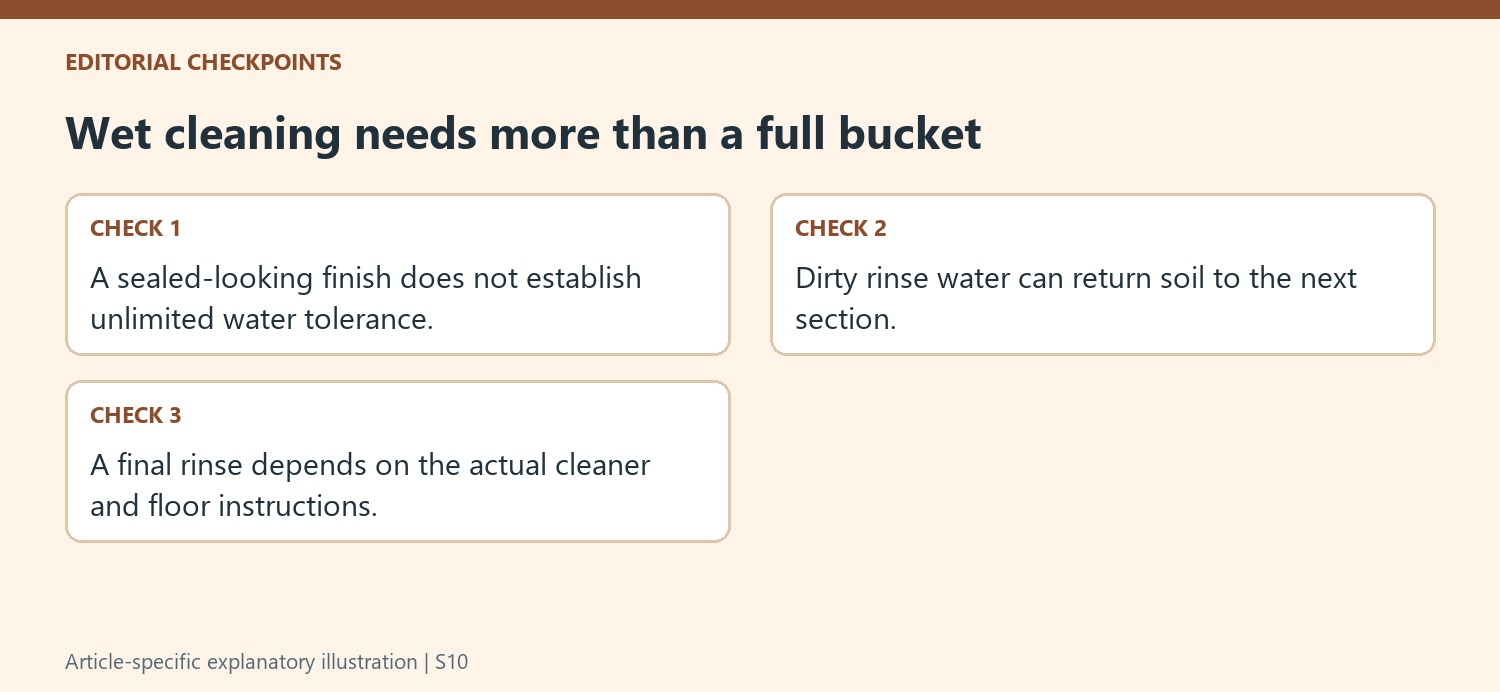
Manage dirty water as part of removing soil
The two-bucket method described in the source separates washing solution from the rinse used to remove dirt from the head. Keep that distinction clear and wring to the dampness the floor allows. Monitor the water and working face as the session progresses; gray water is a sign to refresh the supply, not to continue until the whole room has been covered. A small manageable section makes the result easier to inspect. Choose a route that leaves an exit without walking over the freshly cleaned area. The appropriate head motion depends on the mop design, so follow its instructions rather than forcing one motion onto every system.
Finish according to the selected cleaner rather than a blanket rule
The guide discusses a final rinse, but some approved products have their own rinse or no-rinse directions. Follow the actual cleaner and flooring instructions instead of adding another wet pass automatically. Avoid leaving unnecessary moisture, especially around seams or vulnerable edges. Keep people away from the wet area until it is safe to walk on. Clean the mop and buckets through their permitted process and dry them before storage. A suggested replacement interval is only part of the decision: visible wear, damage, or poor cleaning after proper care also matter. A useful mopping routine removes soil while preserving the floor and leaves the reusable tools ready for the next session, rather than treating the appearance of wetness as proof that the work is complete.
References
- How to Mop Every Type of Floor the Right Way. The Spruce; Kate Van Pelt.
The Spruce's mopping guide starts before the wet mop touches the floor: sweep or vacuum loose material, choose the method for the surface, and prepare clean wash and rinse water. That sequence avoids turning grit and dust into a dirty film.


Leave a Comment
Comments (0)