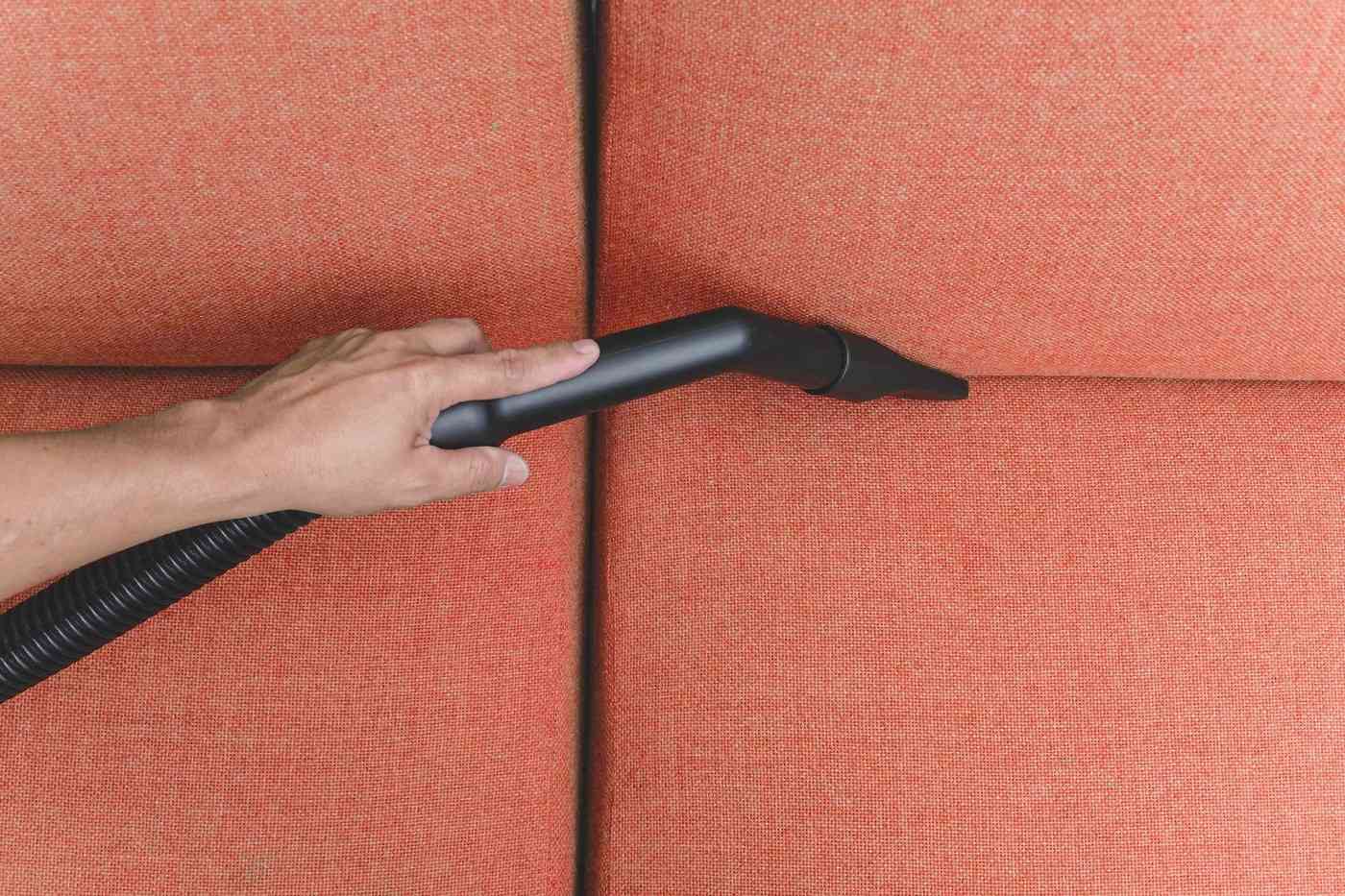
The hidden-dust examples in Better Homes and Gardens' vacuum-hose guide include door tracks, molding, empty drawers, and both faces of blind slats. These are distinct targets that a floor-cleaning routine can overlook. Match a suitable attachment to one accessible area at a time instead of approaching every item with the bare hose. The article also separates electronic vents from displays, reinforcing that reaching a dusty object does not establish that vacuuming is the correct way to clean its entire surface.
Pick an attachment before reaching into gaps
Better Homes and Gardens describes crevice tools, dust brushes, upholstery heads and extension wands for areas a full-size floor head cannot reach. Narrow tools suit edges and gaps, soft bristles lift dust, and a broader upholstery tool works across suitable fabric. A flexible or angled accessory can make access easier without moving every heavy object.
Check fit and surface suitability
Not every vacuum includes each attachment, and some specialized tools must be ordered separately. Confirm compatibility with the hose before buying. Use the appropriate setting and tool for the material being cleaned, and avoid treating a powerful bare suction opening as a universal accessory. The objective is to collect hidden dust without damaging the item or scattering debris elsewhere.
Bring overlooked dust into the room checklist
BHG's examples include molding, door tracks, empty drawers and both directions of blind slats. Those are useful additions because they are easy to miss when only the floor is visible. The guide also separates electronic vents from screens, recommending a gentler cloth method for the display itself. Follow device instructions and power precautions before approaching electronics. Its fan and lighting advice requires the equipment to be off and cool, and excludes very fragile fixtures such as chandeliers. Choose accessible targets that the tool can clean without strain, rather than treating a long wand as permission to pull on delicate or poorly supported parts.
Plan a route through the neglected edges of the room
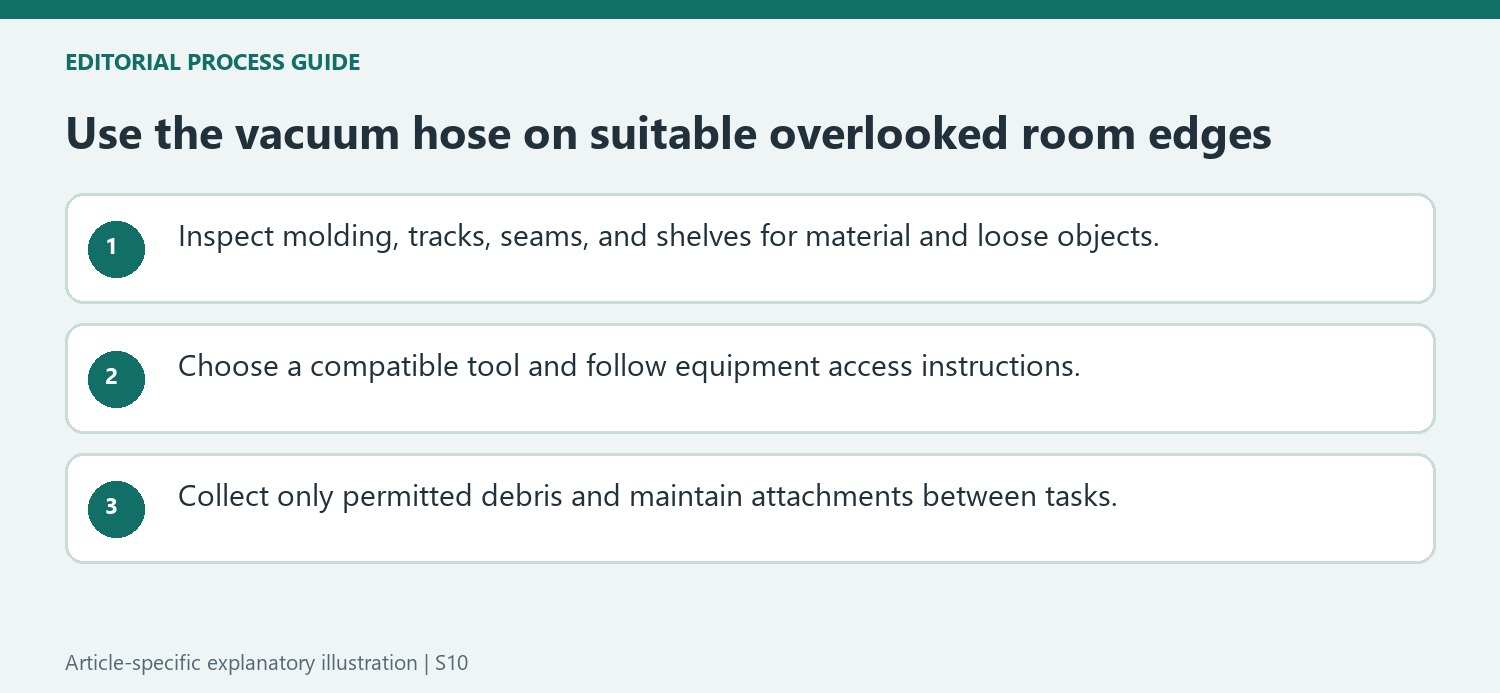
The source describes dust collecting where an ordinary floor pass does not reach: molding, tracks, furniture seams, and shelf corners. Choose a small group of accessible areas and inspect their materials before selecting the hose tool. A soft brush can loosen compatible dusty detail, while a crevice nozzle can reach an appropriate narrow gap. Work from higher suitable areas toward lower ones where that avoids re-soiling completed surfaces. Remove loose objects that could be drawn into the machine. This turns the list into a manageable room routine rather than an invitation to vacuum every item merely because an accessory can reach it.
Distinguish visible cover dust from internal equipment maintenance
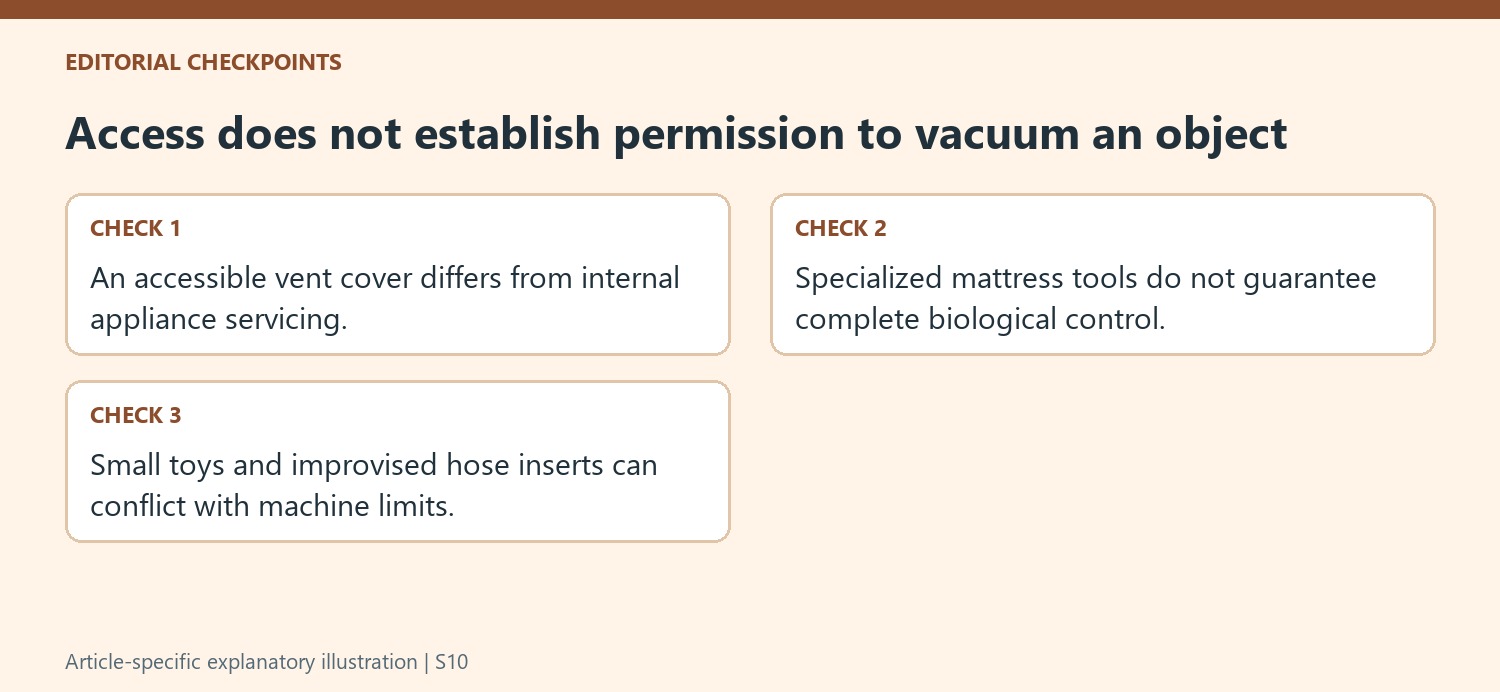
The article includes vent covers, electronics, ceiling fixtures, and appliances, each of which has separate cleaning requirements. Follow the equipment instructions for power isolation, cooling, permitted contact, and access. Removing loose dust from an accessible cover is different from opening equipment or servicing internal parts. A general instruction to vacuum filters is not suitable for every filter type. Fragile fittings and screens may need a gentler approved method instead of direct suction. Avoid transferring the source's universal-sounding claims about dust brushes or specialized mattress tools into guarantees of no damage or complete biological control. Assess the actual surface and permitted procedure.
Keep collection capability separate from household improvisations
A domestic dry vacuum should only collect debris within its specified limits. The source's suggestions involving powders, small toys, or improvised hose inserts are not evidence that a particular machine can handle them without blockage or filtration problems. Pick up small objects separately and use the manufacturer's suitable accessory where needed. A tool that gathers loose crumbs before a permitted appliance cleaning step still needs a completely cooled, appropriately isolated work area. Clean and inspect attachments after use so debris from a track does not travel to delicate upholstery. The main advantage of the hose is controlled access to suitable overlooked dust, supported by a well-maintained machine and a clear understanding of what belongs outside its collection path.
References
- 10 Surprising Things You Should Be Cleaning with Your Vacuum Attachments. Better Homes & Gardens; Mary Cornetta.
The hidden-dust examples in Better Homes and Gardens' vacuum-hose guide include door tracks, molding, empty drawers, and both faces of blind slats. These are distinct targets that a floor-cleaning routine can overlook.


Leave a Comment
Comments (0)