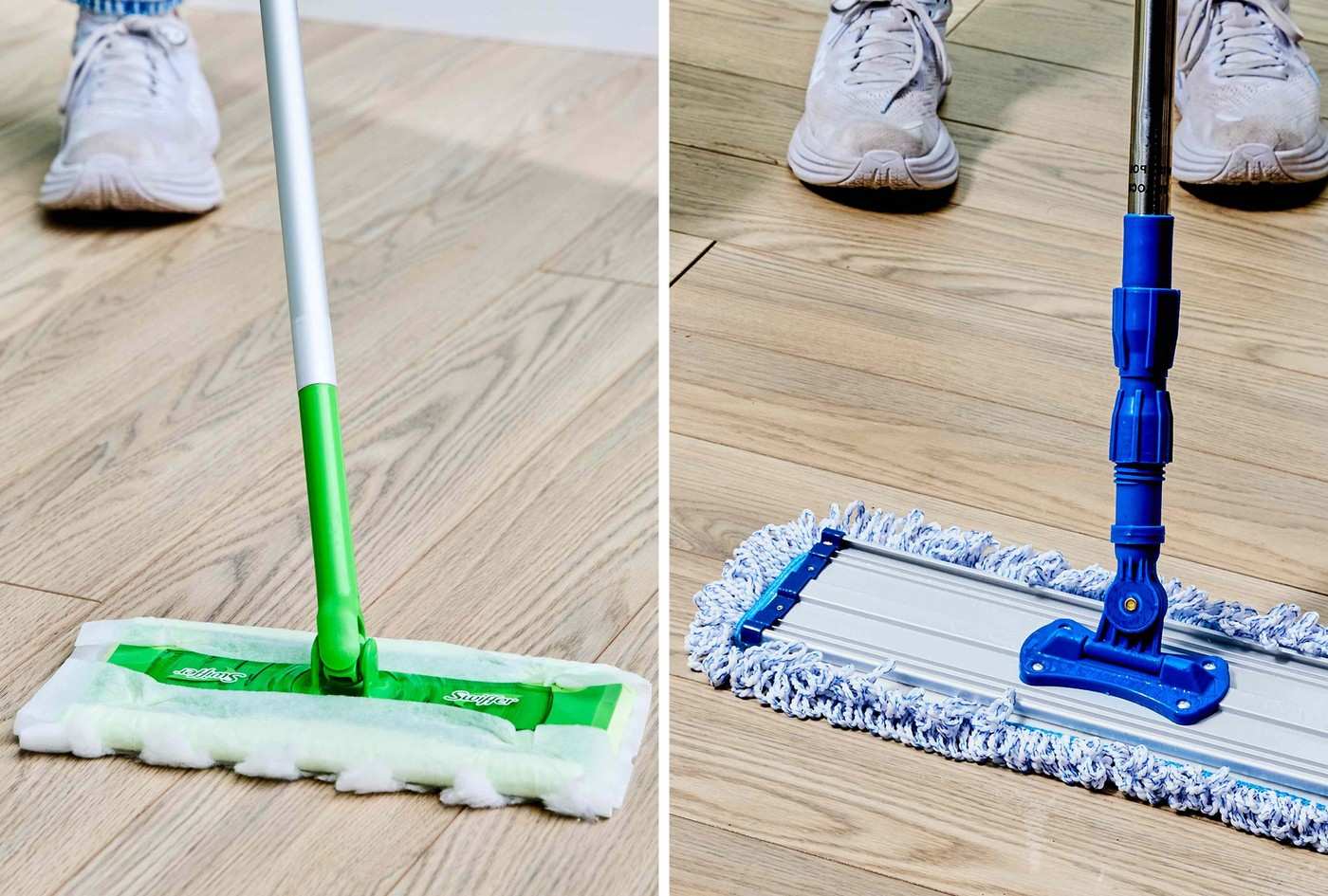
In The Spruce's comparison, a writer tried a washable microfiber dust mop against disposable Swiffer dry sheets, then considered particular wet-cleaning systems separately. Both dry approaches collected hair and dust, while size, pad clearing, and repeated replacement affected convenience. The account is valuable as a description of one trial, rather than a universal ranking for every floor. Compare those working details with furniture clearance and the household's willingness to launder a cover before copying the preference.
Both can collect dry dust
In The Spruce's comparison, the writer tested a washable microfiber dust mop alongside disposable Swiffer dry sheets. Both collected dust and hair, but the reusable cover needed clearing during a larger job. That account illustrates the maintenance difference rather than proving one design is best in every home.
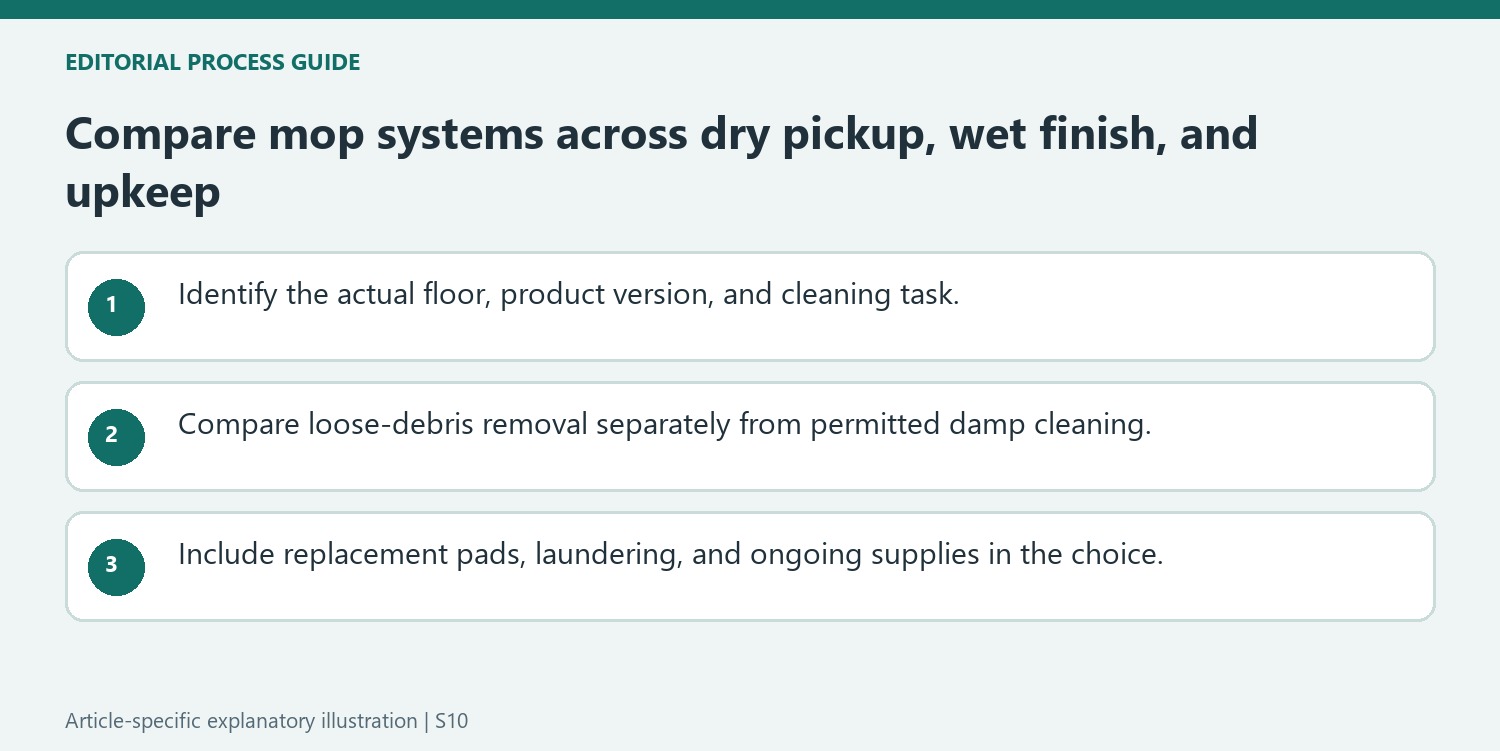
Consider the whole cleaning routine
A washable cover adds laundering, while disposable sheets require replacement supplies. Wet-cleaning systems add their own solution and floor-compatibility questions. Evaluate the floor, storage space and willingness to wash the pad before choosing. The reviewer's experience is useful context, but the tool's instructions and the floor manufacturer's requirements should guide how it is actually used.
Separate the reviewer's dry and wet comparisons
The Spruce's writer found both dry systems collected dust and hair, with the smaller disposable head helping around furniture and the toilet. The preference for reusable microfiber reflected laundering and repeated-use costs alongside performance. The later wet comparison concerned particular cleaners and the writer's own floors; reported film and stickiness are observations from that trial, not universal outcomes for every spray mop. The article also notes that neither wet system cleaned grout exceptionally well. A targeted compatible method may still be needed there. Compare the whole process, including pad changes, rinsing and floor approval, before treating one product's convenience as a complete care plan.
Separate the author's test conditions from a universal ranking
The Spruce's comparison describes one writer using microfiber tools and Swiffer systems on the floors in her home. Both dry approaches collected dust and hair in that account, while the smaller disposable-sheet head reached some tight locations more easily. The author's preference includes ongoing consumable expense and waste as well as pickup. Those observations are useful decision points, not a controlled result for every floor, soil load, or product generation. Compare the actual current systems and their instructions. A newer pad, cleaner, or head can differ from the configuration discussed in the historical test.
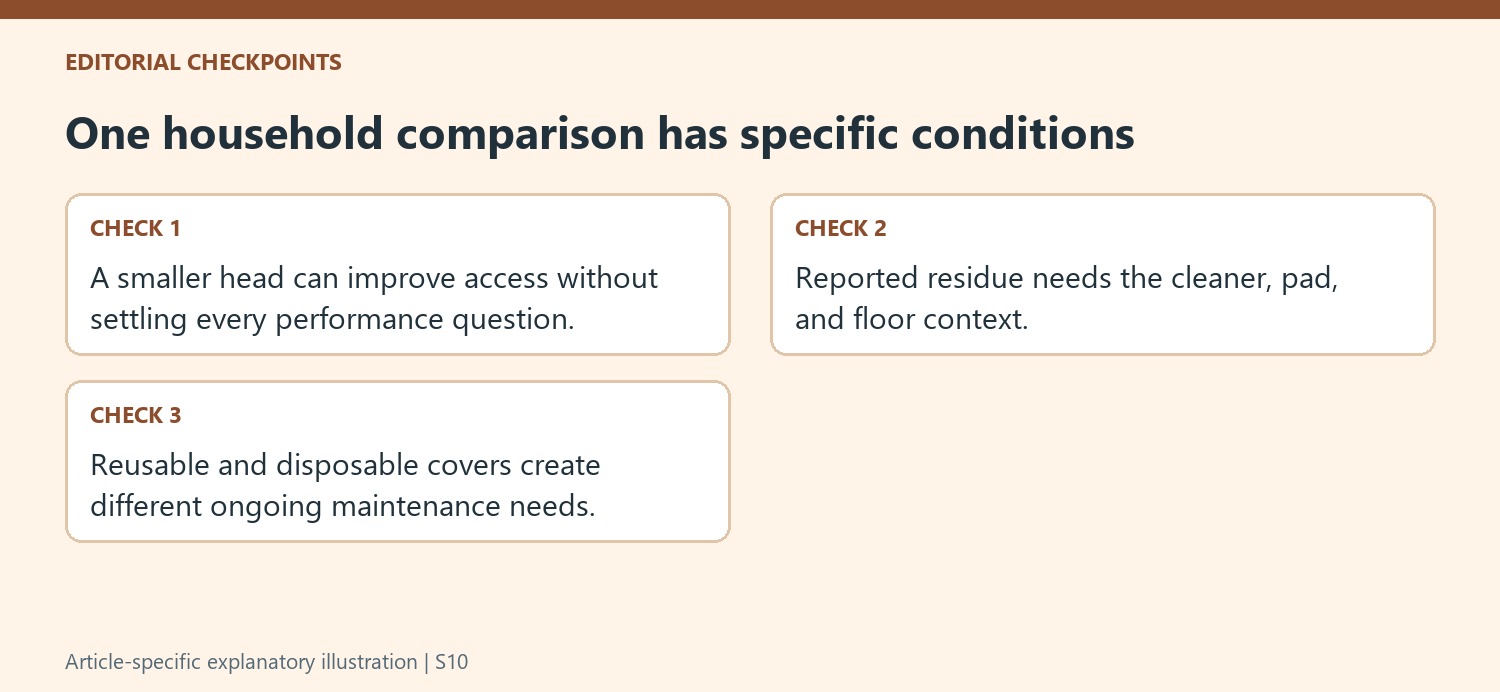
Keep dry pickup and damp cleaning as separate comparisons
Removing loose grit came before the writer's wet-cleaning stage. Follow that order where appropriate to the floor so a damp pad does not simply move loose debris into wet streaks. The source reports a film or sticky result with one tested setup; that does not establish a universal defect in every spray mop. Check the permitted cleaner, amount applied, pad condition, and the floor maker's method when evaluating residue. A homemade solution used by the author is likewise not proof of compatibility with another floor. Grout required extra attention in the account, showing that a flat pass may not reach recessed detail as effectively as the surrounding surface.
Compare the full maintenance and supply cycle
A reusable cover needs a suitable wash, drying time, and preferably a clean replacement available. A disposable system needs compatible sheets and pads on hand and a practical way to discard used ones. Calculate cost around actual consumption rather than the handle price alone. Consider how much area each pad can clean under its instructions before replacement. Do not continue with a saturated or loaded working face merely to meet an imagined cost target. The useful choice is the system whose compatibility, access, finish, and maintenance suit the household. A personal preference from the source can guide those questions without deciding them for every different home. Keep the shortlisted system details with the floor care instructions for later comparison.
References
- I Put My Swiffer and Microfiber Mop to the Test and One Came Out the Clear Winner. The Spruce; Mary Marlowe Leverette.
In The Spruce's comparison, a writer tried a washable microfiber dust mop against disposable Swiffer dry sheets, then considered particular wet-cleaning systems separately. Both dry approaches collected hair and dust, while size, pad clearing, and repeated replacement affected convenience.


Leave a Comment
Comments (0)