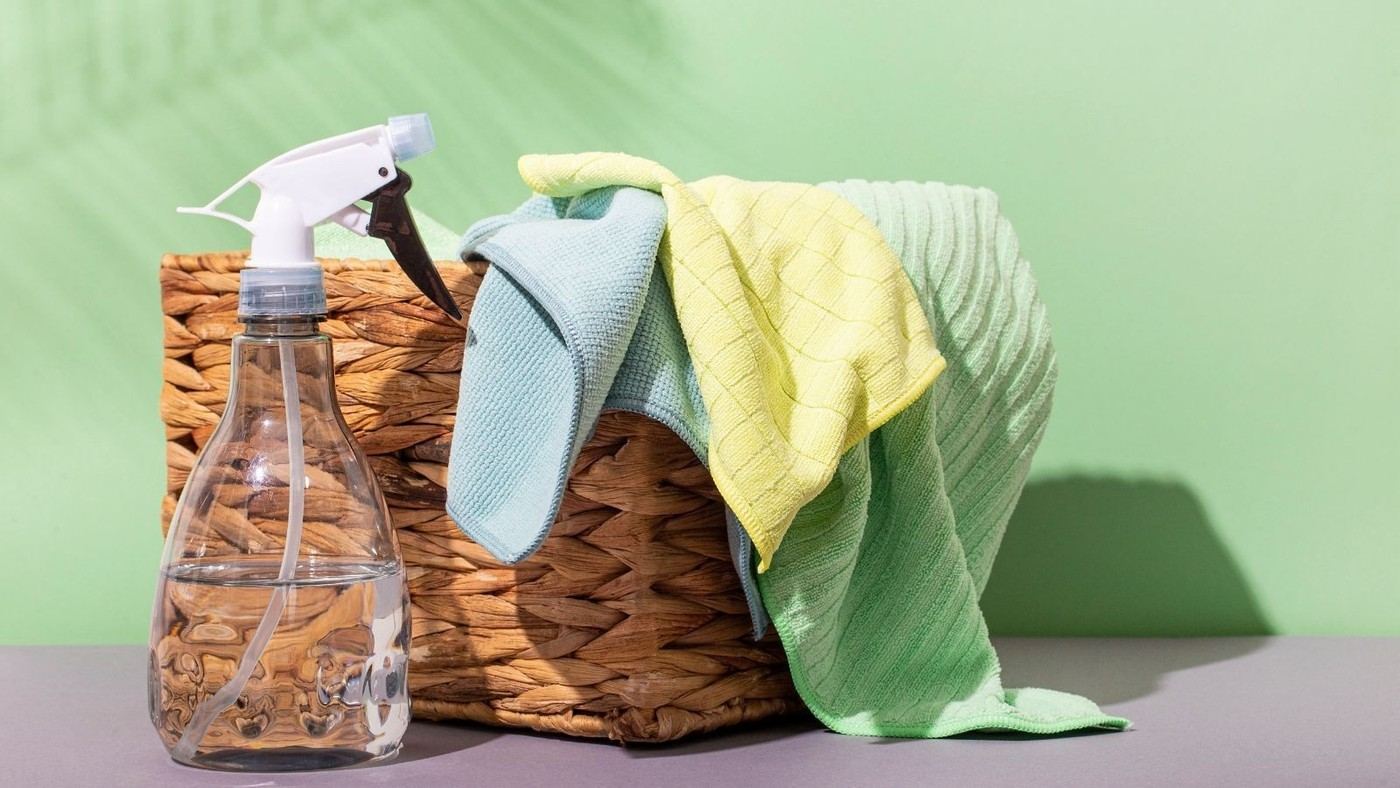
Homes and Gardens' microfiber advice connects folding the cloth into working faces with keeping kitchen, bathroom, and dusting cloths identifiable. Extra faces are useful during one suitable task, but do not erase contamination from another area. The feature also discusses care before first use and avoiding excessive heat. Arrange storage for clean and used cloths separately so that the next person can select the right group without having to guess where an apparently usable square was last used.
Keep the working face clean
Homes and Gardens warns that microfiber loses effectiveness when trapped dirt is allowed to build up. Fold a cloth into sections to expose a clean face while working, then launder it when soiled. A cloth used on a dirty bathroom area should not move straight to another surface simply because unused corners remain.
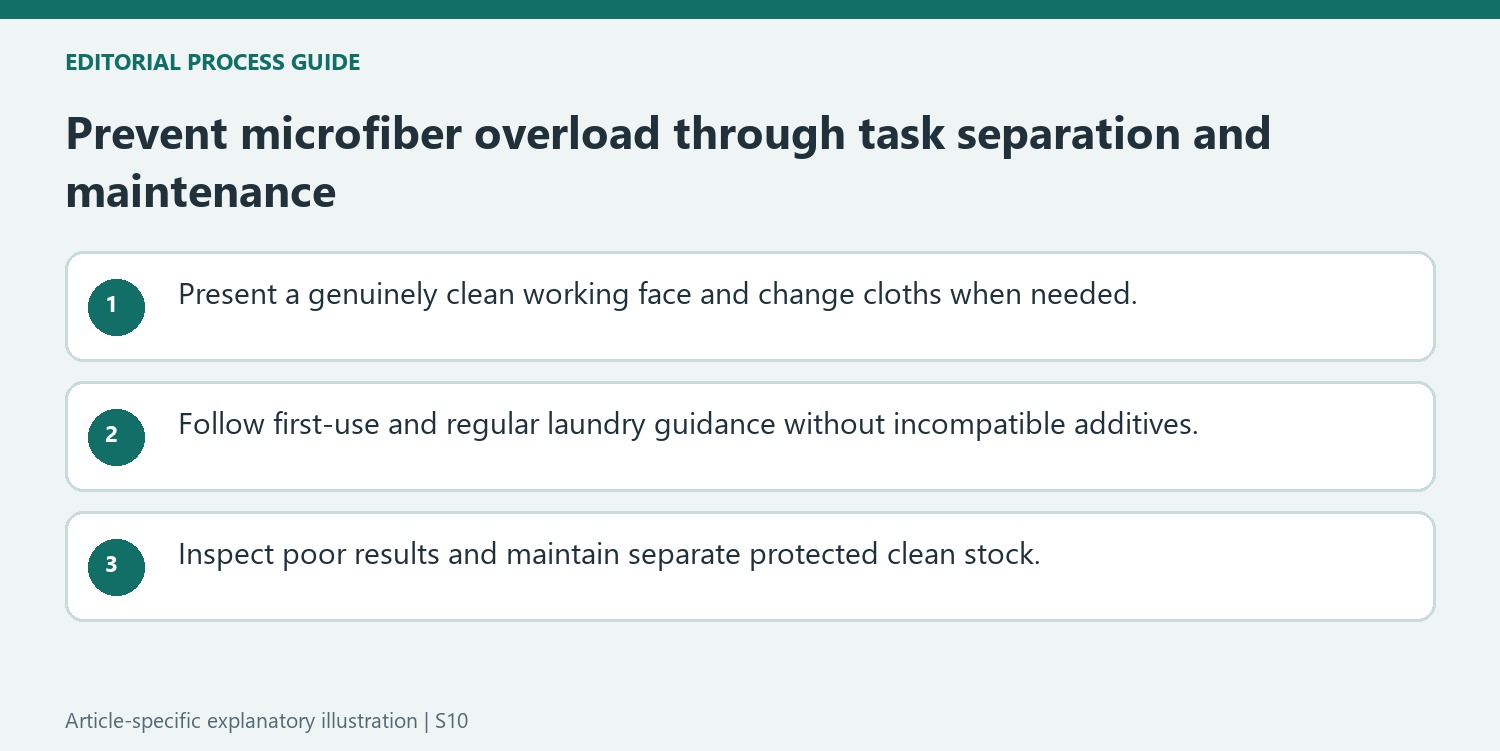
Treat washing as part of the job
The guide's central message is regular cleaning and suitable care, not indefinite reuse. Check the cloth label and remove grit before the next task. Poor maintenance can turn an effective dust collector into a source of transferred dirt. Separate task-specific cloths and allow washed items to dry fully so their usefulness lasts beyond the first few cleaning sessions.
Build task separation into the storage arrangement
Homes and Gardens quotes Vera Peterson on keeping kitchen, bathroom and dusting cloths separate, with color coding as one practical aid. Folding into quarters creates additional working faces during the same suitable task; it does not turn a contaminated cloth into a fresh tool for another area. The feature also recommends washing before first use according to product directions and avoiding high heat that can fuse fine fibers. Keep clean cloth groups distinct from used ones, and air dry on an uncontaminated surface where permitted. If a cloth continues to leave residue after appropriate laundering, assess its condition instead of adding pressure or more cleaning product.
Make the clean working face visible during the task
The source suggests folding a cloth into sections so an appropriate clean face can be presented as work progresses. That is useful only while the remaining faces are genuinely suitable for the next contact. Once the cloth is loaded, wet with an inappropriate product, or contaminated for another area, folding is not a substitute for washing. Keep task groups separate and prepare enough fresh cloths for the planned work. A change of color can serve as a clear reminder when the household uses it consistently. The system should identify the actual purpose rather than assume a particular commercial color means the same thing in every home.
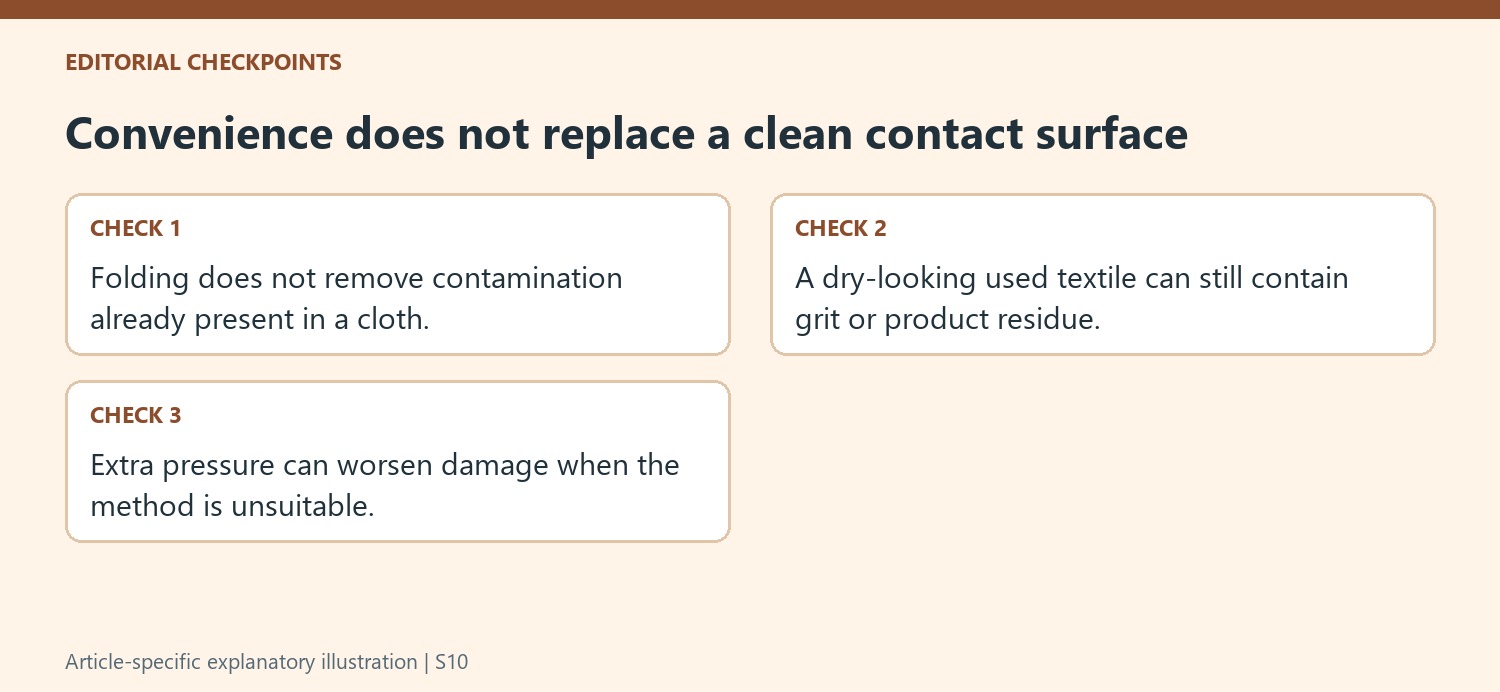
Address the preparation and laundry habits that affect performance
Homes and Gardens discusses a permitted first wash, regular laundering, avoiding softener, and protecting the fibers from excessive heat. Verify those requirements on the chosen product. A new cloth's packaging does not establish that it is ready for every delicate item without checking instructions. Equally, a used cloth that appears dry can still hold grit or residue. Sort it away from lint-producing fabrics and select a compatible detergent and drying method. The source's additional household ingredient suggestions should not become an automatic treatment for every performance problem. Follow the actual material and appliance guidance rather than combining remedies from different parts of a general article.
Diagnose a poor result before adding force or more product
Streaking can involve the condition of the cloth, excess cleaning solution, or the surface being treated. Check those factors and use a suitable clean replacement before escalating pressure on a delicate finish. Persistent loss of pickup or absorbency after proper maintenance deserves a condition assessment and possibly replacement. Keep dry clean stock protected so the tool does not collect new dust in the cupboard. Reusability depends on removing collected soil between appropriate tasks, not on continuing with one cloth until it looks visibly exhausted. A small, consistently maintained group can be more useful than a large mixed pile whose care history is unknown. The goal is reliable compatible contact on the next surface, with each cloth's assigned role and current condition clear.
References
- 5 common microfiber cloth mistakes you're probably making – and how to avoid them. Homes and Gardens; Seraphina Di Mizzurati.
Homes and Gardens' microfiber advice connects folding the cloth into working faces with keeping kitchen, bathroom, and dusting cloths identifiable. Extra faces are useful during one suitable task, but do not erase contamination from another area.


Leave a Comment
Comments (0)