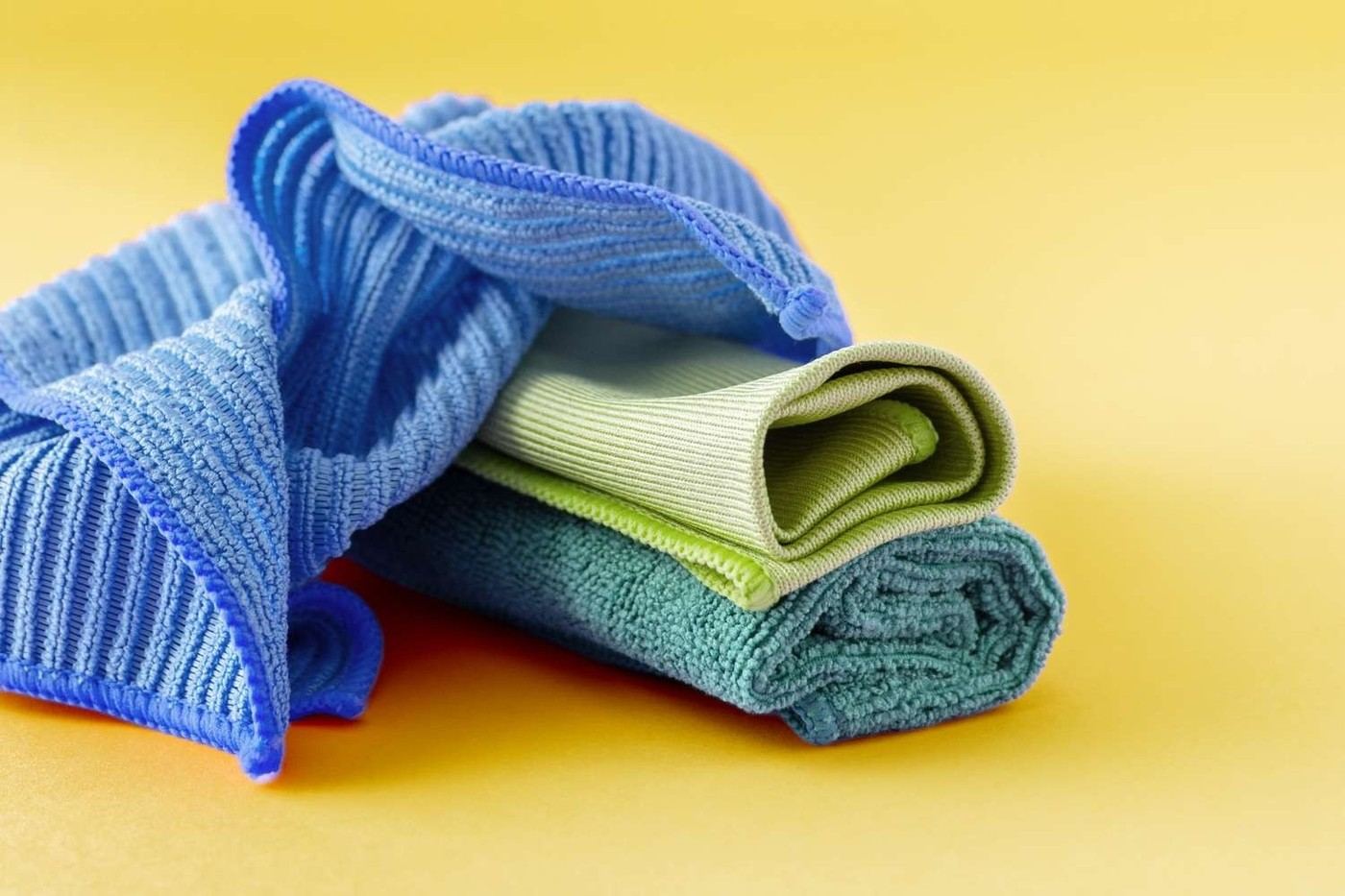
Real Simple's microfiber-washing guide identifies cotton lint, fabric-softener film, detergent buildup, and excessive drying heat as different threats to a cleaning cloth's usefulness. A cloth can emerge fragranced or visibly washed while still carrying material that interferes with pickup. Plan the load and rinse with the cloth's actual label in mind, rather than adding it to whatever laundry is available. The goal is to remove what the fine fibers collected without leaving another unwanted coating behind.
Separate the cloths before washing
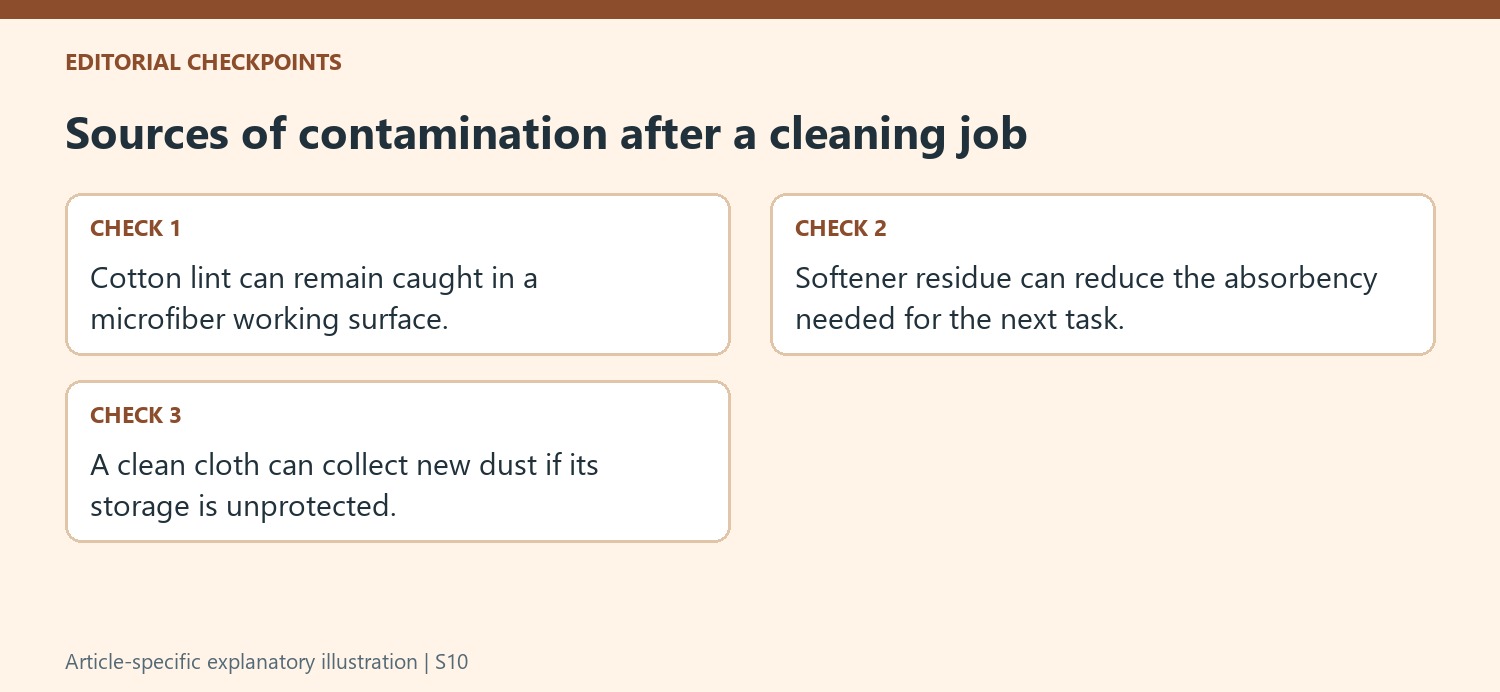
Real Simple explains that microfiber attracts small particles, including lint shed by cotton towels. Wash cleaning cloths separately so they do not emerge coated with fibers from another load. Fabric softener can leave a film that reduces absorbency, and chlorine bleach can damage the material rather than improving its cleaning performance.
Keep the drying temperature low
The guide recommends low heat or air drying because excessive heat can damage the fine synthetic fibers. Remove trapped grit before reusing a cloth on another surface, and wash dirty cleaning cloths promptly. These measures preserve the cloth's ability to collect soil; a reusable cleaning tool still needs regular laundering and complete drying between jobs.
Measure detergent and finish the rinse
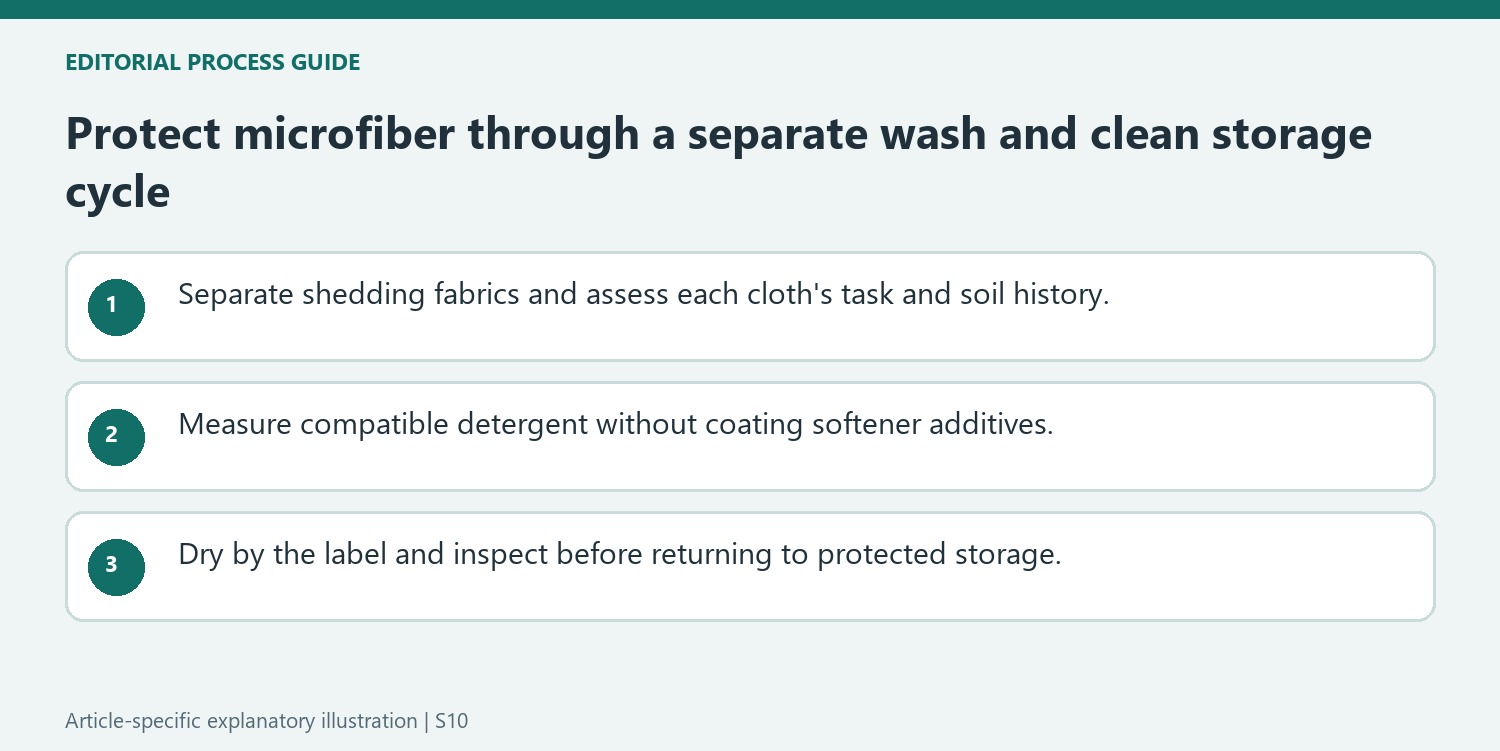
Real Simple warns that overdosing detergent leaves the same kind of unwanted buildup that defeats a highly absorbent cleaning fabric. Its machine method uses warm or cold water subject to care instructions, with no fabric softener or dryer sheet. For lightly used cloths, it also describes hand washing, followed by a clean-water rinse and hanging to dry. Select the route for the cloth's actual soil and label rather than simply adding it to the next available towel load. A visible stain does not always mean the fibers are unusable, but retained grit, oily residue and damp storage all need attention before the cloth returns to delicate-surface work.
Sort by the cloth's history as well as its fiber type
The source explains why microfiber attracts lint from cotton and other shedding fabrics. Keep those materials out of the cleaning-cloth load instead of assuming the washing cycle removes everything the cloth collects. Also consider what the cloth has cleaned. A greasy kitchen cloth and a lightly dusty polishing cloth can need different preparation even though both carry the same material label. Check each item's care instructions before deciding on hand or machine washing. Keeping task groups identifiable makes it easier to avoid returning a gritty or heavily soiled textile to a delicate surface after only a cursory rinse.
Use detergent to remove soil without adding a new coating
The guide emphasizes measured detergent and avoiding fabric softener or dryer sheets. The aim is a clean working textile rather than a fragranced or coated one. Follow the detergent and cloth requirements for the actual load rather than automatically adding a full normal-laundry dose. Stain pretreatment is a separate compatible step where needed, not a reason to combine unrelated cleaners. The source mentions additional products for certain concerns, but a laundry additive must have appropriate label directions for the purpose and material. Do not infer a disinfection result from a general washing suggestion or improvise chemical mixtures to address an odor.
Protect the clean result through drying and storage
Choose the label's permitted drying method and avoid unsupported heat. Air drying can avoid the heat exposure of a dryer when the cloth is placed where it can dry cleanly. If machine drying is allowed, follow the specified setting and keep coating additives out. Inspect the cloth for retained debris, lint, or damage before folding it away. A clean dry storage location keeps the textile from collecting dust before it reaches its next task. Poor absorbency or persistent odor deserves reassessment of the cleaning method and the item's condition rather than another layer of fragrance. Maintaining microfiber means preserving its ability to collect soil while removing what it has already collected. That is a complete use, wash, dry, and store cycle, not merely a decision to put the cloth into the next mixed laundry load.
References
- How to Wash Microfiber Cloths So They Actually Clean Better. Real Simple; Mary Marlowe Leverette.
Real Simple's microfiber-washing guide identifies cotton lint, fabric-softener film, detergent buildup, and excessive drying heat as different threats to a cleaning cloth's usefulness. A cloth can emerge fragranced or visibly washed while still carrying material that interferes with pickup.


Leave a Comment
Comments (0)