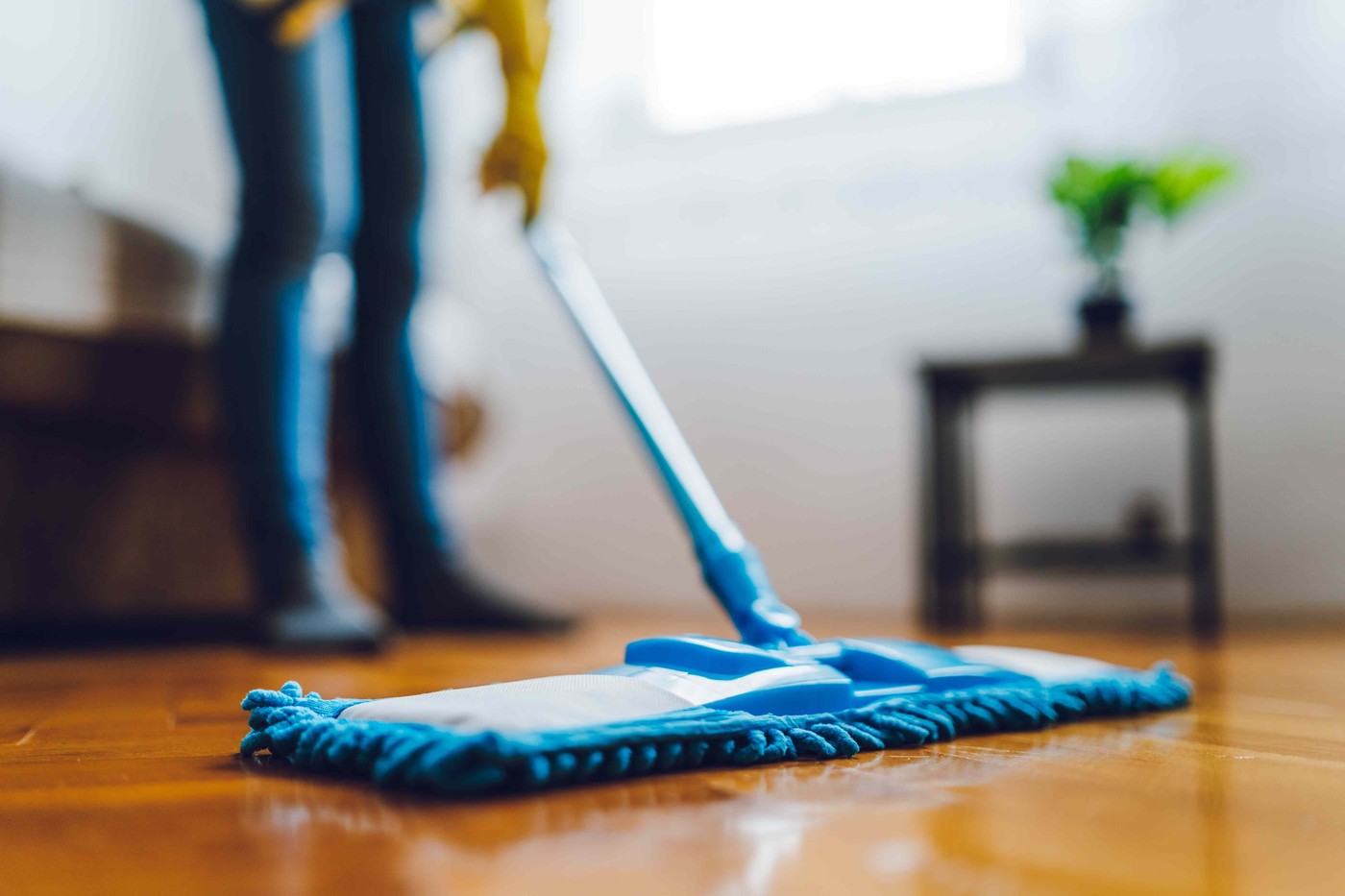
The Spruce defines a dust mop as a dry tool for loose particles and describes reusable fiber heads, washable microfiber covers, and disposable electrostatic sheets. Its technique begins with a clean head and includes overlapping passes with the head kept flat. This is a different operation from spreading water or cleaning solution over a floor. Use that distinction when assigning daily dust removal, and decide how the collected grit will be removed from both the room and the mop afterward.
Use the dry tool for loose particles
The Spruce defines a dust mop as a long-handled tool for removing dust and small debris without water. Its broad head can cover hard floors and reach around furniture. Removing gritty particles regularly can reduce scratching and make the next suitable wet-cleaning session easier.
Choose reusable or disposable covers deliberately
The guide describes traditional fiber heads, washable microfiber covers and disposable electrostatic sheets. Each has a different maintenance or replacement requirement. A dry dust mop is not automatically intended for wet use, so check the product instructions before adding water or cleaning solution. Keep the cover clean enough to collect soil rather than redistributing the dust from the previous room.
Keep the head flat and work in overlapping passes
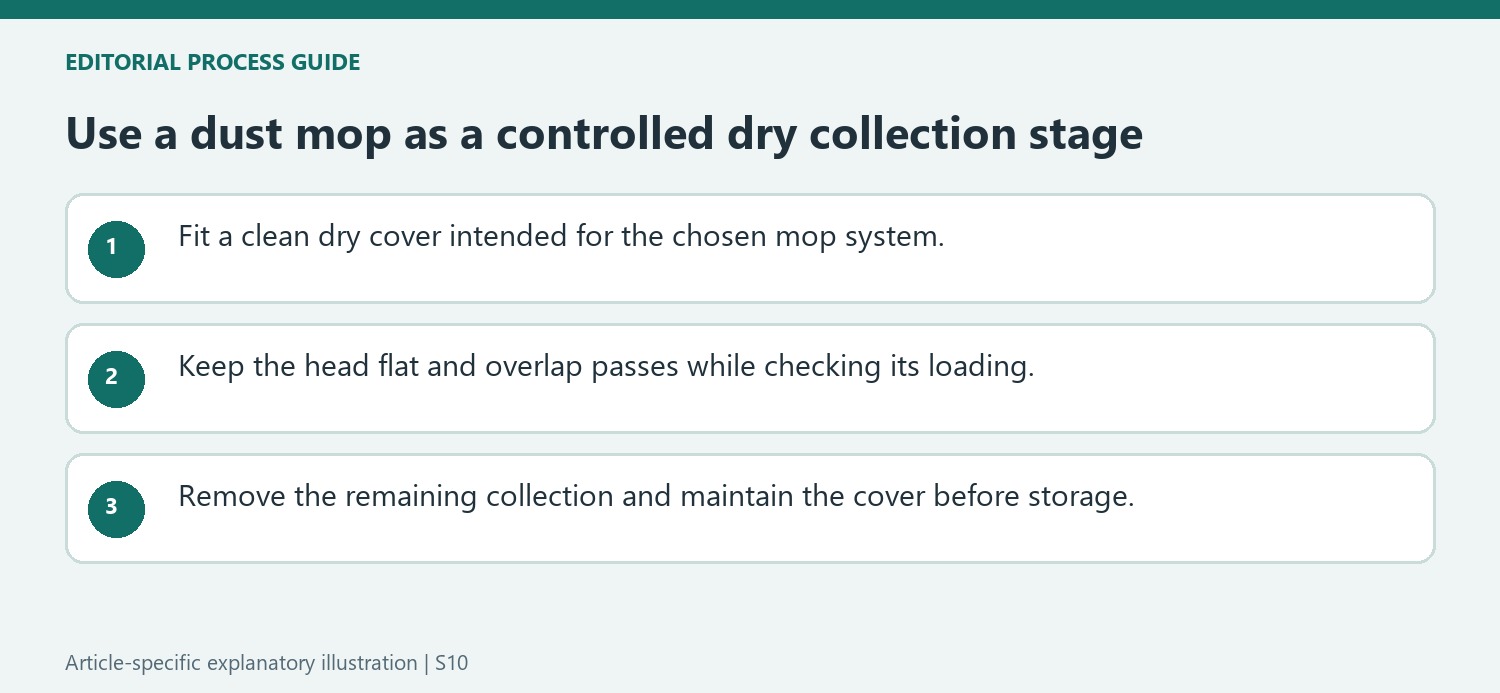
The Spruce describes starting with a clean, dry head and clearing small obstacles before making long passes across the floor. Keeping the head flat helps collect particles rather than flicking them away. Overlap the next pass slightly so narrow strips are not missed. If the cover fills with dust, stop to clear or replace it rather than moving the same loaded fibers into another room. Collect any final pile with a suitable broom or vacuum, then maintain the mop according to its label. The guide also recommends hanging the dry tool for storage to avoid crushing its fibers against the floor between sessions.
Keep dry collection distinct from a wet-cleaning pass
The Spruce defines the dust mop by its dry use and its role in gathering loose particles. Begin with a clean, dry cover fitted securely to the appropriate head. If the same handle accepts different pads, identify which is intended for dust collection rather than assuming any fitted textile can be wetted. A dry pass can remove grit before another permitted cleaning stage, but it does not dissolve every sticky spill or substitute for stain treatment. Check the floor's care requirements and pick up objects that are unsuitable for the mop. This keeps the task focused on loose dust, hair, and small compatible debris.
Use contact and coverage to control the collection
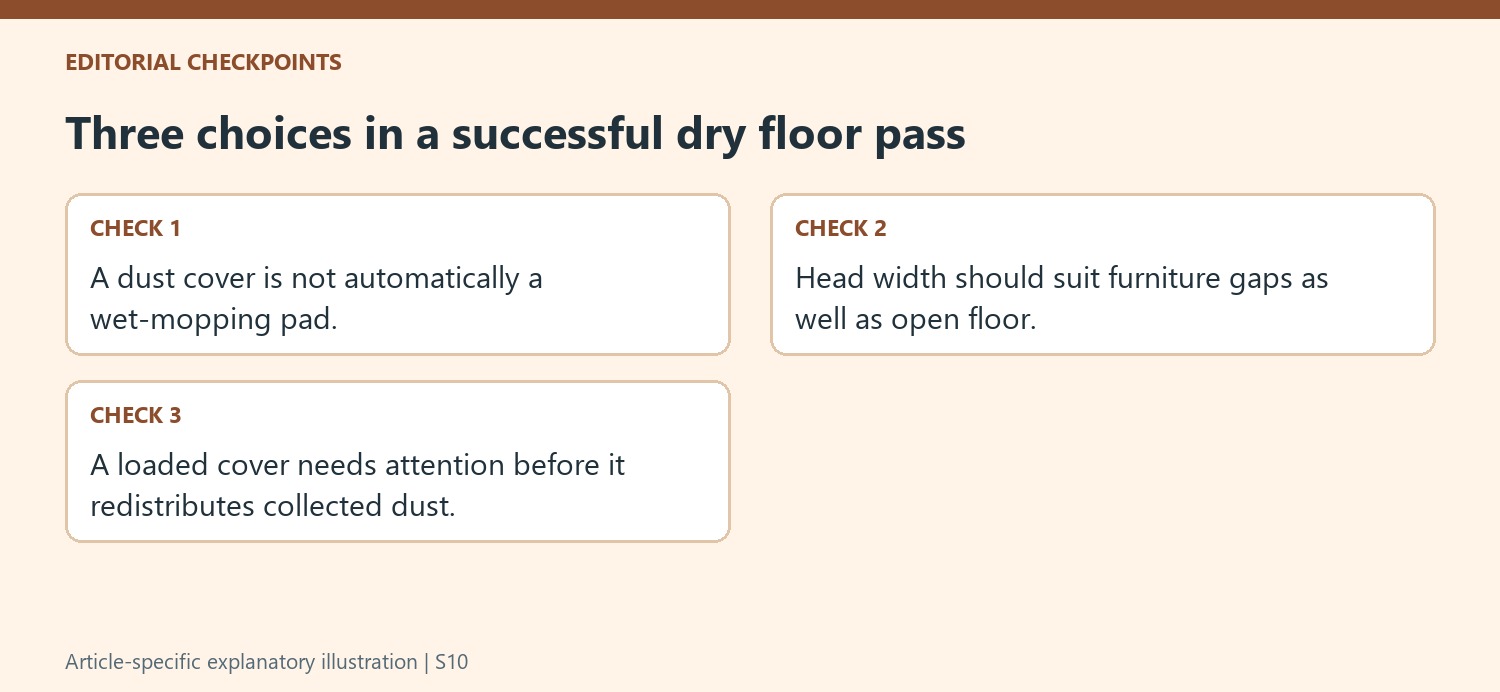
The guide emphasizes keeping the head flat and making slightly overlapping passes. Plan a route around furniture that avoids repeatedly lifting and scattering the gathered material. Move small obstacles where safe and appropriate so the head can cover the intended area. Inspect the cover as the work progresses rather than waiting until it is visibly overloaded. If it stops retaining dust effectively, use a fresh suitable cover or the specified debris-removal method. A wide head can cover an open area efficiently while a smaller one may enter a furnished gap more readily. Select the size against the actual room, not only the largest floor-area claim.
Complete the task by maintaining the collector
Any remaining pile needs appropriate removal instead of being left at the room's edge. Follow the cover instructions for cleaning, laundering, drying, or disposal. The source's discussion of turning disposable sheets or improvising a cover does not override the selected system's fitting and use guidance. A spare washable cover can keep the routine moving while another is being cleaned. Store the head so its working fibers are protected from unnecessary flattening and new contamination. The benefit of dry mopping depends on moving loose dirt off the floor and then out of the tool's next pass. It should not become repeated movement of the same loaded cover from one room into the next.
References
- How to Use a Dust Mop Correctly. The Spruce; Mary Marlowe Leverette.
The Spruce defines a dust mop as a dry tool for loose particles and describes reusable fiber heads, washable microfiber covers, and disposable electrostatic sheets. Its technique begins with a clean head and includes overlapping passes with the head kept flat.


Leave a Comment
Comments (0)