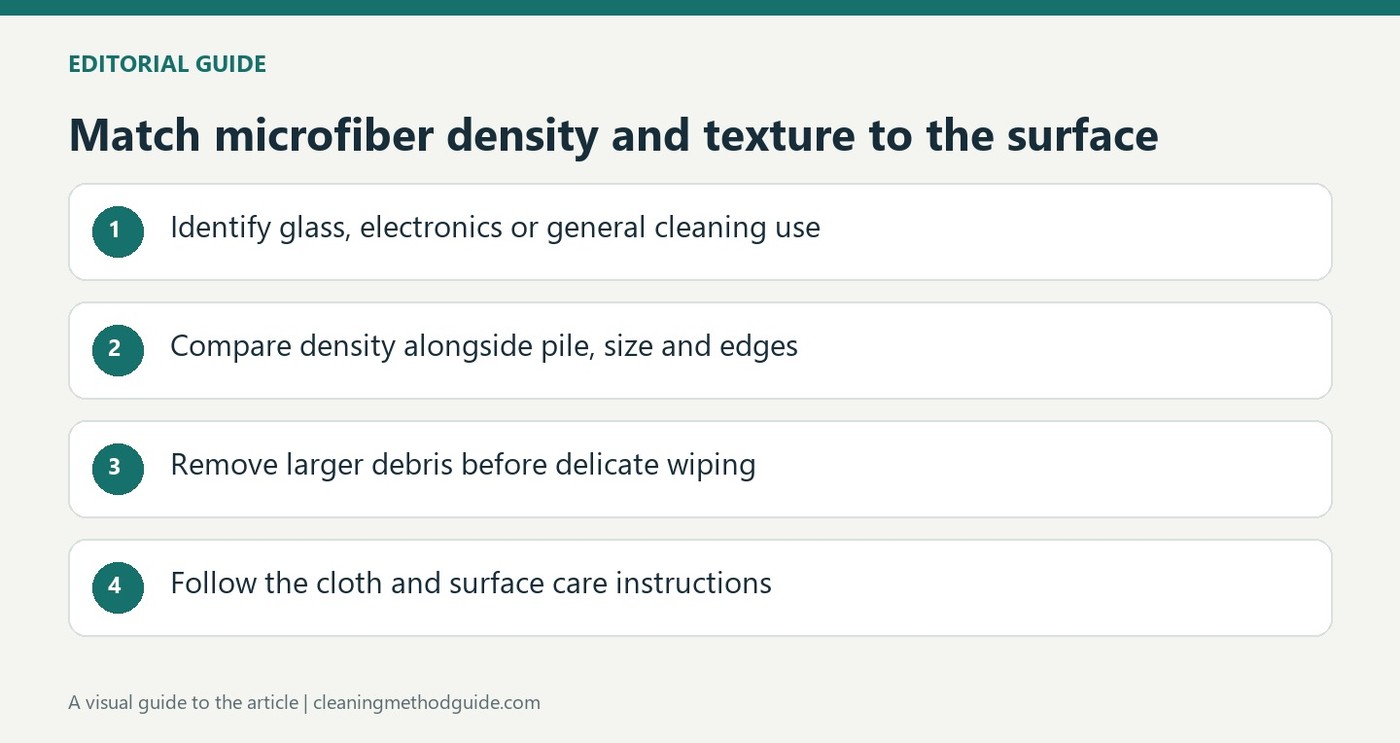
Better Homes and Gardens compares microfiber products across jobs that demand different finishes: a plush detailing towel, a fine polishing cloth, and an everyday wiping cloth are not interchangeable simply because each uses small synthetic fibers. Its discussion of fabric weight, pile, and size provides useful buying questions. Decide whether the task involves absorbing liquid, reaching a narrow space, or leaving glass clear, then check the shortlisted cloth's care needs before putting it into regular rotation.
Compare more than absorbency
Better Homes and Gardens' microfiber cloth roundup considers products for different cleaning needs, including general surfaces and streak-sensitive glass. Texture, size and how the cloth holds moisture can affect its usefulness. A cloth chosen for wiping a countertop does not automatically provide the same finish when used to polish a window.
Keep the recommendation in perspective
A product roundup helps identify the qualities to compare, but it does not remove the need to follow care instructions. Keep cloths used in different areas separate and inspect them for retained grit before touching delicate surfaces. Consider laundering requirements alongside durability and convenience so a reusable cloth remains an effective tool throughout its working life.
Use density as one comparison rather than a guarantee
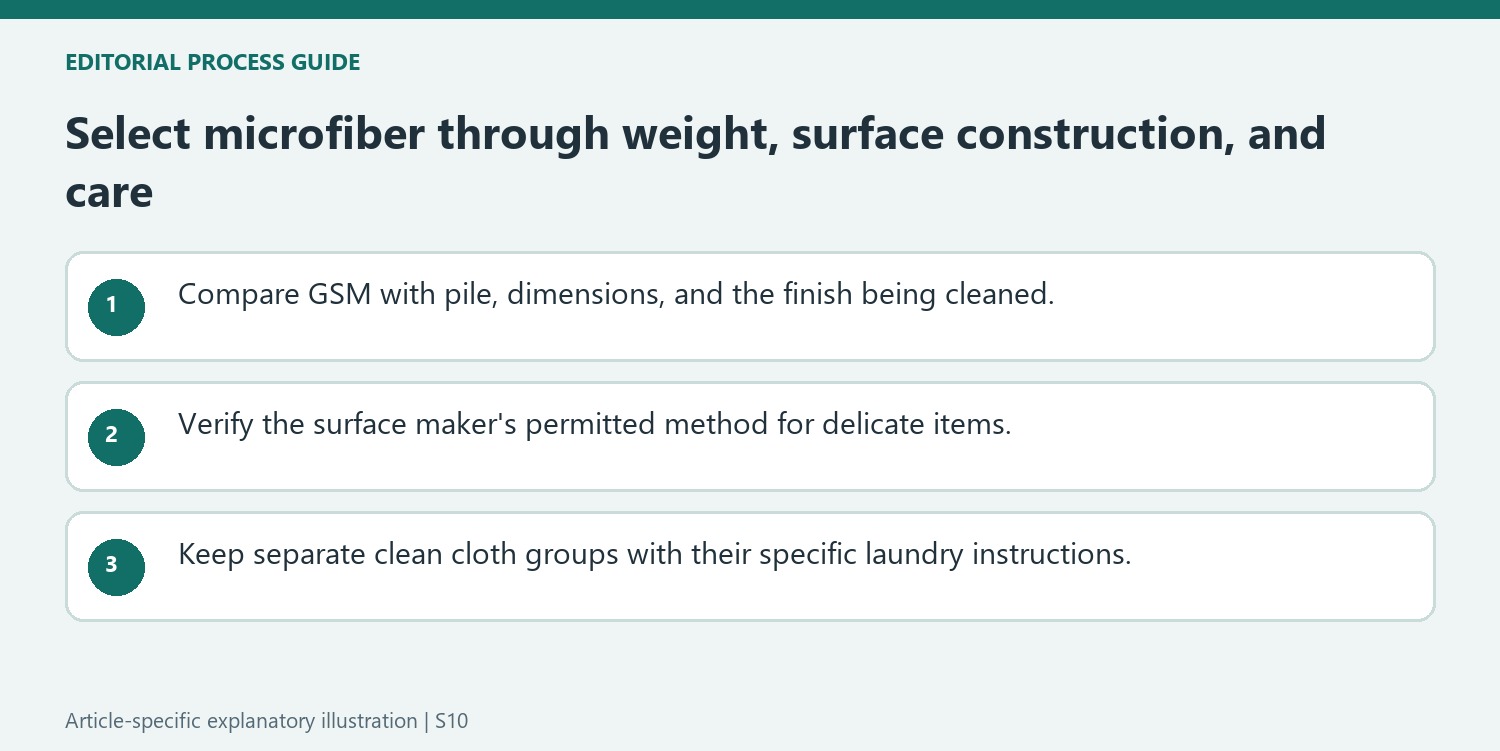
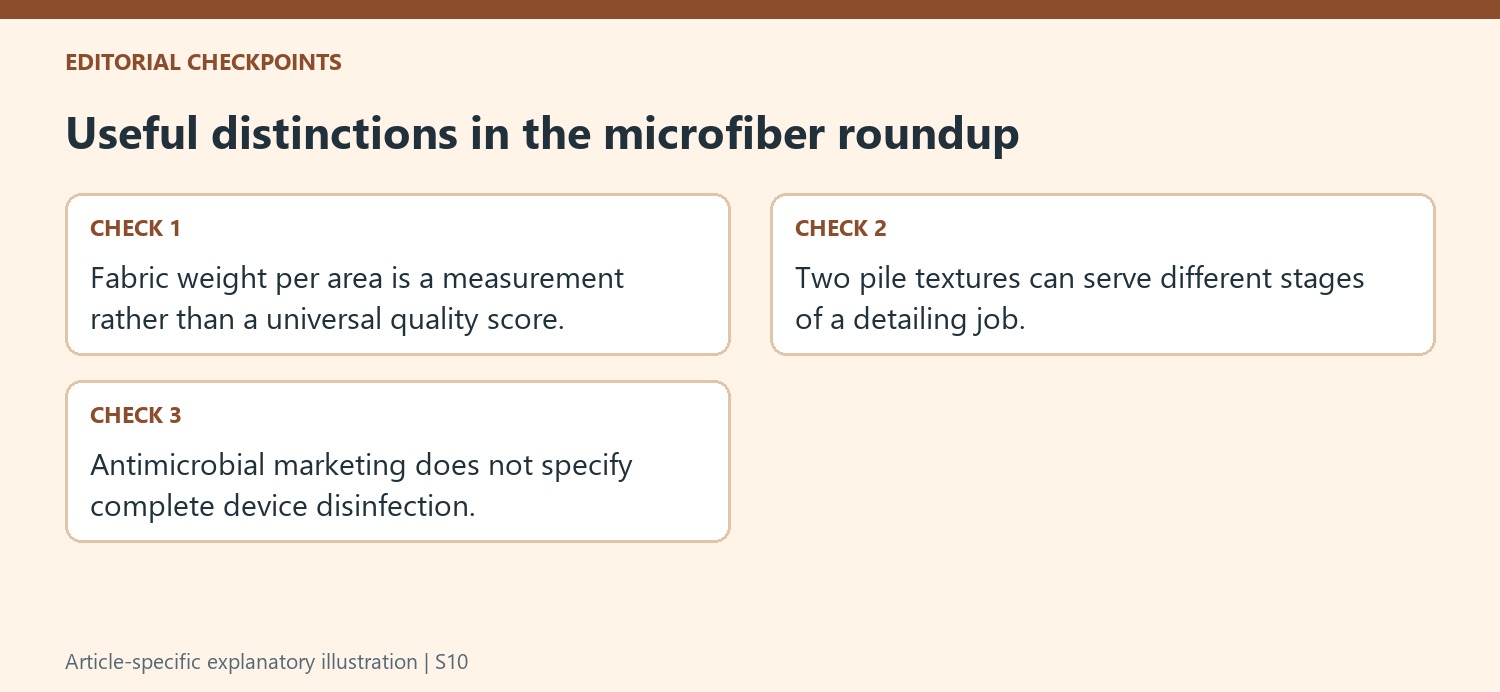
BHG explains GSM as fabric weight per square meter and considers it alongside size and intended use. A denser cloth may hold more moisture, but a delicate eyewear cloth needs a different design from a plush car-detailing towel. The source's Rag Company example has different pile textures on its two sides, while the fine MagicFiber option needs gentler washing and air drying. Its electronics discussion also limits polishing cloths to light dust and fingerprints after larger debris has been dealt with appropriately. Check a device's own instructions before wetting it, and do not assume a cloth's antimicrobial marketing establishes a complete disinfection procedure.
Read weight alongside pile and the intended finish
Better Homes and Gardens uses GSM to describe fabric weight per unit area, not a universal ranking of cleaning quality. Compare it with the cloth's dimensions and surface construction. A high-pile towel for detailing has a different contact pattern from a fine eyewear cloth, even if both are made from related synthetic fibers. The source's dual-pile example illustrates two working surfaces within one towel, while its window kit assigns cleaning and polishing to separate cloths. Those are useful design distinctions to investigate on the actual package. A heavier fabric is not automatically the right choice for a coated lens or a narrow piece of equipment.
Keep delicate-surface instructions ahead of product enthusiasm
The roundup includes cloths marketed for electronics and eyewear, but the equipment maker's care directions still determine the permitted method. Inspect the cloth for grit and address larger debris appropriately before polishing. Avoid treating a broad claim about microbial performance as proof that rubbing a screen completes a validated disinfection procedure. Likewise, do not apply liquid directly to a device because a household cloth guide discusses damp cleaning elsewhere. Choose the cloth and any permitted cleaner as a compatible method for that surface. Product-specific requirements matter particularly where a protective coating or an opening could respond differently from an ordinary kitchen counter.
Compare the care burden with the convenience of reuse
The source notes different washing, drying, and color-release considerations across its selections. A fine cloth may need gentler care, while a detachable duster head needs a way to return to its handle after cleaning. Check the current instructions rather than relying on a general machine-washable description. Keep microfiber away from shedding cotton and avoid softener residue where the label excludes it. A clean spare can help maintain separation between bathroom work, dishes, glass, and electronics. Choose how many items to buy around those uses and the available laundry routine. The benefit of a reusable textile depends on maintaining its effective surface and not carrying collected soil into the next job. Record special requirements with the cloth group so a later wash does not accidentally remove the performance that justified choosing it.
References
- The 8 Best Microfiber Cleaning Cloths for Wiping Down All Kinds of Surfaces. Better Homes & Gardens; Kaitlyn McInnis.
Better Homes and Gardens compares microfiber products across jobs that demand different finishes: a plush detailing towel, a fine polishing cloth, and an everyday wiping cloth are not interchangeable simply because each uses small synthetic fibers. Its discussion of fabric weight, pile, and size provides useful buying questions.


Leave a Comment
Comments (0)