
Real Simple's compact-supplies account puts reusable microfiber, task-specific brushes, and maintained equipment ahead of collecting a separate product for every corner. The author uses different cloth textures and color coding, and includes drying and laundering the cloths in the working routine. This is a personal account of a useful kit, rather than a test proving one universal shopping list. Its most transferable feature is the connection between each tool, its job, and the work needed to keep it ready.
A few maintained supplies can cover many jobs
Real Simple's cleaning expert favors microfiber cloths, dusters and mop heads in different textures, with color coding to separate their uses. Many suitable surfaces need only a damp cloth for ordinary soil, rather than a new specialist product for every task. The article frames the list as the author's practical preferences.
Clean the reusable tools themselves
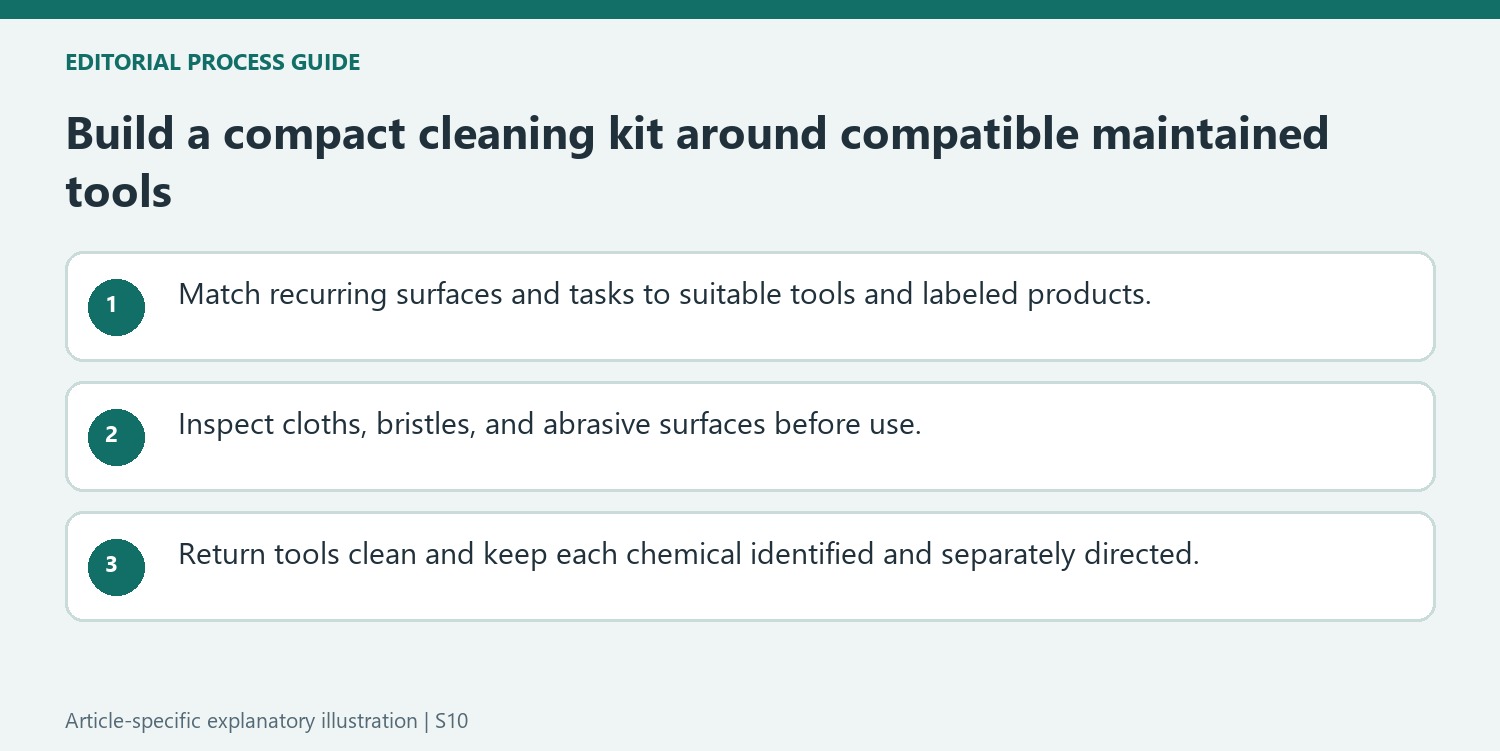
The writer hangs damp microfiber to dry before gathering enough for a separate wash and keeps it apart from lint-shedding cotton. This makes maintenance part of the kit rather than an afterthought. Select products for the actual surface and follow their instructions; a concise supplies list is useful when each tool is suitable, clean and ready for its intended job.
Apply the compact-kit principle without mixing products
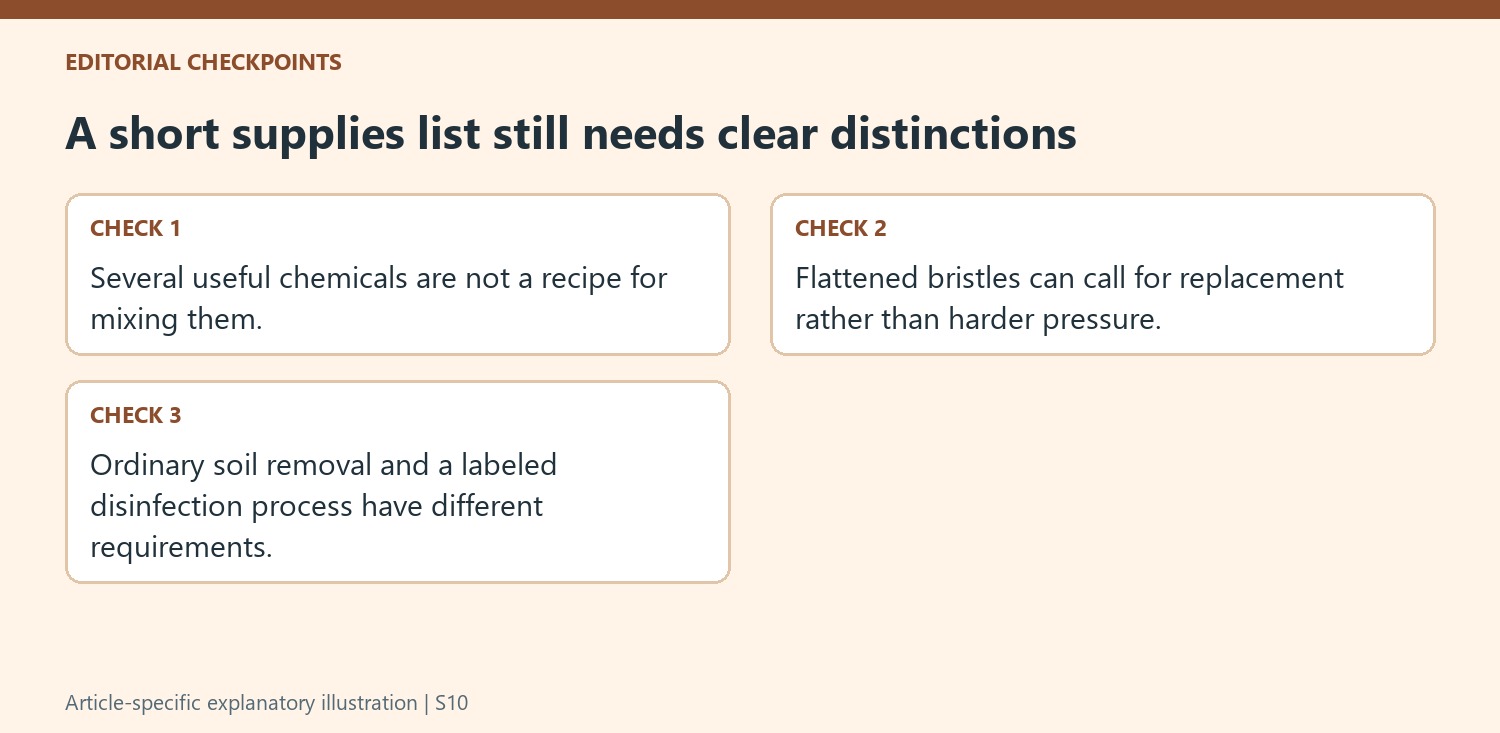
Real Simple's author lists tools and chemicals with different jobs, not ingredients that should all be combined. Nylon brushes illustrate the same task-based selection as microfiber: softer bristles suit delicate detail work, while harder jobs need their own compatible tools. Worn, flattened bristles are a reason to replace a brush rather than increase pressure. The writer also keeps disinfectants for particular needs, distinguishing them from ordinary soil removal. Choose a labeled product for the intended surface and purpose, and follow its instructions independently. A small supplies collection works best when reusable tools are clean and chemical containers remain clearly identified and safely stored.
Organize a small collection by the jobs it can safely perform
Real Simple's author describes a deliberately limited group of recurring supplies. Make that approach concrete by listing the household's surfaces and matching each to a compatible tool and, when needed, a labeled product. Microfiber can cover several ordinary soil-removal tasks, while suitable brushes handle detail or scrubbing work. That does not imply that the same used cloth should travel between every room. A compact kit can contain task-separated tools without requiring a different specialty bottle for every corner. Keep the source's personal preferences distinct from a guarantee that its exact brand choices or homemade methods suit every finish in another home.
Use the tool's condition to decide when technique should change
The writer notes differences in brush stiffness and replaces flattened bristles. Inspect the working end before compensating for poor results with extra pressure or a stronger cleaner. A worn brush may no longer reach the detail it was selected for, and an abrasive melamine sponge can alter a finish rather than merely remove dirt. Follow the surface and tool instructions and test appropriately where permitted. The article's examples of cutting melamine into smaller pieces concern the author's use and disposal routine, not permission to use it on every painted or polished object. Judge success by the intact cleaned surface as well as the amount of visible soil removed.
Keep supplies ready without treating them as a mixing recipe
The source's list includes chemicals with separate purposes, and its collection should not be interpreted as ingredients to combine. Store them in clearly identified original containers and follow each label independently. Choose any disinfection step for the actual need and surface, including the stated application requirements, rather than assuming ordinary wiping and disinfection are identical. A portable caddy can reduce trips if it remains manageable and is stored securely between uses. The author's cloth routine includes drying and separate laundering, which is part of keeping a smaller kit useful. Rotate suitable stock and check the condition of reusable tools before the next session. A concise collection works because its pieces are maintained and understood, not because a short shopping list removes the need for compatibility and handling decisions.
References
- 8 Things I Always Stock Up On As a Cleaning Expert. Real Simple; Mary Marlowe Leverette.
Real Simple's compact-supplies account puts reusable microfiber, task-specific brushes, and maintained equipment ahead of collecting a separate product for every corner. The author uses different cloth textures and color coding, and includes drying and laundering the cloths in the working routine.


Leave a Comment
Comments (0)