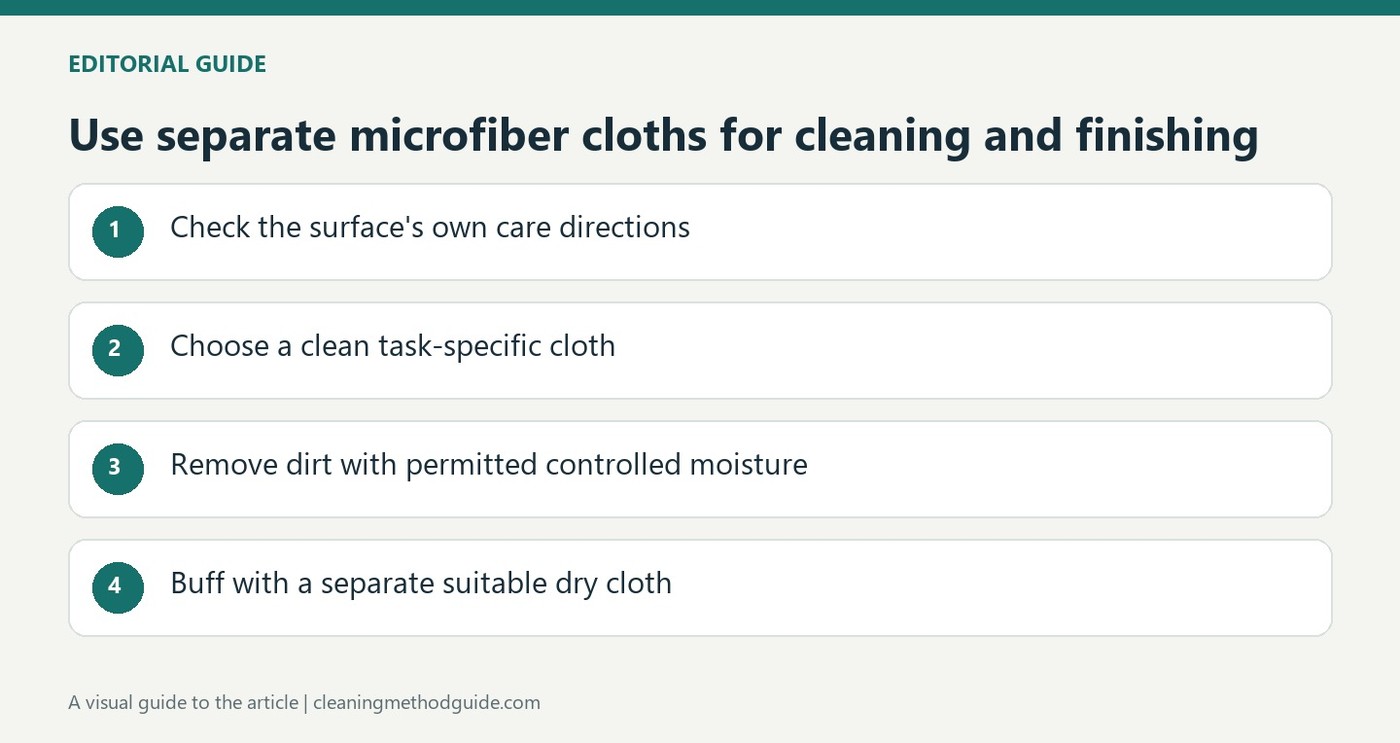
Homes and Gardens separates the damp wiping stage from the dry buffing stage when discussing microfiber on suitable mirrors and glass. That distinction gives the finishing cloth a specific job: it should remove remaining moisture without reintroducing dirt from the first pass. The wider list includes shoes, steel, bathroom fixtures, and screens, making separation between tasks especially important. Treat that versatility as a reason to prepare several appropriate clean cloths, rather than carry one used square around the whole house.
Match the cloth to the finish
Homes and Gardens describes microfiber uses beyond general dusting, including suitable glass and mirrors. The article recommends a damp cleaning cloth followed by a separate dry cloth for buffing. That distinction helps remove dirt without leaving the same moisture and residue behind on a streak-sensitive surface.
Keep delicate equipment requirements visible
The guide also discusses electronics and other household uses, but a cloth's versatility does not override a device manufacturer's cleaning directions. Use an appropriate, clean cloth and avoid carrying grit from shoes or floors to a screen. Different jobs may call for separate cloths or textures, making task separation and maintenance more useful than treating every microfiber square as interchangeable.
Change cloths when the task changes
Homes and Gardens moves from windows to screens, steel, shoes and bathroom fixtures, demonstrating why a versatile tool still needs task separation. A cloth used on a shoe can retain grit that should never be dragged over a coated display. The electronics section cautions against spraying liquid directly onto devices; the manufacturer's permitted method still controls any damp wiping. The article also separates cleaning with a damp cloth from buffing with a dry one, so keep a genuinely clean finishing cloth ready. Wash with the product's approved process, avoid fabric softener and use only permitted drying heat. Reusability depends on removing the collected soil between jobs.
Give each stage its own clean working face
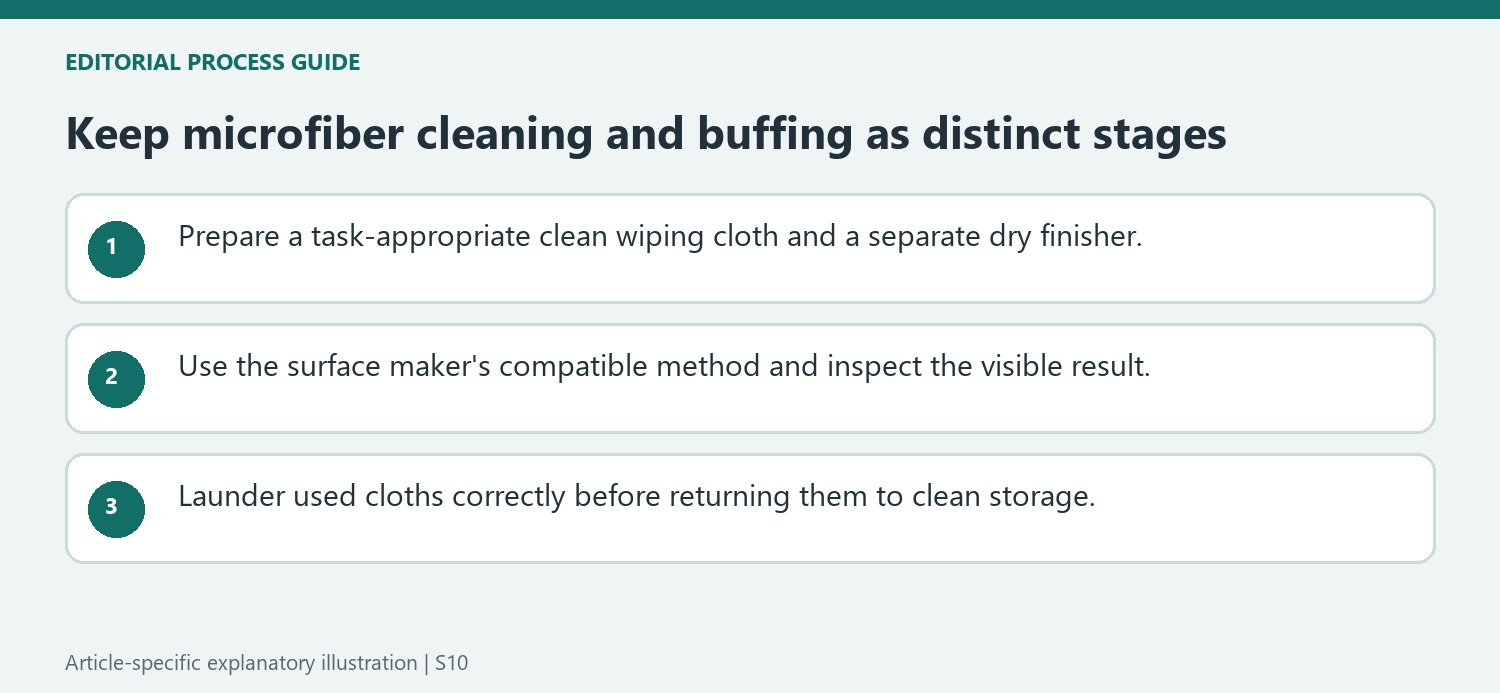
Homes and Gardens describes a damp wiping pass followed by a dry buff on suitable glass. The first pass collects soil and moisture, while the second addresses the remaining finish. Prepare a genuinely clean dry cloth rather than using the already dirty reverse of a saturated wiping cloth. Inspect the result under the room's ordinary light before repeating the process. If marks remain, check for excess product, dirty cloths, or an unsuitable method instead of automatically increasing pressure. The distinction between removal and finishing makes this more useful than a broad promise that microfiber always leaves every surface streak-free.
Treat the wider list as separate material-specific uses
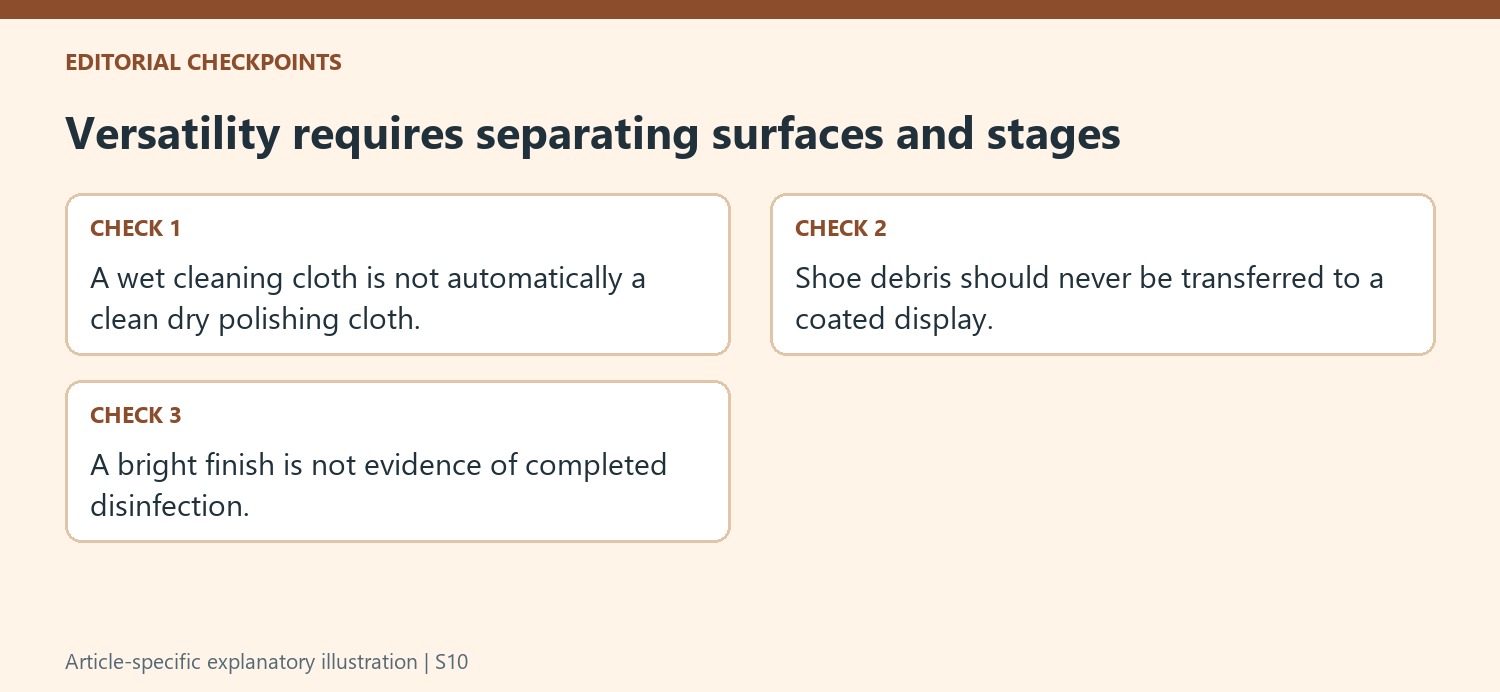
The article moves from glass to steel, shoes, bathrooms, and electronics. That range calls for separate compatibility decisions and task-assigned cloths. A shoe may carry particles that would be inappropriate on a display, while a bathroom cloth belongs in its own cleaning routine. Follow the specific finish or equipment guidance for any moisture and cleaning product. Suggestions involving household oils or homemade mixtures should not be transferred automatically to coated steel or a sensitive screen. The useful common feature is a clean textile suitable for the task, not a universal liquid or identical rubbing technique across all five settings.
Preserve the distinction through washing and storage
The source warns that softener residue, excess detergent, and high drying heat can reduce microfiber performance. Read the selected cloth's label and keep its laundry requirements with the group. Remove collected dirt through that approved process before returning it to a delicate-surface task. A cloth set aside for dry buffing should remain clean and dry in storage, rather than resting among used damp tools. Check for embedded particles again before the next pass. Physical wiping can improve visible cleanliness without establishing that a surface has been disinfected. Where that is needed, follow an appropriate labeled procedure compatible with the object. A two-stage finish works best when the second stage does not quietly reintroduce the dirt, chemical residue, or moisture that the first stage was intended to remove.
References
- 5 helpful ways to use microfiber cloths, the 'unsung heroes of cleaning' – from cleaning electronics to reviving old shoes. Homes and Gardens; Ottilie Blackhall.
Homes and Gardens separates the damp wiping stage from the dry buffing stage when discussing microfiber on suitable mirrors and glass. That distinction gives the finishing cloth a specific job: it should remove remaining moisture without reintroducing dirt from the first pass.


Leave a Comment
Comments (0)